Burg Hirschberg: A Vanished Medieval Spur Castle in Germany


Site at a Glance
- Rating
- 4.3
- Popularity
- Very Low
- Country
- Germany
- Primary era
- Medieval
- External website
- Open
- Eras represented
- Medieval
- Civilizations
- Holy Roman Empire
- Site type
- Military
- Remains
- Castle
On this page6 sections
History
Medieval Origins
Burg Hirschberg is a vanished high-medieval spur castle in Germany, located east of Balingen above the Heselwangen district. It was probably established in the twelfth or thirteenth century and associated with ministerials, members of the medieval service nobility who carried out administrative, military, or court duties for higher-ranking lords, serving the Counts of Zollern-Schalksburg.
The castle was mentioned in 1378, although its existence was doubted for a long time. Archaeological evidence later supported the identification of the site as a medieval castle. Excavations took place between 1952 and 1955, contributing to the interpretation of the surviving terrain features and recovered material.
Legends and Archaeological Investigation
Burg Hirschberg also occupies an important place in Balingen’s storytelling tradition. Jacob Frischlin, a seventeenth-century writer and teacher at Balingen’s Latin school, included Balingen’s foundation legend in his 1622 historical description of Württemberg’s towns, castles, monasteries, and market towns. The castle is also prominent in the Hirschgulden, or Stag Guilder, legend, linking the vanished site to the historical imagination of the region.
Remains
Castle Layout
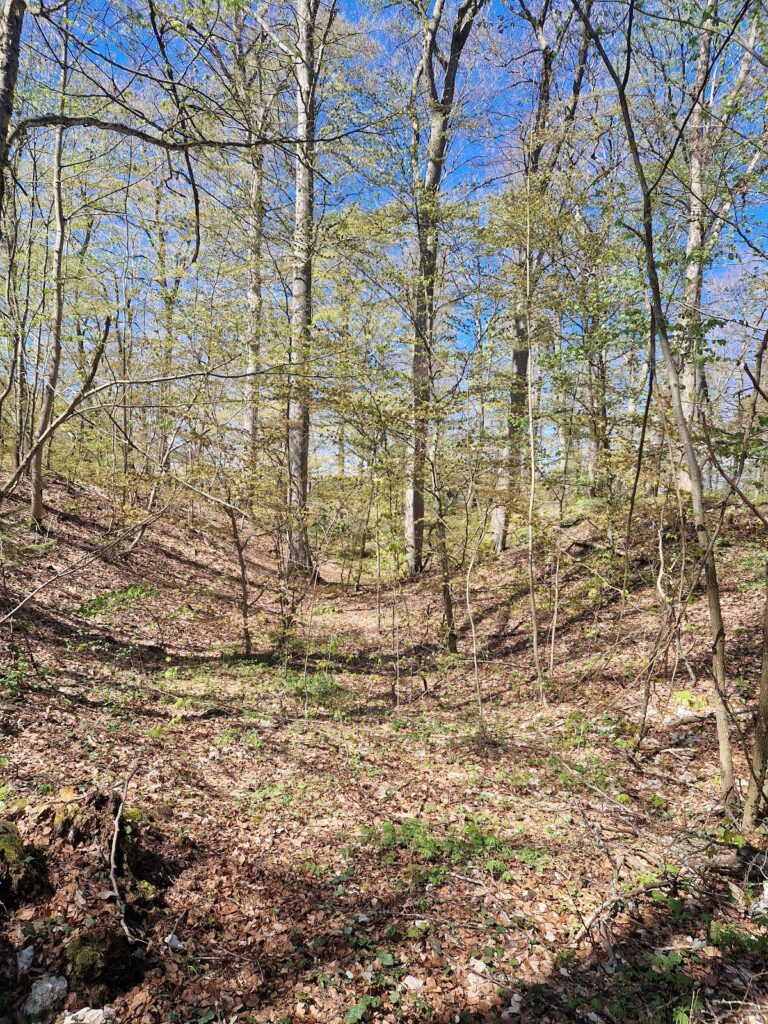
The castle site lies on a northwest-facing mountain spur 722 metres high. Its plan consisted of an outer bailey and a core castle at the end of the spur. A rampart and ditch bounded the complex, while a second rampart divided the approximately 140-metre-long and 12-metre-wide site.
A hillside terrace extended from the northern end of the dividing rampart. It probably served as a Zwinger, a defended strip between or outside principal fortifications. At the western end, where the hillside was especially steep, the terrace had been raised artificially. The outer bailey may have occupied this terrace or the space between the two ramparts.
Surviving Traces and Finds
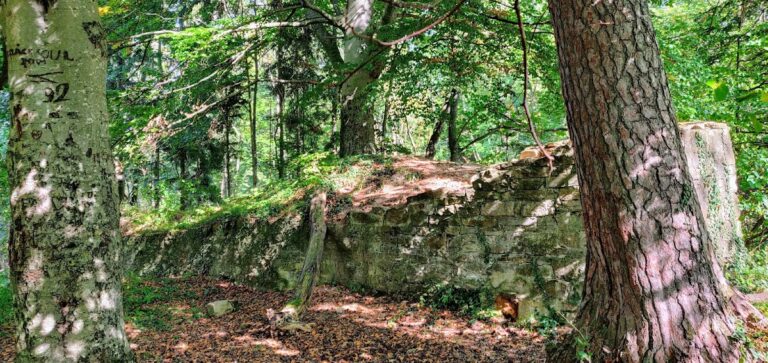
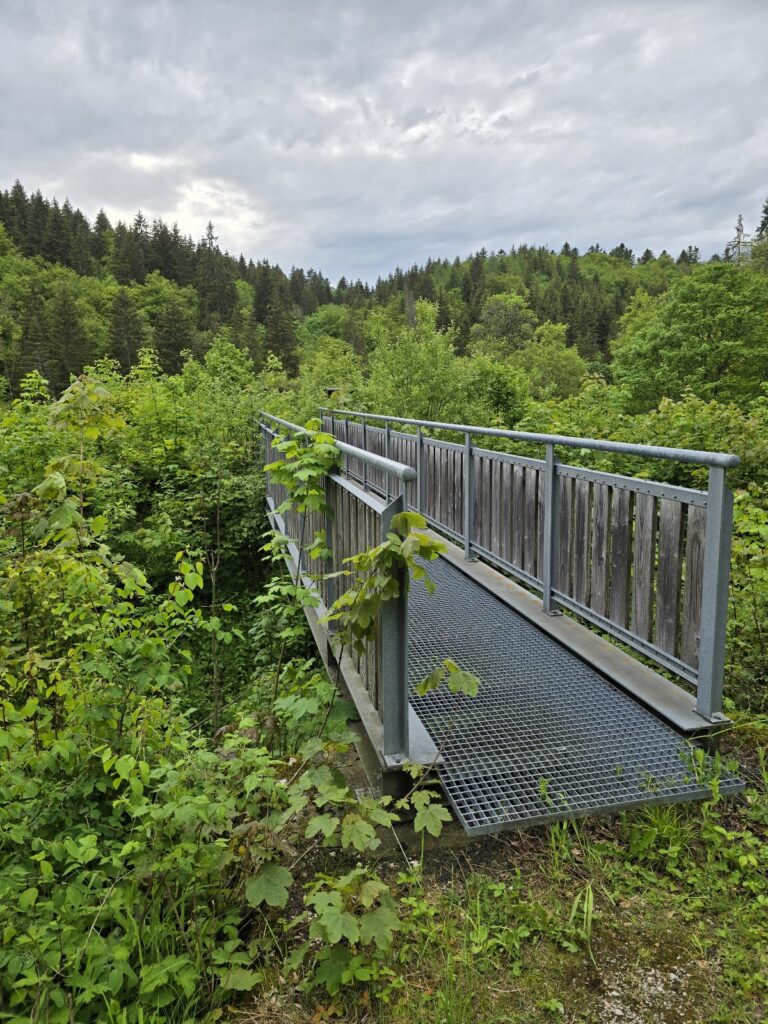
The castle buildings have disappeared, leaving slight traces in the terrain, including sections of the rampart and ditch. Pottery and fragments of stove-tile rims dating from the twelfth and thirteenth centuries were found around these remains. Together, the archaeological material and earthworks identify the site as a Burgstall, a castle location whose buildings have vanished while archaeological and landscape traces survive.