São Domingos da Baralha Fortress: A Portuguese Coastal Defence Fortification


Site at a Glance
- Rating
- 4.7
- Popularity
- Very Low
- Country
- Portugal
- Primary era
- Early Modern
- Eras represented
- Early Modern
- Civilizations
- Portuguese
- Site type
- Military
- Remains
- Fort
On this page7 sections
History
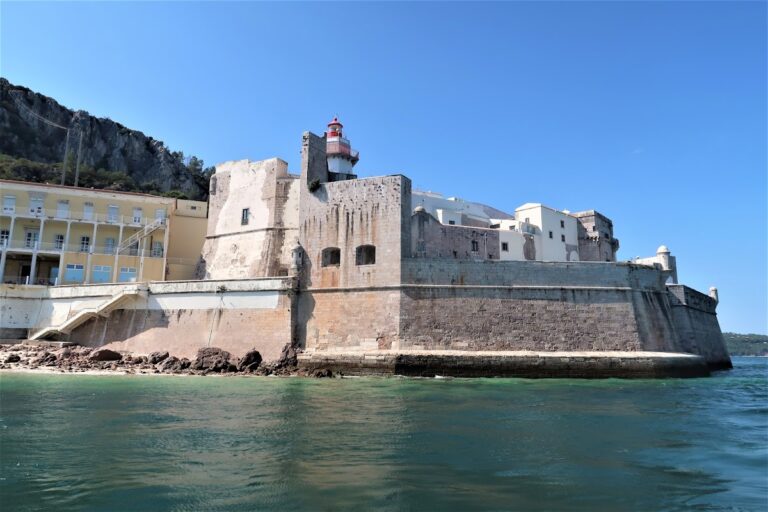
São Domingos da Baralha Fortress is a seventeenth-century Portuguese maritime bastion fort beside Baleeira Beach. Built as part of the coastal defence strategy introduced by King John IV, the fortress helped protect and monitor the Arrábida coast while reinforcing the Crown’s presence in an isolated rural area.
Construction and coastal defence
Construction began during the reign of Afonso VI and was completed under Peter II, successive monarchs of the Braganza dynasty. This royal house came to power after Portugal restored its independence in 1640. The fortress formed part of the first line of defence along the Arrábida coastline, where it also served to control local populations and watch maritime movement.
São Domingos da Baralha was under the authority of the command at Sesimbra Fortress. This command also included the forts of Santiago, São Teodósio, Nossa Senhora do Cabo, and São Pedro das Areias Brancas, also known as São Pedro da Foz. Together, these positions formed a network of coastal strongpoints.
The Peninsular War
On 21 June 1808, during the Peninsular War, the fortress was attacked by the United Kingdom. The conflict was the Iberian campaign of the wider Napoleonic Wars, fought from 1807 to 1814 between French forces and allied Portuguese, Spanish, and British armies. The attack sought to neutralize a fortified coastal position that could have been used by the French navy.
After the attack, the fortress’s eight artillery pieces were thrown into the sea. The soldiers did not attempt to defend the position because they knew that the attackers were Portugal’s allies.
Abandonment and later preservation
The fortress was abandoned after the Portuguese Civil War. Its upkeep was considered unjustified, and exposure to the weather led to further deterioration. In the 1980s, a proposal to transfer the property to the Sesimbra municipal authority was not implemented.
Sesimbra’s municipal services nevertheless removed the coat of arms that had stood above the entrance portal in order to preserve it. The object became part of the reserves of the Sesimbra City Museum, while the fortress itself remained in a ruined condition.
Remains
Fortified platform
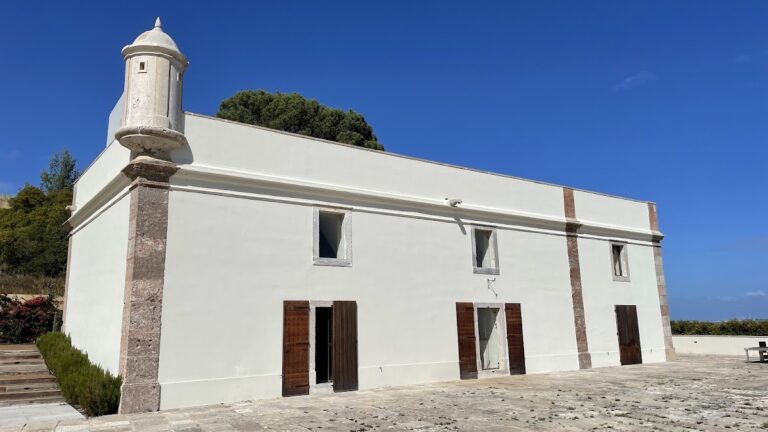
São Domingos da Baralha Fortress occupies an isolated coastal setting between Cape Espichel and Sesimbra, approximately 27 metres above sea level. The maritime bastion fort has a rectangular plan, with service buildings and a cistern integrated into its platform. Its built area measured 408 square metres, and the adjoining land covered 10,392 square metres, making a total area of 10,800 square metres.
The ruins retain the curtain wall, the main defensive wall connecting the stronger elements of a fortification, as well as the cistern within the platform. These surviving elements express the arrangement of the former coastal defence work. The fortress is abandoned and remains in a ruined condition.
Associated chapel
The ruins of the Senhor Jesus dos Navegantes Chapel are associated with the fortress and stand approximately 400 metres away. The former entrance portal of the fortress was surmounted by a coat of arms, which was removed by Sesimbra’s municipal services and is now kept in the reserves of the Sesimbra City Museum.