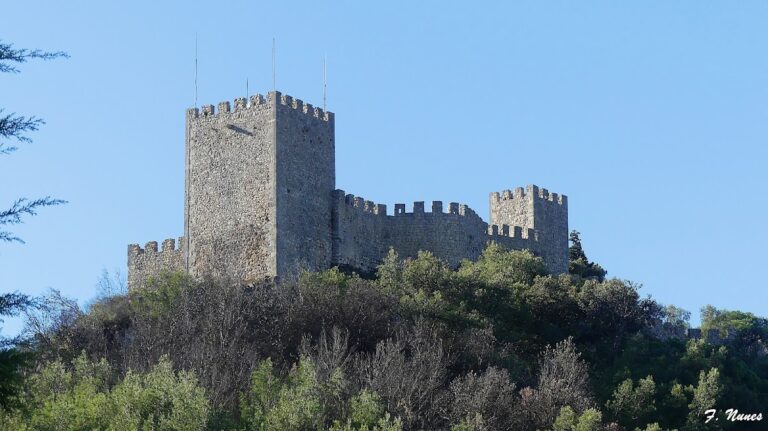
Forte de Santa Maria da Arrábida: Coastal Fort and Convent Complex in Portugal


Site at a Glance
- Rating
- 4.5
- Popularity
- Low
- Country
- Portugal
- Primary era
- Early Modern
- External website
- Open
- Eras represented
- Early Modern
- Civilizations
- Portuguese
- Site type
- Military
- Remains
- Fort
On this page8 sections
History
Forte de Santa Maria da Arrábida is a small Portuguese coastal fortification at São Lourenço, near Portinho da Arrábida. Its development began beside a religious site associated with the Arrábida convent and later formed part of Portugal’s defenses around the Sado River mouth. The fort’s surviving form reflects construction and rebuilding from the seventeenth to the eighteenth century, followed by military deactivation, private reuse, and conversion into a museum.
Religious beginnings and convent patronage
The site acquired a religious character from 1250. According to tradition, Hildebrand, a merchant from the British Isles, built a small hermitage dedicated to Our Lady after surviving a shipwreck there. The place later became the setting for a Franciscan community. The Franciscans, a Catholic order founded on the teachings of Saint Francis of Assisi, shaped the early identity of the complex.
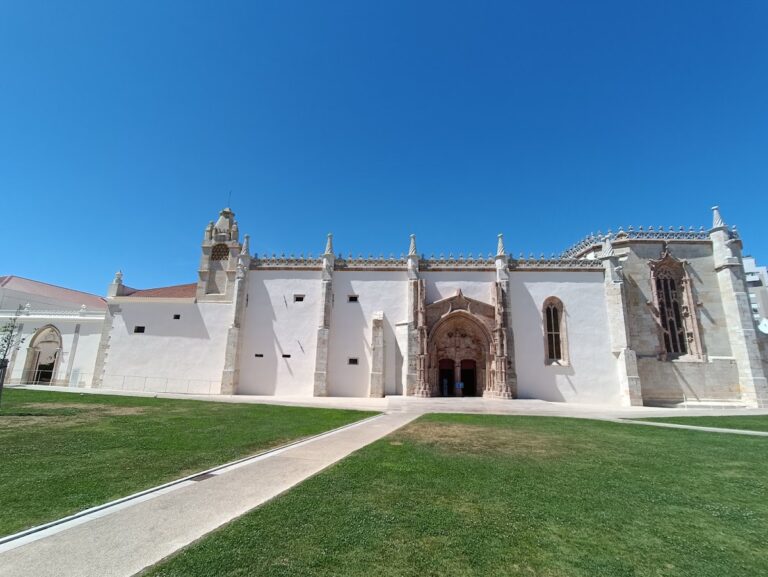
Between 1539 and 1542, Dom João de Lencastre, 1st Duke of Aveiro, built the original convent and donated it to the Spanish Franciscan friar Martin of Santa Maria Benavides, who wished to live there as a hermit. Work continued from the second half of the sixteenth century into the first half of the seventeenth century. The 2nd and 3rd Dukes of Aveiro, together with the daughter-in-law of the 3rd Duke, supported the convent’s development, including its inn and the Stations of the Passion. In the mid-seventeenth century, the 4th Duke of Aveiro promoted the construction of the Bom Jesus Chapel.
Defensive construction and rebuilding
The fort belonged to the broader reorganization of Portugal’s defenses during the reign of John IV, whose rule followed the restoration of Portuguese independence from the Spanish Habsburg monarchy in the conflict known as the Portuguese Restoration War, fought between 1640 and 1668. The defensive system protected the Setúbal river mouth and the sea approaches. It also complemented coastal works extending from Setúbal toward Cape Espichel, including Fort Santiago de Sesimbra, Fort São Domingos da Baralha, and the forts of Santiago do Outão, São Teodósio da Ponta do Cavalo, and Nossa Senhora do Cabo.
The earliest fortification phase began between 1670 and 1676 under Peter II. The fort was intended to defend the small port, the Arrábida convent, an important pilgrimage destination, and the adjacent river mouth and coastal approaches. During the reign of John V, it was rebuilt from its foundations. An inscription above the Gate of Arms records the order for its construction in 1676 and states that the roads and the entire fortification were remade and completed in 1749.
Deactivation and changing uses
The fort was restored in 1798 and remained operational until the reign of King Luís. Its defensive purpose declined as military technology developed, while the convent installations were abandoned. The fort was deactivated in 1853. During the Portuguese Civil War, it was occupied by forces loyal to King Miguel.
The Franciscan friars left the convent in 1834, following the extinction of Portugal’s religious orders. The property was acquired by the Dukes of Palmela in 1863. In the early twentieth century, the fort was rented to private occupants for several purposes, including a hunting lodge, restaurant, and inn. From 1932, Sebastião Leal da Gama, the father of the poet Sebastião da Gama, adapted it as a restaurant and inn. This use continued until 1976.
Protection and cultural adaptation
The property became part of the Arrábida Natural Park in 1978. Extensive consolidation and restoration followed, and in 1991 the fort was adapted as the Luís de Saldanha Oceanographic Museum, incorporating a marine-biology center. The former convent installations were acquired by Fundação Oriente in 1990 and reclassified as a cultural space. The fort has held the Portuguese designation Property of Public Interest since 1977, a legal status that gives formal protection to places considered to possess cultural value.
Remains
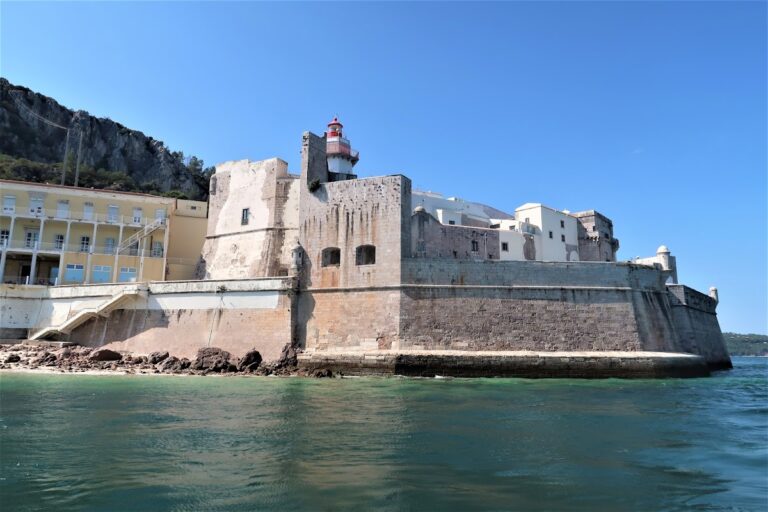
Forte de Santa Maria da Arrábida stands at the foot of the southern slope of the Arrábida mountain range, on the northern bank of the Sado River, in a position southwest of Portinho da Arrábida. It has an organic polygonal plan, combining a hexagonal earthwork battery with four battlements on the side facing the sea. The fort is in good condition, and its former service facilities have been adapted for museum use.
Fortification and museum spaces
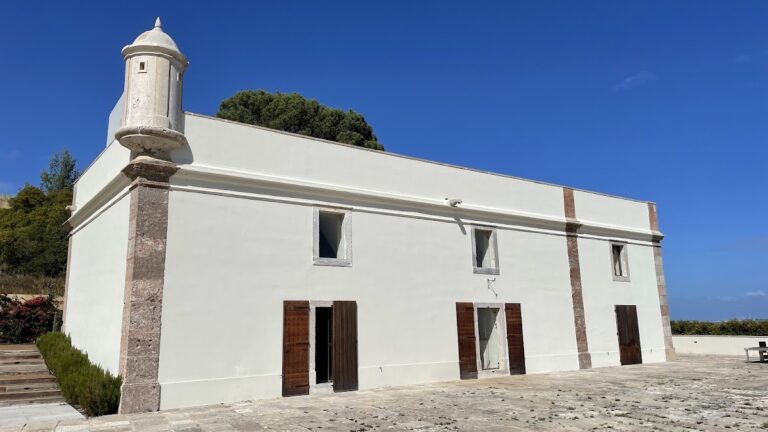
The defensive layout centers on the polygonal fort and its sea-facing battery. The earthwork construction and battlements express its original role in protecting the small port, the convent, and the approaches to the river mouth. Former service areas now contain exhibition rooms, aquarium spaces, and video rooms belonging to the Luís de Saldanha Oceanographic Museum. This adaptation preserves the fort’s built structure while giving its interior a new scientific and cultural function.
Chapel
The chapel contains an expressive image of Our Lady carved from Lioz stone, a fine-grained limestone traditionally quarried in Portugal. The sculpture has seventeenth-century features and preserves the religious association that shaped the site before and alongside its military development.