Quinta da Bacalhoa: A Portuguese Royal Estate and Renaissance Palace
Site at a Glance
- Popularity
- High
- Country
- Portugal
- Primary era
- Early Modern
- Eras represented
- Medieval, Early Modern
- Civilizations
- Portuguese
- Site type
- Domestic
- Remains
- Palace
On this page8 sections
History
Quinta da Bacalhoa is a historic country estate in Vila Fresca de Azeitão, Portugal, whose origins as a royal retreat date to the 15th century. Its earliest building date is uncertain. The estate was established by John of Portugal, a son of King John I, and later became a place of architectural change and cultivation.
Royal retreat and expansion
After John, the estate passed to his daughter Beatriz. She was married to the second Duke of Viseu and was the mother of Manuel I, who later ruled Portugal. Beatriz modernized the property and commissioned new buildings, walls, and a large pond.
Renaissance transformation and the estate’s name
In 1528, the estate was sold to Brás de Albuquerque, the eldest son of the Portuguese commander and administrator Afonso de Albuquerque. Following travels in Italy in 1521–22, Brás brought Renaissance influences to the property and added ceramic tiles to its buildings.
By the late 16th century, the estate formed part of an entail, an inheritance arrangement that restricted the transfer of property, held by Afonso de Albuquerque’s descendant Jerónimo Teles Barreto. It later passed to his sister Maria Mendonza de Albuquerque, who was married to Jerónimo Manuel of the House of Atalaia. The earlier name, Quinta de Vila Fresca, gave way to Quinta da Bacalhoa, probably deriving from the sarcastic nickname “Bacalao,” also applied to Jerónimo Manuel’s wife.
Disrepair, restoration, and modern ownership
During the First Portuguese Republic, the republican regime established in 1910, the palace fell into disrepair. In 1936, Orlena Scoville, a wealthy North American, bought and restored it along with the surrounding vineyards. In the 1970s, her grandson developed the estate into one of Portugal’s largest wine producers.
The palace has been protected since 1910, and in 1996 the estate was classified as a National Monument by the Portuguese Institute for Architectural Heritage. Since 2000, it has belonged to the Berardo Foundation, led by Portuguese businessman and art collector Joe Berardo.
Remains
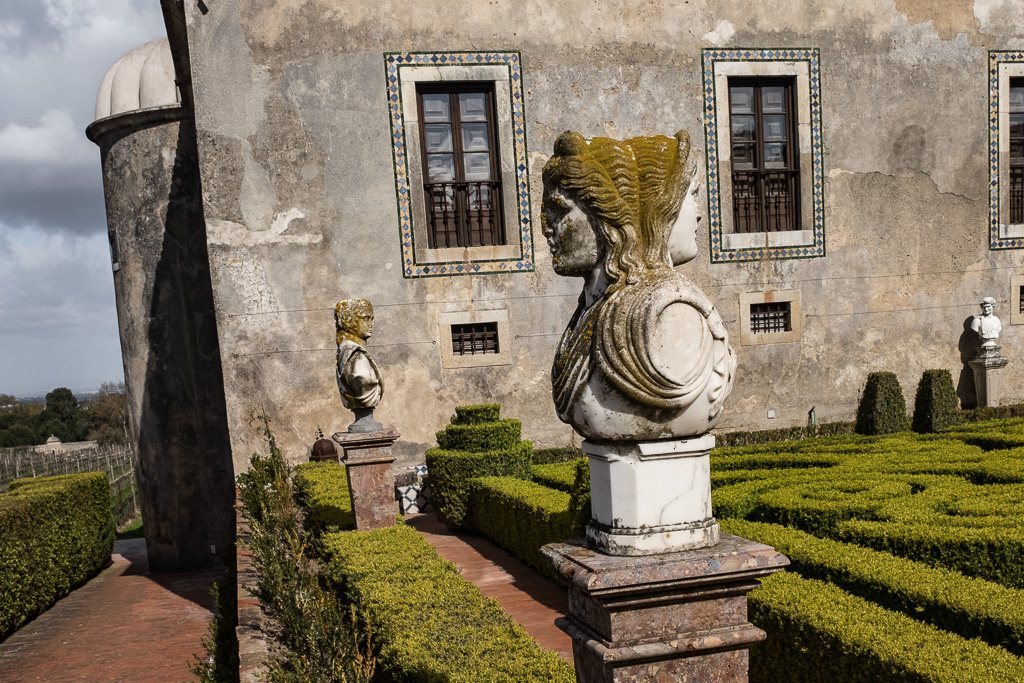
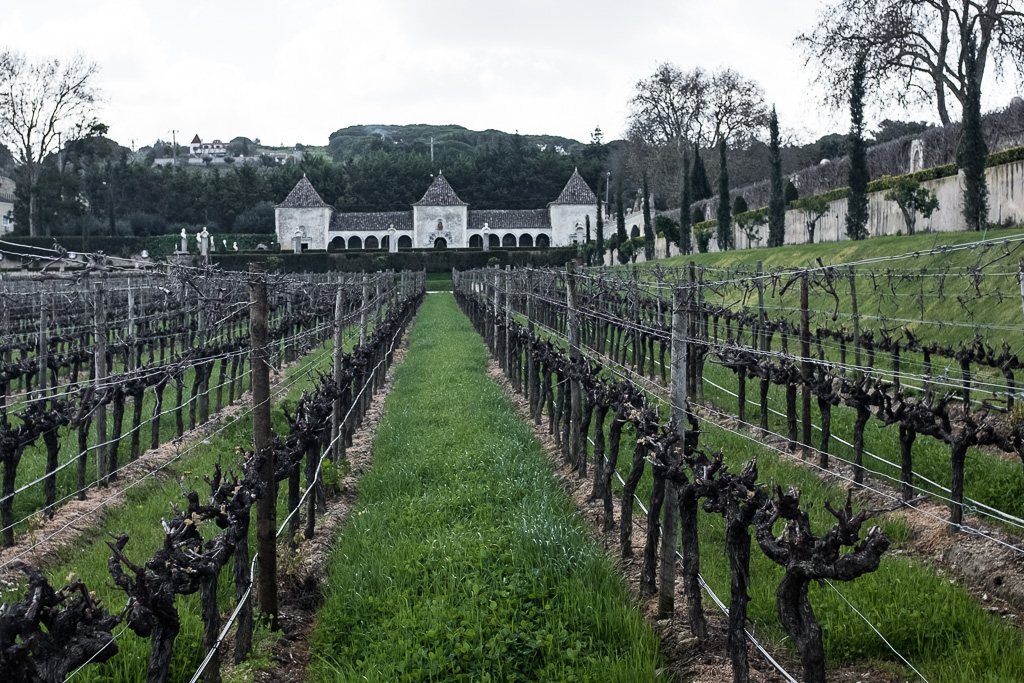
The surviving estate is organized around its palace and formal garden, with walls, pavilions, water features, and interior decoration forming related groups. The palace’s wings enclose the garden, while the garden structures and basin occupy the surrounding grounds.
Palace and walls
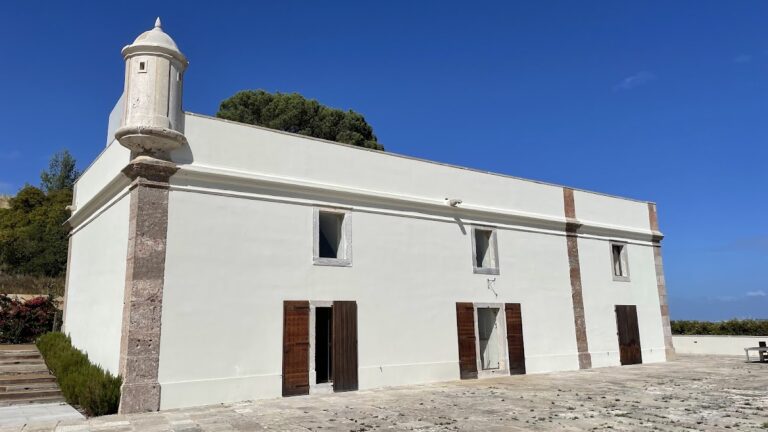
Also known as the Palace of the Albuquerques, the palace has a Renaissance design marked by symmetry in its plan, openings, and stairways. Rows of columns and Moorish-style domed towers contribute to its exterior, while its wings frame the garden. Pointed, curved ceilings from the earliest phase survive alongside Renaissance-style windows. The walls have small turrets capped with domes decorated with repeated rounded segments. Some turrets represent the Sacred Way, a Christian devotional route commemorating Christ’s Passion. Two substantial pavilions stand beside the side walls.
Garden and water features
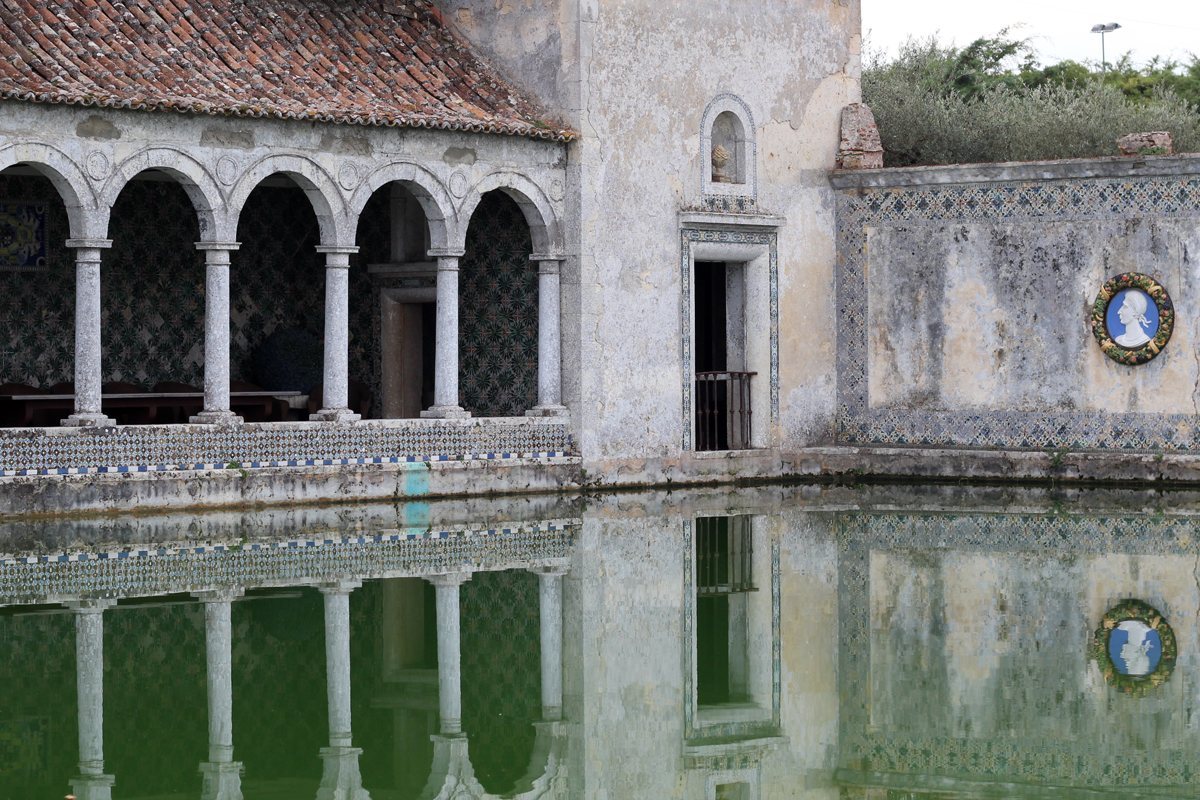
The rectangular garden has clipped box hedges and winding patterns arranged as four beds around a fountain basin. A large square basin lies beside the Casa do Tanque, or Tank House, on the garden’s south side. The house consists of three pavilions joined symmetrically by arcades, with glazed decorative tiles lining the structures and a long terrace between them. A separate recreation pavilion stands beside the basin. Behind the formal garden beds, the historic citrus orchard was removed in the late 20th century to make way for further wine cultivation.
Interior decoration
The palace interior contains polychrome glazed ceramic tiles. A panel dated 1565 and signed by ceramic artist Francisco de Matos depicts Susanna bathing and is Portugal’s oldest surviving example of this tilework. Flemish tin-glazed ceramic medallions frame busts of historically important figures; some decorative medallions are attributed to Luca della Robbia, an Italian Renaissance sculptor and ceramic artist.