Santuario de Codés: A Marian Sanctuary and Minor Basilica in Spain
Site at a Glance
- Rating
- 4.5
- Popularity
- Low
- Country
- Spain
- Primary era
- Early Modern
- Eras represented
- Early Modern, Modern
- Civilizations
- Crown of Castile, Spanish
- Site type
- Religious
- Remains
- Sanctuary
On this page12 sections
History
Legendary origins and the medieval hermitage
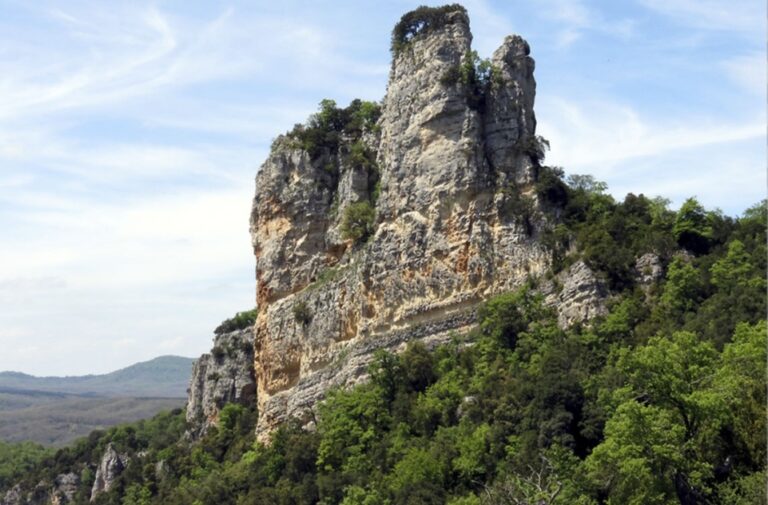
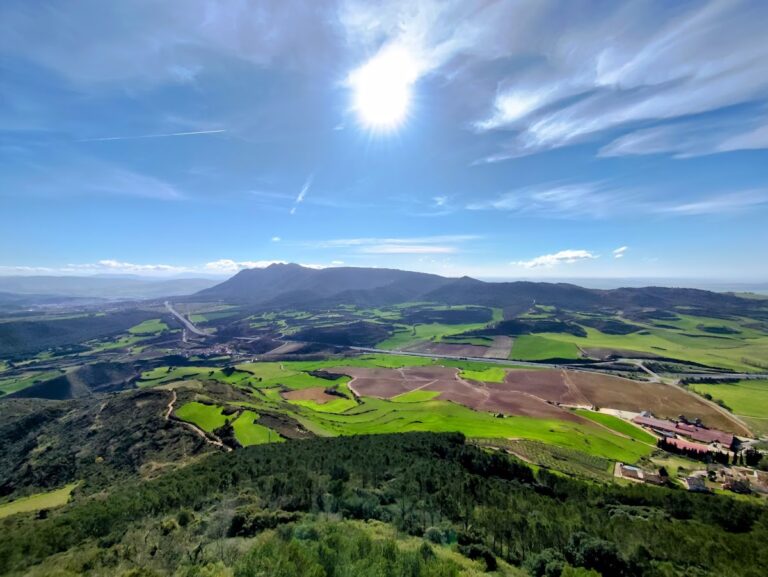
Santuario de Codés is a Marian sanctuary and minor basilica in Spain, located in the municipality of Torralba del Río at the foot of the Sierra de Codés. The complex stands in the frontier region between Navarra, La Rioja, and Álava and belongs to the Archdiocese of Pamplona and Tudela. Tradition places the beginnings of its devotion in the sixth century, when the Visigothic king Leovigild, whose reign included campaigns to consolidate Visigothic control in the Iberian Peninsula, destroyed a settlement on Monte Cantabria near Logroño in 575. Survivors were believed to have carried a Marian image and relics into the mountains of Torralba and buried them for protection.
According to the same tradition, a shepherd rediscovered the objects about seven centuries later in an overgrown hermitage. Independently of this foundation story, a medieval hermitage stood at the site and belonged to the nearby Benedictine monastery of Saint George of Azuelo. The rediscovery tradition helped establish devotion to the Virgin of Codés, whose image became the focus of the sanctuary.
The sixteenth-century growth of devotion
In 1523, a captive held by the band of the outlaw Juan Lobo was said to have called upon the Virgin of Codés and been carried miraculously to the hermitage while still attached to the wooden stock that restrained him. Juan Lobo was later captured and executed by people from Torralba del Río. The event remains part of the annual Fiesta del Lobo, held on Saint John the Baptist’s Day. Its ritual reenacts the pursuit, trial, and execution, followed by the Baile de la Balsa performed by the captors.
The spread of the 1523 miracle led the inhabitants of Torralba del Río to seek a cleric for the hermitage. They chose Juan Merino, later known as Juan de Codés, who served there for 53 years until his death in 1583. Another healing attributed to him concerned a young man from Torralba who had received a severe throat wound during a fight. After celebrating Mass, Juan de Codés blessed a cloth and laid it crosswise over the injury. The young man was said to have recovered, establishing the reputation of the sanctuary’s blessed cloths, which were credited with healing wounds and illnesses.
Devotion to the Marian image spread across Navarra, La Rioja, and Álava during the sixteenth century, bringing increased alms and donations. The medieval hermitage was demolished toward the end of that century, when construction began on the present church. Juan de Amiax, a cleric from Viana, further promoted the sanctuary through his devotional work Ramillete de Nuestra Señora de Codés, published in Pamplona by Carlos de Labayen in 1608. The book recorded 57 miracles attributed to the blessed cloths, including healings claimed for Amiax and his brother.
Seventeenth- and eighteenth-century prosperity
The sanctuary’s resources grew during the seventeenth century. Surrounding villages supplied more than 19 tonnes of grain in 1658 and nearly 20 tonnes in 1660, while Mass intentions reached 4,384 in 1670. In 1620, the sanctuary established a chest with three locks for money and valuable objects. Its keys were held separately by the steward of Codés, the parish priest, and the mayor of Torralba del Río. The chest is now kept in the presbytery behind the grille.
Prosperity reached a high point in the seventeenth and eighteenth centuries. In 1639, a publication celebrated the recovery of Diego Jacinto de Barrón, a councillor of Logroño who attributed a fatal illness to the intervention of the Virgin of Codés. His donations helped finance an enlargement of the church, inaugurated on 10 September 1639. On that occasion the Virgin was placed in a devotional chamber before more than 8,000 people.
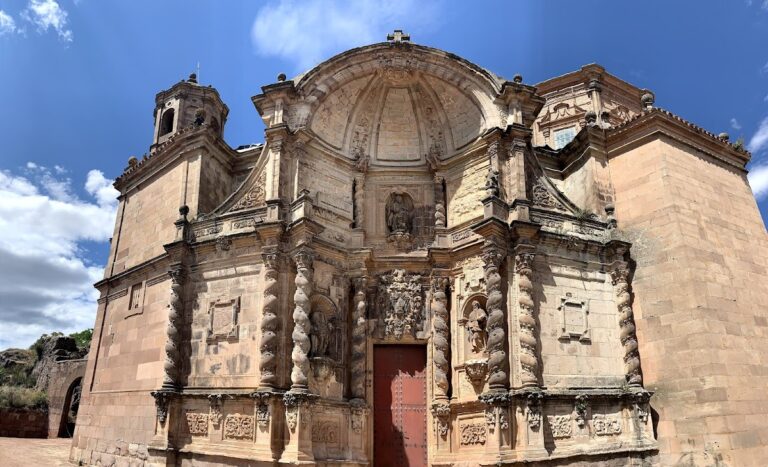
The church acquired its principal form during the seventeenth century, when the sanctuary was enlarged at the east end and covered by a dome. Two bays were added at the west, including an upper level for worshippers and the choir, and a sacristy was built. In the eighteenth century, the complex was enlarged again with a structure for the Virgin’s devotional chamber, while the area above the three-bay portico on the east front was also expanded. The devotional-chamber structure later disappeared.
War, destruction, and restoration
The Peninsular War, the Iberian phase of the wider conflict against Napoleonic France from 1808 to 1814, affected the sanctuary because of its strategic position. Between 1808 and 1814, both sides used it at different times as a barracks, and French troops looted it in 1809. During the First Carlist War, a nineteenth-century civil conflict involving supporters of the Carlist succession claim and their opponents, the liberal guerrilla Martín Zurbano looted the sanctuary in 1837, took hostages, and burned the guesthouse. Fighting during the Third Carlist War caused further damage between 1872 and 1876, leaving the complex’s various buildings in ruins.
Recovery began in 1901 with the creation of the Confraternity administering the Basilica of Our Lady of Codés. Its aims were to promote worship and rebuild the sanctuary. Reconstruction and improvements to the surrounding area continued afterward. The Virgin and Child received new crowns and a mantle, and the crowns were ceremonially placed in 1920. The principal pilgrimage is held on Pentecost Sunday, while villages from the surrounding district make organized pilgrimages on Sundays in April, May, and June.
Remains
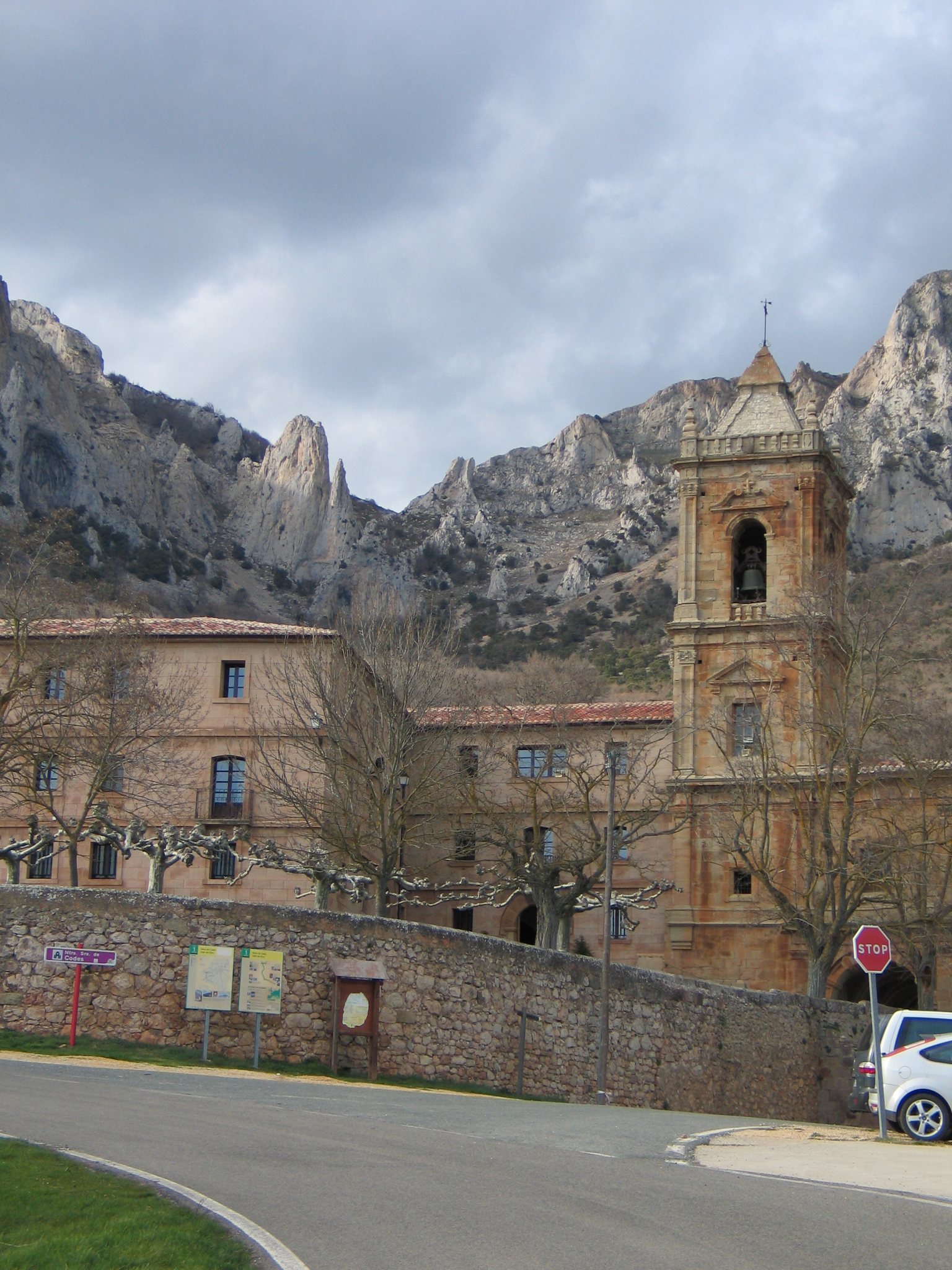
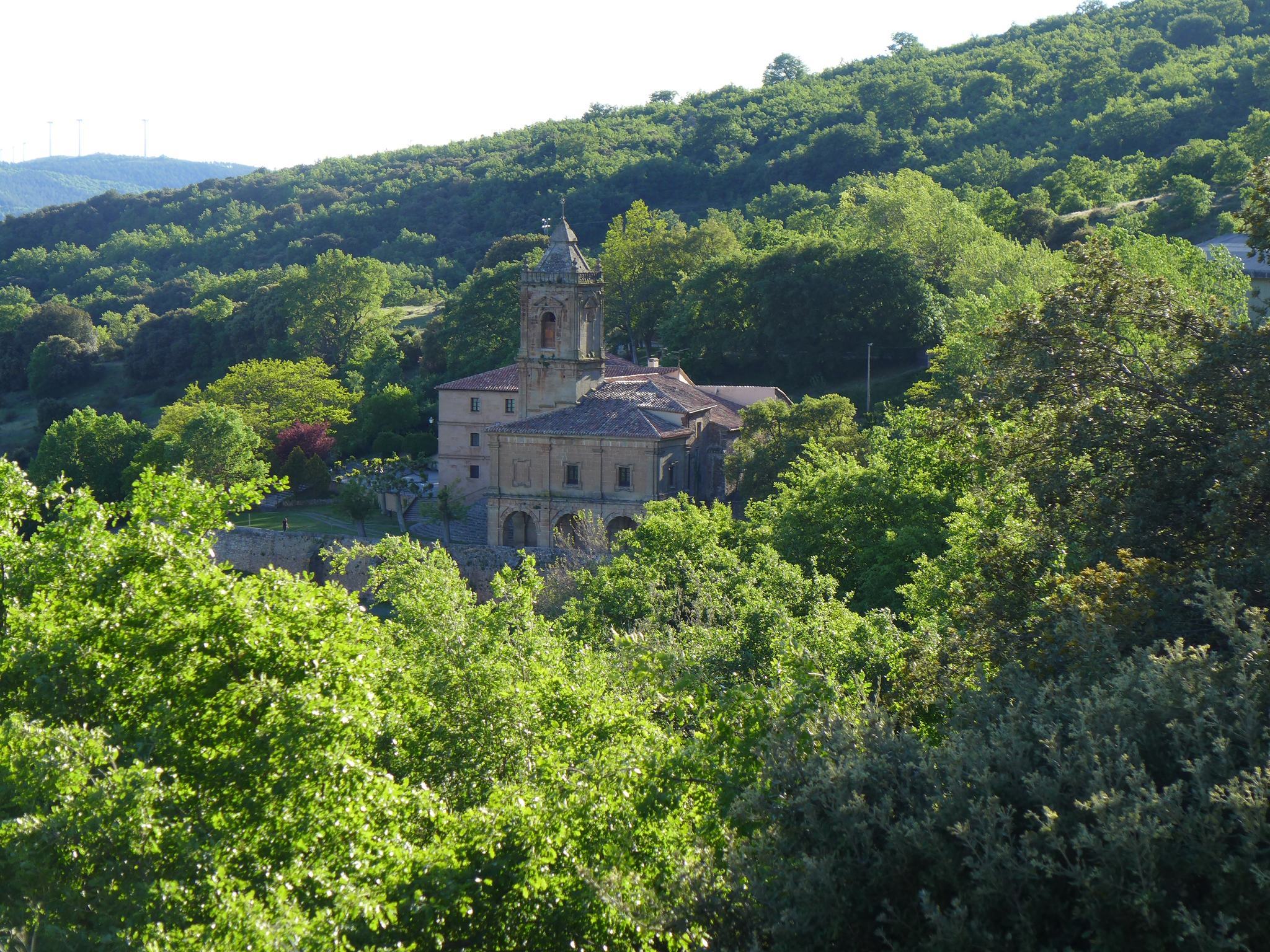
The sanctuary and its adjoining guesthouse form a monumental complex at approximately 814 metres above sea level, on a promontory below the Sierra de Codés. Its surviving elements include the church, portico, tower, fountain, staircase, guesthouse, altarpieces, grille, and other restored fabric. The present complex reflects construction and alteration from the late sixteenth century through the twentieth century.
Church and worship spaces
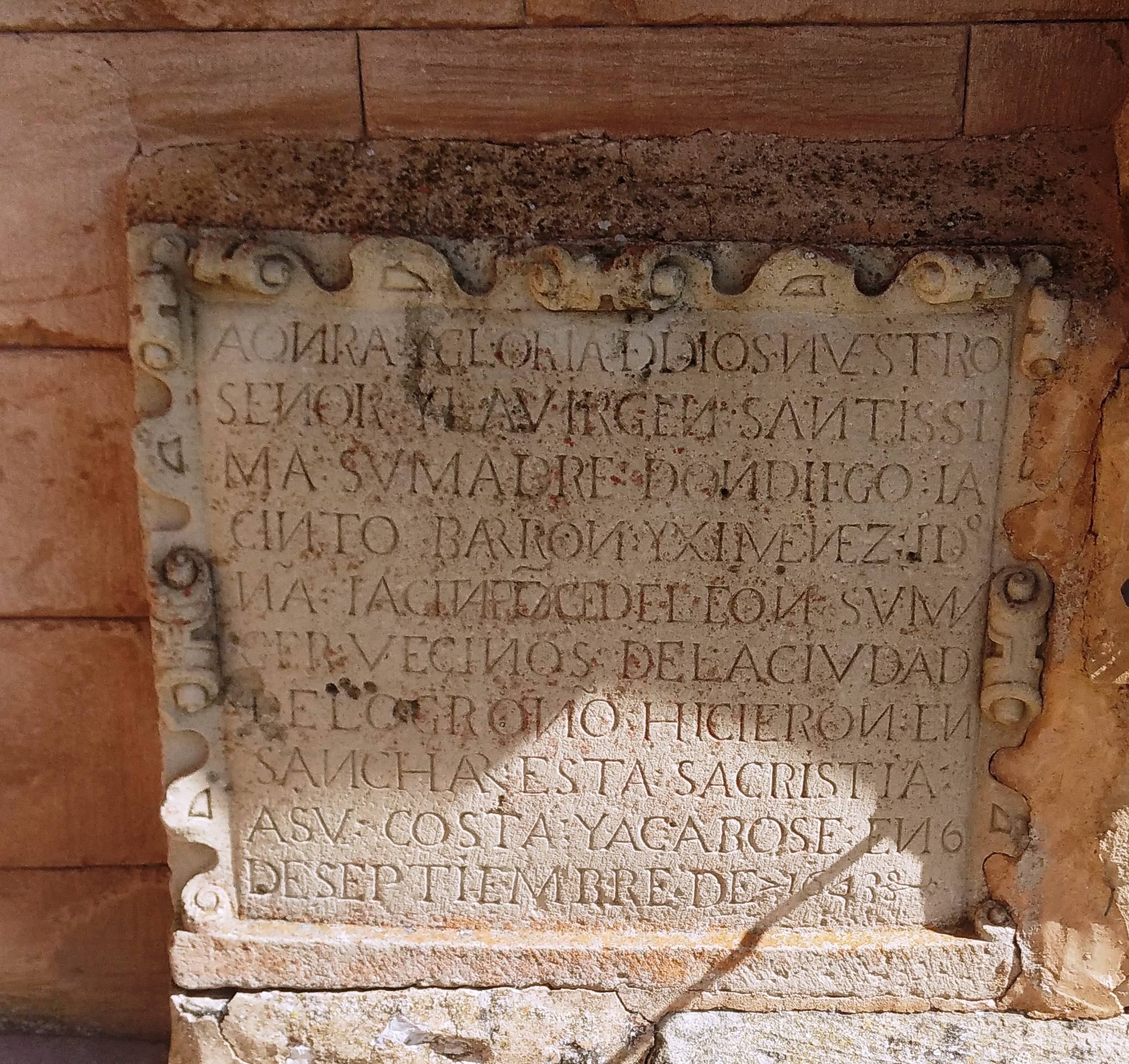
The church began as a central nave with two narrow side aisles after the medieval hermitage was demolished. Two bays of the central nave retain Gothic vaults from this early phase. During the seventeenth-century enlargement, the sanctuary was extended eastward and covered with a dome. Two more bays were added at the west, with an upper level for worshippers and the choir, and a sacristy was incorporated into the building. A stone plaque on the south side of the tower, dated 1643, commemorates the enlargement of the sacristy by Diego Jacinto de Barrón and his wife.
Tower and portico
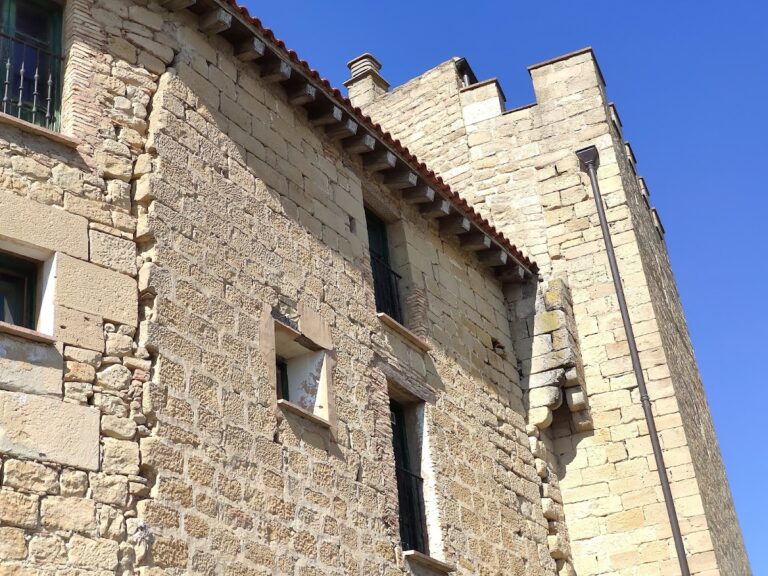
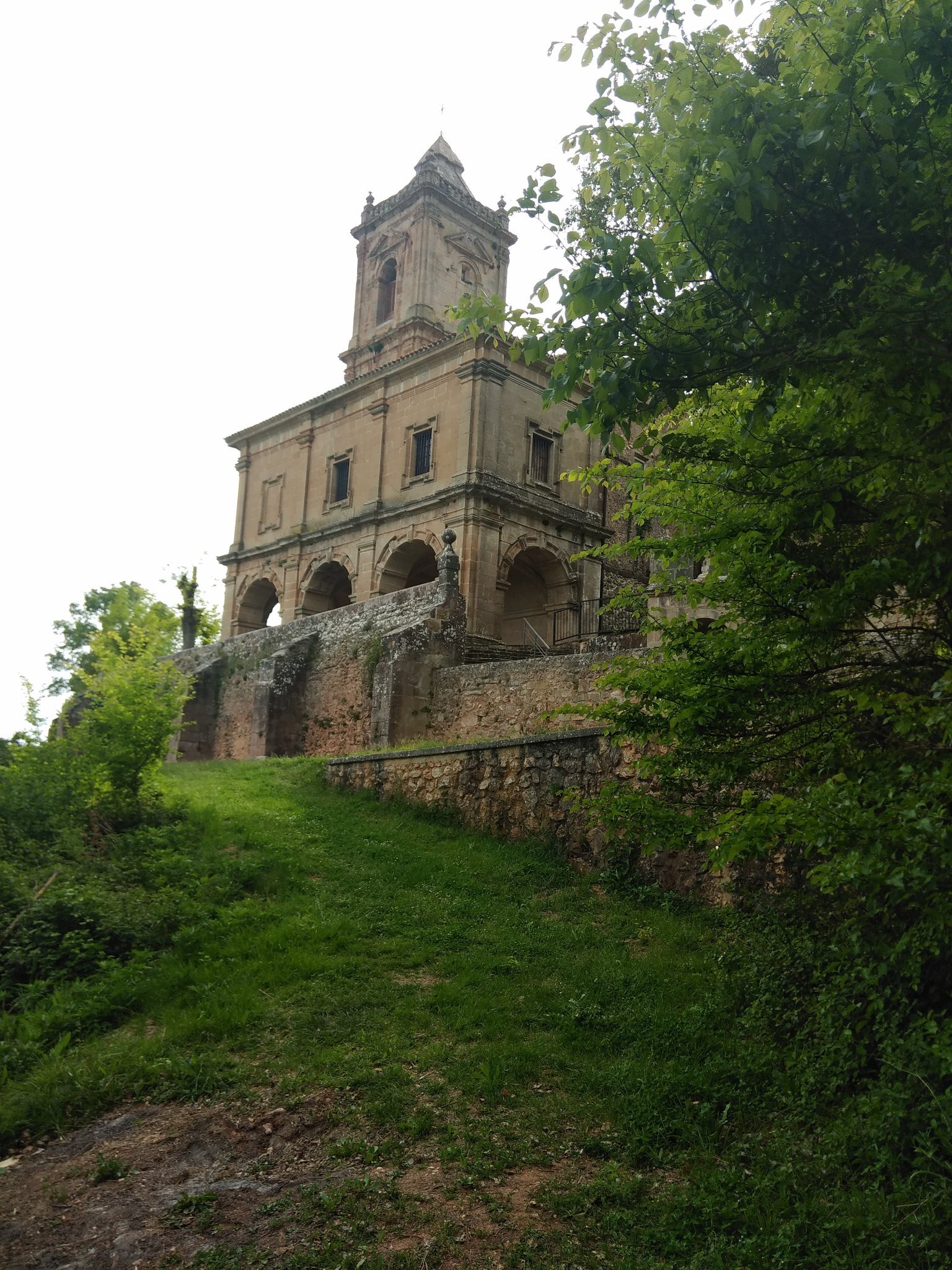
The Baroque tower has three bodies, each with openings of a different shape. Its completion date appears on the base as “781,” a date understood in the context of its eighteenth-century construction. The east front has a three-bay portico, above which the church was enlarged during the eighteenth century. The Fountain of the Virgin, dated 1656, stands at the foot of the portico.
Grille and altarpieces
An iron grille separates the clergy from the congregation at the foot of the presbytery, the part of the church surrounding the main altar. Commissioned in 1651 from the Elgoibar blacksmith Francisco Betolaza and installed in 1654, it replaced an earlier grille. Its 32 bars are arranged in three sections of differing heights, with the lowest section reaching four metres. Diego de Arteaga gilded the iron with about 5,000 gold leaves.
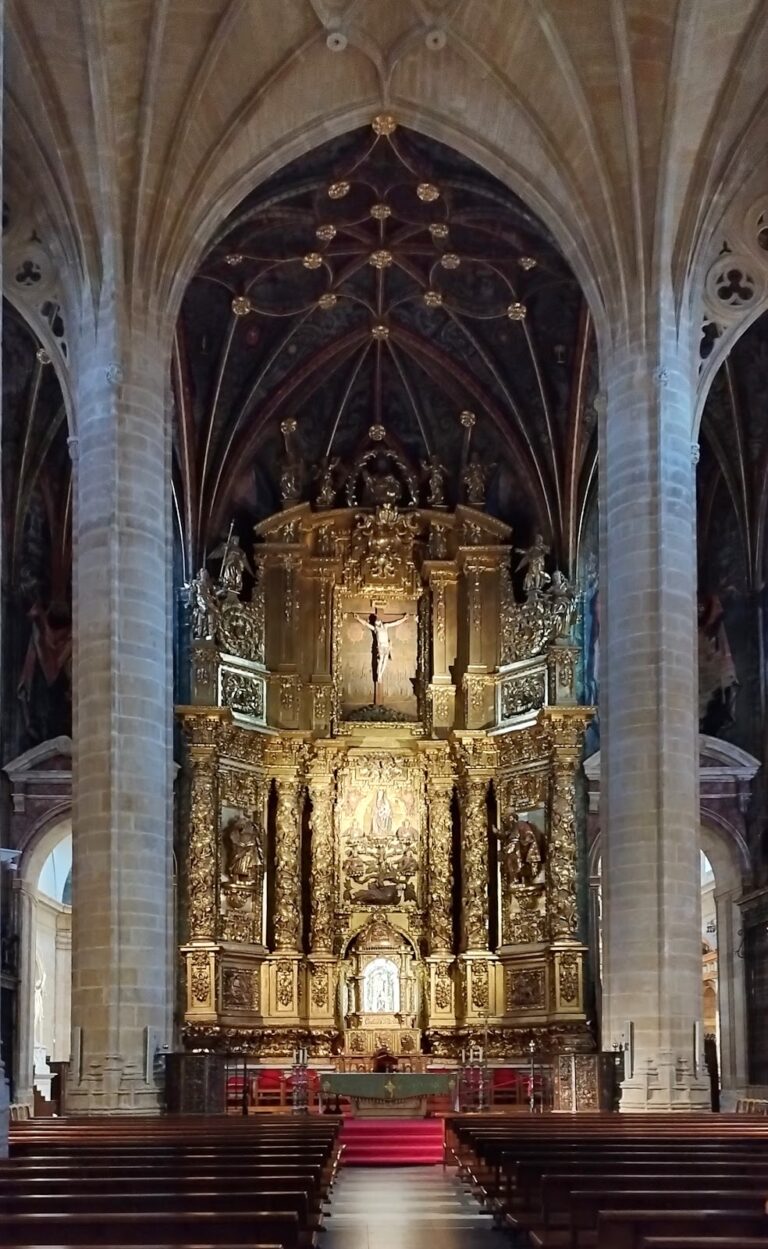
The main altarpiece was installed in 1642 and combines Renaissance features with Baroque elements. Its central niche holds the Gothic Marian carving of Codés, made in the mid-fourteenth century. Three oil paintings from a Madrid workshop surround the image and represent the Annunciation, the Assumption, and the Nativity. Two side altarpieces outside the presbytery were made by Bartolomé Calvo and dated 1654. The one on the Gospel side is dedicated to Saint Peter and contains a polychrome image of the apostle, with a relief of his martyrdom above. The altarpiece on the Epistle side is dedicated to Saint Anthony and includes a polychrome carving of the saint, above which a relief depicts his temptation by demonic beings.
Guesthouse and approach
Guesthouse
The guesthouse beside the church was built at the beginning of the seventeenth century. In 1692, Pedro de Lepe y Dorantes, bishop of Calahorra and La Calzada, enlarged it and converted it into a summer palace. Its entrance hall and staircase date from the eighteenth century. The present three-storey appearance belongs to the twentieth century, and the year 1908 is engraved on the key of the entrance arch.
Staircase and surviving setting
A semicircular staircase on the south side leads to the church. It was built in 1904, probably near the approach to the former hermitage. Together with the portico, fountain, tower, church, guesthouse, and restored fabric, it forms part of the surviving architectural setting of the sanctuary.