Sorginaren Txabola: A Prehistoric Passage Dolmen in Álava
Site at a Glance
- Popularity
- Medium
- Country
- Spain
- Primary era
- Stone Age
- Eras represented
- Stone Age
- Civilizations
- Unclassified
- Site type
- Burial
- Remains
- Tomb
On this page10 sections
History
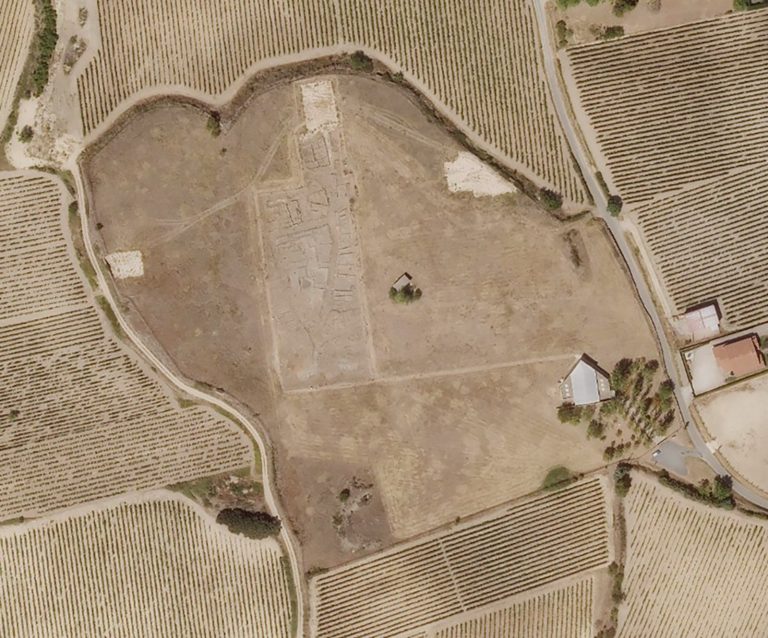
Sorginaren Txabola is a funerary passage dolmen at Elvillar in Álava, Spain. This prehistoric megalithic tomb was used from the late Neolithic or Chalcolithic (Copper Age) into the Bronze Age, and also has a Roman-period phase. Its long use and enduring place in local tradition connect prehistoric burial practices with later activity and folklore.
Discovery and archaeological study
Álvaro de Gortázar and Carlos Sáenz de Tejada discovered the monument in 1935. In June 1936, the Basque priest, ethnographer, and archaeologist José Miguel de Barandiaran carried out its first archaeological test excavation. Sáenz de Tejada, Gortázar, and local residents assisted in the three-day investigation. The finds were catalogued and first deposited at the Society of Friends of Laguardia’s museum, then transferred to the Archaeological Museum of Vitoria.
Gortázar, Sáenz de Tejada, and Domingo Fernández Medrano undertook a further study in 1947. Archaeologist Juan María Apellániz led an initial restoration in 1974. Between 2010 and 2014, the Provincial Council of Álava commissioned additional archaeological study and conservation, led by University of the Basque Country professors Javier Fernández Eraso and José Antonio Mujika Alustiza.
Protection and local tradition
On 26 July 2011, Sorginaren Txabola became part of a protected Monument Complex encompassing other lowland dolmens in the Historic Territory of Álava. The site’s name means “Witch’s Hut,” reflecting local stories that gave the tomb a place in the area’s folklore.
One tradition tells of a witch whose songs could be heard at the dolmen at dawn on Saint John’s Day. Anyone who approached her or looked in her direction was said to turn to stone and become part of the monument. A related version says that she called out to sell trinkets. Another local legend tells of witches who lived at the dolmen and were tried by the Inquisition and burned at the stake during the 1610 Logroño witchcraft proceedings.
The latter story informs the August Akelarre, a performance whose name is a Basque term for a witches’ gathering. It was first staged at the dolmen, then moved to Elvillar’s main square for logistical reasons. The performance opens the town’s patronal festivities, which include the Christian feast of Our Lady of the Assumption on 15 August and the feast of Saint Roch on 16 August.
Remains
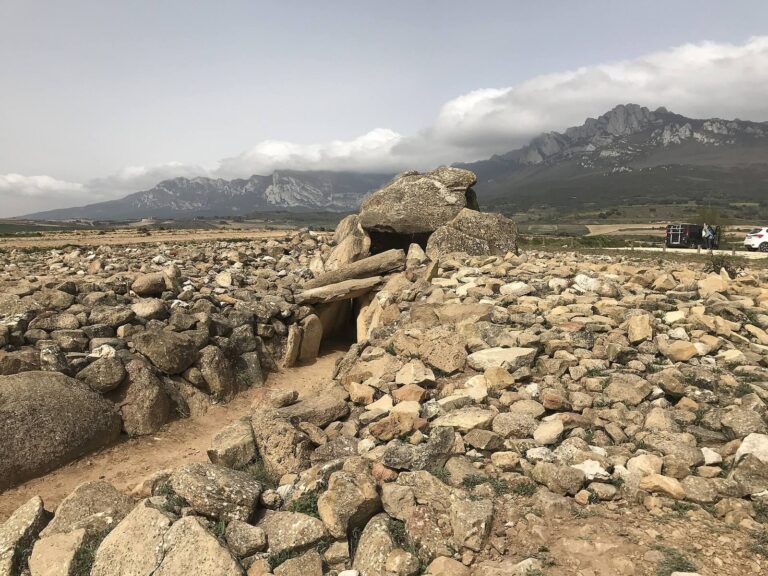
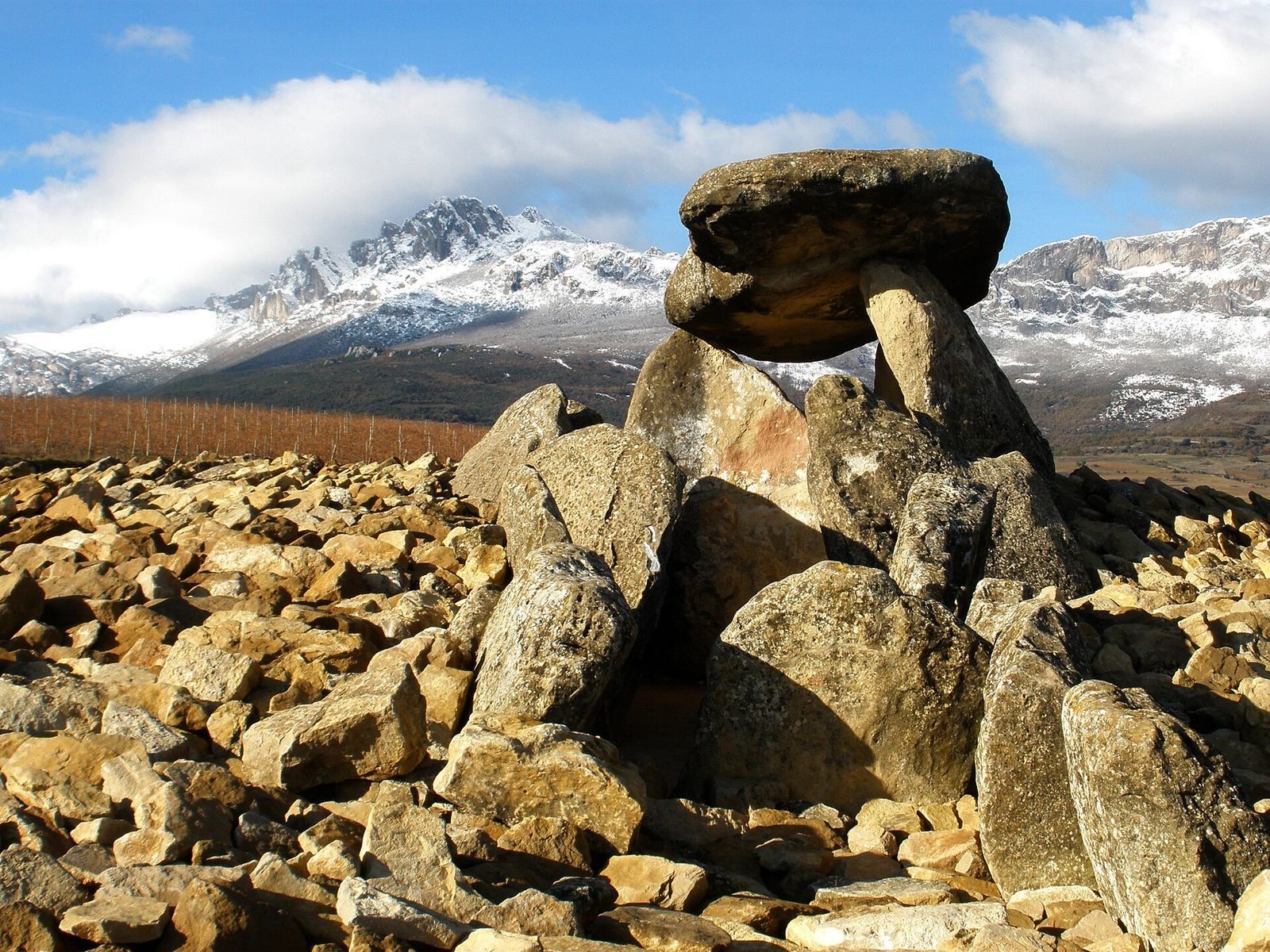
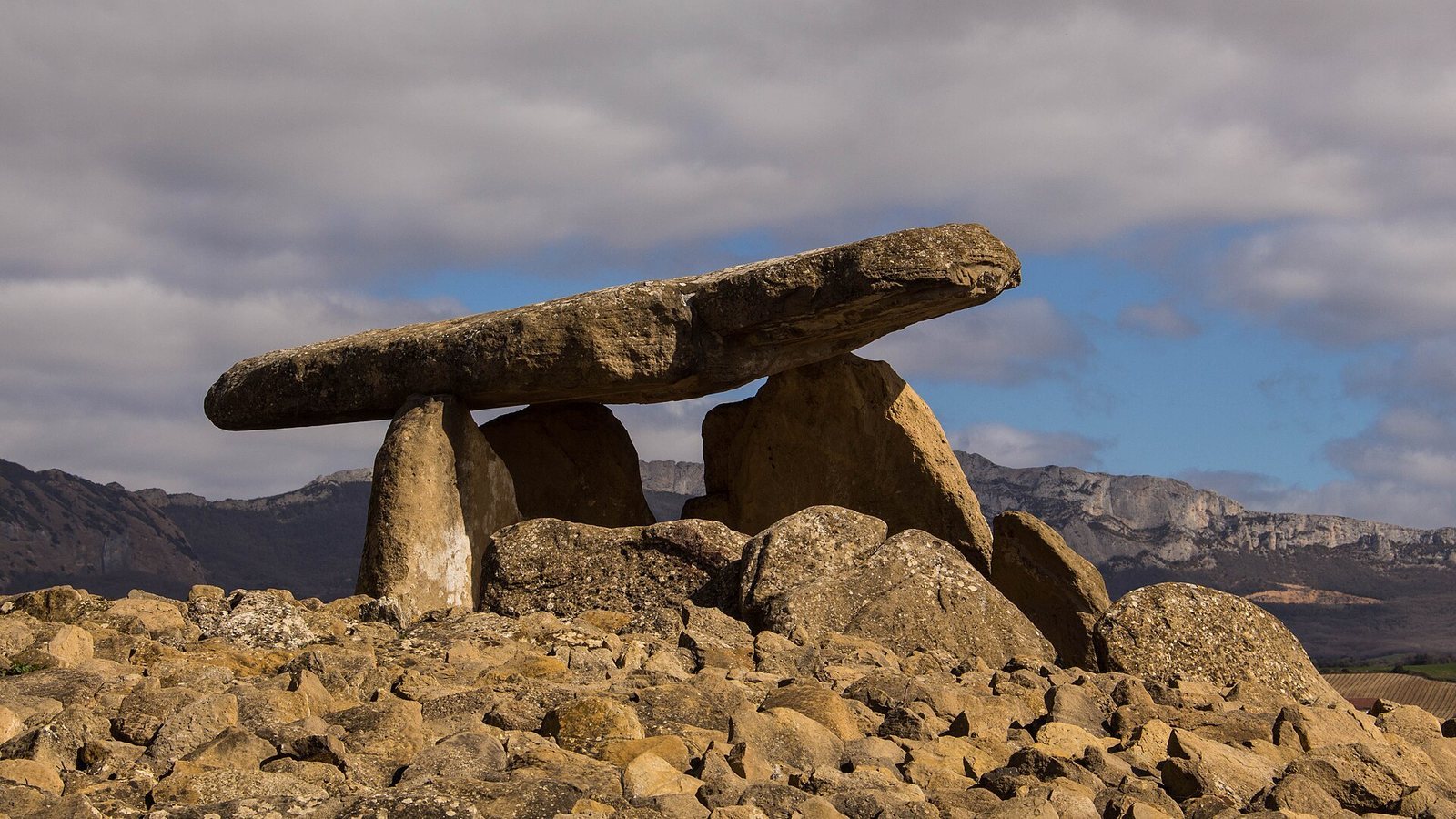
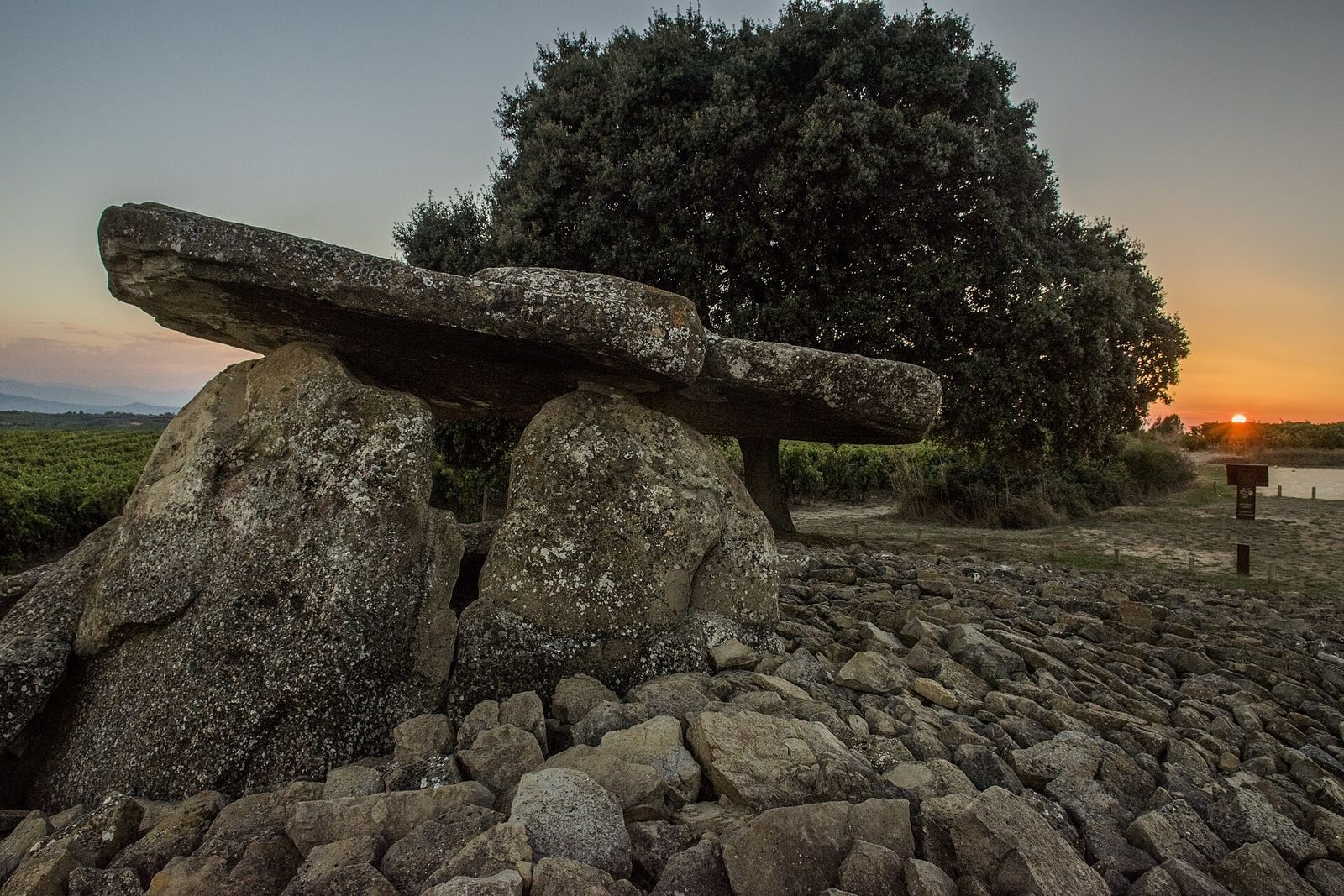
The monument is a large passage dolmen formed by a polygonal burial chamber, a long corridor, and a covering mound. Sandstone slabs and upright stones make up the main structure, with the corridor leading into the chamber. The remains also include a marked ritual area immediately before the corridor entrance.
Burial chamber and corridor
Burial chamber
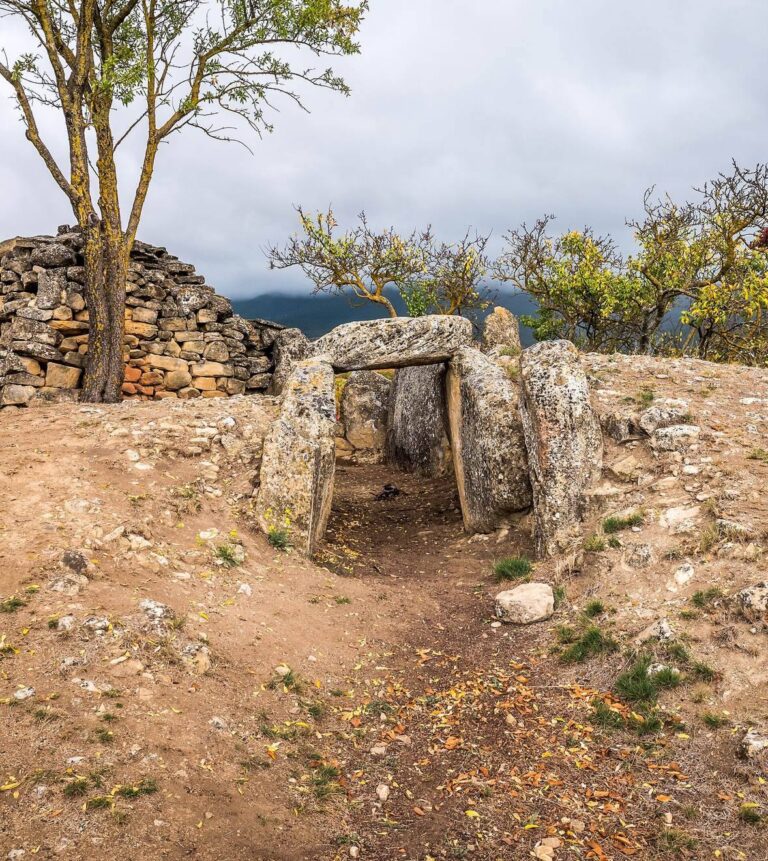
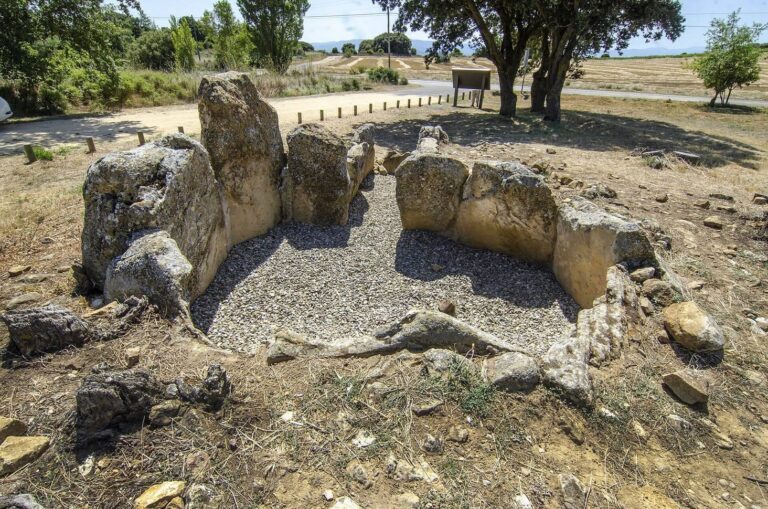
The polygonal chamber measures about 4 by 3.8 metres and stands 2.7 metres high. Nine sandstone orthostats, or large stones set upright, form its sides. Three of the larger stones support the horizontal capstone. When the monument was discovered, the capstone had broken into three pieces; it was later restored and reset in what was judged to be its original position.
Corridor
Five sandstone slabs form the rectangular corridor, which is about 6 metres long, 1.1 metres wide, and 1.5 metres high. A transverse slab divides it into two sections. The upright stones in the corridor are lower than those forming the chamber, and the corridor ends at the burial space.
Mound, ritual area, and finds
Covering mound and entrance area
The covering mound survives in part. During the 2010–2014 restoration, it was rebuilt by interlocking stones in the monument’s original construction technique. The work also identified and marked a ritual area just before the corridor entrance and strengthened the burial chamber.
Burial finds
Excavations recovered the remains of at least 39 people and a range of grave goods. These include two stone hammerstones, a polished axe made of ophite, an igneous rock, pottery fragments and vessels, rings, and a bone spatula idol, an object shaped like a spatula and interpreted as an idol. The pottery includes a Ciempozuelos-style Bell Beaker, a type of prehistoric vessel named for its bell-like shape. Finds from a Roman-period phase were also recovered. The human remains and objects are now held at the Álava Archaeology Museum, where some are displayed.