Santuari de la Serra de Montblanc: A Gothic Sanctuary and Former Poor Clare Convent
Site at a Glance
- Rating
- 4.6
- Popularity
- Very Low
- Country
- Spain
- Primary era
- Medieval
- External website
- Open
- Eras represented
- Medieval
- Civilizations
- Crown of Aragon
- Site type
- Religious
- Remains
- Sanctuary
On this page18 sections
History
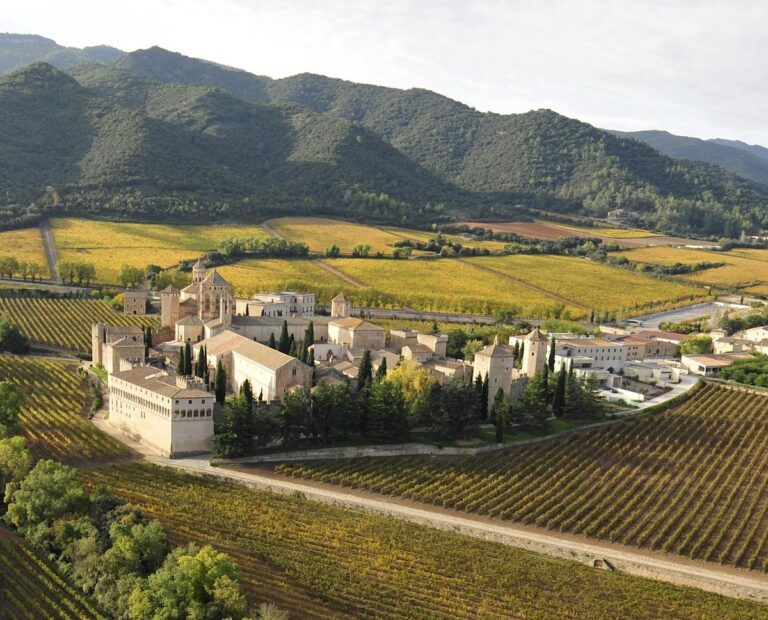
Santuari de la Serra de Montblanc is a Catholic sanctuary and former convent of Poor Clare nuns in Spain, founded on the summit of the Serra hill at Montblanc in the late thirteenth century. The Poor Clares are the contemplative female branch of the Franciscan tradition established by Saint Clare of Assisi. The complex became one of Catalonia’s important pilgrimage destinations and was regarded as the region’s sixth-oldest Poor Clare convent.
Foundation and medieval development
On 20 January 1296, the Byzantine princess Eudoxia Lascaris and several nobles from Montblanc signed the foundation charter. Eudoxia pledged to establish a church and convent for Poor Clare nuns, and tradition associates her later entry into the community with about 1306. The choice of the hill was linked to a Marian tradition: a sacred image was said to have stopped there during a journey. The site already contained a medieval boundary cross, associated with the local belief that five Christian boys had been martyred there by Saracens.
In 1311, the abbess asked James II of Aragon for stone, timber, and other materials from the ruined synagogue in Montblanc’s Jewish quarter. These materials were intended for the first church at the Serra. The church was consecrated in 1365. During the fifteenth century, the sanctuary became the second most visited pilgrimage sanctuary in Catalonia after Montserrat. Popes granted indulgences to pilgrims, while Catalan monarchs gave the institution favorable fiscal and juridical privileges.
Marian devotion and religious life
Devotion to the Virgin of the Serra expanded over the centuries, and the image became the patron of Montblanc and the Conca de Barberà. A smaller Marian image was carried through Montblanc during processions seeking rain or relief from epidemics. The sanctuary’s abbesses were elected by the nuns for three-year terms from a shortlist proposed by the Archbishop of Tarragona. In the mid-seventeenth century, the office was called “Presidenta”; the title of abbess returned in the eighteenth century.
The sanctuary’s religious identity also continued through the Good Friday procession of the dead Christ from the Chapel of the Holy Sepulchre. Processions carrying the principal Marian image from the sanctuary to the church of Santa Maria became part of major commemorations.
War, destruction, and reconstruction
During the Peninsular War, the conflict between Spain and Napoleonic France from 1808 to 1814, French troops used the convent as a barracks. They expelled the nuns but did not damage the church. The Marian image was secretly moved to Santa Maria in Montblanc. In 1811, Catalan militia expelled the French from the sanctuary, leaving the complex badly damaged.
After the war, the parish priest Maties Jové won 5,000 duros in the Madrid lottery, allowing reconstruction to begin. The Marian image was returned in 1816, and the Poor Clare nuns reoccupied the convent. During the anticlerical uprising of 1835, the church and convent were attacked, and the Marian image was seriously damaged. It was restored, although damage remained visible on the Virgin’s mantle and on one arm of the Christ Child.
Coronation and twentieth-century upheavals
Pope Pius X approved the canonical coronation of the Virgin on 10 September 1905. A canonical coronation is formal papal or episcopal recognition of an established public devotion to a Marian image. The ceremony took place in 1906, with Archbishop Tomàs Costa of Tarragona presiding over a solemn celebration in Santa Maria on 9 September. Since then, an extraordinary commemorative celebration has traditionally been held every twenty-five years.
The 1916 celebration marked the tenth anniversary of the coronation, the centenary of the convent’s restoration, and the return of the nuns and the Marian image. Further commemorations followed in 1926 and 1931. In 1930, a local referendum incorporated the Virgin’s feast day on 8 September into Montblanc’s principal civic festival.
During the Spanish Civil War in 1936, Republican militiamen took the sanctuary’s valuable objects and destroyed its furnishings, saint images, and smaller Marian image. The principal image was concealed and saved by Anton Fotent, head of the municipal brigade. He wrapped it in newspaper and crossed sheet metal, covered it with plaster, and walled it up. After the war, it was recovered and carried through Montblanc in a peace celebration in 1939.
The 1956 fiftieth-anniversary celebrations took place under the Franco regime. The Virgin was displayed under military escort and had been granted the rank of captain general. Later commemorations marked the seventy-fifth anniversary of the coronation in 1981, the seventh centenary of the sanctuary and convent in 1996, and the coronation centenary in 2006, when a papally granted jubilee was included for pilgrims. The 2016 celebrations commemorated the bicentenary of the convent’s restoration and the return of the Marian image and nuns.
Recent administration
In 2008, the last Poor Clare nuns left for a convent in Reus, ending approximately 712 years of Poor Clare presence at the Serra. The Catholic group Seminari del Poble de Déu managed the sanctuary until its dissolution in 2017. Administration then passed to the Archdiocese of Tarragona and the parish of Santa Maria de Montblanc. The sanctuary has been protected as a Cultural Asset of Local Interest since 2005.
Remains
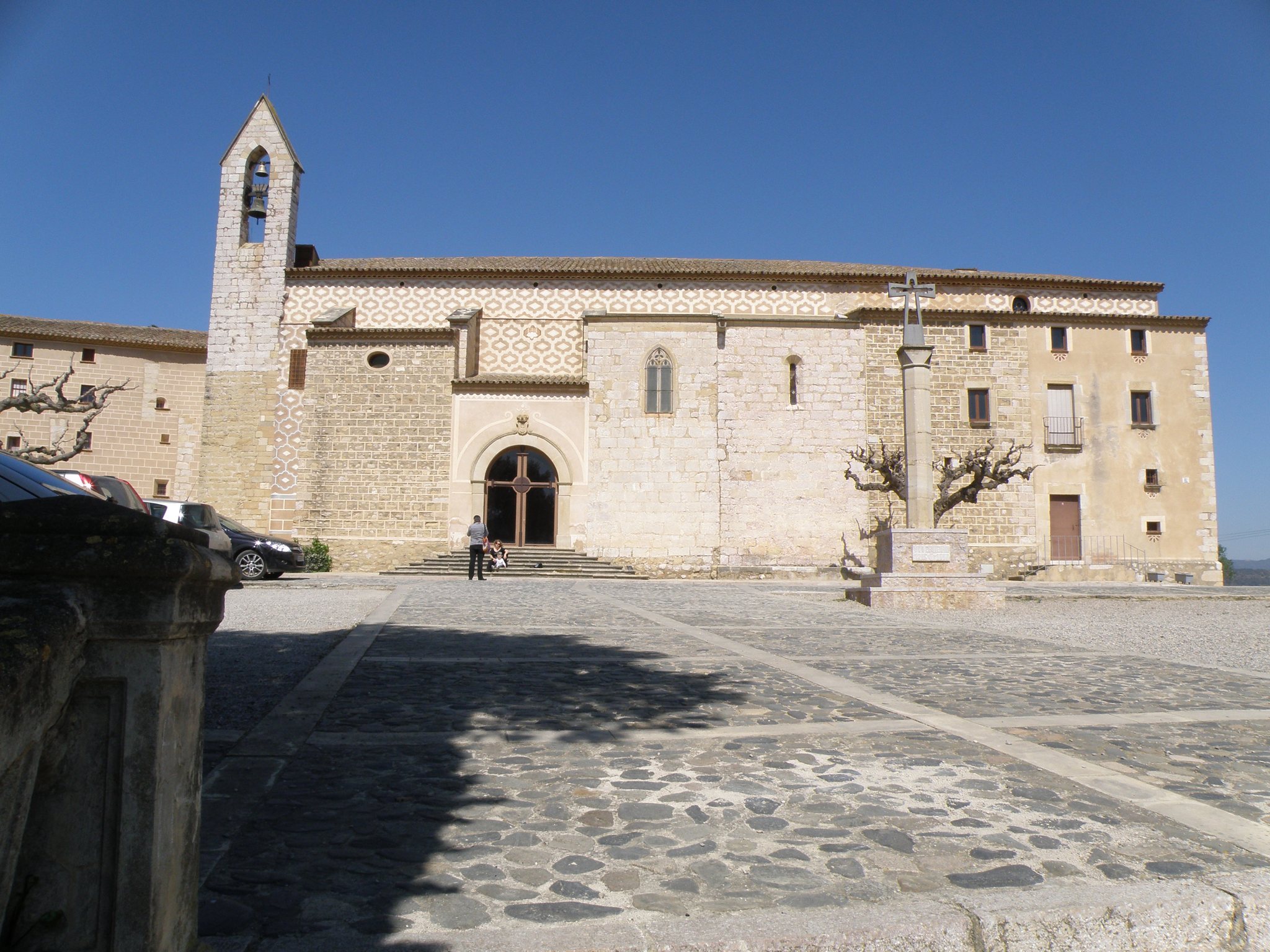
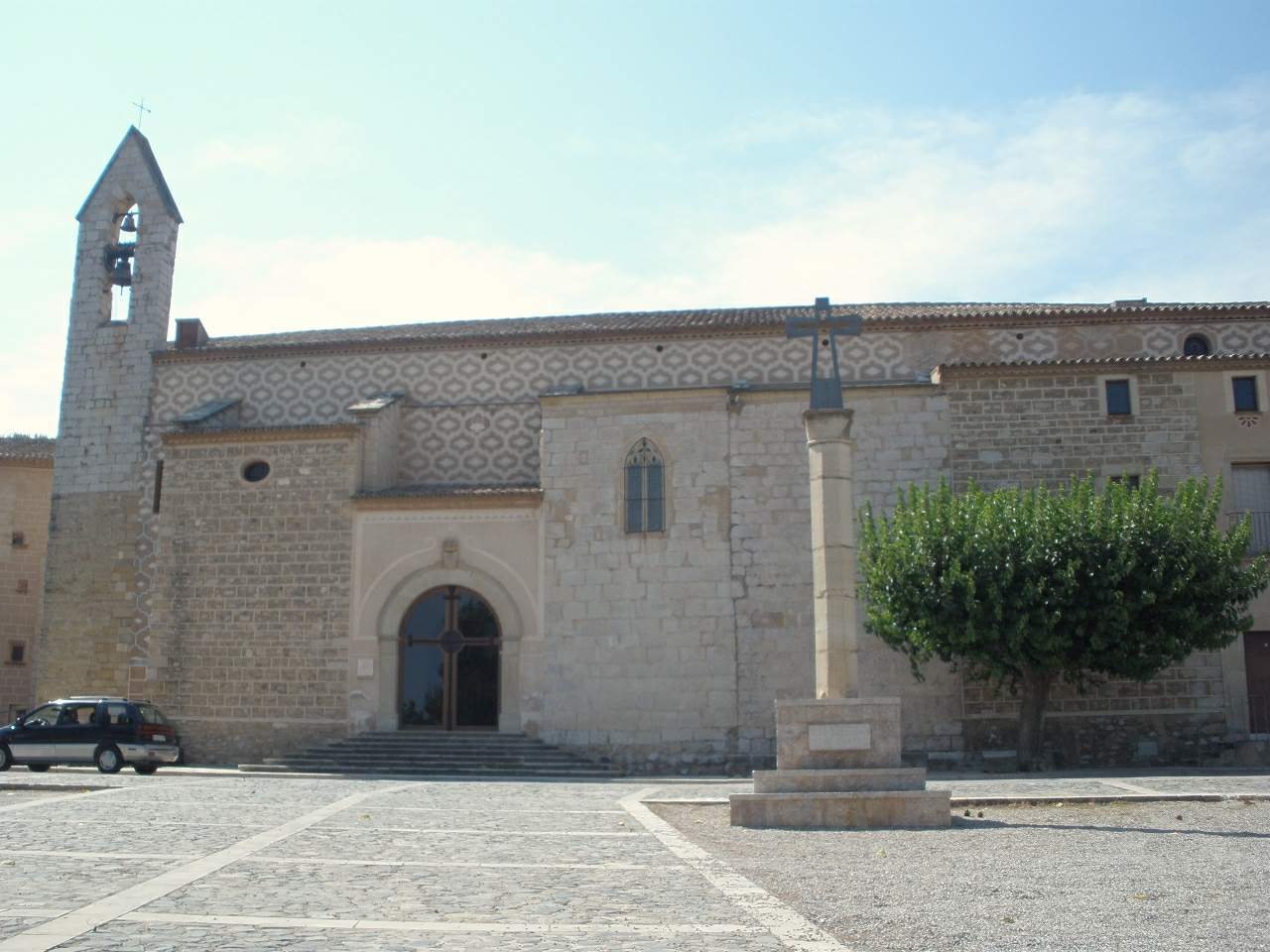
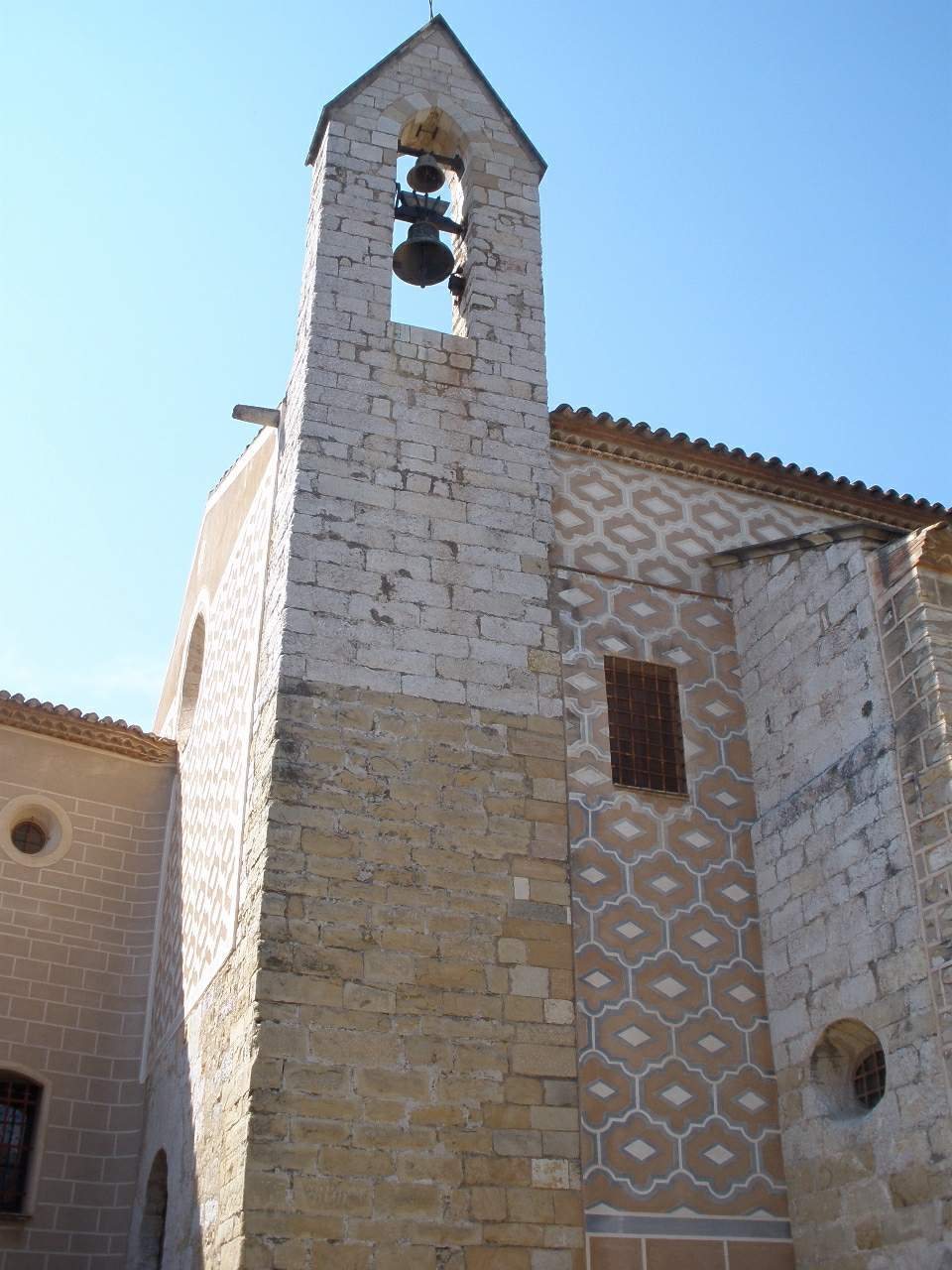
The sanctuary stands at approximately 363 metres above sea level on the summit of the Serra hill. The complex consists of a Gothic church and the former Poor Clare convent. Repeated destruction, looting, restoration, and additions have altered the buildings, while the church’s interior is in good condition and its façade has been restored.
Church and chapels
Gothic church
The present church is a relatively simple Gothic building with lateral chapels. One is dedicated to Saint Lucy and another to Saint Clare. The Chapel of the Holy Sepulchre contains an image of the dead Christ carried in Montblanc’s Good Friday procession. The church’s structure reflects the repeated rebuilding of the complex after damage.
Baptismal font
The baptismal font consists of a plain granite column and a stone basin with uneven longitudinal elliptical incisions. Its form belongs to the Romanesque tradition.
Tombs and ossuaries
Presbytery ossuary
An ossuary, a container or tomb for human bones, is set within a newly built rectangular enclosure in the presbytery wall on the Gospel side. It is made of fitted dressed stone. Its sloping cover and front carry three shield motifs outlined by fine carved lines. The shields contain three circles and two horizontal bands.
Ossuaries in the Epistle wall
A second ossuary stands on two corbel supports in the Epistle wall. The supports have dentil-like profiles, and the container bears two shields with three circles on plain fields. Its sloping cover shows an open book. A third ossuary in the same wall is placed beneath a pointed, trefoil-headed arch. A nun appears on the front of the sarcophagus between two matching shields, which are repeated on the cover. Each shield contains five circles on a plain field, and dark ochre paint survives on the front and on the circles of the cover shields.
Abbesses’ tombs
One ossuary associated with an abbess carries a carefully carved figure of the deceased holding a book in her left hand. Two winged shields flank the figure. Above it rises an arcosolium, a tomb beneath an arched recess, with flamboyant crocketed decoration and slender winged shields of the Alenyà family. The tomb slab has no inscription, although the abbess is documented in 1396.
Another wall-set ossuary urn is covered by a sloping slab and surmounted by a round arch of voussoirs, the wedge-shaped stones forming an arch. The lower right voussoir is larger than its counterpart and retains part of an unrecognizable shield. An abbess holding a pastoral staff appears on the front of the urn beside another mutilated figure, with two heavily eroded shields between them.
Cross and Marian images
Green Cross of the Serra
The Green Cross of the Serra, also called the Cross of the Virtues, is a highly venerated Romanesque boundary cross from the twelfth century. Made of green jasper, it is 118 centimetres high and contains a 35-centimetre image of the Virgin Mary embedded in its centre. Its upper wooden section is later because the original was mutilated in the nineteenth century. A small chapel beside the cross connects the church with the former convent. The cross is now inside the sanctuary beside the high altar.
Virgin of the Serra
The principal image is kept in a shrine chamber behind the high altar, reached by stairways along the sides of the sanctuary. Such a chamber allows approach to a sacred image separately from the main liturgical space. The image is a life-size Gothic polychrome alabaster sculpture, approximately 175 centimetres high and weighing 371 kilograms. It was made around 1315 in the workshop of Pere de Bonull.
The Virgin is accompanied by four biblical women, Rachel, Esther, Rebekah, and Judith. One finger is visibly missing, which local tradition attributes to Eudoxia having cut it off to take part of the image to Zaragoza. The wall behind the high altar was repainted in the twentieth century after being completely damaged during the Civil War. Its scenes show the Presentation of Jesus in the Temple, the Annunciation, the Visitation of Mary to Elizabeth, and the Nativity. The lower section depicts Montblanc’s walls and several devotees of the Virgin.
A seventeenth-century alabaster Marian image, about half a metre high, was lost during the Civil War. A replacement known as the Small Image of the Virgin was presented in 2006.
Exterior setting
Outside the sanctuary, a square contains benches and a fountain. It is connected with the approach from the Serra ascent, the Portalet de la Serra, the former Hospital of Sant Marçal, and the Conangla and Fontanilles promenade.