Nahargarh Fort: Jaipur’s Eighteenth-Century Hilltop Retreat and Defense
Site at a Glance
- Rating
- 4.5
- Popularity
- Very High
- Country
- India
- Primary era
- Early Modern
- External website
- Open
- Eras represented
- Early Modern, Modern
- Civilizations
- Rajput
- Site type
- Military
- Remains
- Castle
On this page8 sections
History
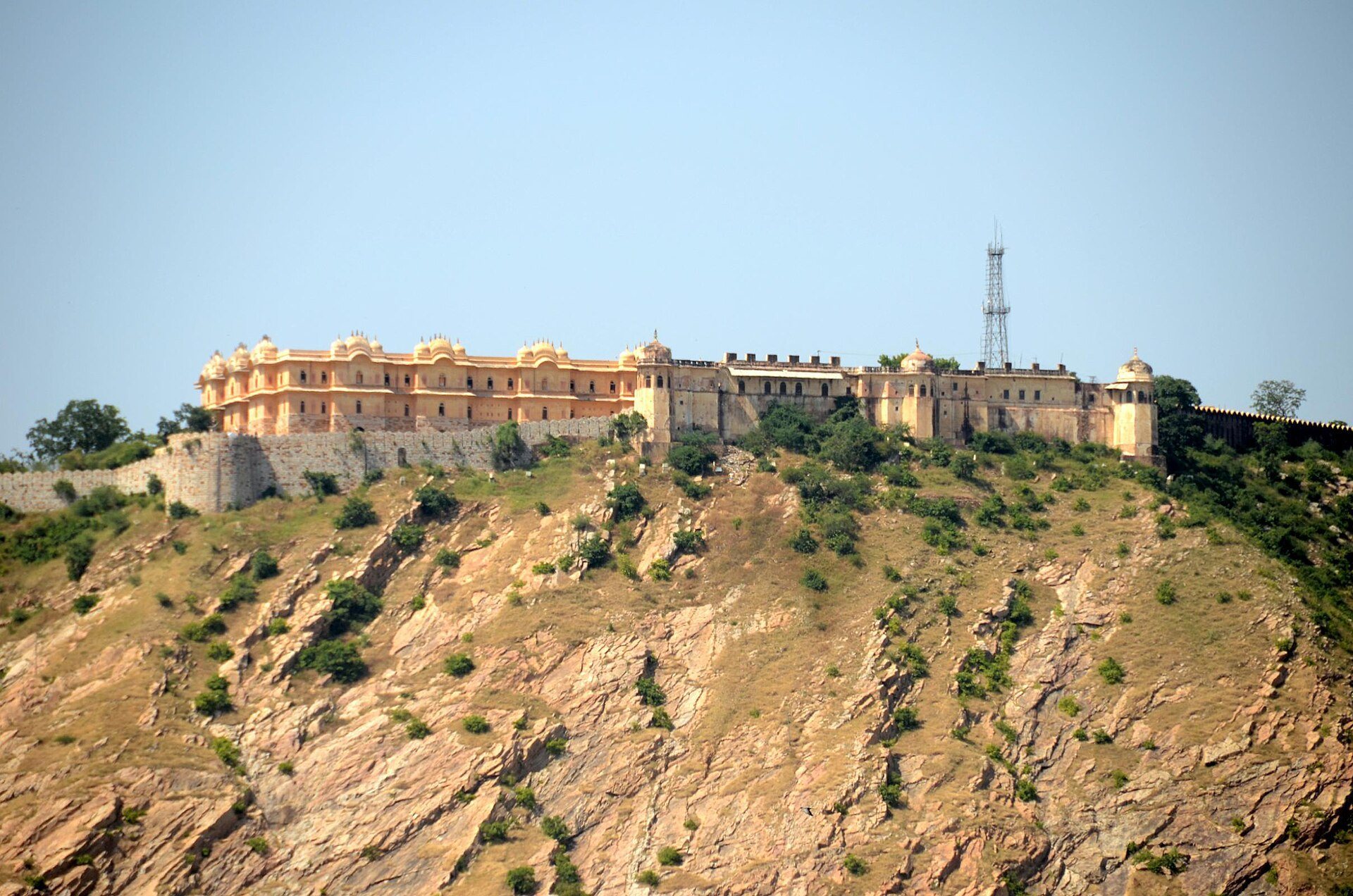
Nahargarh Fort in India stands above Jaipur and was built mainly in 1734 under Maharaja Sawai Jai Singh II, the founder and eighteenth-century ruler of the city. Planned as a retreat and refuge on the Aravalli ridge, it later became part of Jaipur’s wider defensive system.
Foundation and the Name Nahargarh
The fort was originally called Sudarshangarh. It later became known as Nahargarh, a name understood as “abode of tigers” or “Tiger Fort.” Local tradition connects the change with Nahar Singh Bhomia, a spirit or guardian believed to have obstructed construction. A temple within the fort was built to pacify and commemorate him.
Defensive Role and Eighteenth-Century Diplomacy
Nahargarh worked with Amber Fort and Jaigarh Fort as part of the defenses of Jaipur. Although the fort was never attacked, it hosted treaties with Maratha forces during the eighteenth century. The Marathas were a powerful Indian political and military confederacy whose conflicts brought them into opposition with Jaipur.
Protection, Expansion, and Royal Use
During the Indian Mutiny of 1857, a large uprising against the rule of the British East India Company, Sawai Ram Singh II moved Europeans from the surrounding region to Nahargarh for protection. Among them was the wife of the British Resident.
The fort was extended in 1868 during Sawai Ram Singh II’s reign. Between 1883 and 1892, a range of palaces was constructed there, including Madhavendra Bhawan, built by the later maharaja Sawai Madho Singh II. Nahargarh also served as a hunting residence for the maharajas of Jaipur.
Timekeeping and Heritage Protection
Until April 1944, the Jaipur State government used solar time read from the Samrat Yantra, the monumental instrument for determining solar time at Sawai Jai Singh II’s Jantar Mantar observatory. A gun fired from Nahargarh supplied the time signal.
Nahargarh is a state-protected monument and forms part of the historical fort complex associated with Amber and Jaigarh.
Remains
Hilltop Fortifications
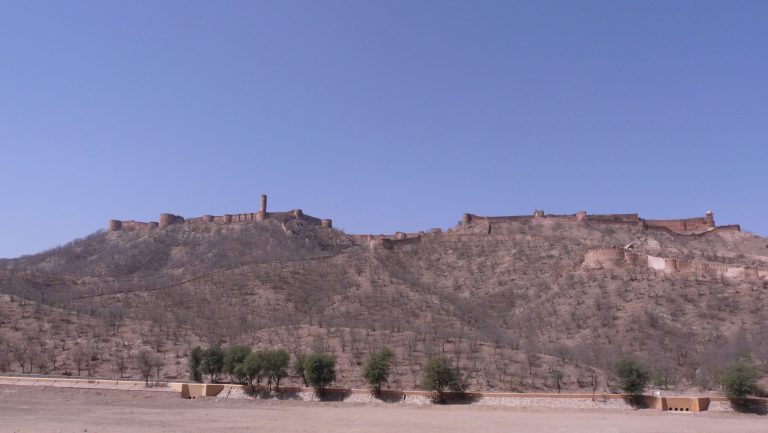
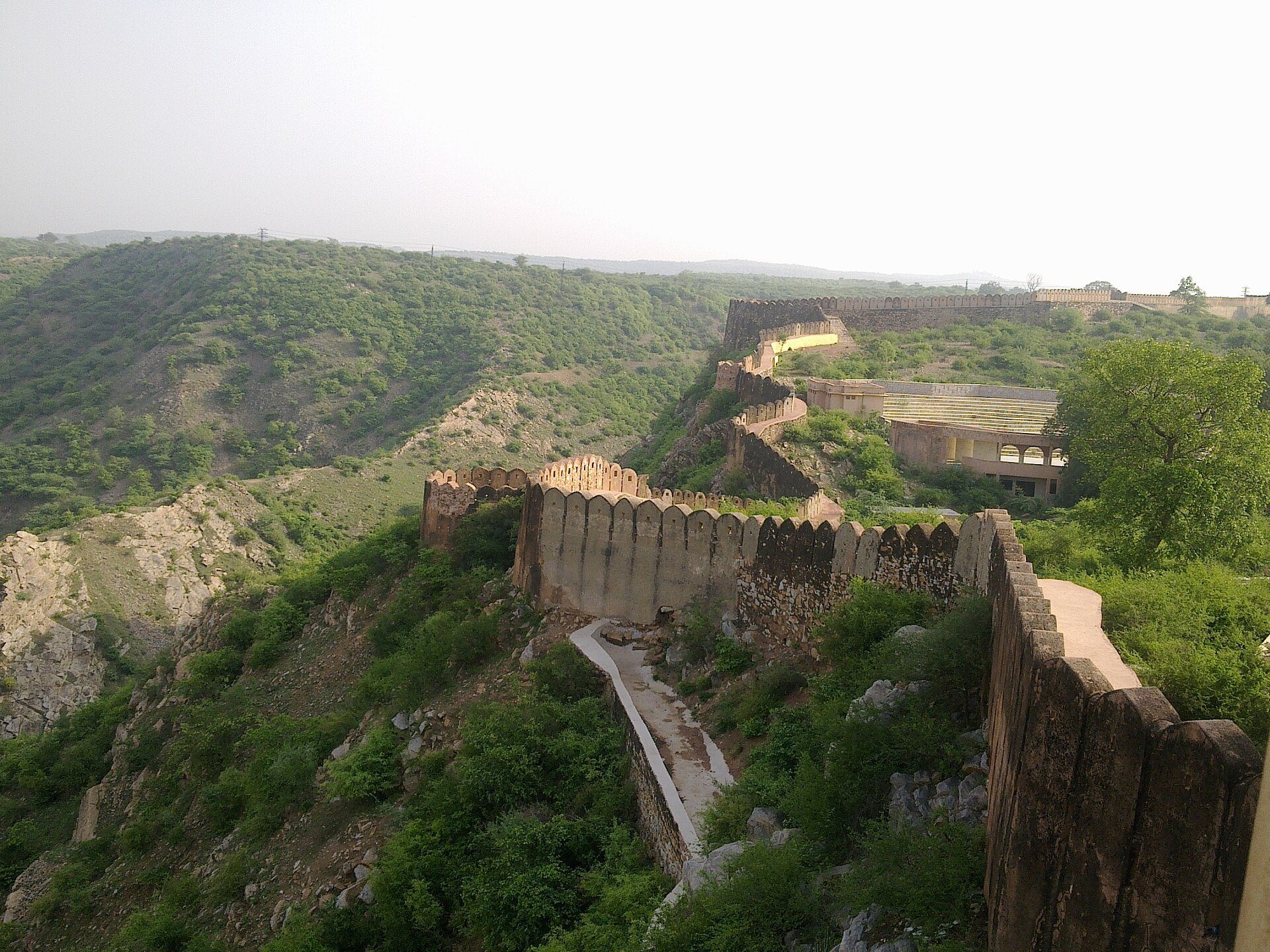
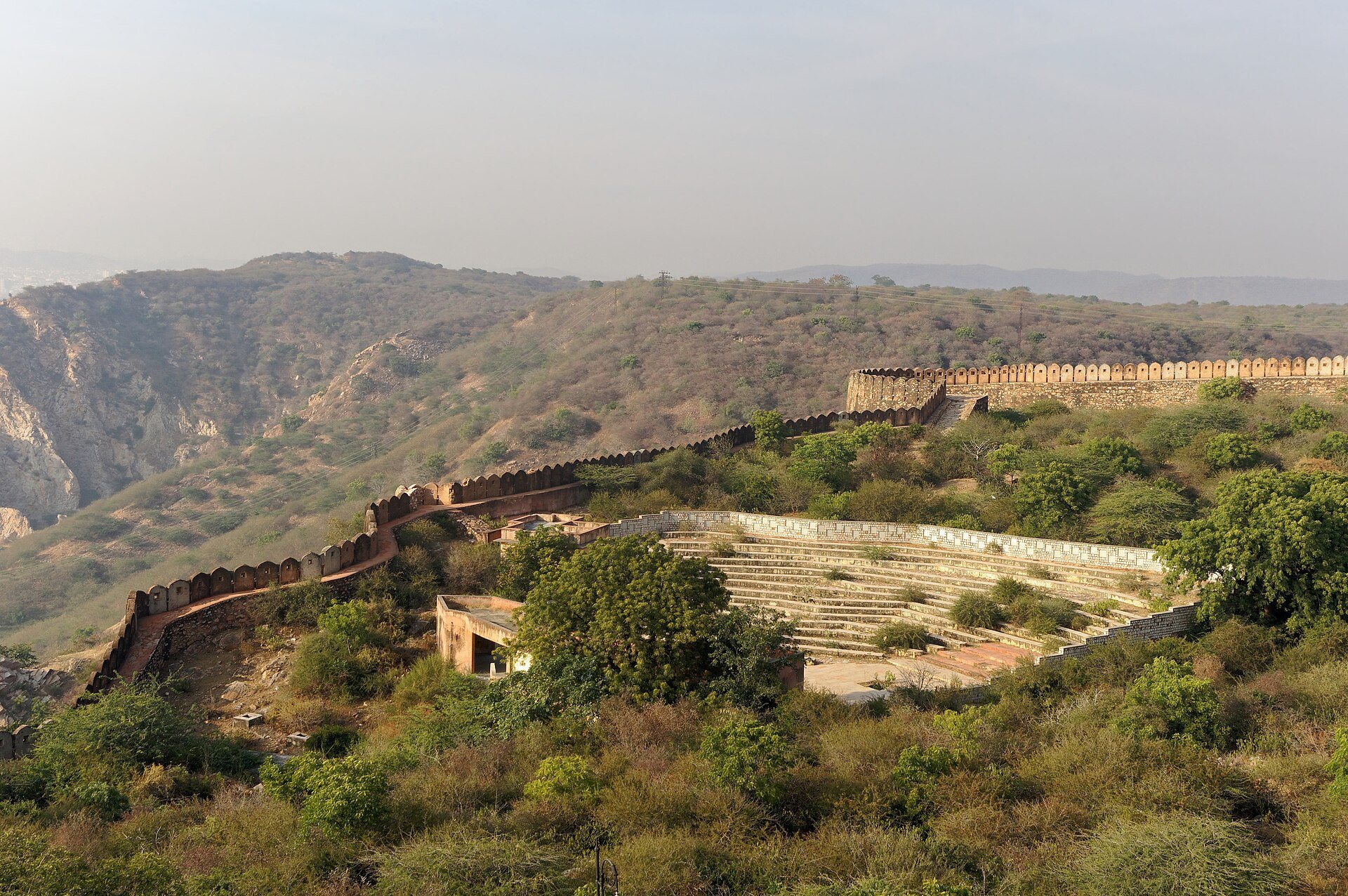
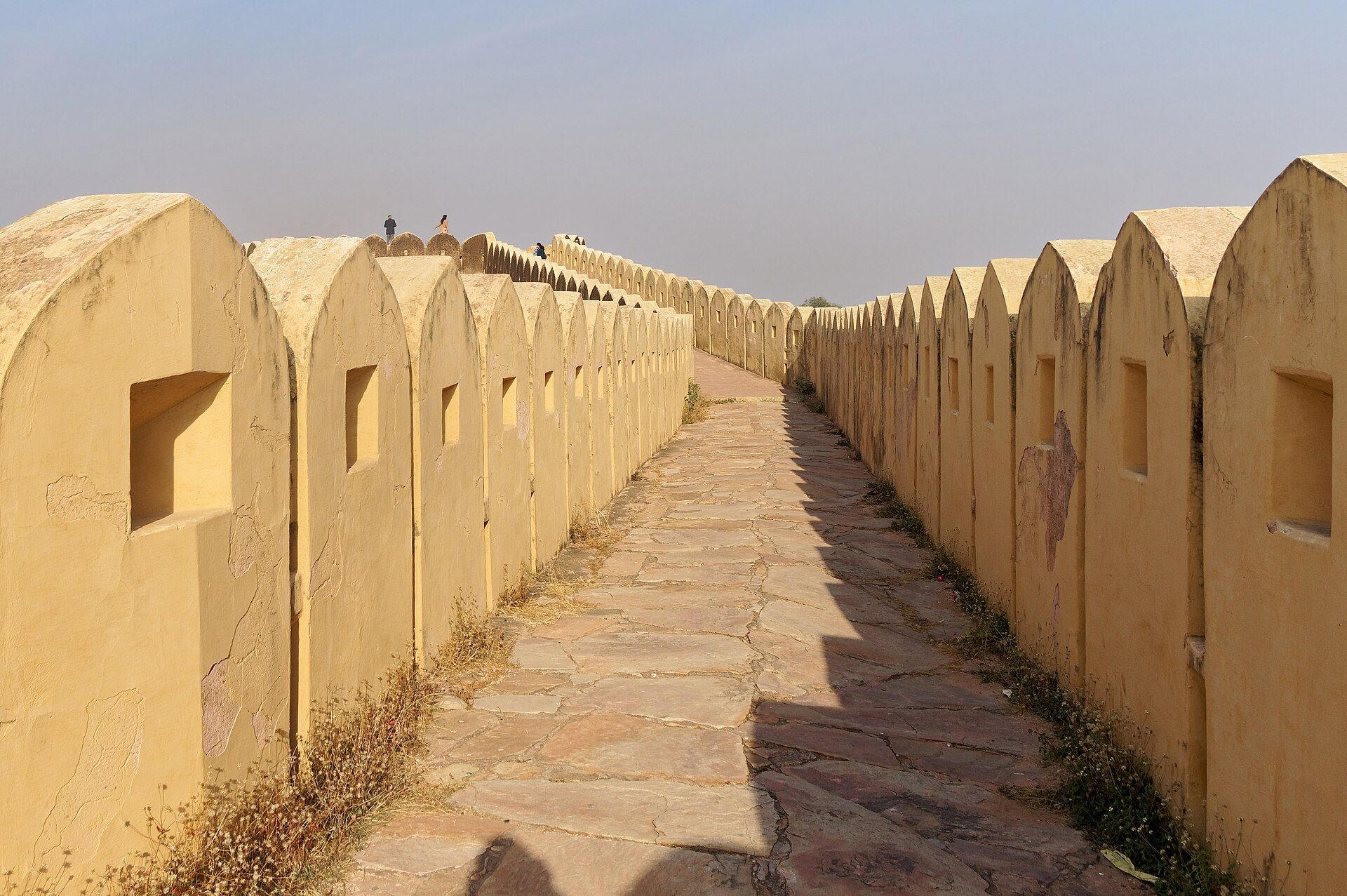
Nahargarh occupies the edge and summit of the Aravalli Hills above Jaipur, at an elevation of approximately 213 metres. Its red-sandstone walls extend across the surrounding hills, forming fortifications that linked the fort with Jaigarh and the wider defensive system of Amber and Jaipur.
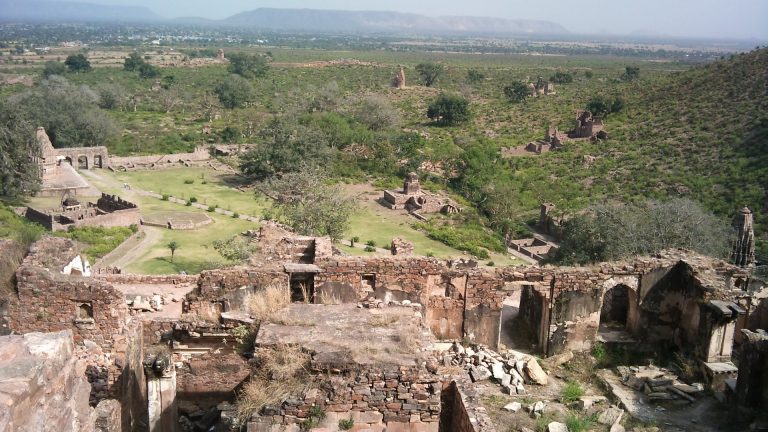
Parts of the fort survive in poor condition, with some areas reduced to ruins. The enclosing walls and their position across the hills preserve the relationship between the retreat, the surrounding landscape, and Jaipur’s connected defenses.
Madhavendra Bhawan and the Temple of Nahar Singh Bhomia
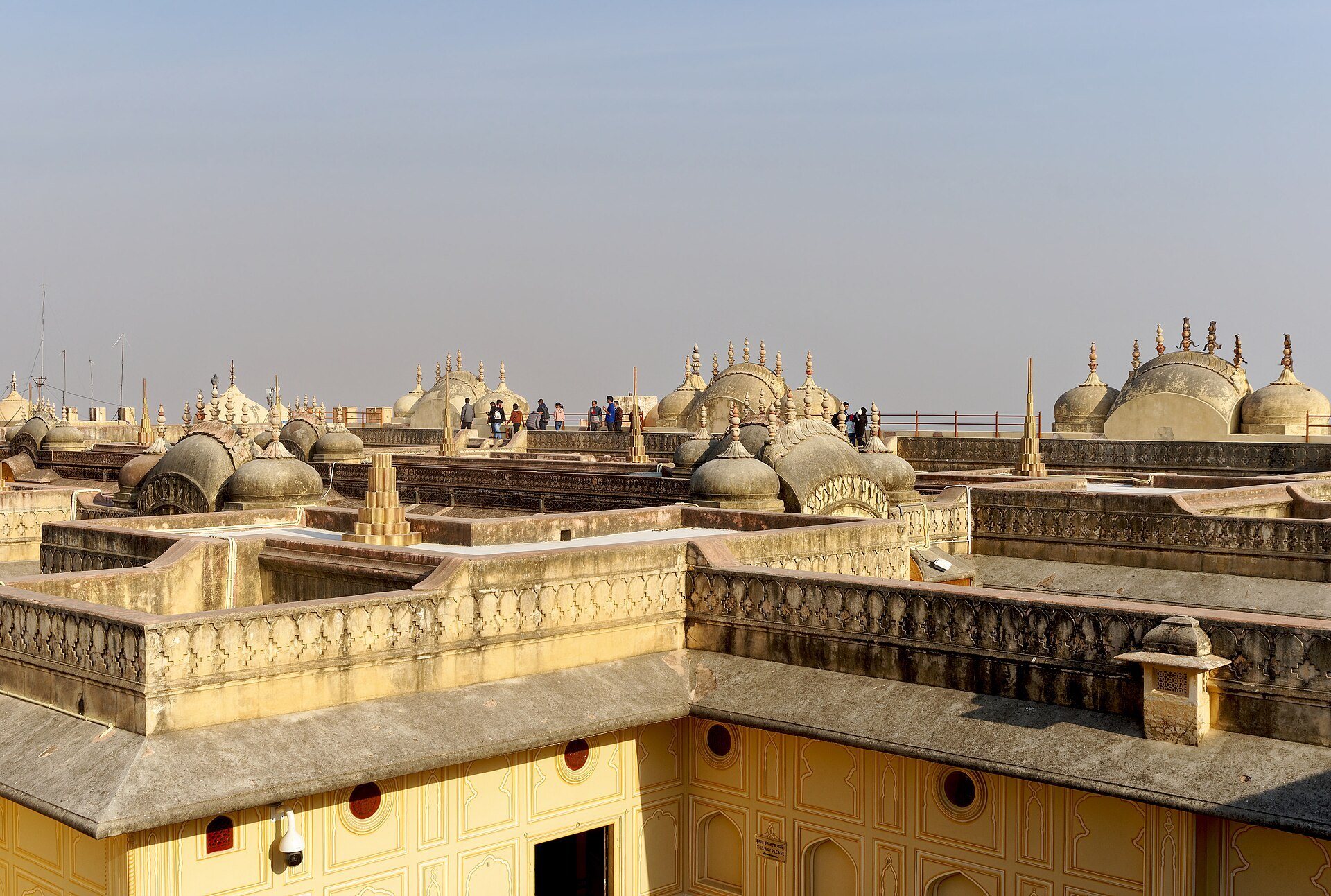
Madhavendra Bhawan contains nine apartments for the queens of Jaipur and a suite for the king. The rooms are joined by corridors decorated with delicate frescoes, paintings applied directly to wall plaster traditionally while it is still wet. Within the fort’s enclosure, a temple dedicated to Nahar Singh Bhomia preserves the local tradition associated with the site’s name and the fort’s construction.