Santi Pietro e Paolo Parish Church: Quinto’s Catholic Place of Worship
Site at a Glance
- Popularity
- Very Low
- Country
- Switzerland
- Primary era
- Early Modern
- Eras represented
- Medieval, Early Modern, Modern
- Civilizations
- Holy Roman Empire, Swiss
- Site type
- Religious
- Remains
- Church
On this page10 sections
History
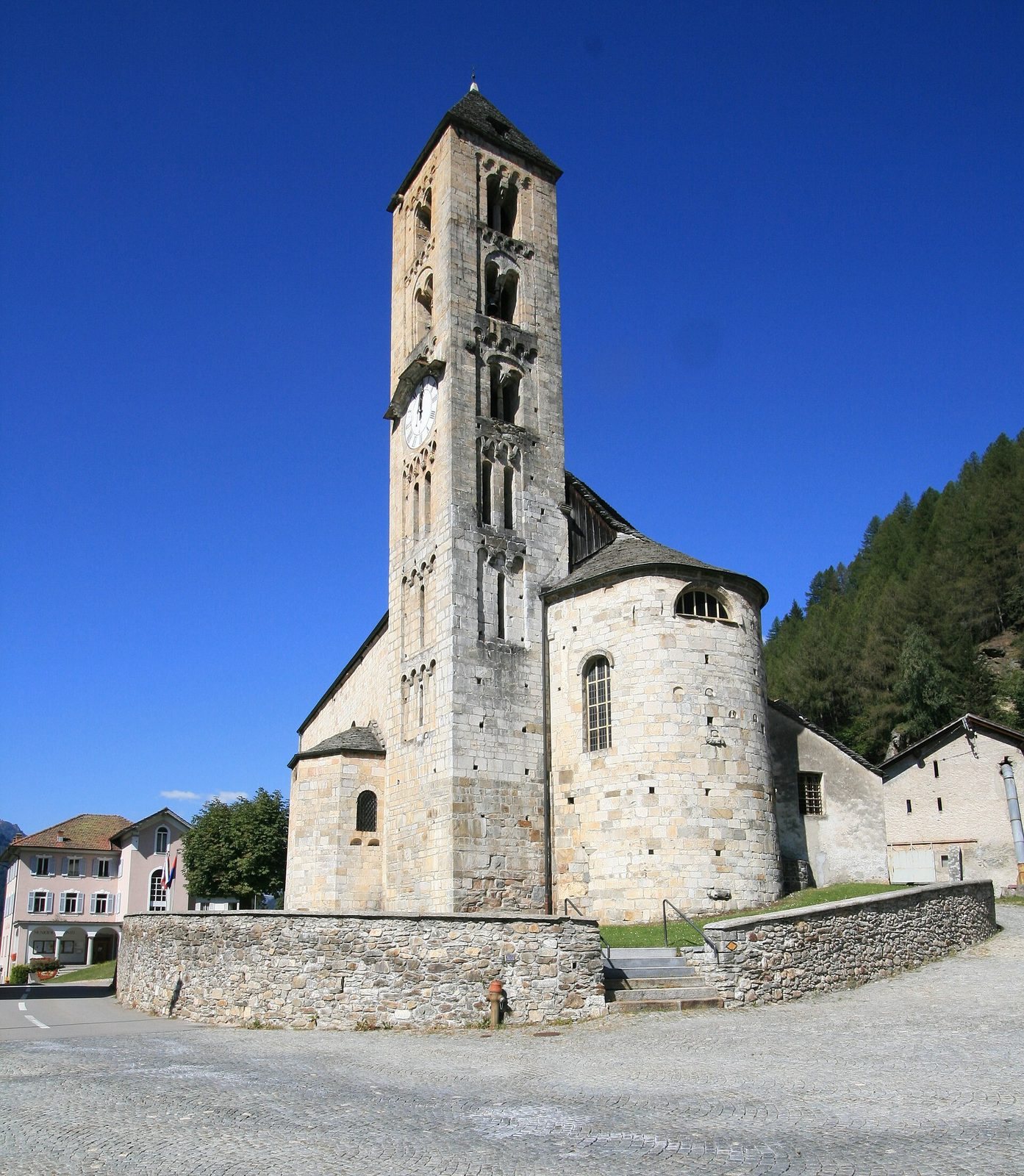
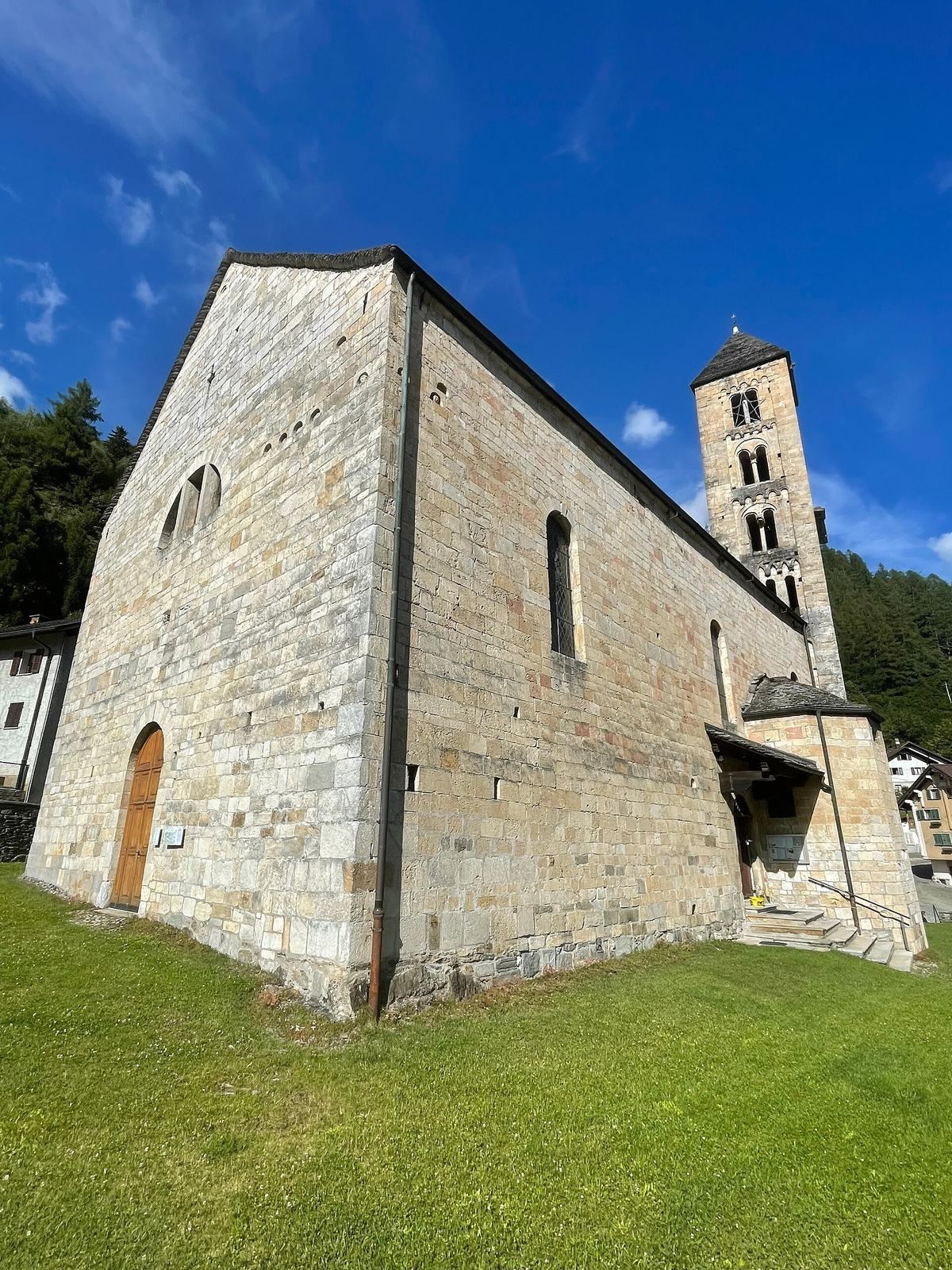
Santi Pietro e Paolo Parish Church is the principal Catholic place of worship in Quinto, in Switzerland’s canton of Ticino. Dedicated to Saints Peter and Paul, early Christian apostles, it follows the Ambrosian rite, a Catholic liturgical tradition especially associated with the Archdiocese of Milan, and belongs to the Diocese of Lugano, a church district overseen by a bishop. The church is identified as Romanesque in style and is documented from 1227; its present building followed a complete rebuilding in 1681.
Medieval church
A Romanesque church of the ninth century preceded the present building. It was enlarged toward the north and west in the tenth century. The parish church’s record begins in 1227, several centuries after this earlier phase.
Rebuilding and later decoration
Work on the present church began in 1680, and it was completely rebuilt in 1681 under architect Antonio Rossalino. The rebuilding retained part of the earlier apse and the bell tower. Thomas Moosbrugger made the choir’s stucco decoration in 1736, and Stefano and Tommaso Calgari painted the interior frescoes in 1848.
The organ
Ziegler Orgelbau built the organ in 1948 for the Zurich Conservatory. The parish acquired it in 1984.
Remains
The church has a single nave beneath a barrel vault, a continuous curved ceiling. The choir is also covered by a barrel vault, intersected by lunettes, curved recesses formed where a smaller vault meets a larger one.
Medieval fabric and exterior
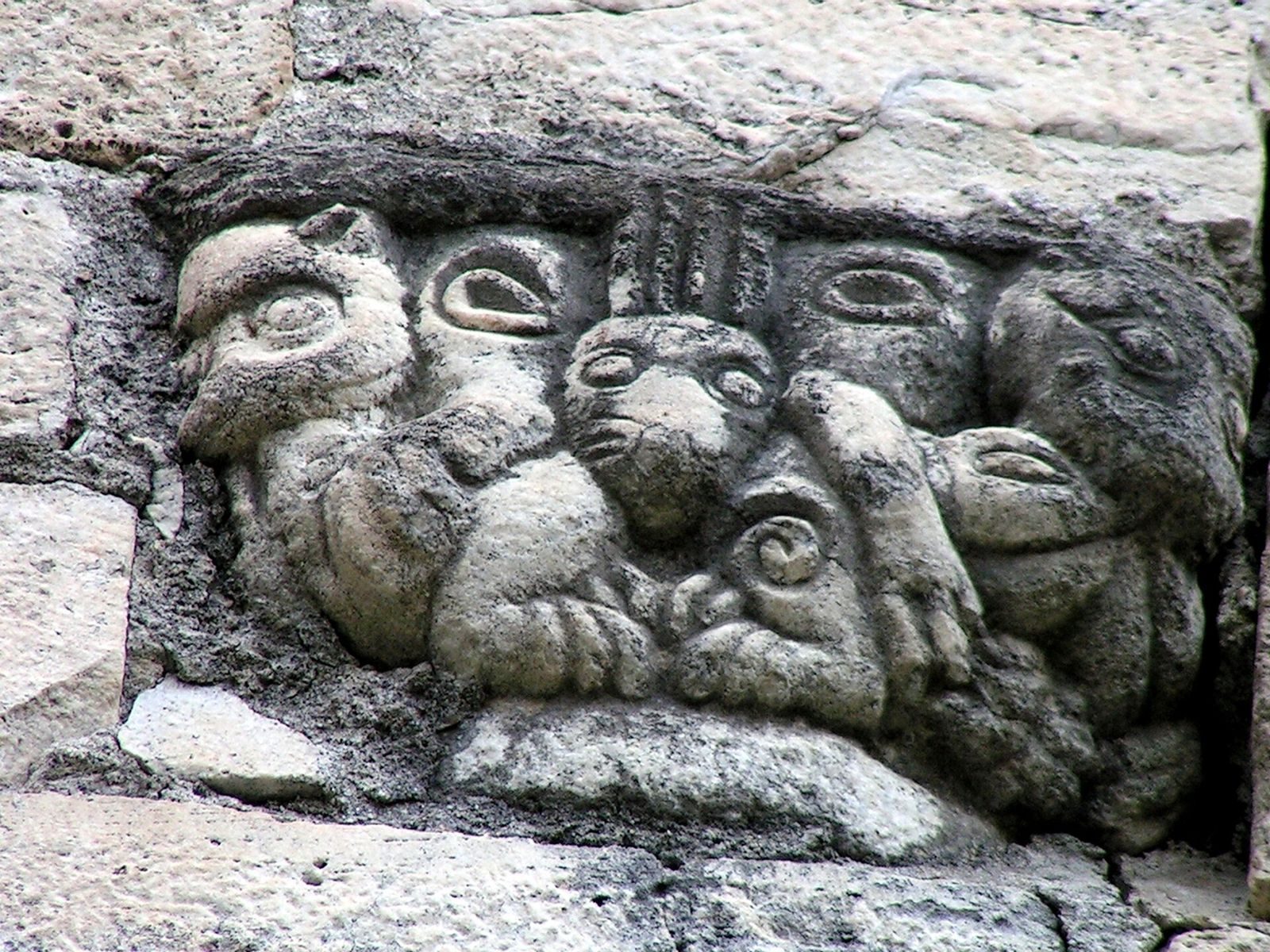
Parts of the earlier Romanesque church survive, together with its crypt, a chamber beneath the church. The twelfth-century bell tower and a portion of the older apse also remain. The exterior apse masonry includes a Romanesque block of finely dressed stone. A Romanesque sculpture appears on the exterior façade, while a fragment of a fifteenth-century fresco survives on the east façade.
Interior
Vaults and decoration
The interior carries frescoes by Stefano and Tommaso Calgari, and the choir has stucco decoration by Thomas Moosbrugger.
Altars and Marian statue
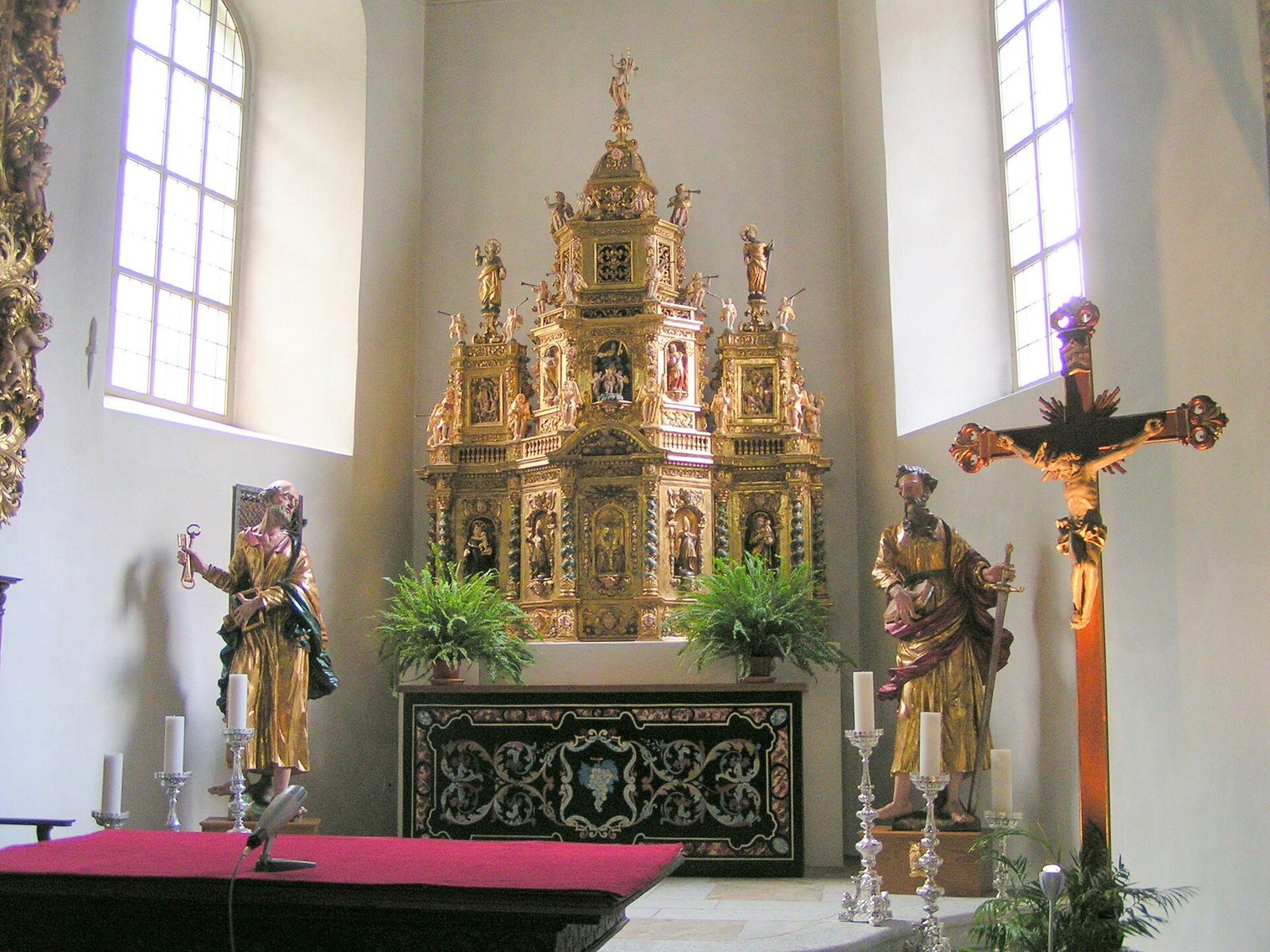
A wooden altar made by Carlo Zezio and Paolo Pisoni between 1691 and 1694 stands in the presbytery, the area around the main altar. The side-chapel altars, made in 1701, are attributed to Paolo Pisoni’s school. A chapel on the Gospel side contains a Marian statue from the first half of the sixteenth century.
Organ
The organ stands in an elevated choir gallery opposite the main façade. Its two keyboards each have 56 notes, and its concave pedalboard has 30. The keyboards and pedals operate through an electro-mechanical mechanism, while electric controls select pipe ranks and combinations of ranks. The wooden case has a simple geometric design, with its main pipes arranged in cusp-shaped and wing-like groups across several fields.