Santi Pietro e Paolo: A Baroque Parish Church in Lema, Switzerland
Site at a Glance
- Popularity
- Very Low
- Country
- Switzerland
- Primary era
- Early Modern
- Eras represented
- Early Modern, Modern
- Civilizations
- Swiss
- Site type
- Religious
- Remains
- Church
On this page10 sections
History
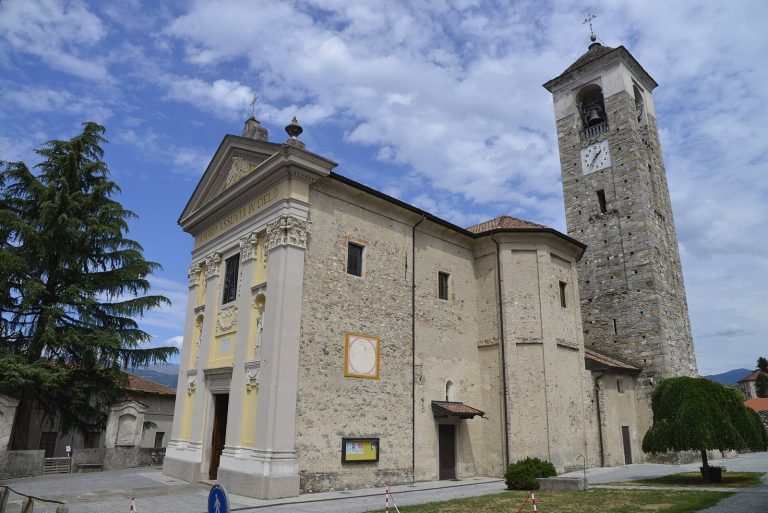
Santi Pietro e Paolo, also known as San Pietro, is a Roman Catholic parish church in Lema, Switzerland, built in the Baroque style prominent in Europe during the 17th and 18th centuries. It is dedicated to Saints Peter and Paul, two early Christian apostles, and is affiliated with the Diocese of Lugano, an administrative district of the Catholic Church. The present church was built between 1636 and 1654.
Parish and construction
A chapel stood on the site by 1444. The parish of Astano became independent in 1612, before the present church replaced the earlier chapel and incorporated fragments from it.
The church was consecrated in 1706. Its first remodeling followed in 1706–1707 and included the creation of the main altar.
Confraternities and later care
A chapel for Astano’s confraternities, religious associations organized around shared devotional activities, was built behind the choir in the early 18th century and enlarged in 1747. The Rosary confraternity, established in 1605, supported a Catholic devotion involving repeated prayer and meditation on Jesus and Mary. The Blessed Sacrament confraternity, established in 1672, was devoted to the Eucharist.
Restorations took place in 1927, 1943–1947, and 1997. A comprehensive interior restoration began in February 2019 and finished in September 2020. The church is protected as a monument and classified as a cultural property of regional importance.
Remains
The Baroque church is arranged around a single nave with four side chapels. Its grounds include a surrounding sequence of chapels, an ossuary before the entrance, and a cemetery adjoining the building to the south and east.
Exterior and grounds
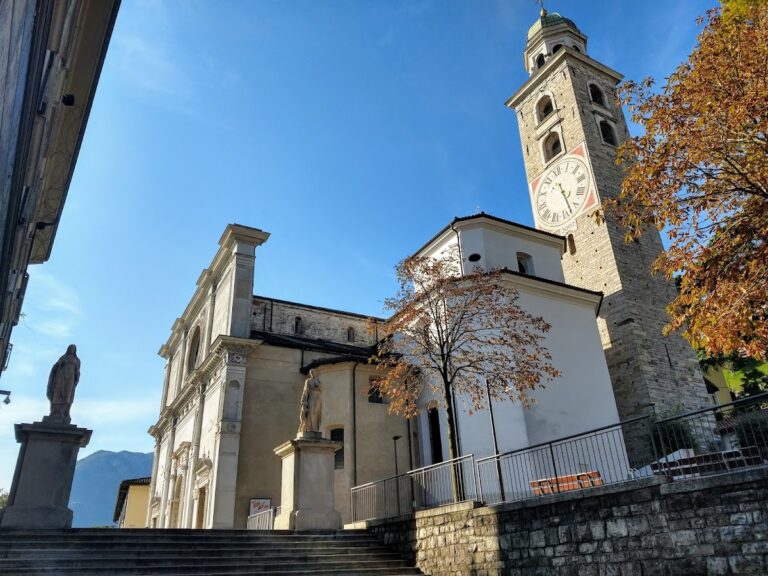
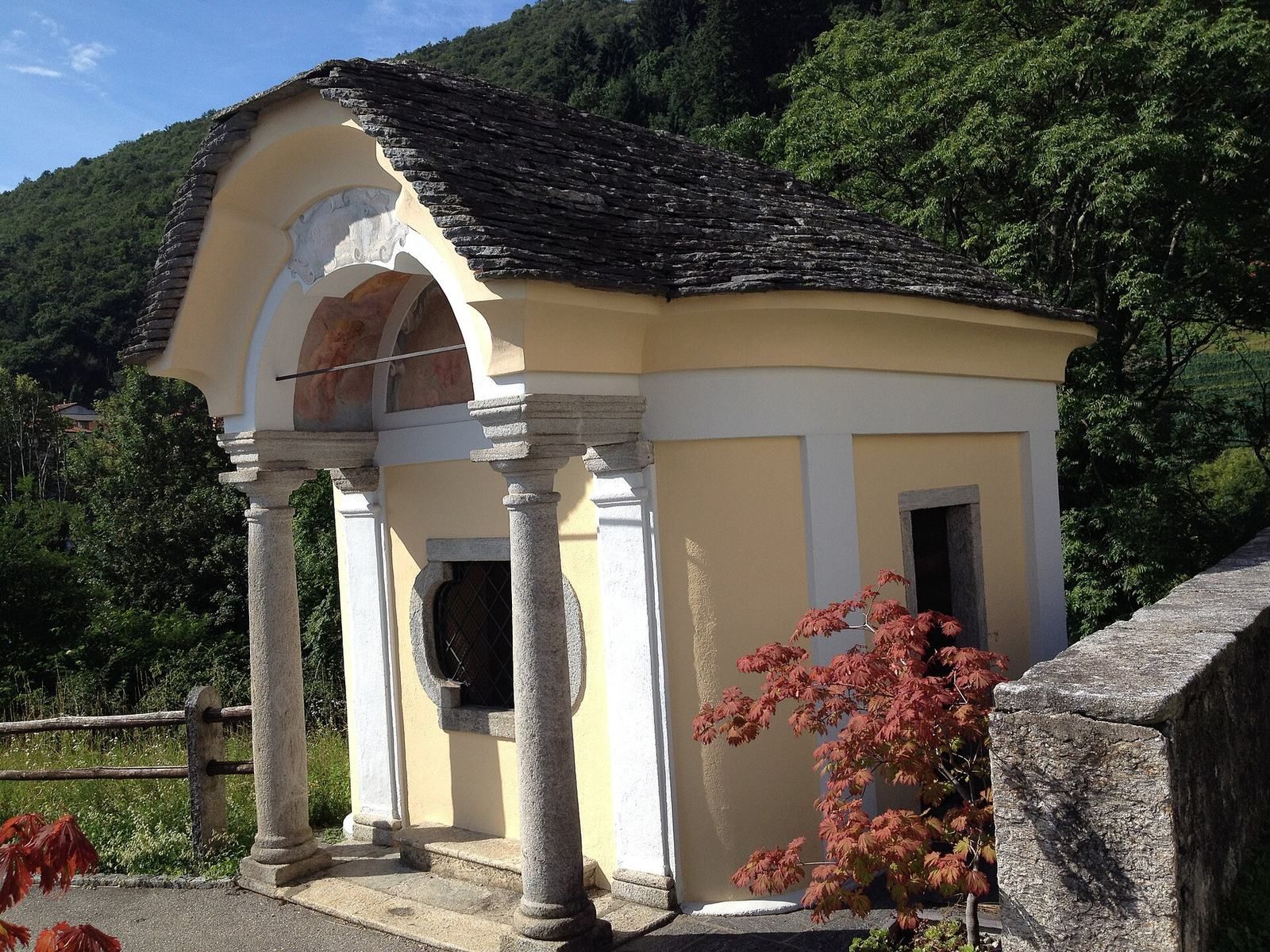
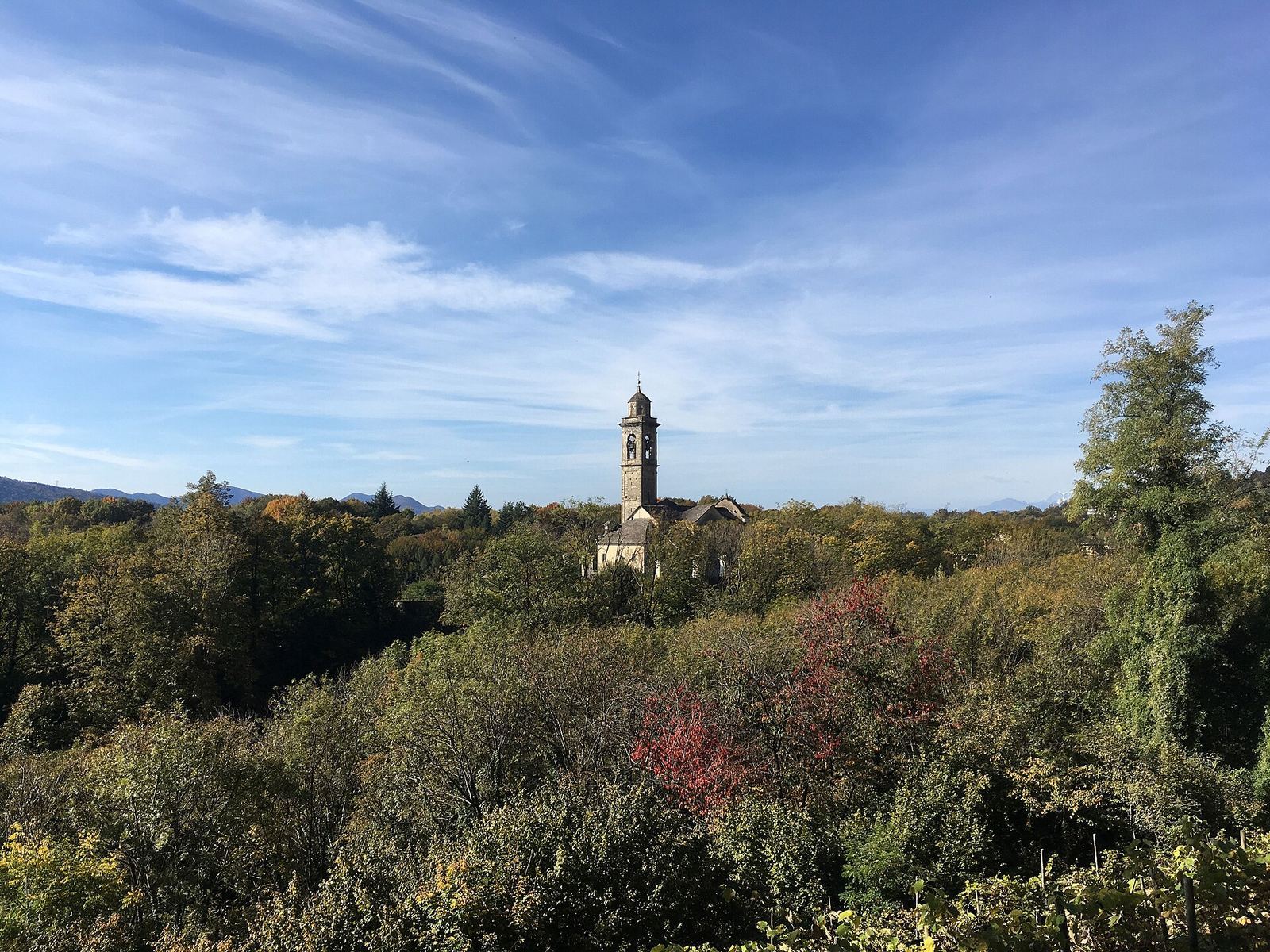
The village-facing façade has a curved gable and a Serliana, a three-part opening with a central arch and openings on either side. The tall bell tower has an octagonal upper section. A series of chapels around the church forms a Way of the Cross, a devotional sequence recalling episodes from Jesus’s Passion and traditionally comprising 14 stations; the chapels contain 14 bronze Stations of the Cross by Sandro Del Prete. In front of the portal, an ossuary, a place for storing human bones, has a portico supported by Tuscan columns and frescoes from the second half of the 18th century. The cemetery contains historic family crypts and a plague column dating to 1687, commemorating an epidemic that killed a considerable part of Astano’s population.
Interior
Nave
The single nave has a barrel-vaulted ceiling with lunettes, curved recesses within the vault, and groups of Ionic pilasters, flat wall supports with scroll-shaped capitals. A continuous horizontal band runs above them. Illusionistic frescoes, painted to suggest depth, decorate the ceiling and date to the second half of the 19th century.
Side chapels
In the baptismal niche on the north side, 18th-century stuccowork surrounds a 17th-century font. An adjacent chapel contains a mid-17th-century painting showing Pope Saint Pius V crucified and, probably, Saint Vincent Ferrer. On the south side, the chapel of the Madonna has a polygonal niche containing a 19th-century statue of the Virgin. The neighboring chapel of Saint Aloysius Gonzaga has an altar from 1684 and an 18th-century painting of the Sacred Heart of Jesus with Saint Joseph, Mary Magdalene, Saint Francis, and Saint Aloysius Gonzaga.
Main altar
Made by sculptor Andrea Manni of Rovio, the main altar is of Arzo marble, a stone from Arzo in the canton of Ticino. It features inlay and a tabernacle, a receptacle for the consecrated Eucharistic host, decorated with statuettes.
Confraternity chapel
The chapel behind the choir has a separate entrance accessible from outside, with a window framed in stuccowork above it. Inside are its own altar and a three-part oil painting on canvas from the 17th century. The painting portrays a story in which parish priest Paolo Bacchetta (1600–1672) escaped three robbers during an attack on 19 February 1656 after invoking the Madonna of Trezzo, a title for the Virgin Mary associated with Trezzo. The chapel also contains a silk processional banner for the two confraternities, painted by Domenico Induno in 1848. A rear room used as a funeral chamber preserves a banner of the Blessed Sacrament confraternity.