Church of Saints Martin and George: A Catholic Church in Castello di Vestignano
Site at a Glance
- Popularity
- Very Low
- Country
- Italy
- Primary era
- Early Modern
- Eras represented
- Medieval, Early Modern
- Civilizations
- Papal States
- Site type
- Religious
- Remains
- Church
On this page13 sections
History
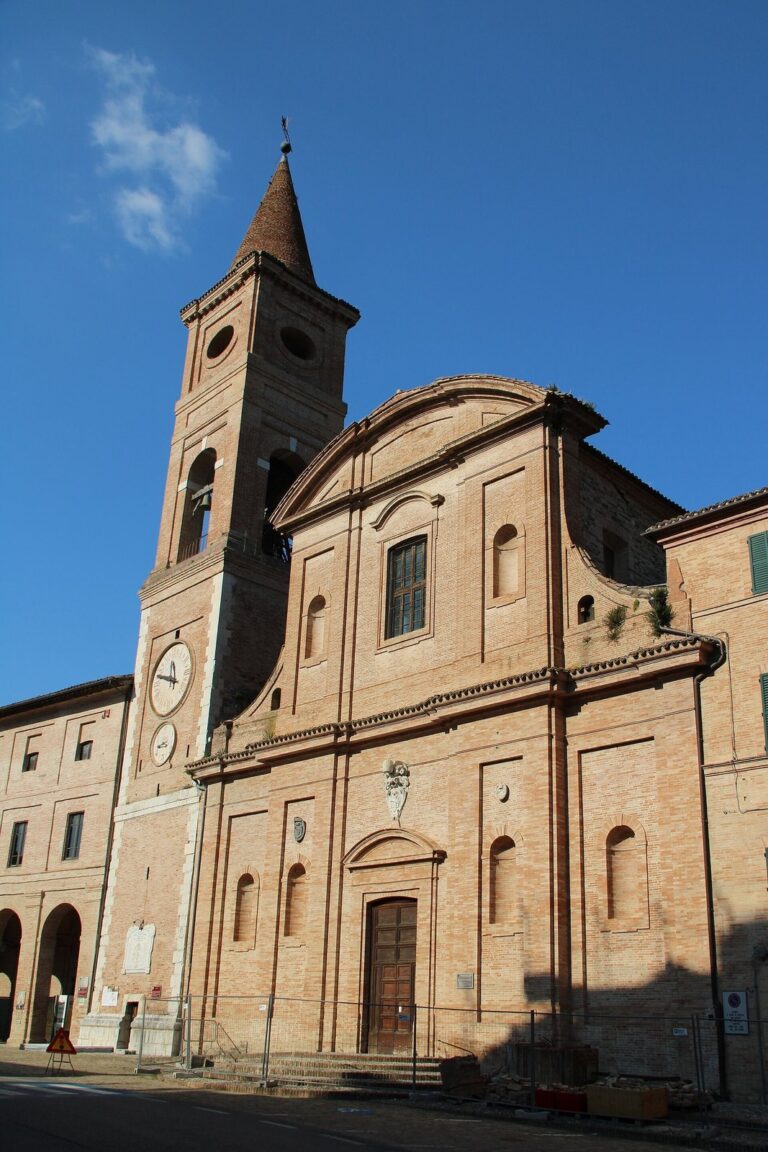
The Church of Saints Martin and George is a Catholic church in Castello di Vestignano, within the municipality of Caldarola, Italy. It is dedicated to Saints Martin and George, with Saint Martin as its titular saint, the saint under whose title a church is formally dedicated. The church belongs to the Archdiocese of Camerino-San Severino Marche-Matelica, an ecclesiastical jurisdiction headed by an archbishop.
Romanesque origins
The church began as a small Romanesque building, in a medieval architectural style. It has been proposed that it was built over the remains of a non-Christian shrine. Nearby place-names recalling pagan pastoral and agricultural practices have been associated with this possibility, which remains a hypothesis.
Sixteenth-century enlargement
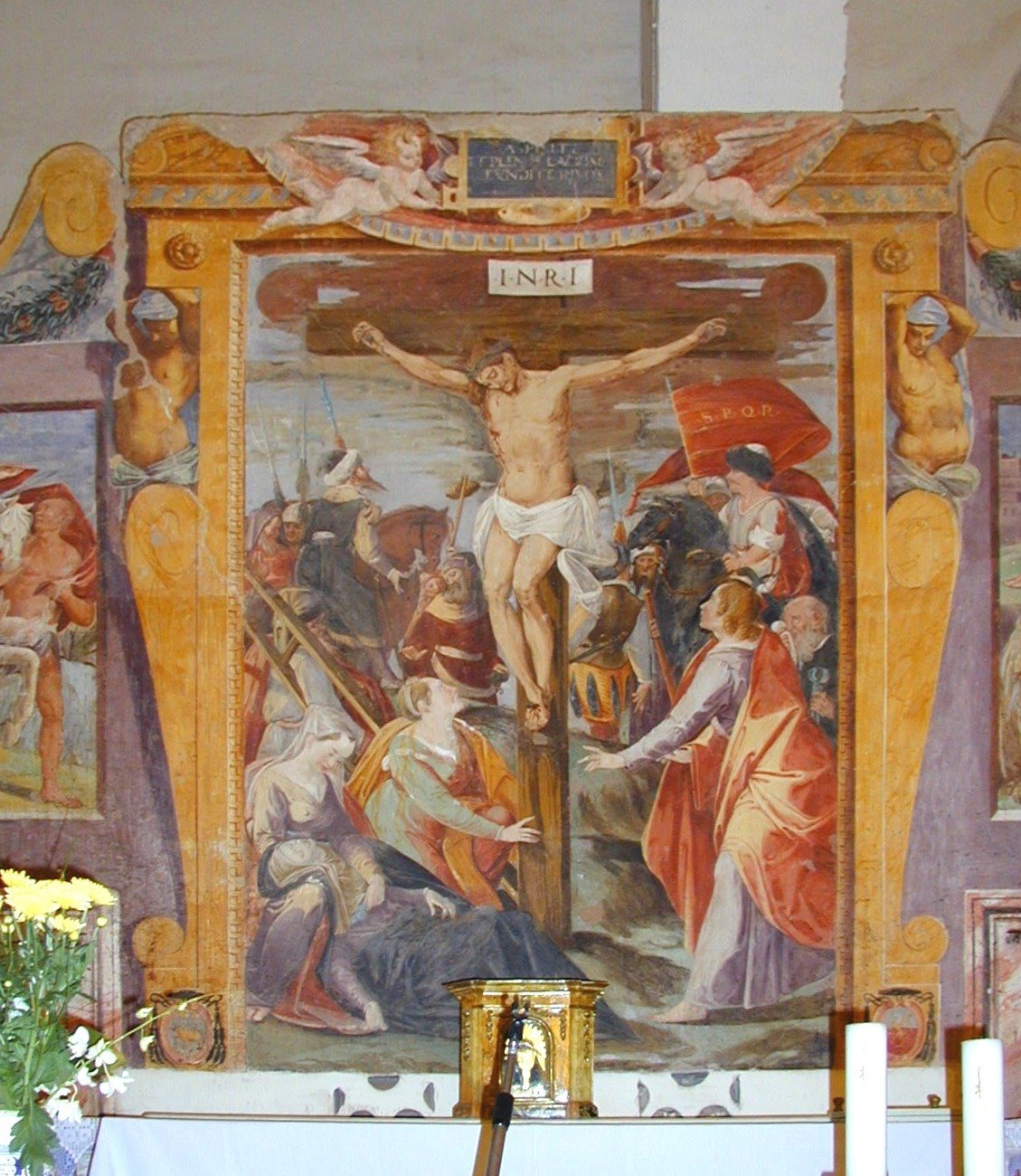
Before the mid-sixteenth century, a major enlargement substantially altered the church’s original form. The building’s painted decoration includes works from later periods, among them an altar-wall ensemble created by Simone De Magistris in 1587–88.
Remains
The present structure brings together parts of the earlier Romanesque church and a larger interior. The east-facing, rounded apse stands behind a straight partition wall that forms the interior’s altar end. The main entrance is set in the façade, while frescoes cover the wall opposite it, the side walls, and the altar area.
Plan and entrance
Apse and altar wall
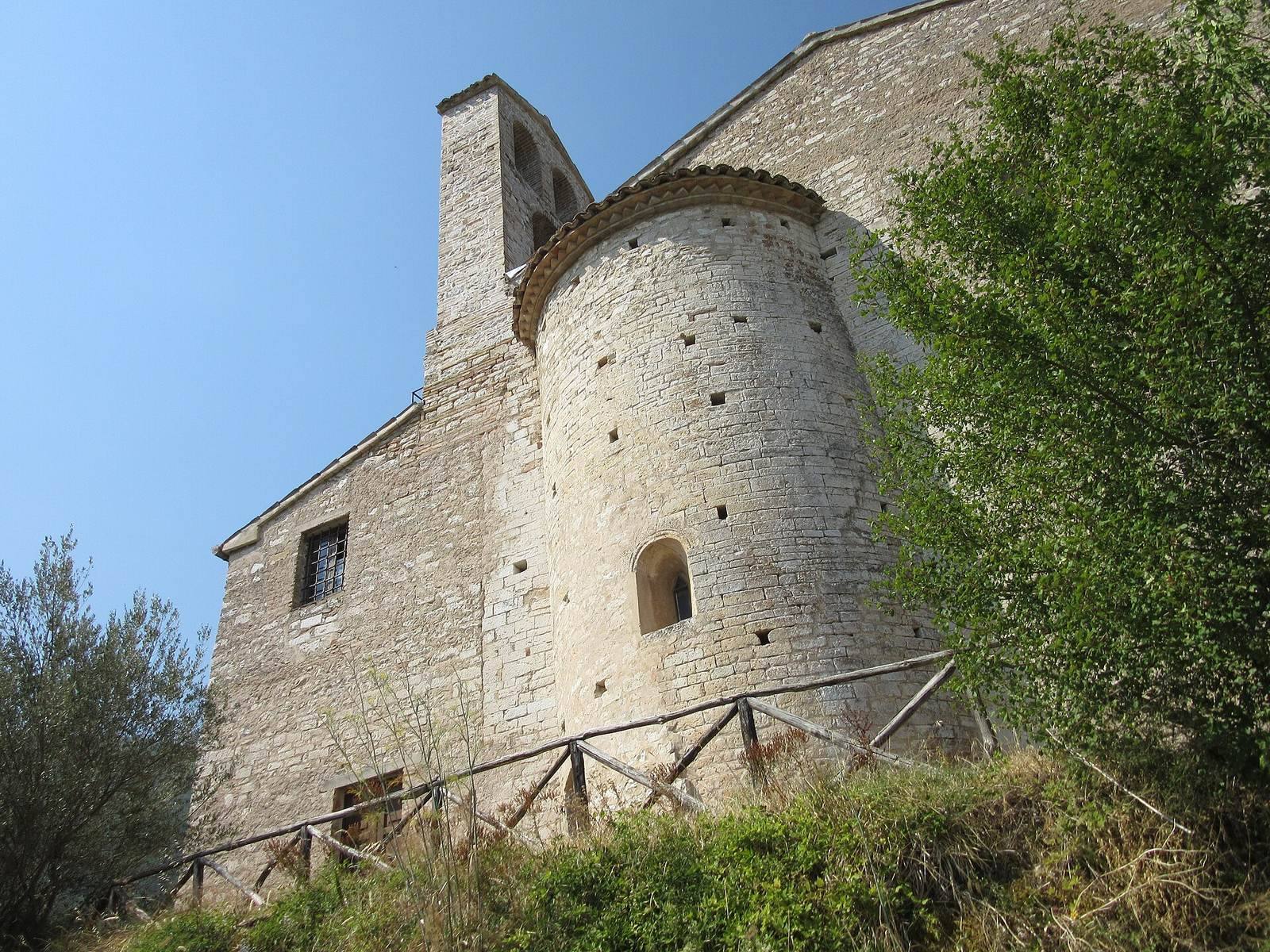
The earlier church’s apse, the usually rounded end of a church, faces east, following a medieval orientation toward Jerusalem. Its arrangement suggests that the original building had two chapels, one above the other; the lower space was probably larger and intended for worship. A straight wall built in front of the semicircular apse during the enlargement leaves its conch, the semi-dome at the apse’s end, and the rest of the rear wall uncovered. The partition forms a new end wall for the enlarged interior. It carries a main altar and two side altars, with two doors opening behind it into the space now used as a sacristy.
Façade and portal
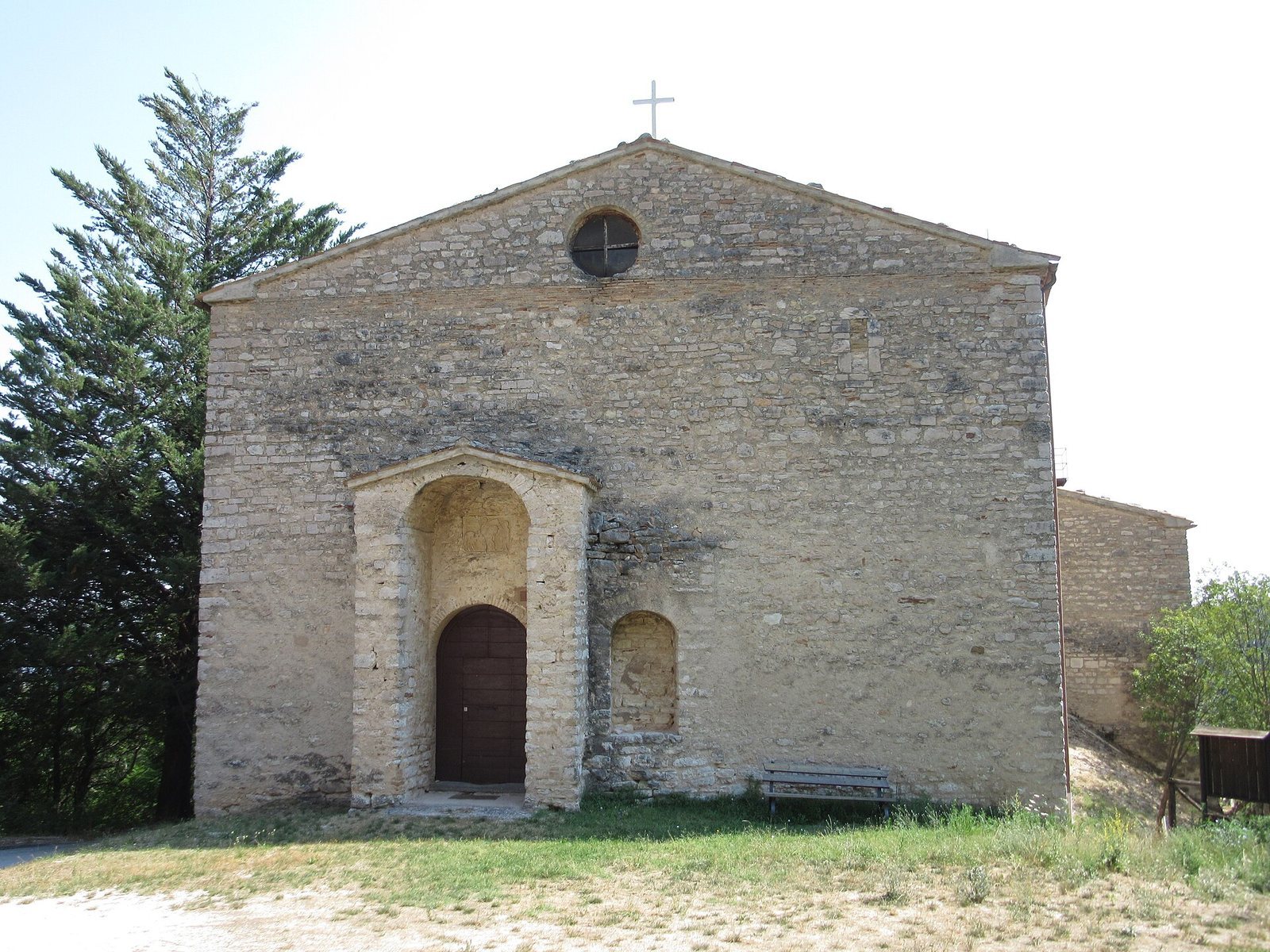
The main façade, projecting porch, entrance, niche, and a fresco fragment preserved in the niche have been linked to possible earlier buildings, although their relationship to the church’s earliest fabric is uncertain. Above the entrance lintel, a stone bears a high relief, sculpture projecting strongly from its background. It shows Saint Martin of Tours, a fourth-century bishop traditionally associated with sharing his cloak with a poor man, handing his cloak to a man on horseback. The Gothic-letter inscription S. Martinus at the stone’s upper left has been used to date the relief to the twelfth or thirteenth century; it probably belonged to the first church.
Frescoes
Counter-façade
Two frescoes by Giovanni Andrea De Magistris occupy the counter-façade, the interior wall opposite the main entrance. One depicts the Risen Christ with the Apostles. The other shows Saints Martin and George, who were especially venerated by the Lombards, a Germanic people who ruled parts of Italy in the early medieval period.
South wall
A fresco of Jesus among the Apostles on the south wall was brought to light in recent times. It is attributed to Giovanni Andrea De Magistris and was previously attributed to Durante Nobile. The same wall has a Nativity scene topped by an Annunciation, the angel Gabriel’s announcement to Mary that she would bear Jesus; both are attributed to De Magistris. Scenes of the Mysteries around these paintings, episodes from the lives of Christ and Mary, appear to be later and may be by Simone De Magistris.
North wall
A fresco dated 1538 and attributed to Giovanni Andrea De Magistris depicts the Madonna and Child with Saints Roch and Sebastian. Three oval panels along its lower edge show Saints Apollonia, Anthony the Abbot, and Helena.
Altar-wall ensemble
Simone De Magistris painted an ensemble for the altar wall in 1587–88. Its central scene is a Calvary, depicting Christ’s crucifixion, with saints. Above the doors, panels show Saint Martin with the poor man on the left and Saint George slaying the dragon on the right. George was an early Christian martyr, commonly portrayed in the legend of the dragon. The left side altar holds an Assumption, dated 1588, depicting Mary being taken bodily into heaven. The other side altar has a Resurrection, also described as the Risen Christ with Holy Bishops. One identification places Saints Blaise and Venantius in the scene, though the identification of Venantius is uncertain.
Other paintings
A fresco of Saint Leonard of Nobilacum and the Madonna enthroned with the Child is attributed to the Master of Rasiglia, an art-historical name for an unidentified painter. A separate fresco of Saint Anthony of Padua was painted by Domenico Luigi Valeri in the mid-eighteenth century.