Santi Gioacchino e Anna ai Monti: An Eighteenth-Century Roman Catholic Church
Site at a Glance
- Popularity
- Medium
- Country
- Italy
- Primary era
- Early Modern
- Eras represented
- Early Modern
- Civilizations
- Papal States
- Site type
- Religious
- Remains
- Church
On this page10 sections
History
Santi Gioacchino e Anna ai Monti is a Roman Catholic church on Via di Monte Polacco in Rome, Italy, built in the eighteenth century in the late-Baroque style. Dedicated to Saints Joachim and Anne, whom Christian tradition regards as the Virgin Mary’s parents, it belongs to the Diocese of Rome and the parish community of Santi Silvestro e Martino ai Monti. Its liturgy follows the Roman Rite, the Latin Church’s principal liturgical tradition.
The Minim convent and church
In 1731, nuns of the Minim order, founded by Francis of Paola, bought a house at the site and established a convent. The nuns were known as Paolotte or Oblates of Saint Francis of Paola. Work on suitable convent buildings began in 1746 but stopped in 1753 because of a lack of funds. In 1760, Pope Clement XIII had the monastery demolished to make way for the present church. Building work resumed in 1770.
A hidden chamber discovered in 1774 became the subject of differing explanations. It was later interpreted as a monument connected with the Christian Aproniani family, an early Christian Roman family. Local tradition instead attributed the treasure to a Polish king said to have lived in the area, and linked the tale to the name Monte Polacco, used for a nearby staircase.
Giovanni Francesco Fiori designed the church. The church and convent were completed in 1780, and Pope Pius VI consecrated the church in 1781. The feast of Saints Joachim and Anne is observed on July 26.
State ownership and later worship
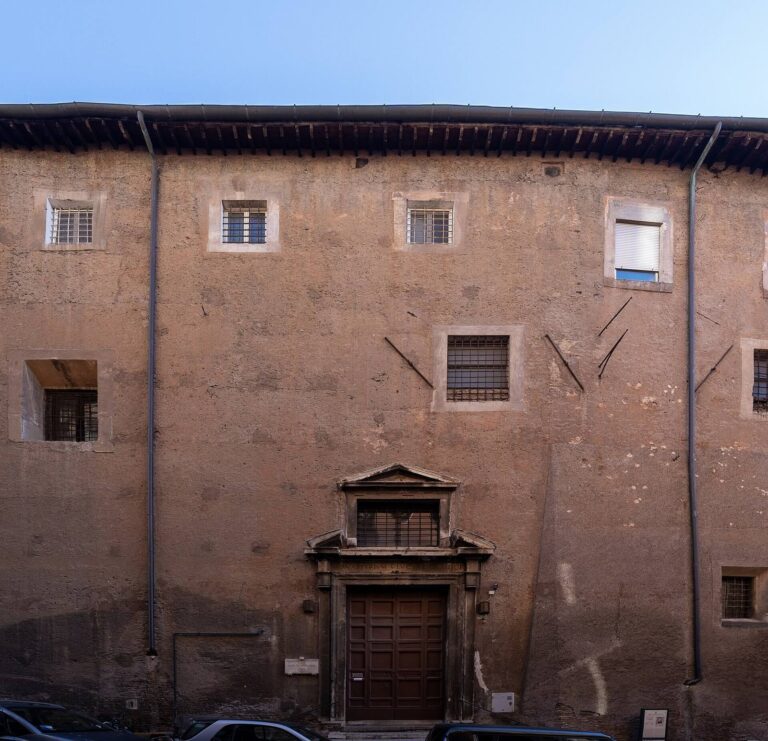
The Italian state expropriated the church and convent in 1873. The former convent became offices for the Carabinieri, Italy’s national gendarmerie, which has both police and military functions. The church later reopened as a spiritual and liturgical center for the corps.
Around 2000, the Carabinieri left the convent. Pope John Paul II permitted the Ethiopian Orthodox Church to use the church. The Ethiopian Orthodox Tewahedo Church holds worship there and has permanent use of the church’s underground level.
Remains
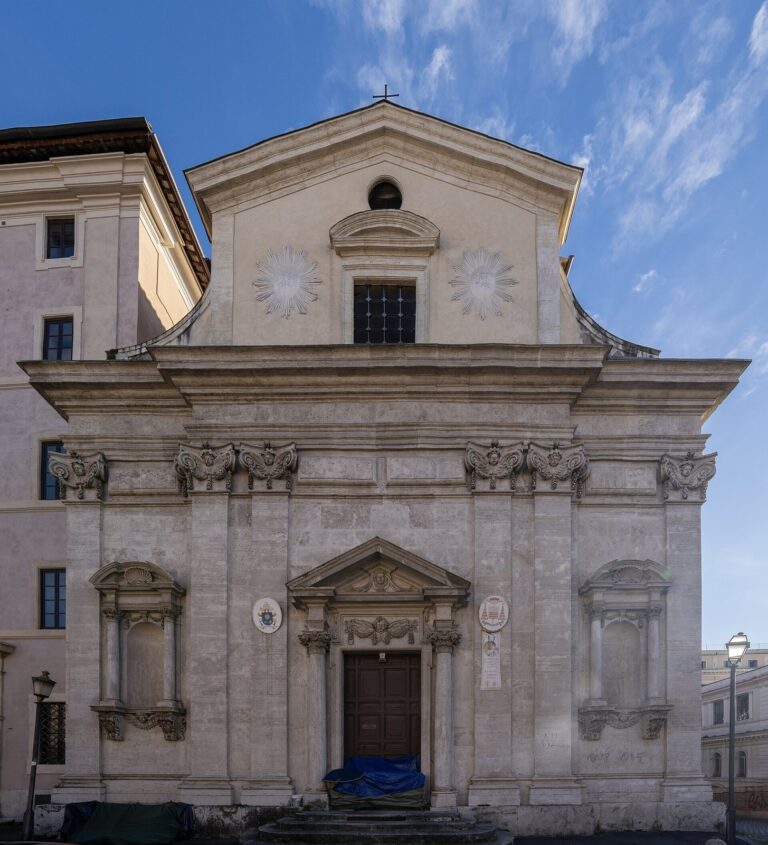
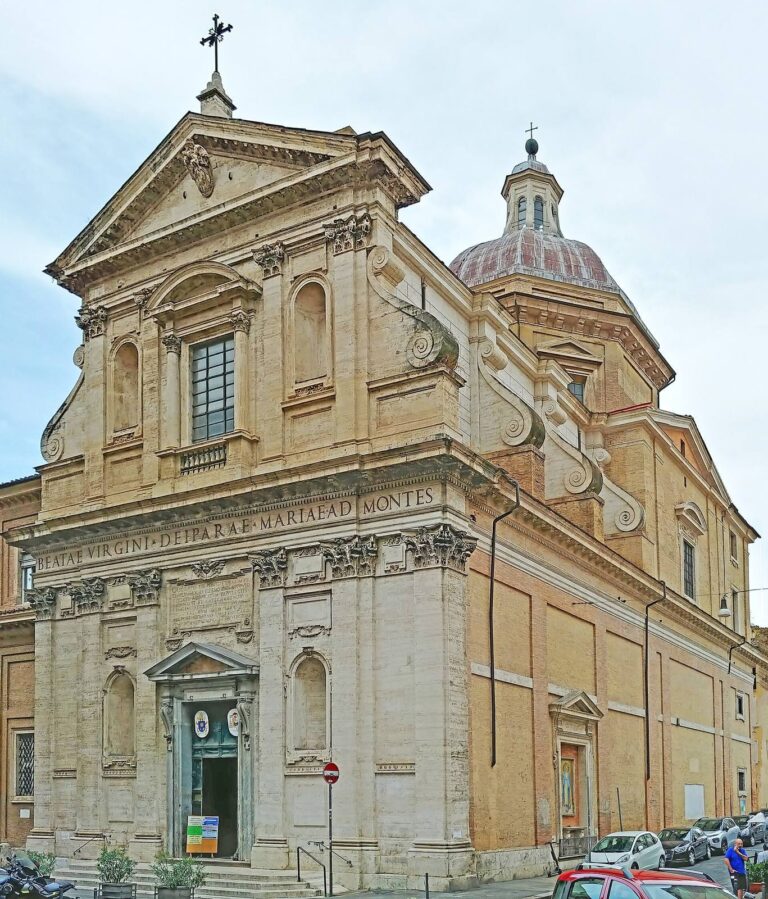
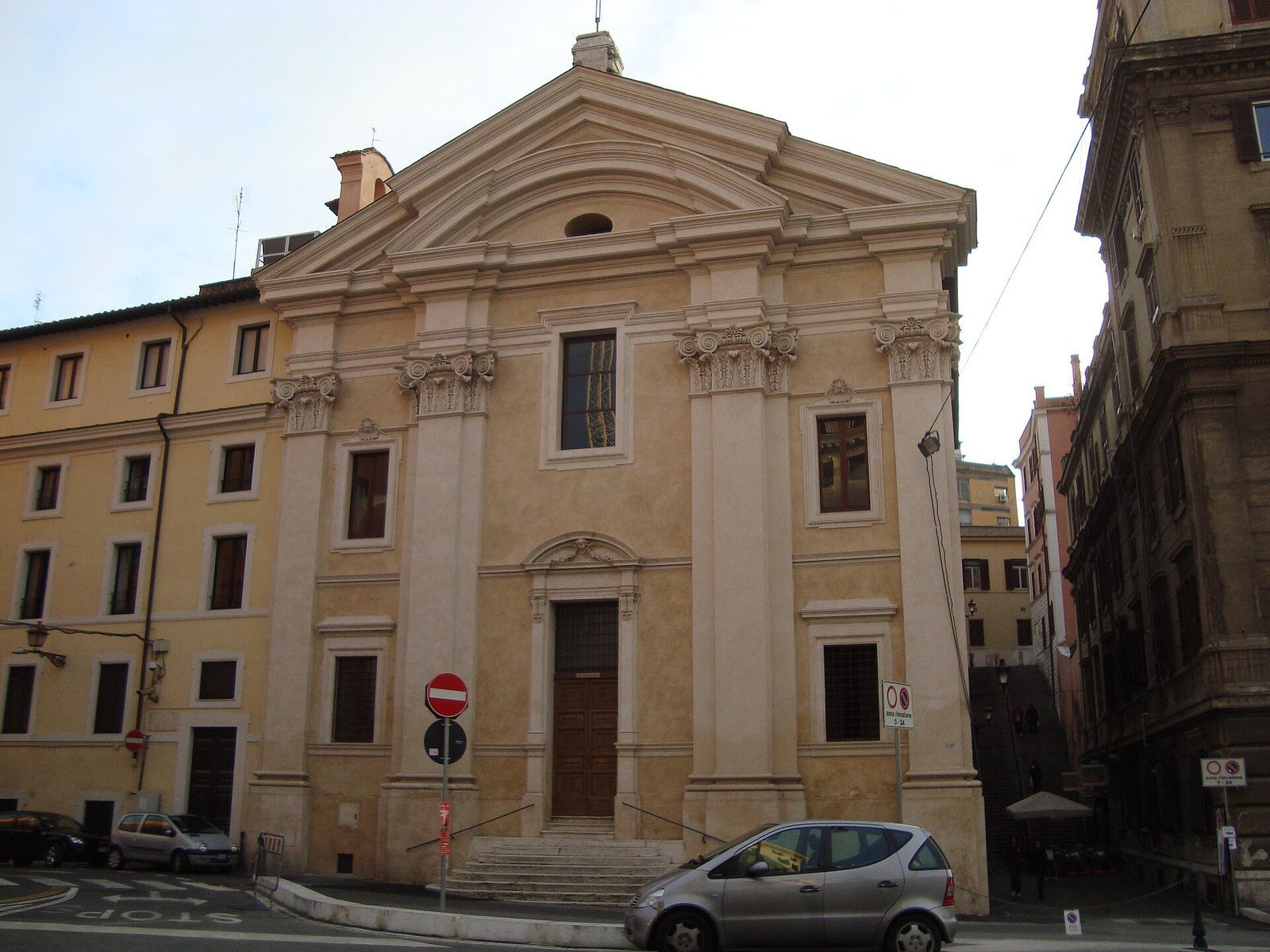
The church is attached to the former convent and faces Largo Visconti Venosta, at the beginning of Via in Selci. Its late-Baroque exterior surrounds a Greek-cross plan, with four arms of equal length, and a central dome.
The church
Facade
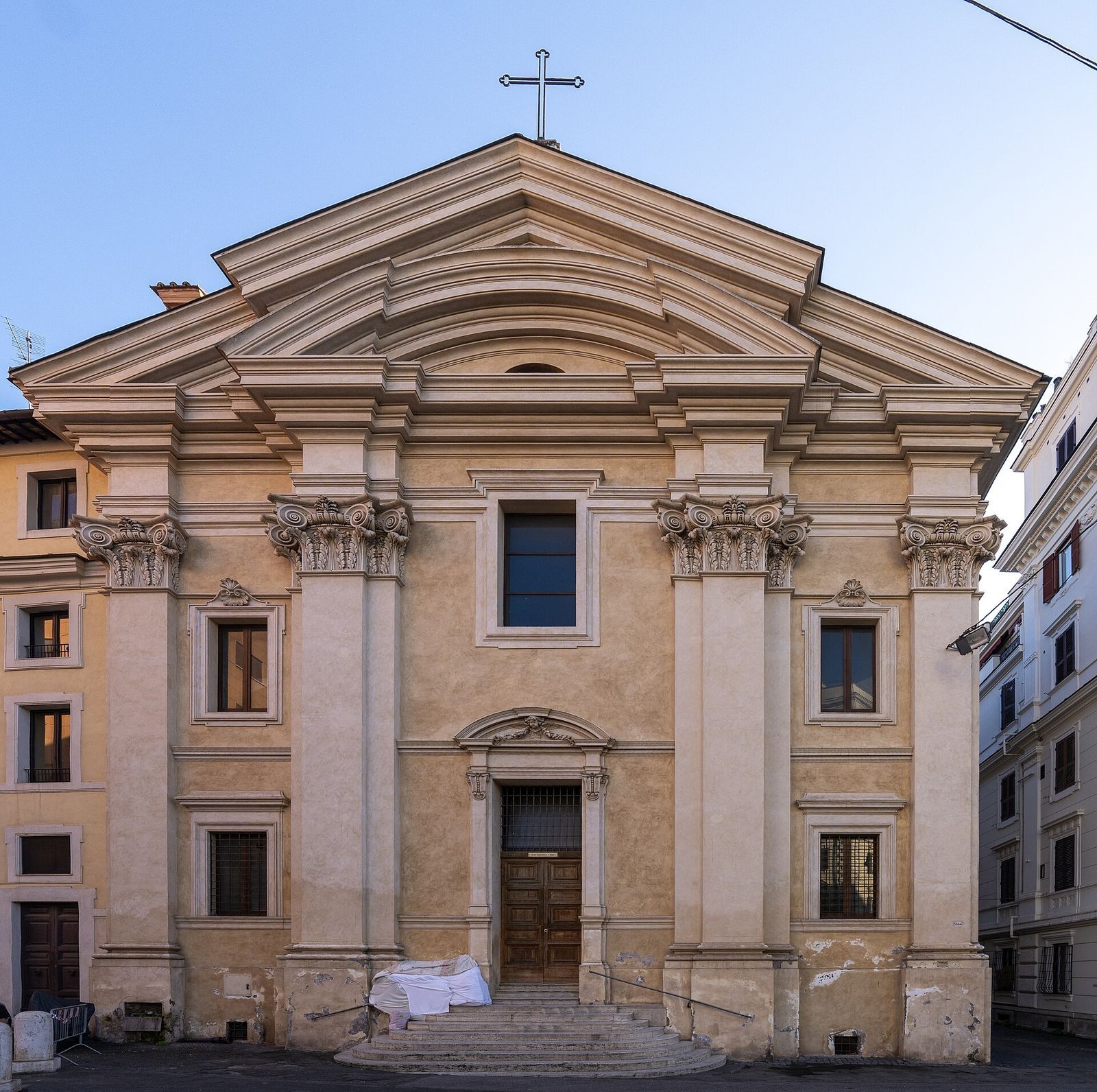
The tan facade has pale-gray architectural details. Four large pilasters, shallow rectangular wall supports, rise from tall bases and support an entablature, the horizontal structure above them. The entablature has a plain band, and the upper molding projects over the pilasters. A triangular pediment, the shaped upper section of a facade, contains a smaller curved pediment. Above the entrance, another curved pediment is decorated with a childlike sculpted head and draped garlands.
Plan and dome
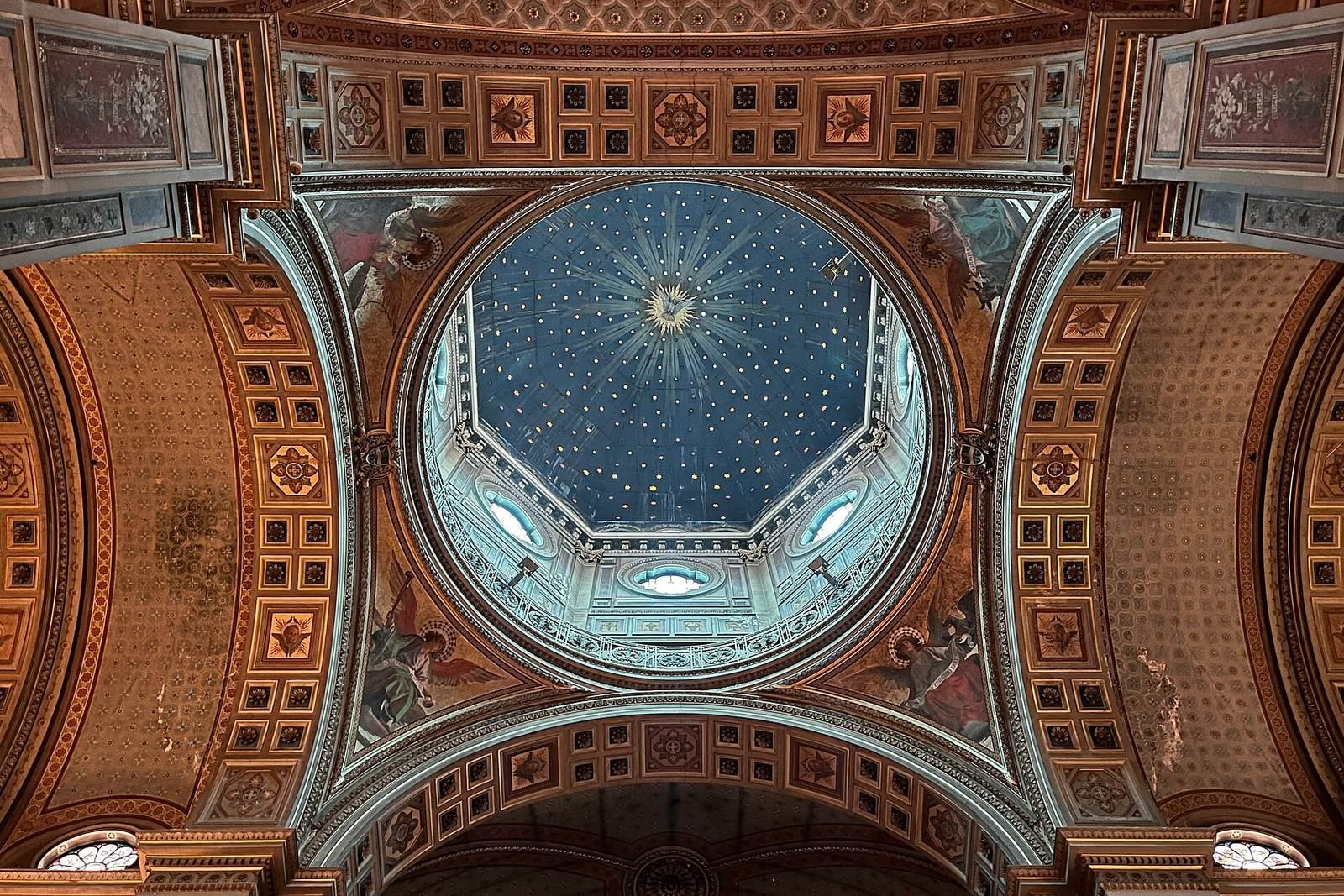
The central dome’s circular decorative field, or tondo, is decorated in stucco with a dove representing the Holy Spirit and winged childlike figures. The curved surfaces that support the dome over a square space bear symbols of the four Evangelists.
Altar and side chapels
An anonymous painting above the high altar shows the Virgin Mary as a girl with her parents, Joachim and Anne. One side chapel is dedicated to the Crucified Christ; the other honors the Immaculate Conception, the Catholic teaching that Mary was preserved from original sin from the first moment of her conception.
Holy-water basin
An inscription on a holy-water basin commemorates Maria Agnese del Verbo Incarnato, a nun who died in 1810. Her visions concerning the Most Precious Blood, the blood of Christ in Christian devotion, inspired Gaspare del Bufalo to found the Missionaries of the Precious Blood.
The concealed chamber
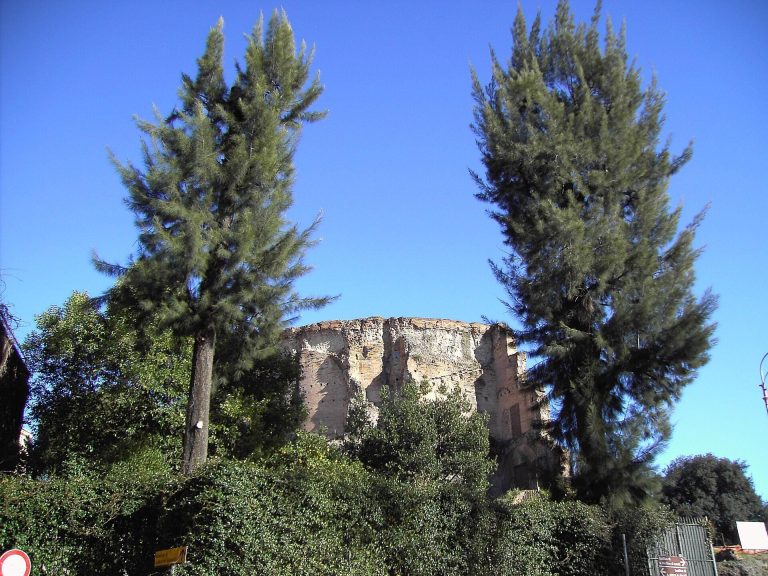
The chamber was concealed within a thick ancient wall behind the choir of the Paolotte convent. It probably dated to the period of the first so-called barbarian invasions, incursions into the Roman Empire by peoples from outside it. Its contents included silver objects, statuettes made of gilded metal, silver horse harnesses, rock-crystal chandeliers, and marble sculptures. The collection also held a silver dressing set described as apparently unique among its pieces. The treasure was given to the convent and later dispersed; some of its finest objects are believed to be in the Vatican Museums.