Portopí Lighthouse: A Historic Beacon at Palma Harbor
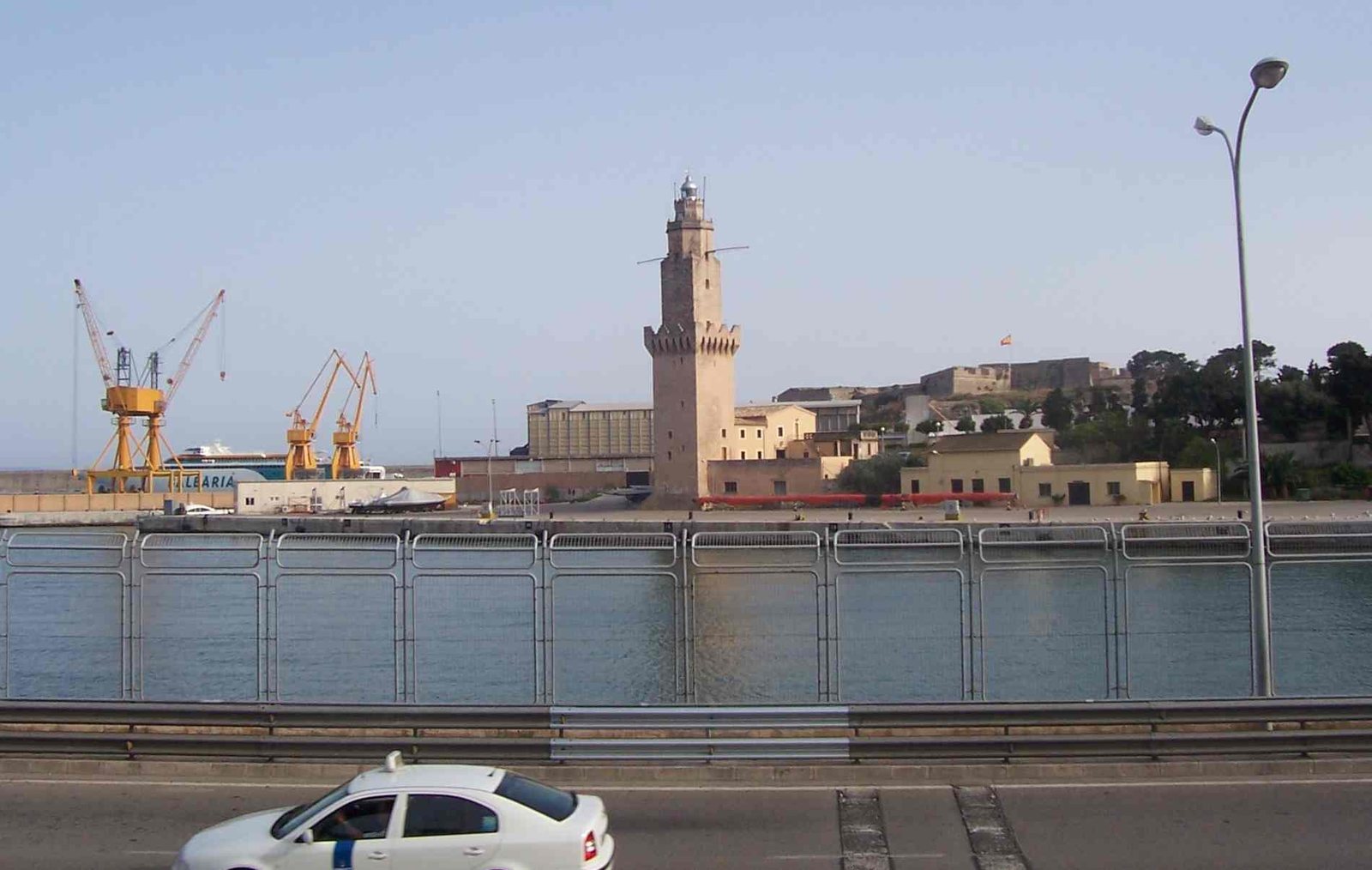
Site at a Glance
- Popularity
- Medium
- Country
- Spain
- Primary era
- Medieval
- Eras represented
- Medieval, Early Modern
- Civilizations
- Crown of Aragon, Spanish
- Site type
- Infrastructure
- Remains
- Lighthouse
On this page11 sections
History
Portopí Lighthouse is a maritime beacon in Palma, on the island of Mallorca in Spain. It was already in existence by 12 September 1300, when a codicil to the will of James II, king of Majorca, mentioned it; its operation is dated to the early 14th century. It ranks as Spain’s second-oldest lighthouse and the world’s third-oldest, after the Tower of Hercules and the Lantern of Genoa. It was also called Torre del Faraó, an older term for a lighthouse.
Early operation and transfer
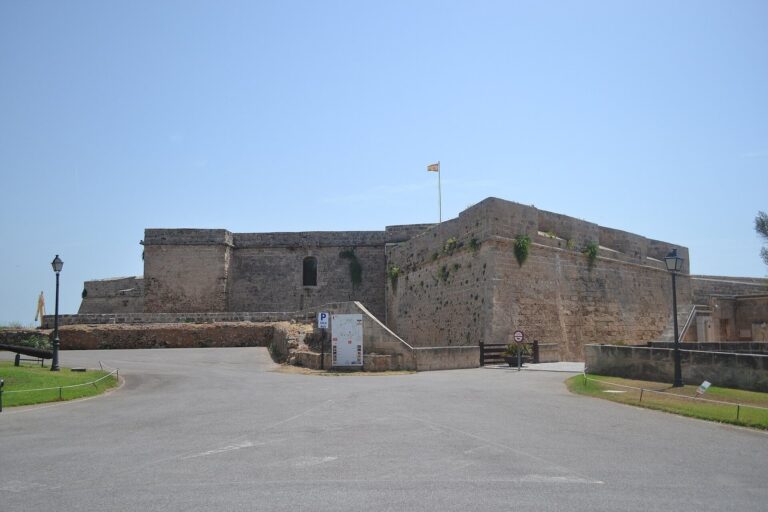
The first lighthouse stood on the site now occupied by Fort San Carlos. Its light operated seasonally, burning each day from 8 September until Pentecost, the Christian feast celebrated seven weeks after Easter. The Tower of Signals had been built in the 13th century as a watchtower for the port’s defense and was enlarged in the 15th century.
Fort San Carlos was built near the original lighthouse in 1612. The sound of its cannon fire broke the lighthouse’s windows, so the light was transferred in 1617 to the Tower of Signals. A new section was added to adapt the tower, doubling its height. Oil lamps continued to provide a seasonal light. Once the lighthouse moved, the tower’s defensive role was no longer needed, but it continued to signal the number and type of ships entering the harbor. Black balls were used at first, then flags; the system remained in service until 1971.
Storm damage and repair
The tower suffered repeated damage from storms and lightning. Its neglected state was noted in 1650. On Maundy Thursday in 1652, lightning damaged the spiral staircase and the roof of one floor. In 1667, a storm tore away several courses of masonry, prompting the addition of a sloping buttress.
Further storm and lightning damage followed in 1684, 1691, and 1806, with repairs made after the incidents. These events altered parts of the tower, while its lower and upper sections are regarded as part of the historic structure rather than later rebuilding.
Changing the light and preserving the historic beacon
In 1807, a rotating apparatus with 14 lamps and three parabolic reflectors, curved surfaces that focus light, was installed. It turned once every five minutes, sending out several flashes lasting 10 seconds, followed by a dark interval of one and a half minutes. In 1893, it was replaced by a Fresnel lens, whose concentric stepped sections focus light while reducing weight, combined with reflectors and powered by mineral oil known as Scottish paraffin. This produced a fixed white light interrupted at intervals.
Petroleum replaced paraffin in 1901, and electricity was introduced in 1918. Electric lamps and reflectors were installed in 1927. A port-lighting plan adopted in 1958 proposed moving the light to a new site on the west breakwater. The change took effect on 24 August 1972, when the historic light was extinguished. The Port Authority argued for keeping it at the Tower of Signals on historical grounds, and it was relit there in 1974.
In 1983, the Tower of Signals was declared a Spanish Historic-Artistic Monument and designated an Asset of Cultural Interest in the monument category.
Remains
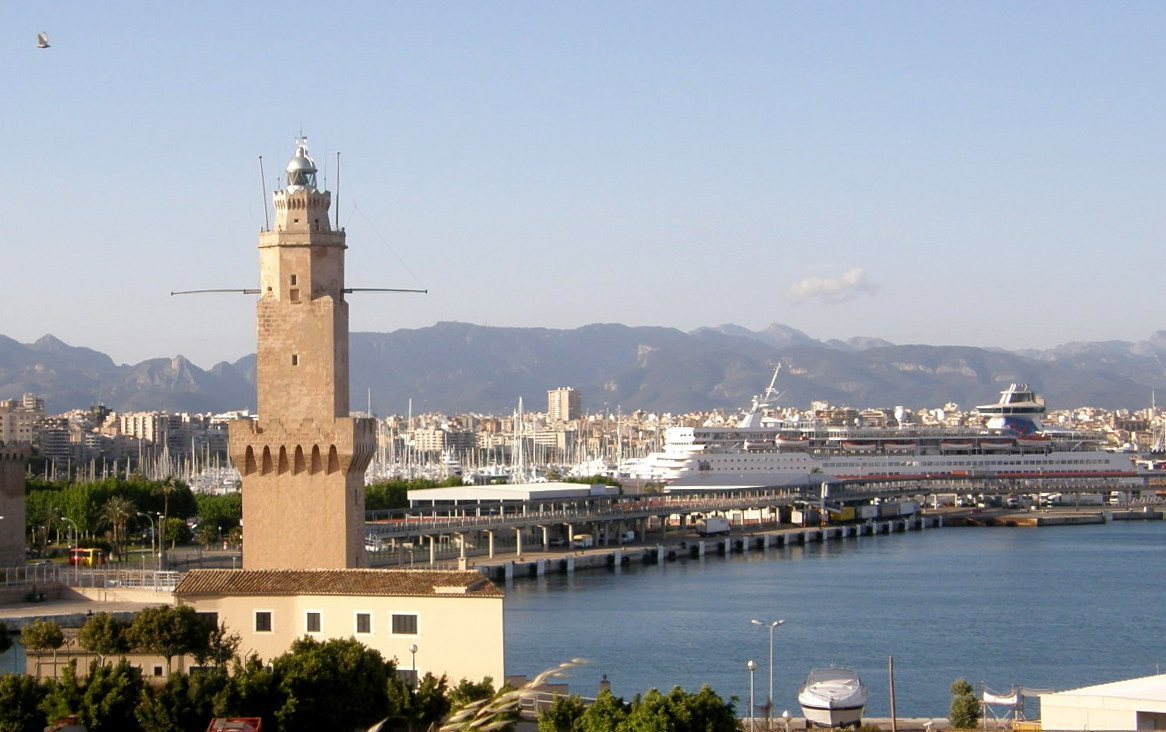
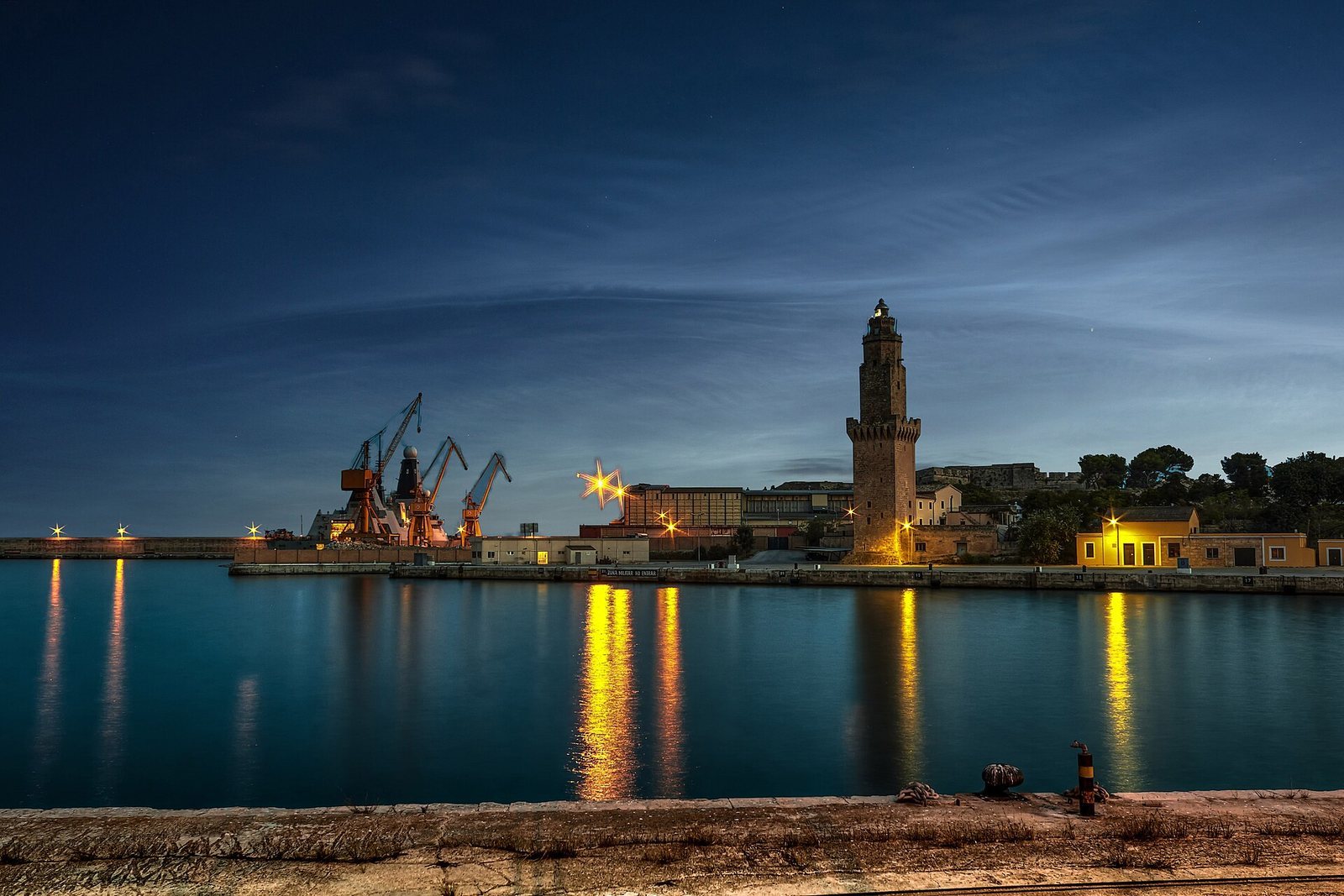
At Palma harbor, the lighthouse is formed around a three-part stone tower that changes from square to octagonal sections as it rises. The lantern occupies the uppermost section, above the lower bodies of the tower.
Tower and harbor features
The tower
The tower stands 38 metres high, with a focal height, meaning the height of the light source, of 41 metres. Its five-storey lower body is square and ends in a battlemented machicolation, a projecting ledge with openings to defend the wall base. Above it, a smaller square body has three storeys and an octagonal section topped by a parapet, or low protective wall. The uppermost body is octagonal and contains the lighthouse mechanism. The tower has three balconies; its stonework is unpainted and the lantern is grey.
Harbor chain
A chain used to close the harbor ran from the Tower of Signals to the Tower of Paraires at the opposite end of the port.
Lighting and associated installations
Lantern and signal
The earliest lantern used small sheet-iron lamps set in a frame. Corks held their wicks, which were fed with oil. The present light is electrically powered and automated. It is white and flashes twice every 15 seconds, covering a sector from 327° to 040° between Cap Regana and Punta Cala Figuera. Its nominal nighttime range is 22 nautical miles.
Exhibition annex
An annex houses an exhibition of obsolete maritime-signalling equipment collected from lighthouses in the Balearic Islands. The exhibition has been open since 2004.