Santi Apostoli: A Roman Catholic Church in Naples
Site at a Glance
- Popularity
- Medium
- Country
- Italy
- Primary era
- Early Modern
- Eras represented
- Early Modern, Modern
- Civilizations
- Italian, Kingdom of Naples, Kingdom of the Two Sicilies, Spanish
- Site type
- Religious
- Remains
- Church
On this page20 sections
History
Santi Apostoli is a Roman Catholic church in Naples, Italy, dedicated to the Apostles, the principal disciples of Jesus, and part of the Archdiocese of Naples. Its history is closely associated with the Theatines, a Catholic religious order, and with major rebuilding and artistic projects from the late sixteenth century onward.
Origins and Theatine administration
Tradition dates the church’s foundation to 468 and attributes it to Bishop Sotero. It places Santi Apostoli among five places of worship regarded as principal parish churches. Another legend connects the church to Emperor Constantine, a Roman emperor, and describes it as built over a possible Roman temple dedicated to Mercury.
The Caracciolo family is credited with restoring the church. By 1530, its administration was in the hands of Colantonio Caracciolo, Marquis of Vico, and by 1570 it had passed to the Theatines. The order began renovating the church in 1581.
Rebuilding and artistic commissions
Francesco Grimaldi built the monastery’s cloister in 1590 and began a wider rebuilding of the church around 1611. After Grimaldi died in August 1613, Giovan Giacomo Di Conforto continued the project, enlarging the chapels and shortening the choir. The work was completed in 1626.
Cardinal Ascanio Filomarino commissioned an altar partly to bring to Naples the artistic taste of Pope Urban VIII’s court, with whom he had close ties. The earthquake of 1688 destroyed part of the monastery, and a new wing was added in 1758.
Suppression and later use
In 1809, Joachim Murat, a French military leader who became king of Naples, suppressed the Theatine order. The monastery served as a barracks until 1821. Ferdinand I, ruler of the Kingdom of the Two Sicilies, proposed giving the church to the Jesuits, members of the Society of Jesus, but they declined. The Theatines then regained the church and took on the administration of Santa Maria Vertecoeli.
From 1870, the monastery housed a tobacco factory for about a century. Following a long restoration, the complex became home to Naples’s State Art High School. The 1980 Irpinia earthquake damaged the dome’s two-colour majolica covering, a decorated glazed ceramic surface that was not restored.
Remains
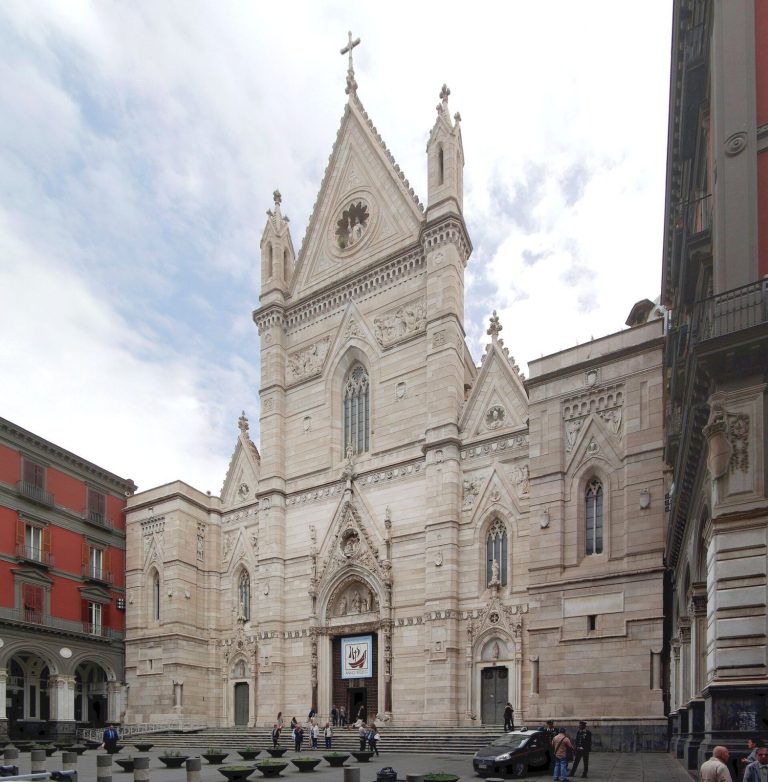
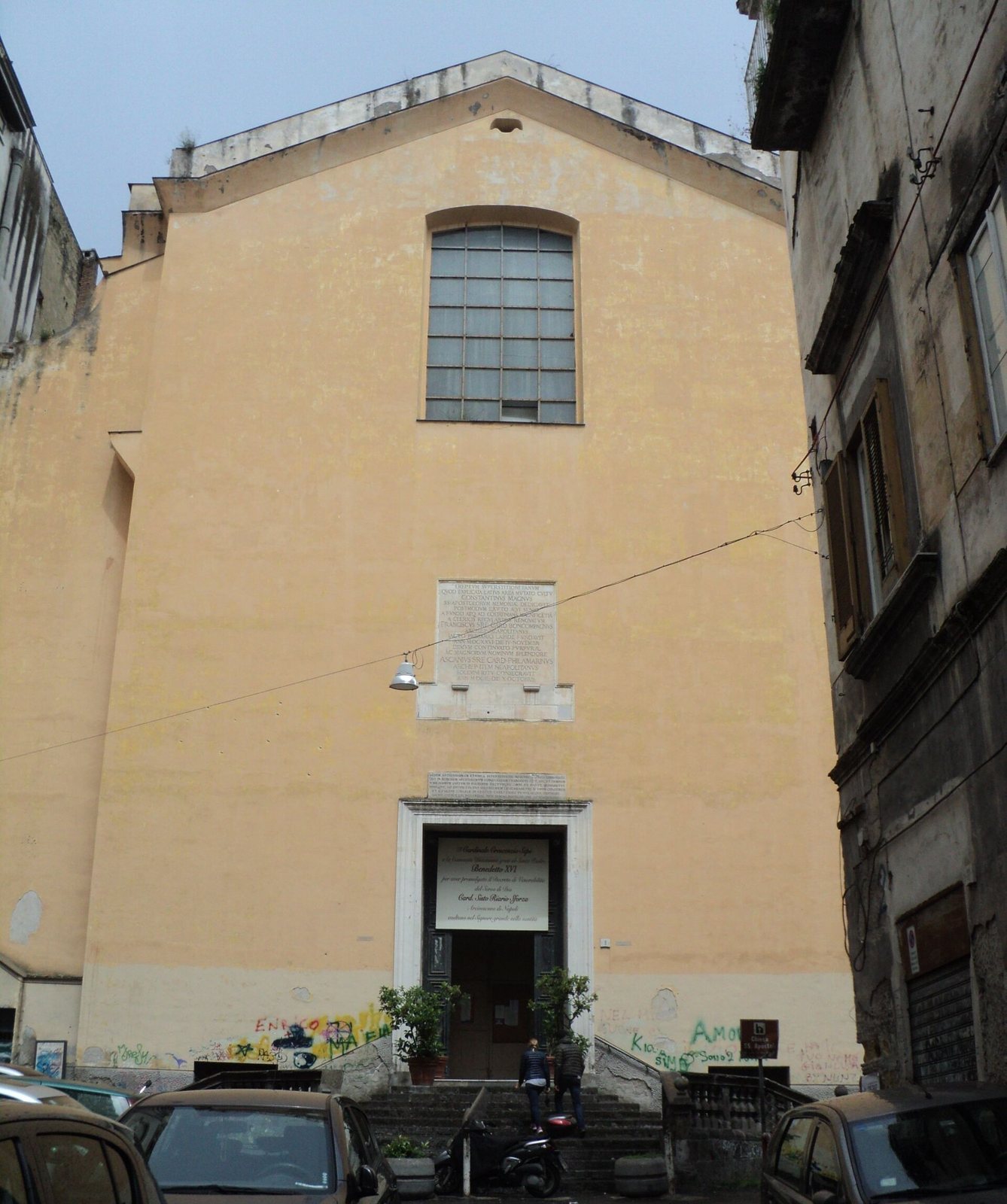
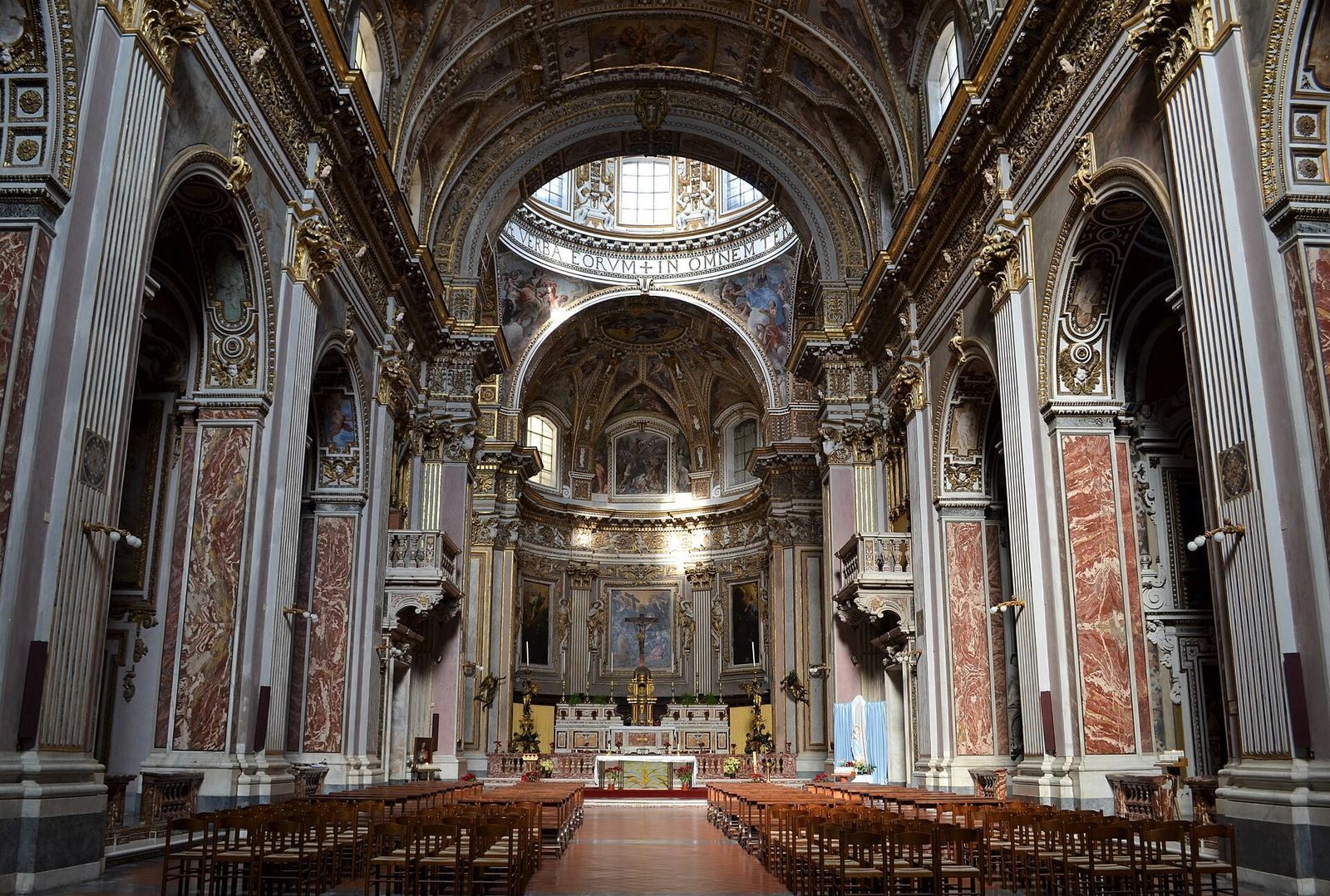
The church has a plain plastered façade and an exterior staircase of piperno, a volcanic building stone, dated to 1685. Its Latin-cross plan has a long central nave intersected by a transverse arm called the transept. The nave is covered by a barrel vault, a continuous tunnel-shaped ceiling. Marble bands form the floor, laid in 1698 and restored in the early twentieth century. Four chapels line each side of the nave; each has a small elliptical dome and a semicircular apse, or curved end. The third chapel on the right also provides a side entrance.
Painted decoration
Nave and entrance wall
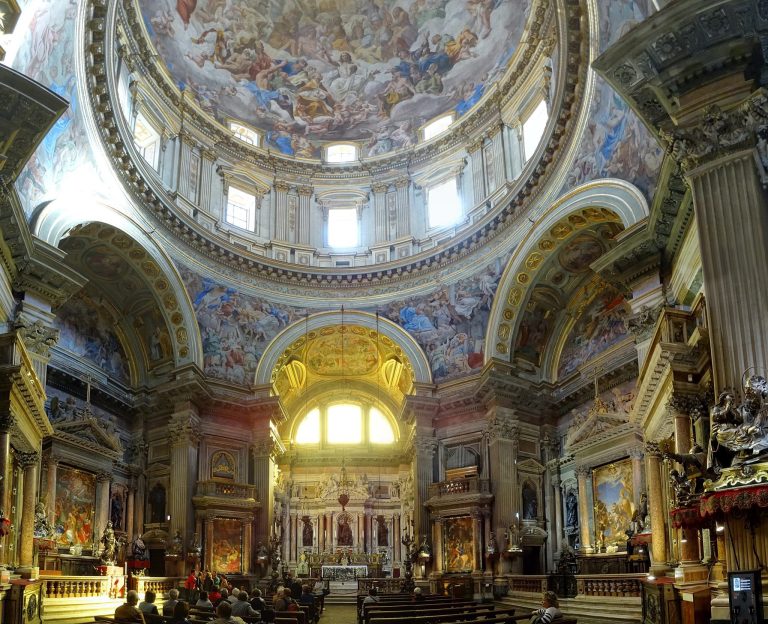
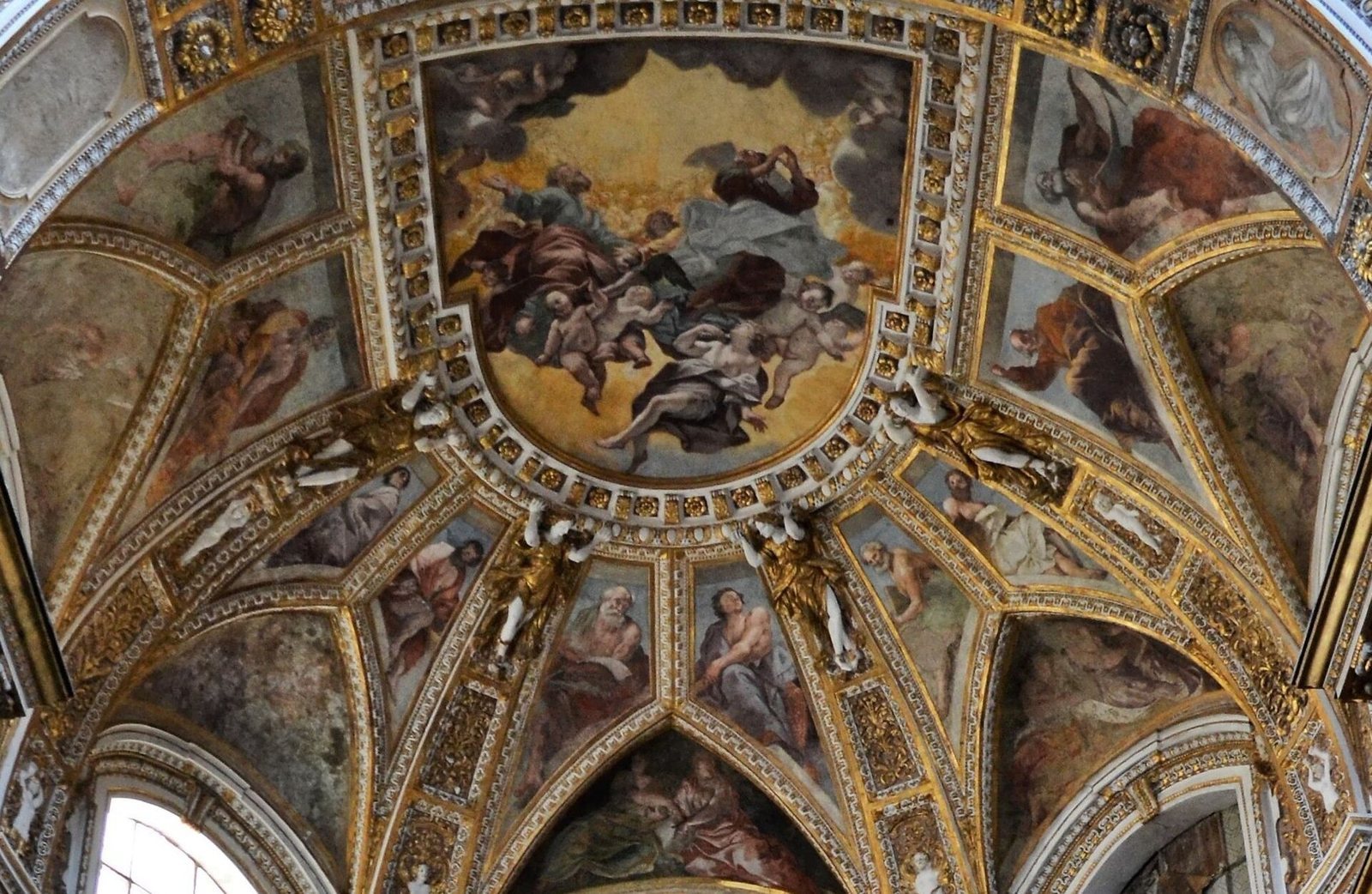
Giovanni Lanfranco painted the church’s principal fresco cycle between 1638 and 1646. It extends across the wall opposite the main entrance, the nave vault, the upper front walls of the transept, the transept vaults, and the apse, depicting episodes from the lives of the Apostles. On the nave vault, scenes of the martyrdoms of Thomas, Bartholomew, Matthew, and John the Evangelist lead to the Glory of the Apostles. Gilded stucco frames the paintings, with Virtues in the curved spaces above the windows and Prophets and Patriarchs above them.
On the entrance wall, Lanfranco’s Pool of Bethesda appears within an illusionistic architectural setting painted by Viviano Codazzi. Lanfranco’s scenes of the martyrdoms of Simon and Jude are placed between the windows above it.
Dome
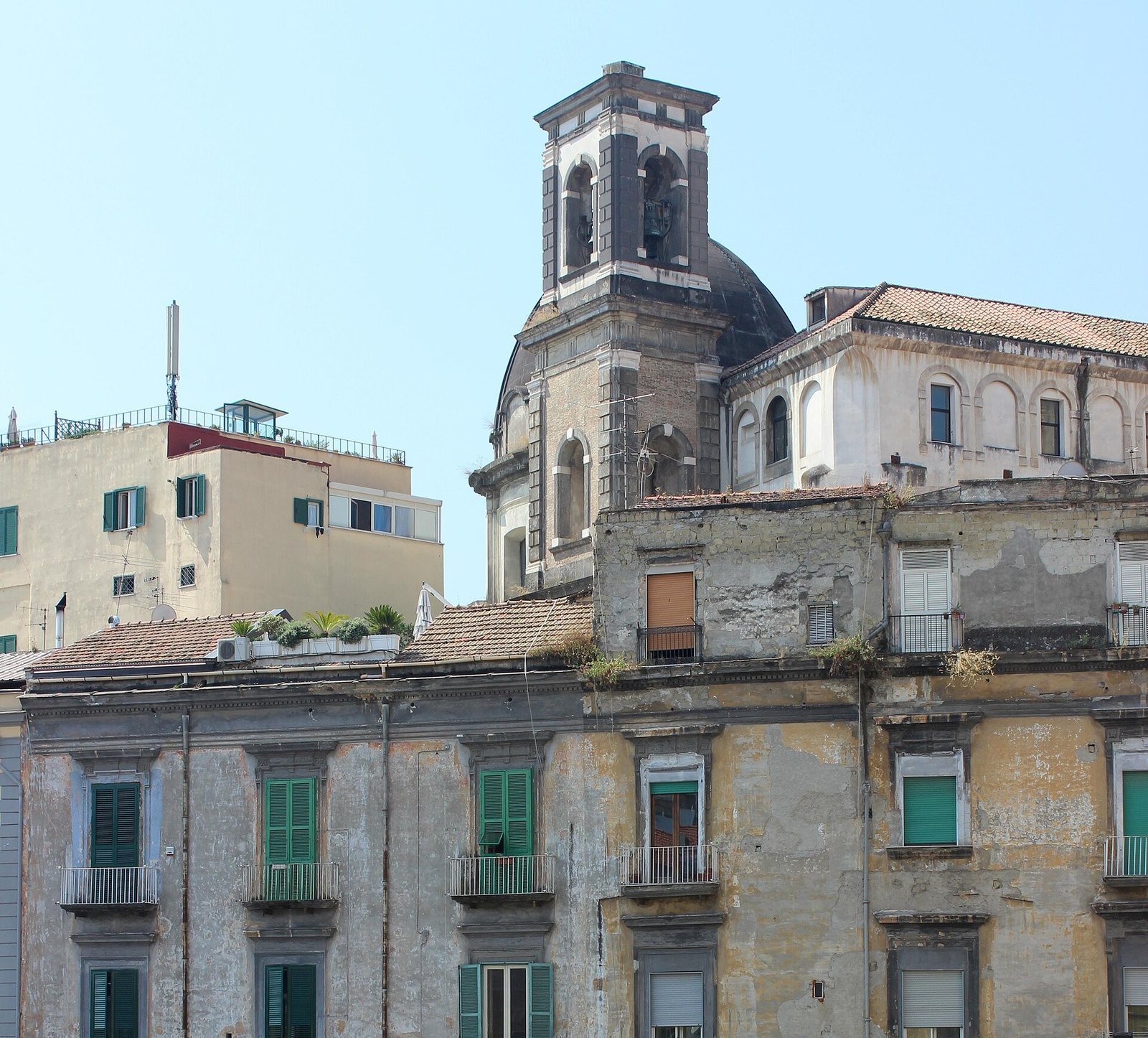
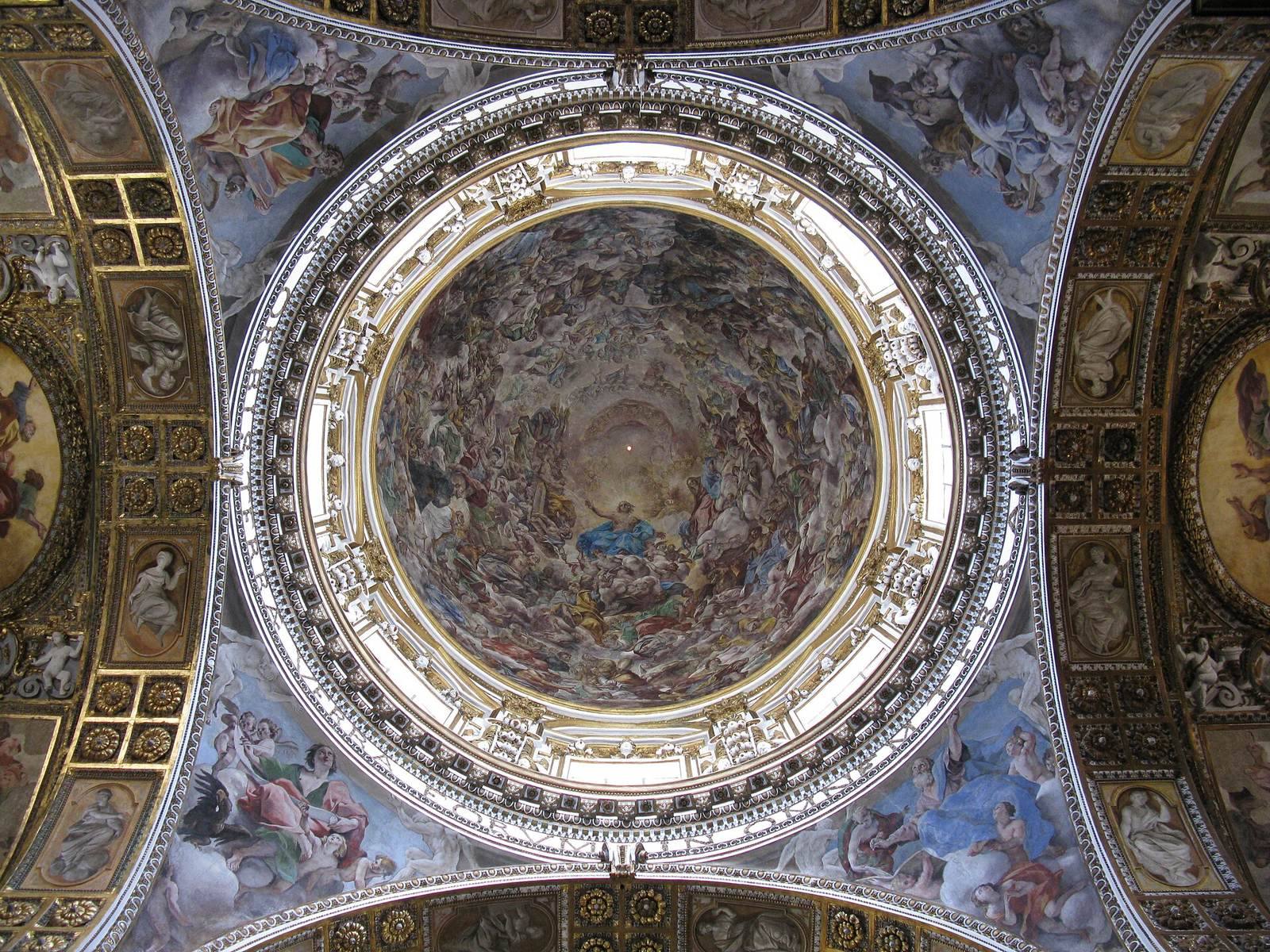
The dome dates to 1680 and has stucco decoration by Dionisio Lazzari. Giovanni Battista Beinaschi painted its central Paradise, while Lanfranco depicted the four Evangelists in the curved structural sections that support the dome over a square space. In 1693, Francesco Solimena painted the arches above the side chapels, replacing earlier work by Giacomo del Pò.
Apse
The semicircular apse contains an upper fresco of the Glory of the Virgin. Ten Apostles occupy the sections below, around a rectangular central scene of the Martyrdom of Saints Philip and James. Five canvases hang against the lower apse walls: Christ Indicating the Cross as the Rule of the Theatines, Saint Andrew Avellino, Saint Sotero Prostrate before Mary and Saint Januarius, Blessed Giovanni Marinoni Contemplating Jesus in the Garden, and The Immaculate Conception and Saint Gaetano.
Side chapels
Chapels on the left
The first chapel is dedicated to Paolo Burali of Arezzo. Its 1775 altarpiece by Francesco De Mura shows Blessed Paolo Burali and Giovanni Marinoni with Marchioness Maria Patrizi presenting a child. A painting of Saint Charles Borromeo by Carlo Rosa hangs on the left wall. In the second chapel, dedicated to Saint Gregory, Domenico Fiasella’s altarpiece depicts the Madonna with Saints Gregory and Giovanni. Giacomo del Pò painted the chapel’s wall and vault frescoes in 1717, showing episodes from the lives of Saint Gregory and Troadio.
The third chapel is dedicated to Saint Gaetano, a Catholic priest and co-founder of the Theatines. Its main altar holds Agostino Beltrano’s painting of the saint. Around 1671, Giacomo Farelli painted scenes of the 1656 plague on the chapel’s dome and walls. The fourth chapel is dedicated to Saint Michael. Jacopo Lazzari designed its marble decoration, and Marco da Siena painted the altarpiece, the Madonna with Saints Peter, Paul and Michael among the Souls in Purgatory. Giovanni Battista Beinaschi painted scenes from Saint Michael’s life on the side walls.
Chapels on the right
The first chapel is dedicated to Saint Nicholas of Bari. Nicola Malinconico painted its wall and vault frescoes, which show episodes from the saint’s life and Virtues, as well as the altarpiece Saint Nicholas Overthrowing the Idols. The second chapel is dedicated to Saint Ivo, a medieval Breton priest and jurist venerated as a patron of lawyers. Domenico Fiasella’s altarpiece shows him receiving petitions from the poor. The chapel also contains Giuseppe Sammartino’s 1776 tomb of the jurist Vincenzo Ippolito, alongside Paolo De Matteis’s Saint Ivo Distributing Bread to the Poor on the left wall and Saint Ivo Celebrating Mass on the right.
The third chapel is dedicated to the Crucifix and serves as a side entrance. It contains the 1877 tomb of Archbishop Sisto Riario Sforza. The fourth chapel is dedicated to Saint Andrew Avellino, a Theatine priest and saint. Its altar by Simone Tacca is flanked by two angels by Giuliano Finelli. Finelli began the tombs of Flaminio and Fabrizio Antinori; Bartolomeo Mori completed them with busts. Nicola Malinconico’s paintings show Saint Andrew suffering a stroke before an altar on the right and being received by a cardinal on the left.
High altar and transept altars
High altar
Ferdinando Fuga designed the original high altar in 1751. Around 1836 it was moved to the Basilica of San Francesco di Paola and replaced by an altar from Santo Spirito di Palazzo, a church demolished to make way for the basilica. Two bronze candlesticks by Andrea Bolgi, dated 1653, stand beside the high altar; Bolgi also made two angels holding lamps at the end of the choir area. Above the altar is a seventeenth-century furnishing for the Eucharist, made of hard stones and metal. Behind it stands a wooden choir by Antonino da Sorrento, also from the seventeenth century.
Filomarino altar
The left transept contains the white-marble Filomarino altar, Francesco Borromini’s only work in Naples. Dedicated to the Annunciation, the Christian account of the angel Gabriel telling Mary she would bear Jesus, it was begun in Rome in 1638 and completed in Naples in 1647. Giuliano Finelli finished the balustrade and made the two lions. Giulio Mencaglia created the altar medallion and the 1646 Sacrifice of Isaac; François Duquesnoy made a 1639 frieze with childlike decorative figures, and Andrea Bolgi produced the cherub-head decorations and fruit basket.
Giovan Battista Calandra made mosaics of the Annunciation and Virtues based on paintings by Guido Reni in Rome’s Quirinal Chapel. He also made side-medallion portraits of Ascanio and Scipione Filomarino based on paintings by Pietro da Cortona and Valentin de Boulogne. Lanfranco painted the Martyrdom of Saint Peter on the front wall and the Martyrdom of Saint Paul in the vault.
Pignatelli altar
The right transept’s Pignatelli altar is dedicated to the Immaculate Conception, the Catholic teaching that Mary was conceived without original sin. Ferdinando Sanfelice designed it around 1713–1723, following the Filomarino altar’s model. Matteo Bottiglieri made its choir of angels. Francesco Solimena painted copper panels of the Cardinal Virtues, prudence, justice, fortitude, and temperance, which flank a late-sixteenth-century central panel of the Immaculate Conception. Bartolomeo Granucci made the gilded-bronze work and side medallions of Saint Gaetano and Saint Andrew Avellino. Lanfranco painted the Martyrdom of Saint Andrew in the vault and the Martyrdom of Saint James the Greater beside the window.
Crypt and sacristy
Crypt
Dated to 1636, the crypt is about the same size as the church but faces the opposite way, with its apse at the entrance. Formerly used as a cemetery, it has three aisles, two rows of pillars, a high altar, and four side chapels. Belisario Corenzio painted scenes from the Old Testament there. The poet Giambattista Marino is buried in the crypt.
Sacristy
The sacristy, built in 1626 and later restored to Ferdinando Sanfelice’s design, stands at the corner of the left transept and includes a small octagonal chapel. Nicola Malinconico painted its Assumption, Sacrifice of Aaron, Triumph of Judith, and Judgment of Jacob. The room also contains a choir made by Francesco Montella in 1640, an eighteenth-century organ by Felice Cimmino, sacred vestments and furnishings, and a 1649 bust of Gennaro Filomarino by Gaetano Finelli.
Monastery and cloister
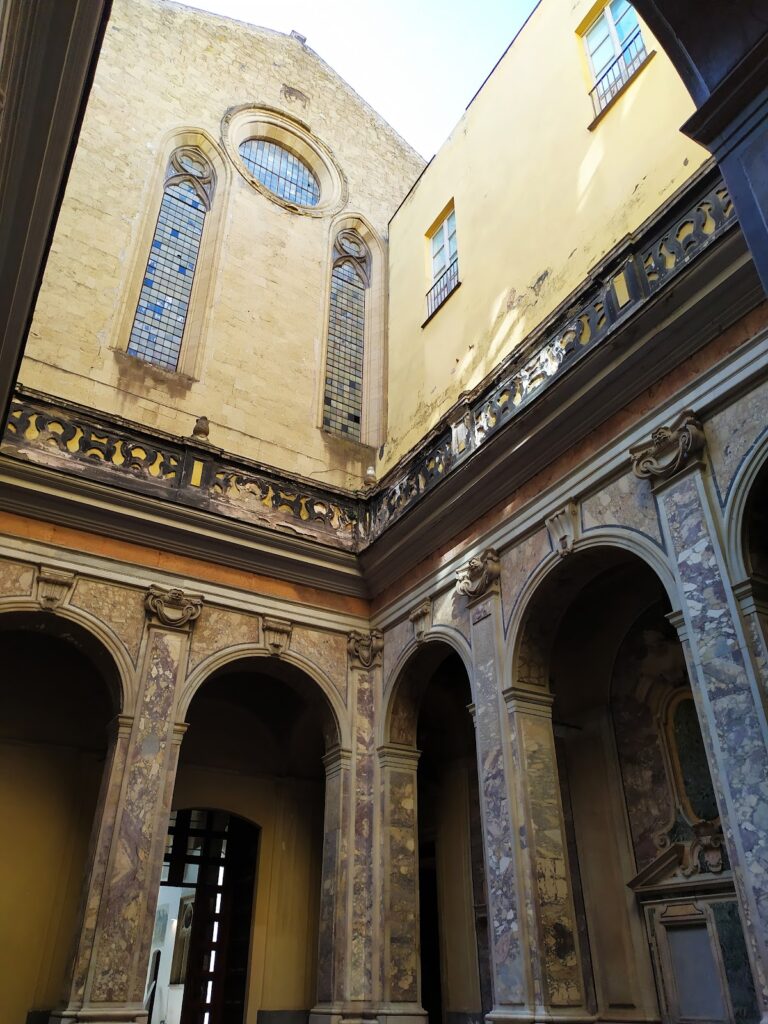
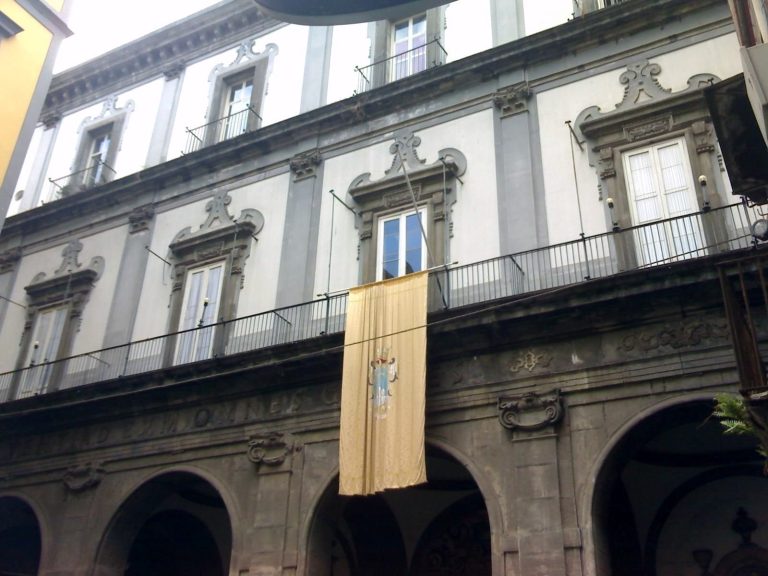
The monastery and cloister adjoin the church and form part of its complex. The cloister was built by Francesco Grimaldi in the late sixteenth century.