Santa Teresa degli Scalzi Church: A Carmelite Church in Verona
Site at a Glance
- Popularity
- Medium
- Country
- Italy
- Primary era
- Early Modern
- Eras represented
- Early Modern, Modern
- Civilizations
- Austrian Empire, Habsburg, Venetian
- Site type
- Religious
- Remains
- Church
On this page10 sections
History
Santa Teresa degli Scalzi Church is a Roman Catholic church in Verona, Italy, begun by the Discalced Carmelites in 1666 to a design by Giuseppe Pozzi. The Discalced Carmelites are a reformed branch of the Carmelite order. The Baroque church belongs to the Diocese of Verona, the Catholic Church’s administrative jurisdiction in the area. It was first dedicated to the Virgin of the Annunciation and the Archangel Gabriel, who, in Christian tradition, announced to Mary that she would bear Jesus. It was later dedicated to Teresa of Ávila, a sixteenth-century Spanish Carmelite nun and reformer, and patron saint of the Discalced Carmelites.
Foundation and dedication
The Discalced Carmelite community reached Verona in 1663 and initially lived at the Dominican convent of Santa Anastasia. After acquiring houses near Valverde and receiving three adjoining fields from the city, the community moved to the temporary site in 1664. Construction of its church and convent began two years later. The main building work was completed before the façade, which was finished in 1750.
Suppression and changing uses
On 8 July 1806, a decree issued under Napoleon, the French emperor whose rule extended over parts of Italy, suppressed the convent. The church continued to hold worship and became a subsidiary church of the parish of San Luca. In 1848, Verona’s local government took over the church and convent for use as barracks and military storehouses; this continued until 1857. Some friars remained in rooms in the convent even after the Italian suppression of religious orders in 1866.
The state assigned most of the convent for use as a prison in 1883. During the first half of the twentieth century, it also held political prisoners. After the Castelvecchio trial in 1943, prisoners included Galeazzo Ciano, a senior Italian Fascist politician, and Emilio De Bono, a general and leading Fascist official.
War damage and later use
An air raid in October 1944 destroyed the sacristy, choir, and adjoining rooms, and damaged the church. About 300 prisoners were sent to Germany. The prison closed after the Second World War. Work on the part of the complex left to the friars began in 1969.
Remains
Plan and exterior
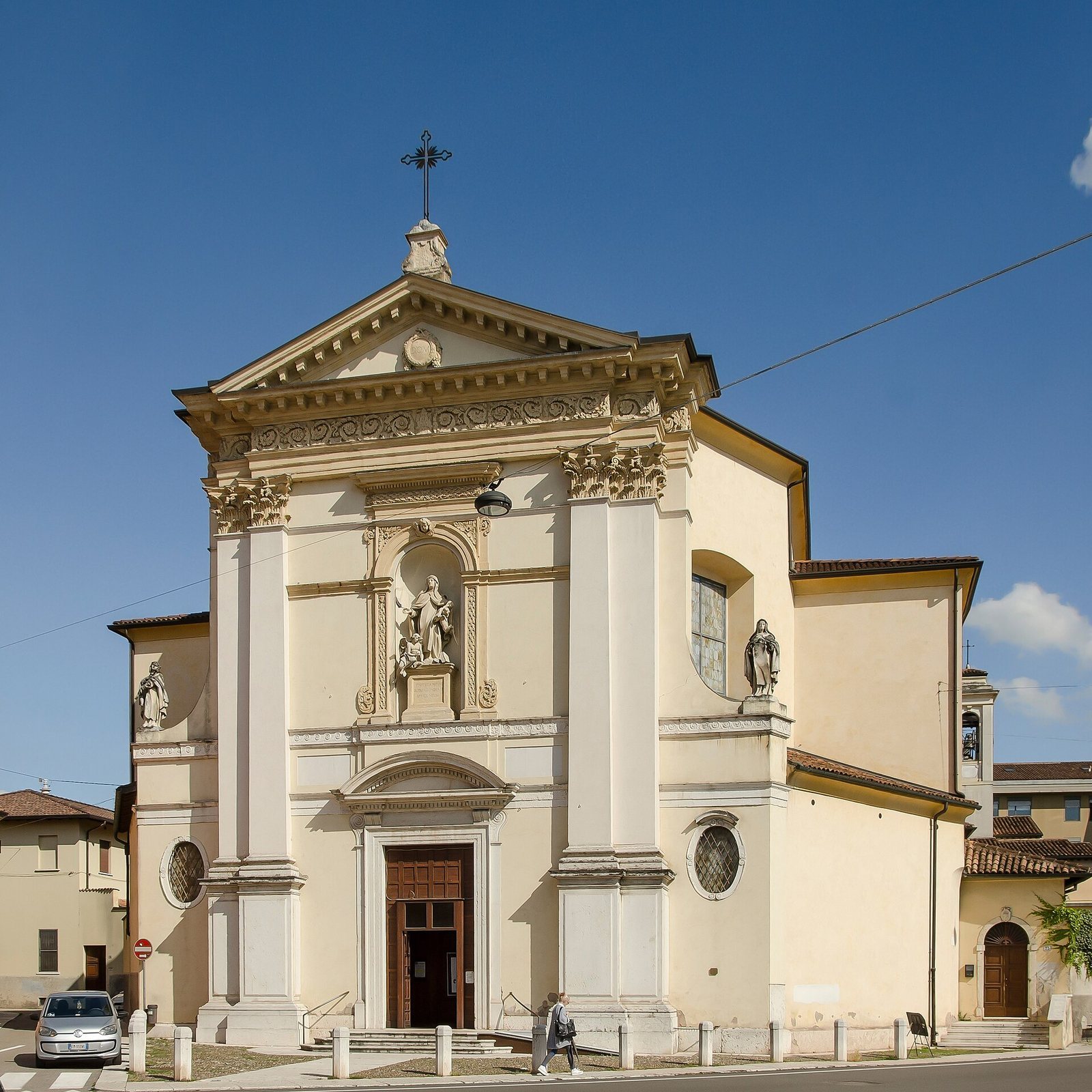
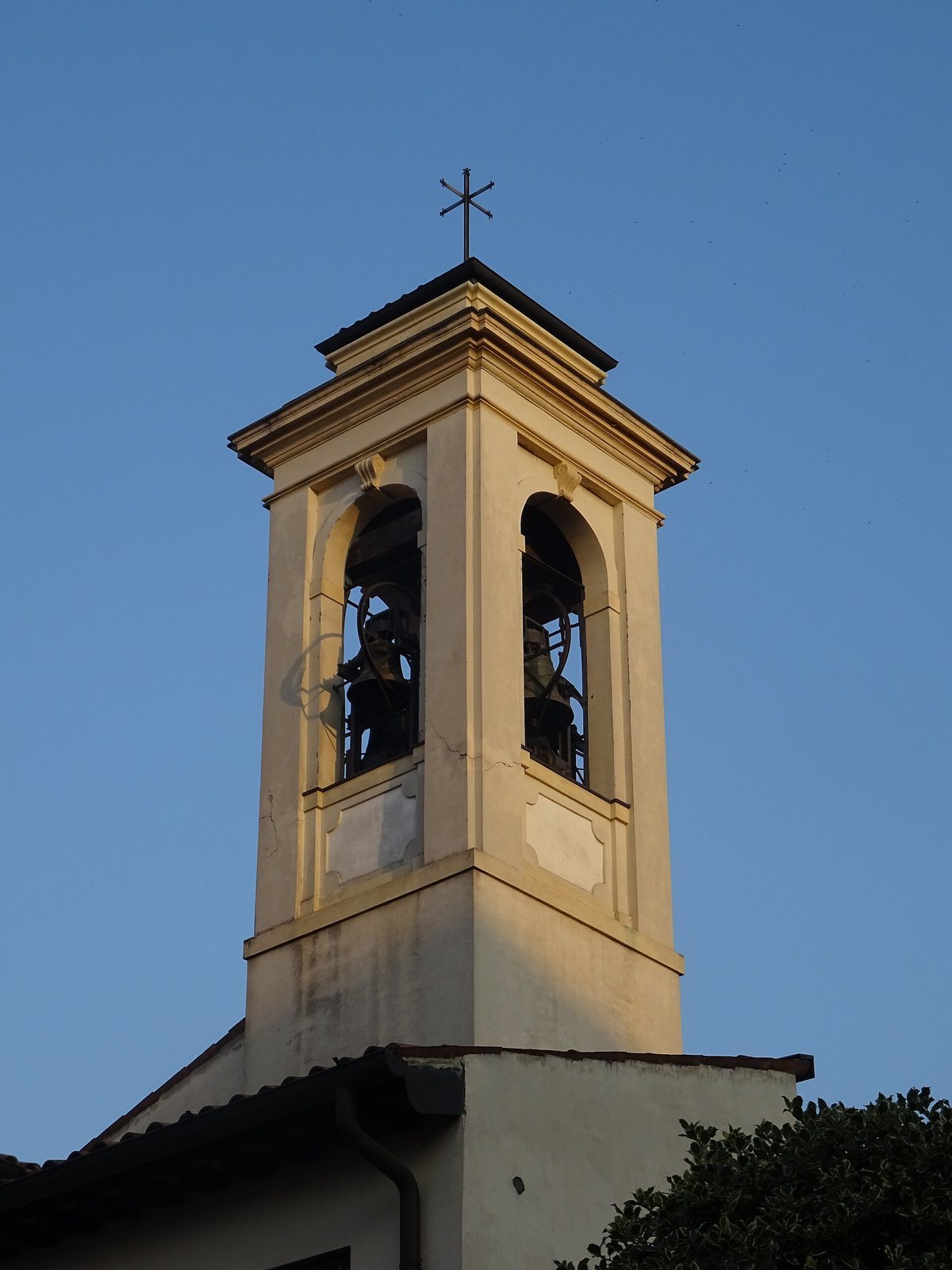
The church’s plan is an elongated octagon set inside a rectangle, with the surrounding space accommodating service areas. Although Baroque design often favours elaborate forms and rich effects, the church’s austere façade, elevations, and flat ceiling retain a Classical character, drawing on measured forms associated with classical antiquity. Three statues by Francesco Zoppi on the façade show Teresa in different liturgical moments. The bell tower holds five bells cast in 1825, tuned in A and rung according to the Veronese bell-ringing tradition.
Altars
Main altar
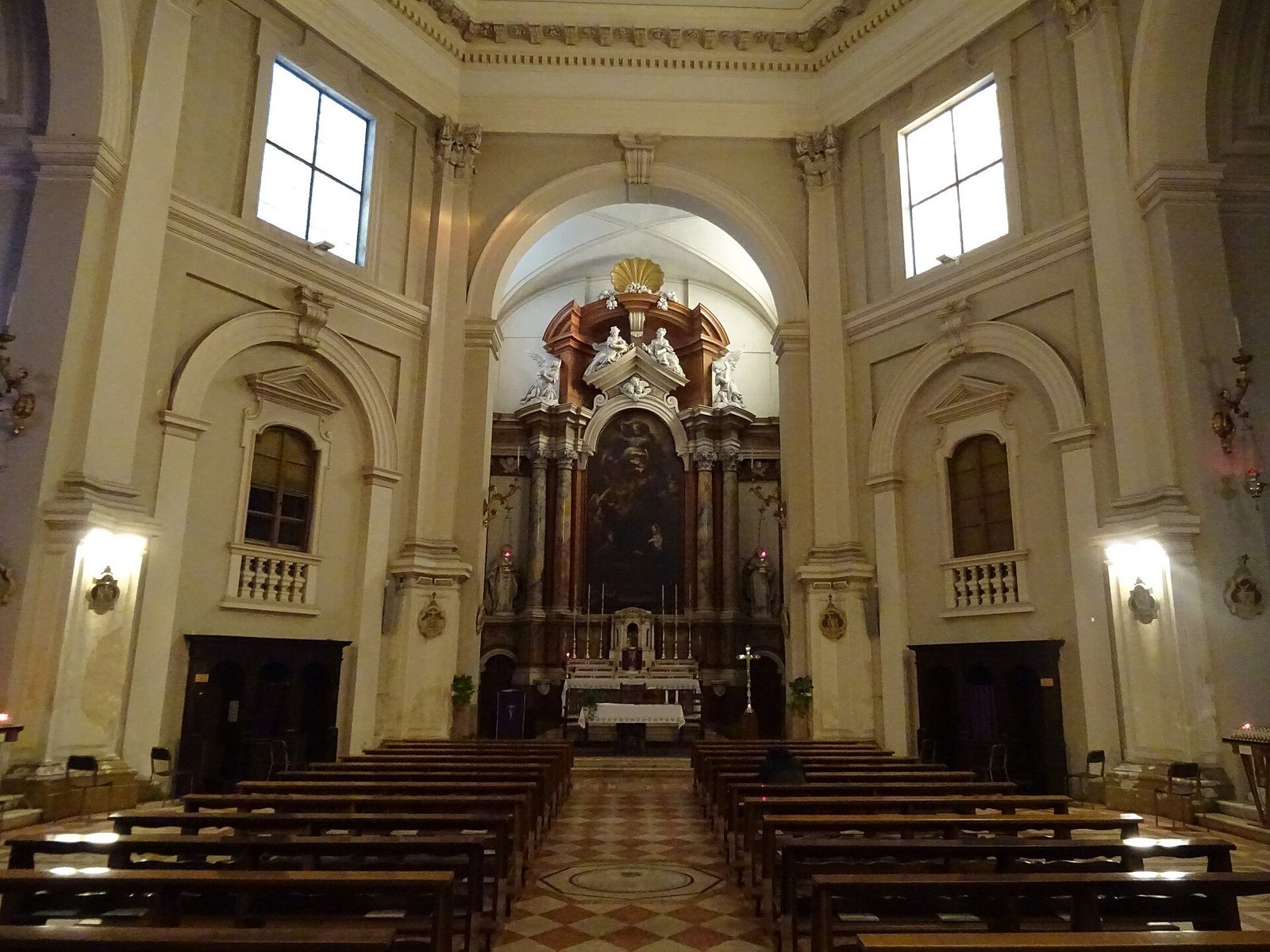
The comparatively Classical main altar includes sculptures by Angelo Calegari. Angels and personifications of the Virtues appear above, with Teresa and John of the Cross below. The large altarpiece, painted by Antonio Balestra, depicts the Annunciation, with God the Father shown in glory above. Its treatment of light drew attention, and the eighteenth-century Veronese painter Giambettino Cignaroli praised the Virgin’s carefully rendered face and proportions, noting features including her wrists, nose, eyes, mouth, chin, and cheeks.
Side altars
Giacomo Puttini sculpted the two side altars, dedicated respectively to Teresa and John of the Cross, a Spanish Carmelite priest, mystic, and reformer. Their rich Baroque decoration includes twisted columns and coloured marble. The left altar once held a painting by Sante Prunati showing John of the Cross prostrate before the Saviour, poor people receiving alms, and the figures of Faith, Hope, and Charity with angels above.
Ceiling and other interior features
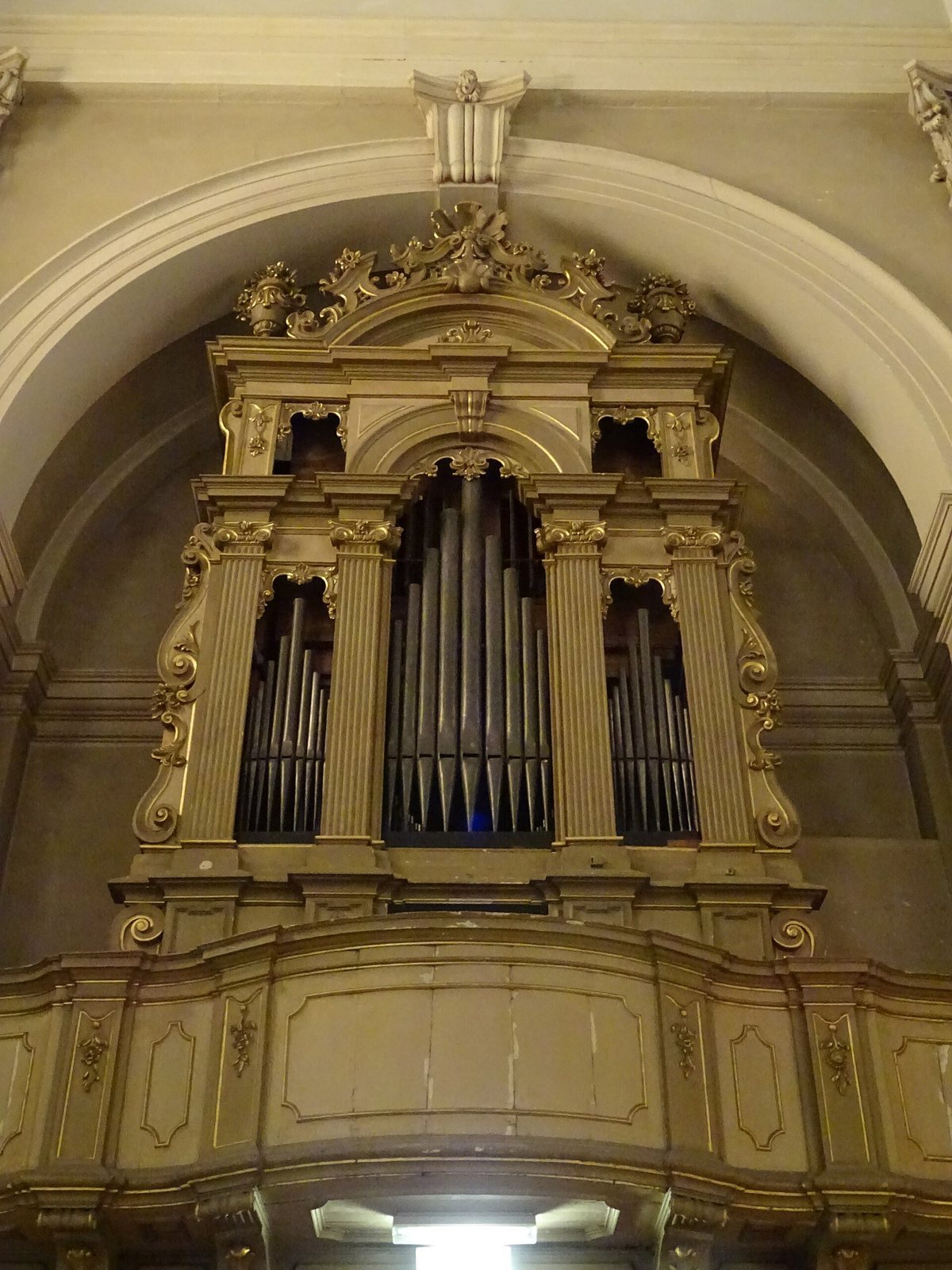
At the centre of the flat ceiling, a fresco by Marco Marcola depicts the Holy Trinity, the Virgin Mary, Saint Joseph, and Teresa in glory. The organ is housed in a choir gallery along the inner wall opposite the façade, and the church has a chapel on each side. The sacristy contains an early eighteenth-century canvas of the Holy Family and Saint James.