Church of the Holy Saviour (Alcamo): A Benedictine Church and Monastic Complex
Site at a Glance
- Popularity
- Very Low
- Country
- Italy
- Primary era
- Early Modern
- Eras represented
- Medieval, Early Modern
- Civilizations
- Kingdom of Sicily, Spanish
- Site type
- Religious
- Remains
- Church
On this page11 sections
History
The Church of the Holy Saviour, also known as Badia Grande, is a Catholic church in Alcamo, Italy, completed in the 14th century and affiliated with the Benedictine order and the Diocese of Trapani, an ecclesiastical district overseen by a bishop. Benedictines are members of a Christian monastic tradition based on the Rule of Saint Benedict.
Medieval origins and rebuilding
The church was already in existence by 1300. A document from 1308 names it in connection with the apostolic tithe, a levy collected for the papacy. It was rebuilt in the mid-16th century, then reconstructed again between 1690 and 1697, when it was consecrated.
A restoration in 1737 added stucco decoration, and the church reopened in 1759. Its interior preserves works associated with several later periods of artistic activity.
The nunnery and its school
The adjoining Badia Grande nunnery housed nuns from noble families, who undertook religious observances and made sacred objects through enamel and wax modeling. They may also have produced vestments. In 1567, Abbess Margherita de Montesa, the community’s leader, and a group of nuns moved to the monastery of San Francesco di Paola, later called Badia Nuova, to establish a new community.
From 1862, the nuns operated a school in an effort to prevent the convent’s suppression under laws enacted in 1866. Its three-class College for Young Women taught reading, writing, embroidery, arithmetic, geography, and Italian; pupils in the final class also studied history, music, and French. Fees covered books and equipment, and could include medical care.
Later changes
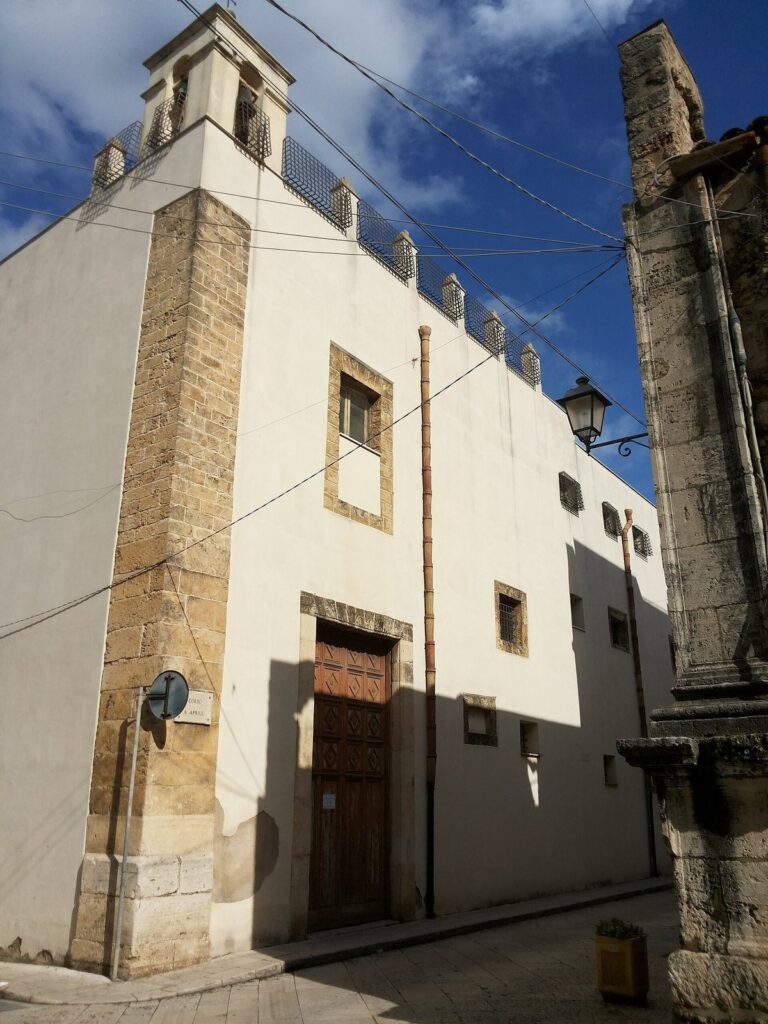
The convent was suppressed in 1906, and the remaining nuns moved to Badia Nuova. Its buildings subsequently served as barracks, primary and nursery schools, and a vocational school. They are now used by the Pietro Maria Rocca Comprehensive School. Damage from the 1968 Belice earthquake forced the church to close for several years.
Remains
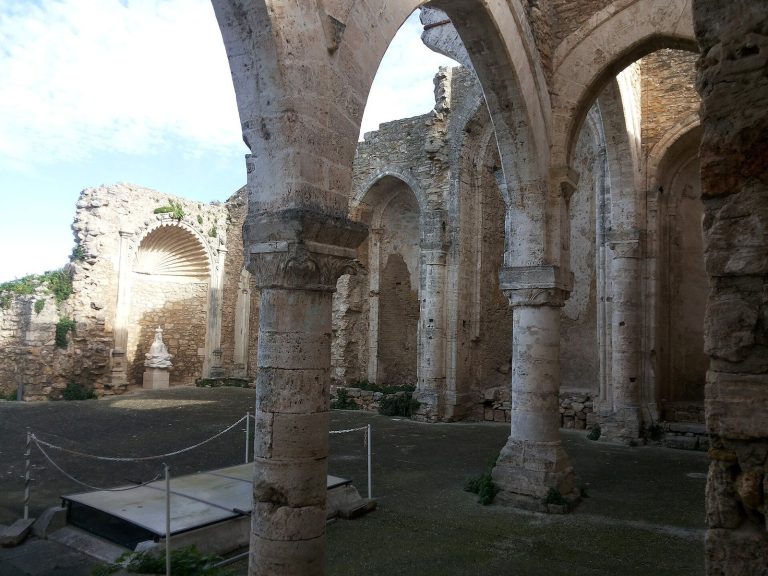
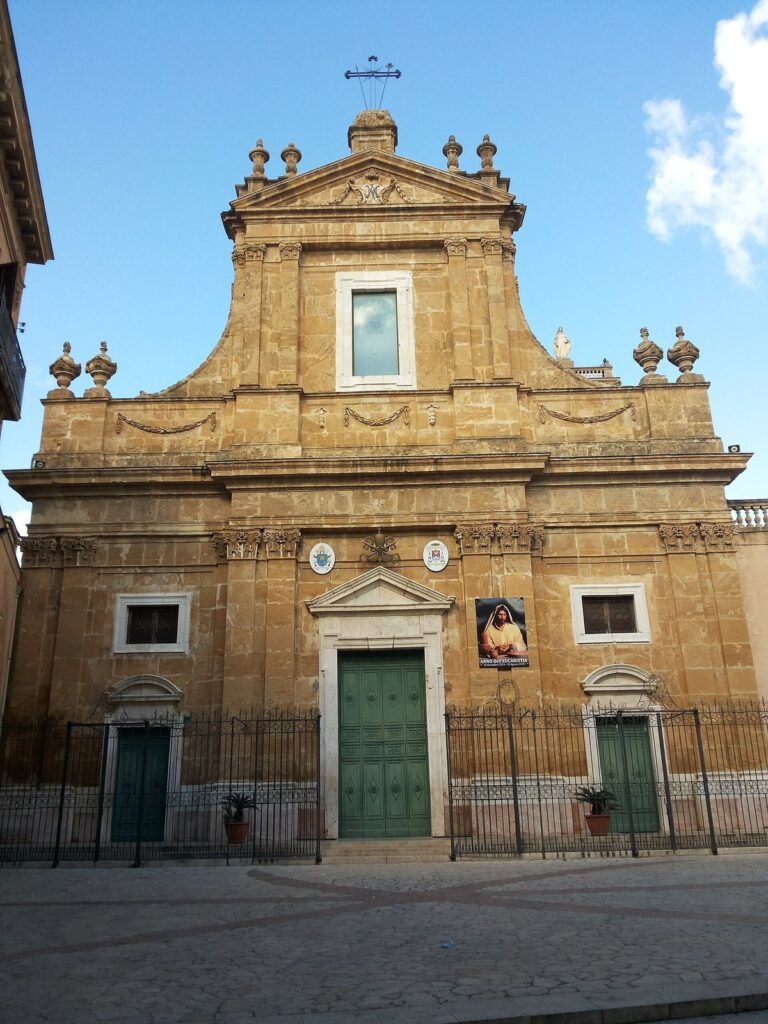
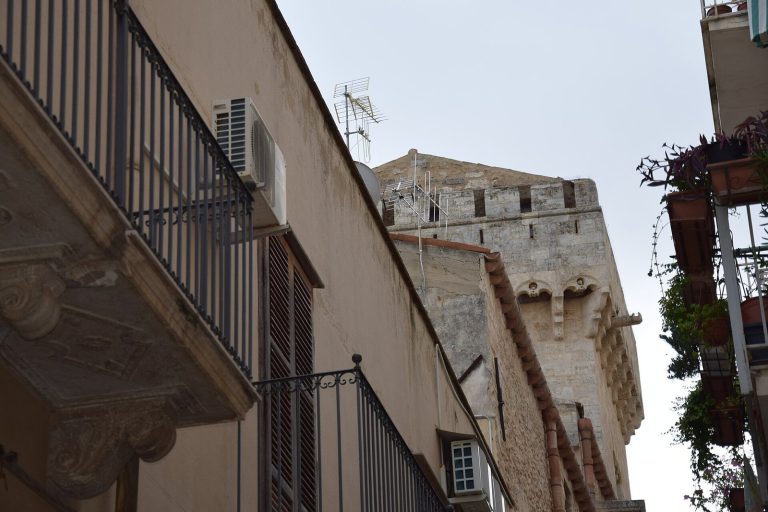
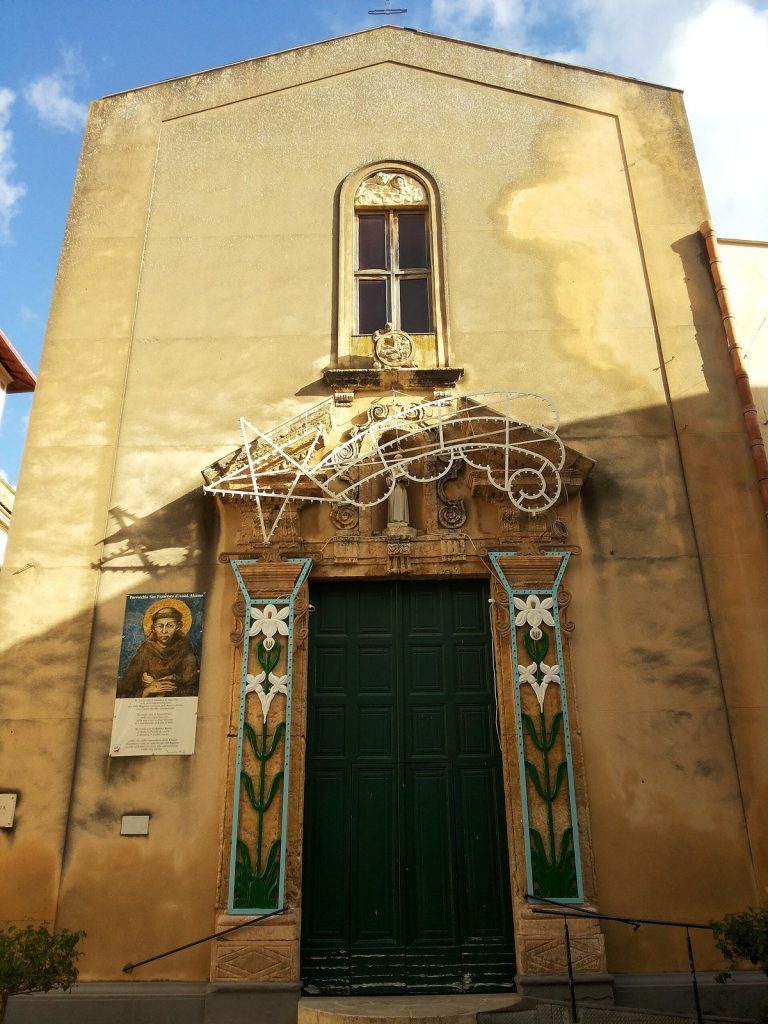
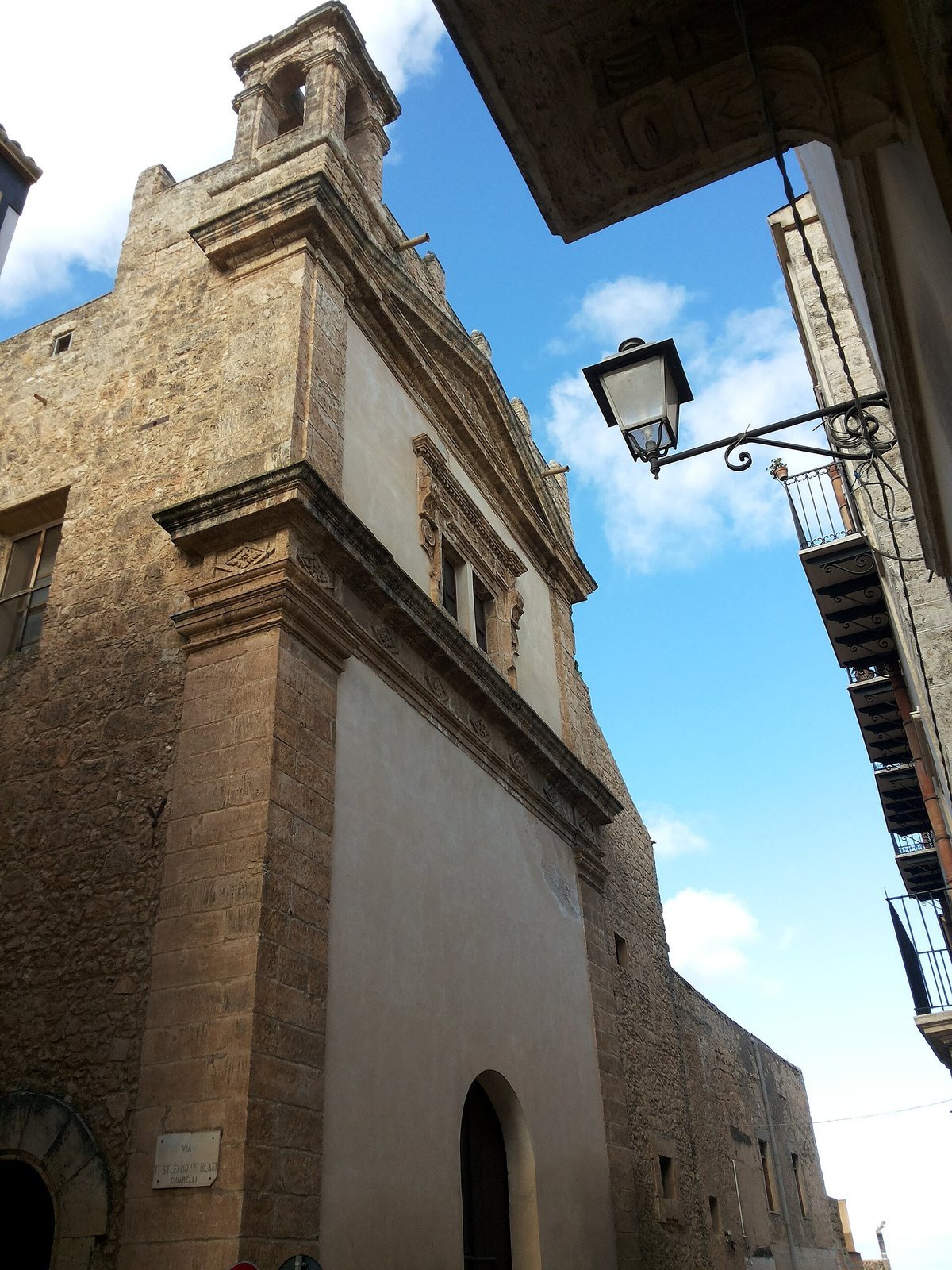
The church has a classical-style façade with portals and windows, topped by a square bell tower with four round arches. It adjoins the former Badia Grande nunnery. Inside, a single nave, or main worship space, has a barrel vault, a continuous arched ceiling, and five altars.
Sculpture and paintings
Stucco figures
Ten statues made in 1758 by Bartolomeo Sanseverino decorate the church. They are formed from stucco, a plaster-based material used for decoration. Two large angels stand in the sanctuary area, while eight allegorical figures appear on the walls: Religion, Faith, Patience, Renunciation of the World, Vigilance, Happiness, Charity, and Hope. Sanseverino was a pupil of Giacomo Serpotta, a Sicilian Baroque sculptor known for his stucco work.
Altarpieces and vault paintings
Carlo Brunetti’s painting of the Transfiguration of Jesus, dated 1759 to 1760, is on the high altar. Brunetti also painted scenes on the vault showing Saint Benedict among other saints and the sacrificial Lamb among angels. The first altar on the right holds The Ecstasy of Saint Teresa, attributed to Pietro Novelli, and the first altar on the left has the similarly attributed Assumption of the Virgin. Novelli was a Sicilian Baroque painter.
Saint Benedict
A marble statue of Saint Benedict of Nursia, made by the Renaissance sculptor Antonino Gagini in 1545, depicts the saint blessing and wearing a cope, a long ceremonial cloak worn by clergy. Relief carvings on its pedestal show Saint Placidus being rescued from a river and a young man restored to life. Placidus is traditionally regarded as a disciple of Benedict.
Annunciation paintings and carved panels
Baldassare Massa made oval paintings of the Annunciation. The paintings, along with carved panels depicting Saint Michael the Archangel and Saint John the Baptist, were stolen in the early 1980s. Some of the works were bought back at an auction in London in 1994.
Eucharistic tabernacle
The marble Eucharistic tabernacle, a repository for the consecrated Eucharist, rises about four metres and is carved in deep relief. Antonino Gagini began the work, and Abbess Margherita de Montesa arranged for Baldassare Massa to complete it. The tabernacle was made in 1557 to 1558 and gilded in 1558 by the painter Giovan Leonardo Bagolino. Its composition includes a canopy-like structure among four kneeling angels, a crucifix, figures of Saint John the Apostle and the Virgin Mary, and the Holy Spirit as a dove among four angel heads. Other carved scenes show the Flagellation, John the Baptist baptizing Jesus, Saint Michael defeating Satan, and the rebel angels cast into hell. The work also bears the arms of Alcamo and Margherita de Montesa. Massa added seven scenes from the Passion of Christ, oval images of Saint Benedict and the Redeemer, and God the Father with outstretched arms.