Santa Maria Podone: A Church in Milan
Site at a Glance
- Rating
- 4.6
- Popularity
- Medium
- Country
- Italy
- Primary era
- Early Modern
- External website
- Open
- Eras represented
- Medieval, Early Modern, Modern
- Civilizations
- Duchy of Milan, Holy Roman Empire, Italian, Spanish
- Site type
- Religious
- Remains
- Church
On this page10 sections
History
Origins and rebuilding
Santa Maria Podone is a church in Piazza Borromeo in Milan, Italy, founded in the ninth century and consecrated in 871. Its name comes from the nobleman Vuerolfo, also known as Pedone or Podone, son of Ercmario of Milan, who donated the land for its construction. He was reportedly a soldier in the army of Charlemagne, the Frankish king crowned emperor in 800.
The church was rebuilt in the Gothic style in 1440, when the Borromeo family also added a chapel. Its completion is dated to the sixteenth century. A further major reconstruction began in 1625 under Federico Borromeo, archbishop of Milan, and gave the church a Baroque character.
Later history and present use
Ruggero Boscovich, an eighteenth-century scientist and mathematician, was buried in the church on 13 February 1787. The Chapter of Santa Maria Podone was suppressed in 1810.
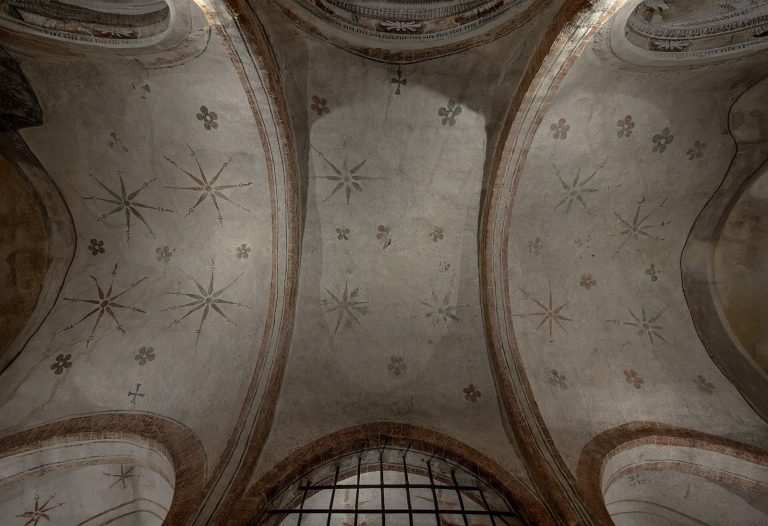
Repeated alterations and restorations have changed the church over time. Conservation work in 2004–05 uncovered fifteenth-century frescoes in the left apse that had been concealed behind plaster. Since 13 October 2012, the church has housed the Orthodox Church of Italy as a Greek Orthodox place of worship following the Byzantine rite, a liturgical tradition used by Eastern Orthodox churches. It is associated with the Orthodox Archdiocese of Italy. On 15 May 2013, it received Bartholomew I, Ecumenical Patriarch of Constantinople and a senior leader of the Eastern Orthodox Church, during his visit to Milan.
Remains
Exterior and plan
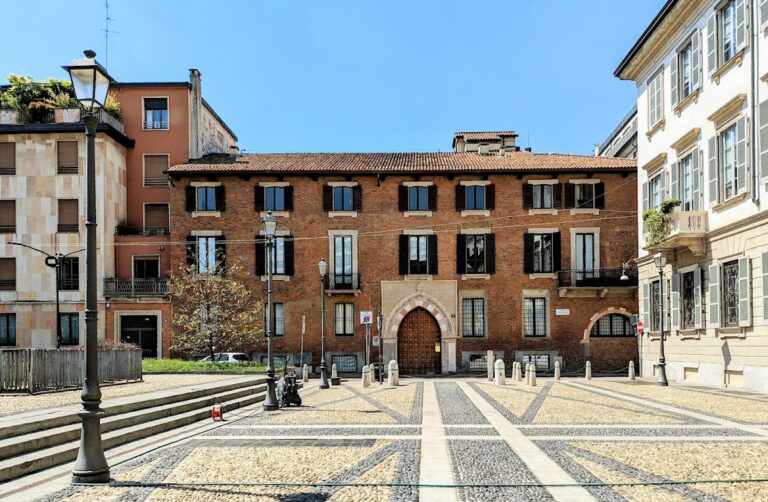
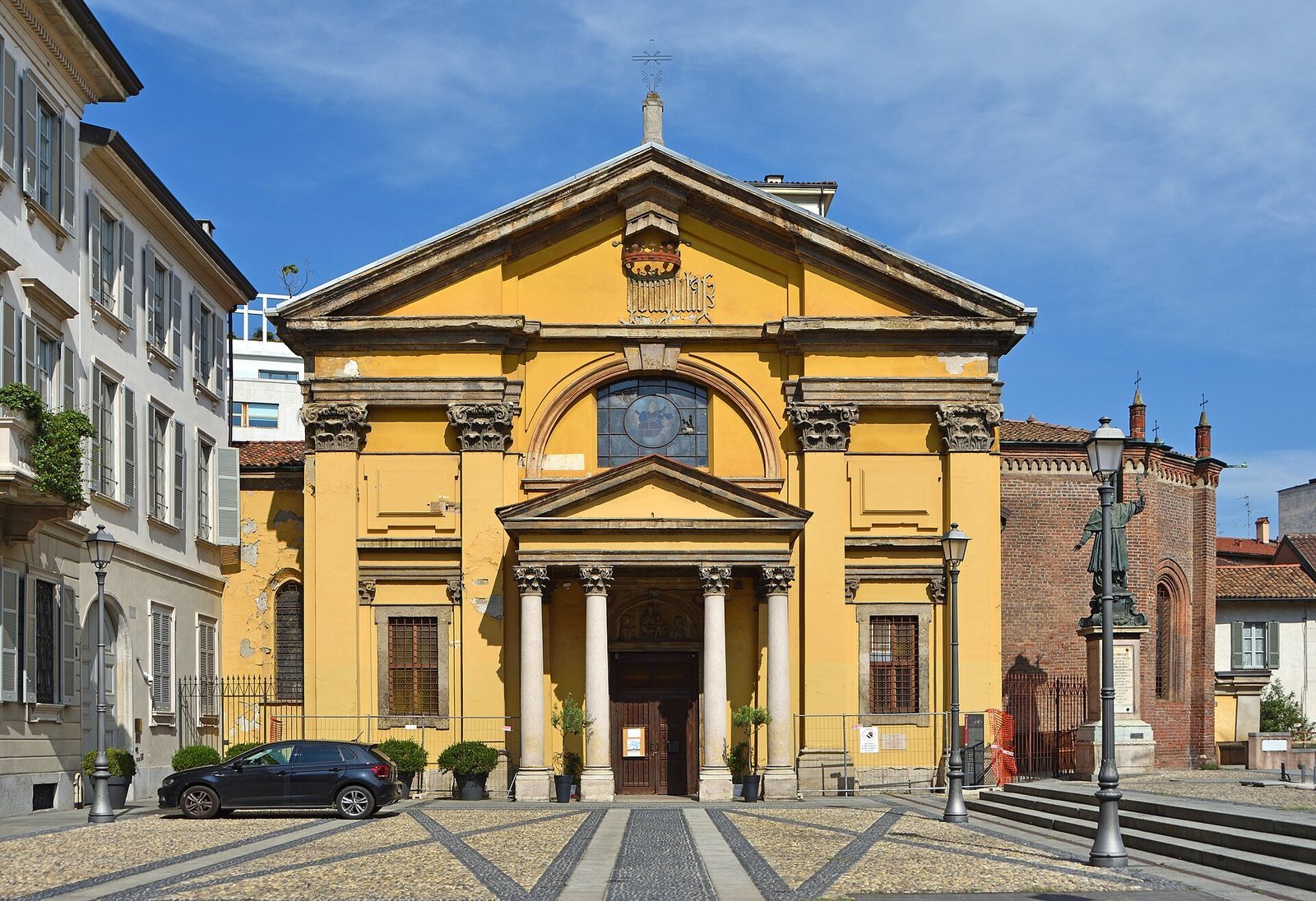
The church retains a three-aisled plan, with each aisle ending in a semicircular apse, a rounded space at the end of a church. Its interior has a Baroque appearance shaped by restorations. The building stands in Piazza Borromeo, across from the Borromeo family’s principal Milanese palace. A statue of Saint Charles Borromeo by the sculptor Dionigi Bussola stands in front of the church.
Façade
The gabled Baroque façade was designed by Fabio Mangone and built between 1628 and 1634. Two pairs of robust pilasters, shallow projections resembling columns, frame its composition. Rectangular windows have marble surrounds, and a large central window sits beneath a triangular pediment. The pediment bears the Borromeo crest, including two crowns and an inscription meaning humility.
Entrance and bell tower
A later Neoclassical porch, supported by four marble columns, shelters the older entrance portal. The chaplain Ambrogio di Pietro donated the portal, which was made by Samuele and Policleto Luvoni. The sixteenth-century bell tower is attributed to Pellegrino Tibaldi.
Interior
Chapels
The chapel on the right is dedicated to the Holy Family and formerly served as the Borromeo family’s private chapel. Its apse has a polygonal shape and Gothic windows with one main opening each. On the left, a chapel formerly dedicated to Saint Justina is now devoted to the Crucifix; it contains Giovanni Stefano Danedi’s 1638 painting Martyrdom of Saint Justina. A smaller chapel on the left, designed by Carlo Cerada in 1859, is dedicated to Our Lady of Childbirth. Above its altar is a fresco of Mary attributed to Michelino da Besozzo.
Altars and apses
The main apse forms the presbytery, the clergy’s area around the altar, and is divided from the nave by a marble balustrade. Its furnishings include a Neo-Gothic pulpit and choir, as well as a Baroque main altar of multicolored marble dating to 1625–29. On the right side of the nave, the altar of Saint Renato contains the martyr’s relics, objects preserved for their association with him.
The left apse preserves fifteenth-century frescoes: a Coronation of the Virgin in its semi-dome and a Crucifixion of Jesus. A pipe organ made by Balbiani-Vegezzi-Bossi was built after the Second World War, with its keyboards positioned behind the main altar.