Santa Maria Maggiore: A Former Franciscan Convent Church in Venice
Site at a Glance
- Rating
- 3.9
- Popularity
- Very Low
- Country
- Italy
- Primary era
- Early Modern
- External website
- Open
- Eras represented
- Early Modern, Modern
- Civilizations
- Venetian
- Site type
- Religious
- Remains
- Church
On this page11 sections
History
Santa Maria Maggiore is a former Roman Catholic church in Venice, Italy, built by a Franciscan women’s convent during the Renaissance. Located in the Santa Croce district, the present church was constructed between 1523 and 1531 and belonged administratively to the Patriarchate of Venice. Its origins lay in a community of devout women who lived near Sant’Agnese in Dorsoduro and sought permission to establish a convent in 1483.
Foundation and Renaissance construction
An earlier request to establish the convent was refused, but land on the island of Santa Maria Maggiore was granted to the women and a hermit on 11 November 1497. A wooden convent and church followed, built approximately between 1497 and 1504. Tullio Lombardo, a Venetian Renaissance sculptor and architect associated with the transition from late Gothic forms to Renaissance classicism, took part in the construction and marble decoration from 1500 to 1505. The present brick church was then built between 1523 and 1531, probably under his supervision.
The Malipiero family supported the convent’s foundation and early development. Alvise Malipiero made a major donation, remained its patron until his death in 1557, and was buried in the family tomb inside the church. The church was dedicated to Santa Maria Maggiore and San Vincenzo. A Byzantine image of the Virgin was traditionally associated with the choice of the Santa Maria Maggiore dedication, and the nuns also received an old image of the Virgin.
Convent life and supervision
The convent expanded through donations of artworks and other benefactions. By 1695 it housed 112 sisters. From 1521, the Venetian state exercised increasing supervision over women’s monasteries through the Provveditori sopra i Monasteri, an institution established to oversee such communities. Enclosure was imposed on most convents from 1570, and in 1594 the convent came under the authority of the Venetian patriarch at the initiative of Pope Clement VIII.
Suppression and changing uses
The fall of the Venetian Republic in 1797 was followed by the Napoleonic suppression of churches and monasteries. The convent was abolished under the decree of 5 June 1805 and subsequent measures, and its residents had left by 12 August that year. The complex passed to the military, while the church was closed and deconsecrated by the early nineteenth century, no later than 1807.
The former convent became barracks, and the church was stripped of its furnishings and paintings before being converted into a stable. The former convent square was renamed Campo di Marte, where Austrian officers practised riding and civilians could also enter. The main altar was transferred to Santa Maria Mater Domini in 1829. A fire severely damaged the convent’s load-bearing structures in 1817, and the buildings were not used again before their demolition in 1900.
After the convent’s demolition, the church served as a tobacco warehouse and its interior was rebuilt. A prison complex, Carceri Giudiziarie, was constructed on the former convent grounds from 1927, receiving prisoners from the Palazzo delle Prigioni at San Marco. Santa Maria Maggiore now forms part of the Santa Maria Maggiore prison district.
Restoration and preservation
The church was restored between 1961 and 1965 and again in 1974. Nineteenth-century additions were removed during work in the late 1960s, which also included repairs to damaged plaster. A fresco dated 1700 was removed during this intervention.
Remains
Island setting and convent layout
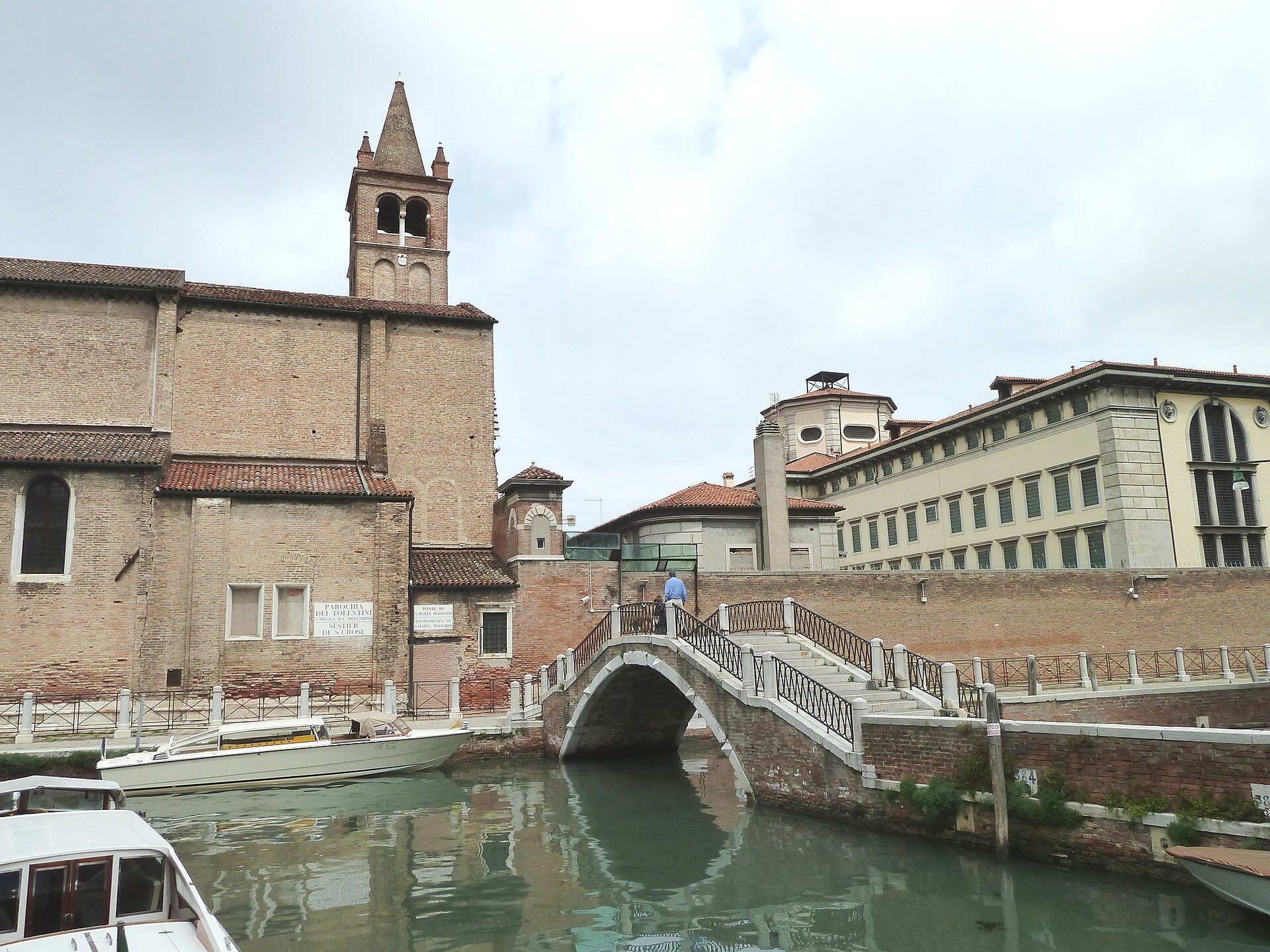
The church and convent originally occupied a rectangular island at the western edge of Santa Croce, surrounded by canals. The northern boundary was the Rio dei Pensieri, later filled in and renamed Rio terà dei Pensieri. The southern canal was crossed by the Ponte Santa Maria Maggiore, while the Ponte Campo di Marte lay to the west.
An engraving in an 1806 manuscript preserves the appearance of the former convent. An entrance beside the left side of the church facade opened into a long atrium and then a spacious courtyard bounded on three sides by a cloister, a covered passage bordering a convent courtyard. A second cloister stood between this courtyard and the Santa Maria Maggiore square. Built with the church, it was the oldest structure in the complex.
Church structure and artworks
Renaissance church
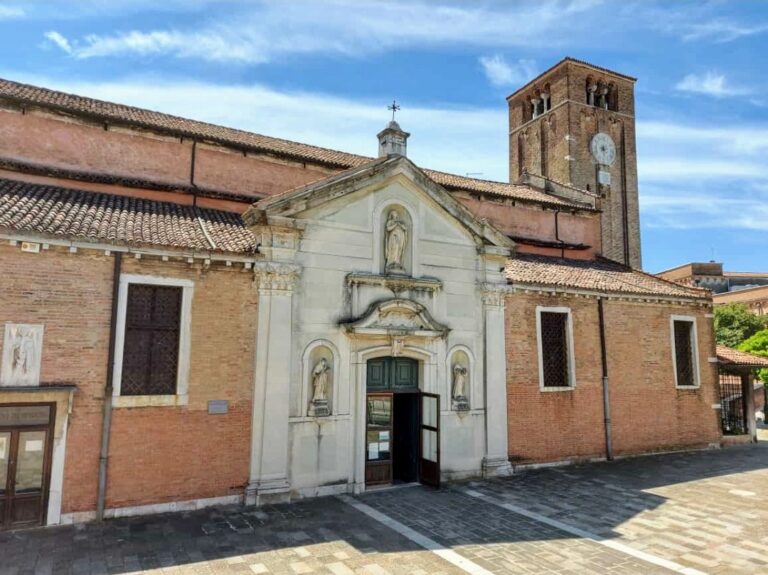
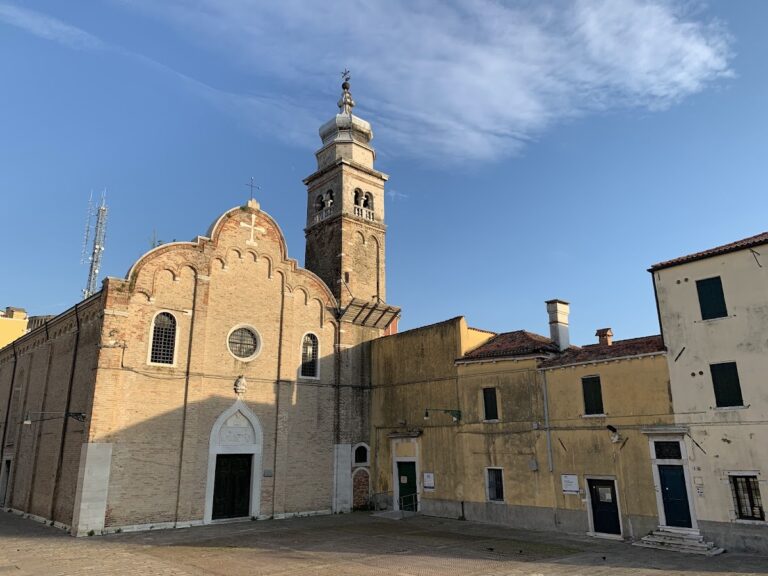
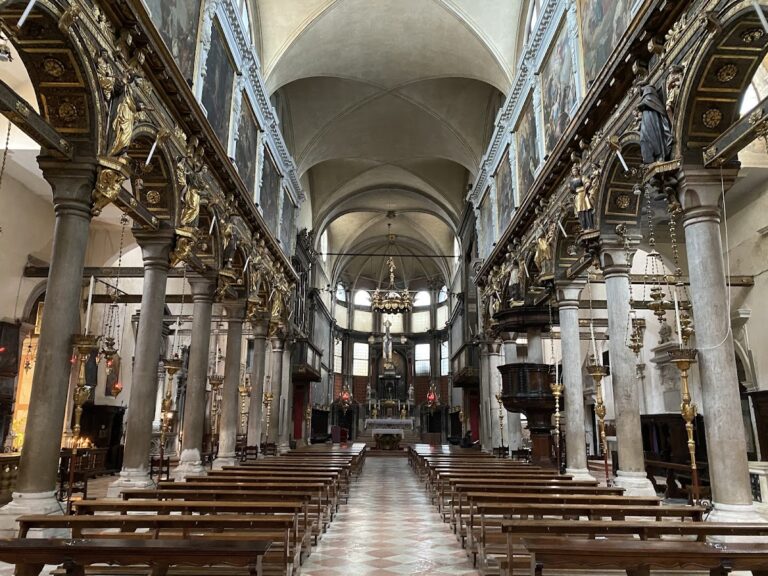
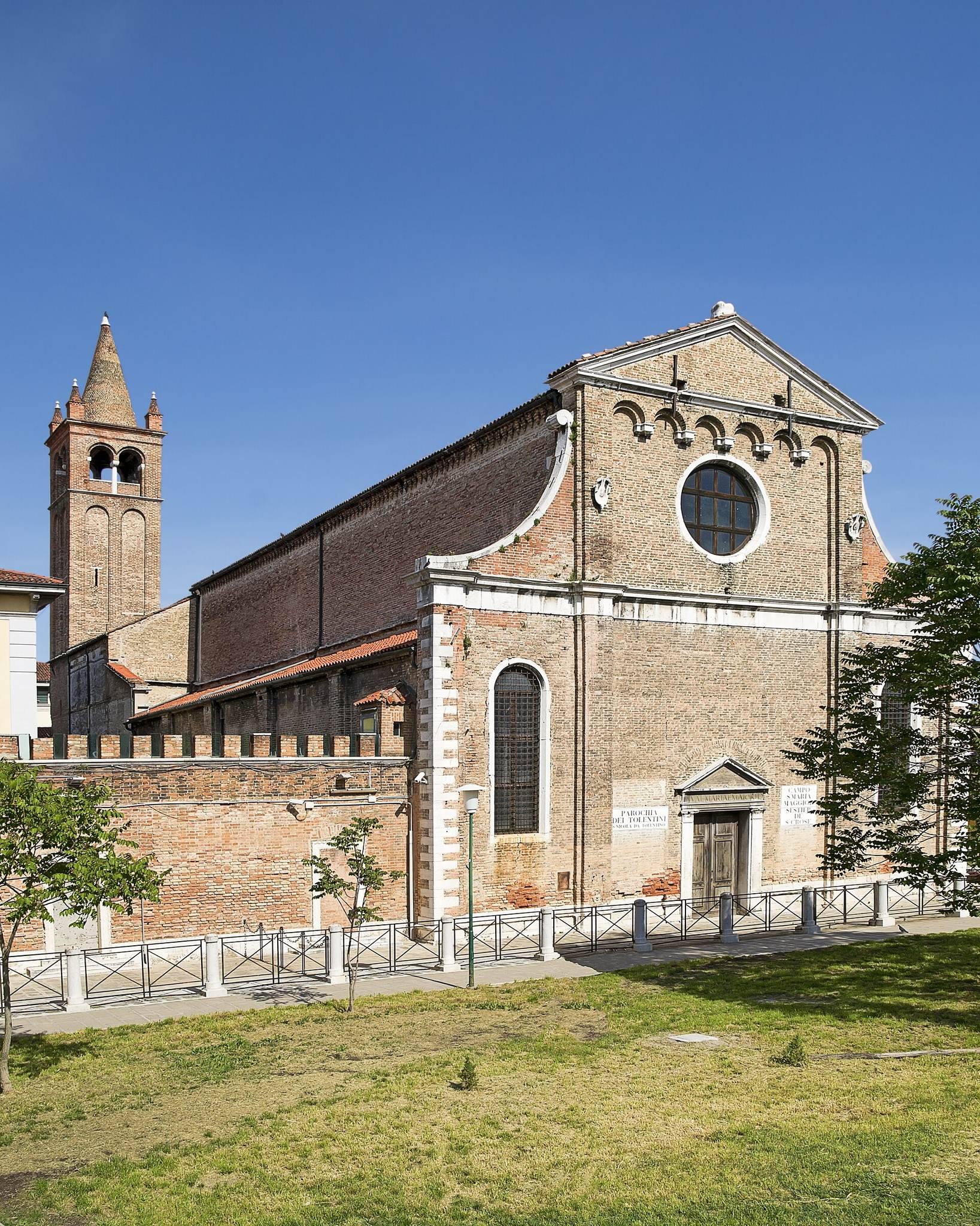
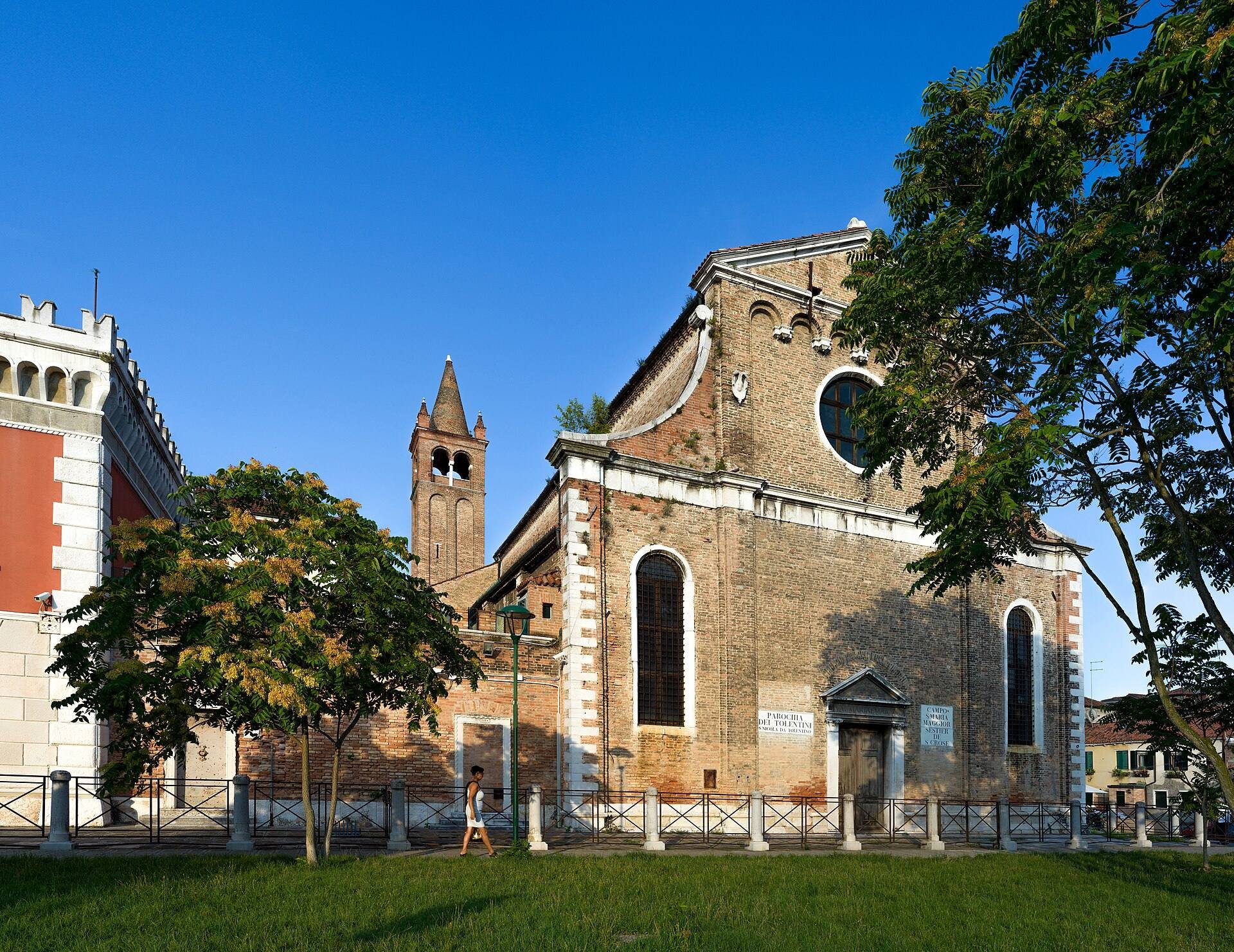
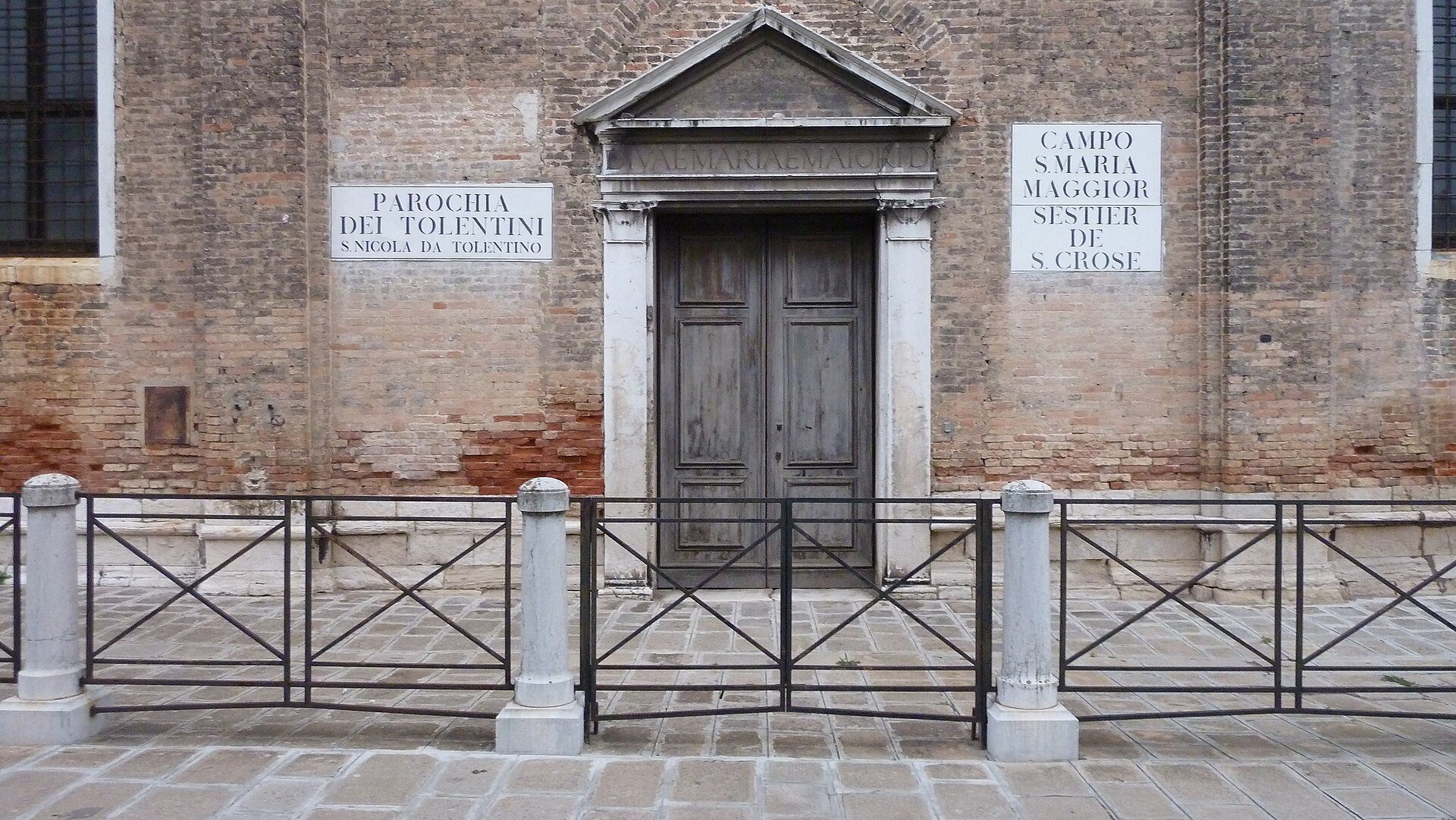
The church is a Renaissance brick building attributed to Tullio Lombardo. Its facade has a simple portal, a central cornice, a triangular upper termination, and gentle arches linking the central section with the sides. Inside, a basilica plan, meaning a long central nave flanked by lower side aisles, is combined with a long presbytery, the area reserved for the high altar and clergy, and shallow chapels along its sides.
Five pairs of columns divide the nave from the side aisles. Their Ionic capitals, classical column tops marked by paired spiral forms, support semicircular arches. Traces of a painted imitation colonnade remain on the right wall. The church originally contained 11 altars, including the high altar, two in the side chapels, and four in each side aisle. Their dedications included saints of the order, the Coronation of the Blessed Virgin Mary, Saint Marcellus, Saint Nicholas, the Ascension, Saint Clare, Our Lady of Sorrows, and Saint John.
Paintings and movable works
Eight altars and their associated artworks were removed or lost. Giovanni Bellini’s Saint John the Baptist, commissioned for the chapel beside the high altar, was transferred to the Accademia in Venice after a local protest prevented its intended transfer to the Pinacoteca di Brera in Milan. Paolo Veronese’s Assumption of the Blessed Virgin Mary, formerly displayed on the high altar, was conserved and is held by the Accademia.
The Accademia also holds Virgin and Child with Saints and Members of the Marcello Family, probably by Giambattista del Moro, which has been listed in its collection since 2008. Works formerly associated with the church and held by the Pinacoteca di Brera include Veronese’s Agony in the Garden of Olives, Alessandro Varotari’s Victory of the People of Chartres over the Normans, and Andrea Mantegna’s Madonna and Child with a Choir of Cherubim.
The main nave formerly contained a fresco representing the Exaltation of the Cross, Souls in Purgatory, and Our Lady in Glory with Saint Francis. Dated 1700, it was removed during the late-1960s renovation so that damaged plaster could be restored.
Campanile
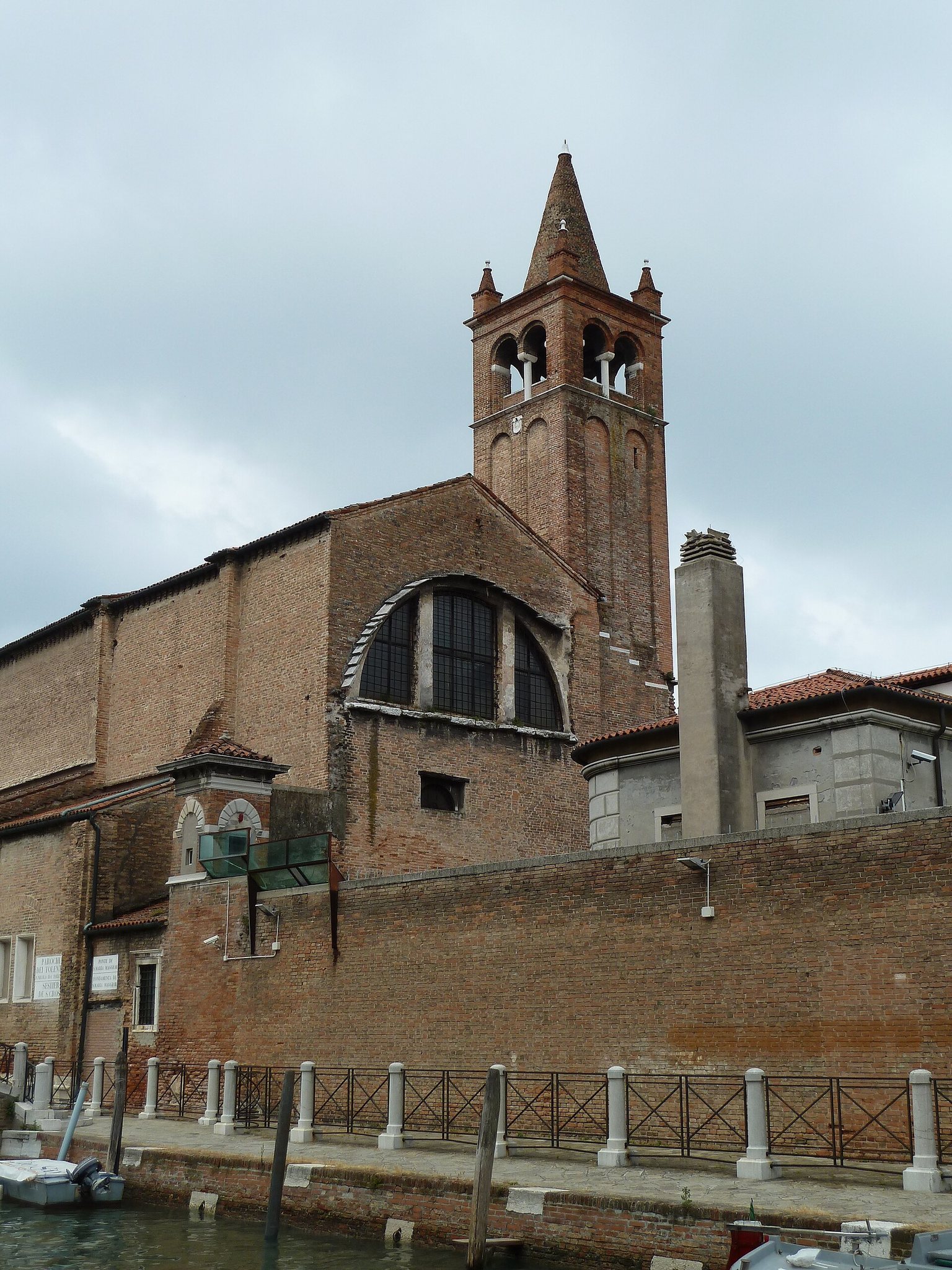
The square-plan campanile, or bell tower, rises 33 metres. It bears the Malipiero family coat of arms and is topped by a Gothic-style conical spire surrounded by four pinnacles.