Santa Maria in Fontibus: A Parish Church in Albenga
Site at a Glance
- Popularity
- Medium
- Country
- Italy
- Primary era
- Early Modern
- Eras represented
- Medieval, Early Modern, Modern
- Civilizations
- Genoese, Holy Roman Empire, Italian
- Site type
- Religious
- Remains
- Church
On this page9 sections
History
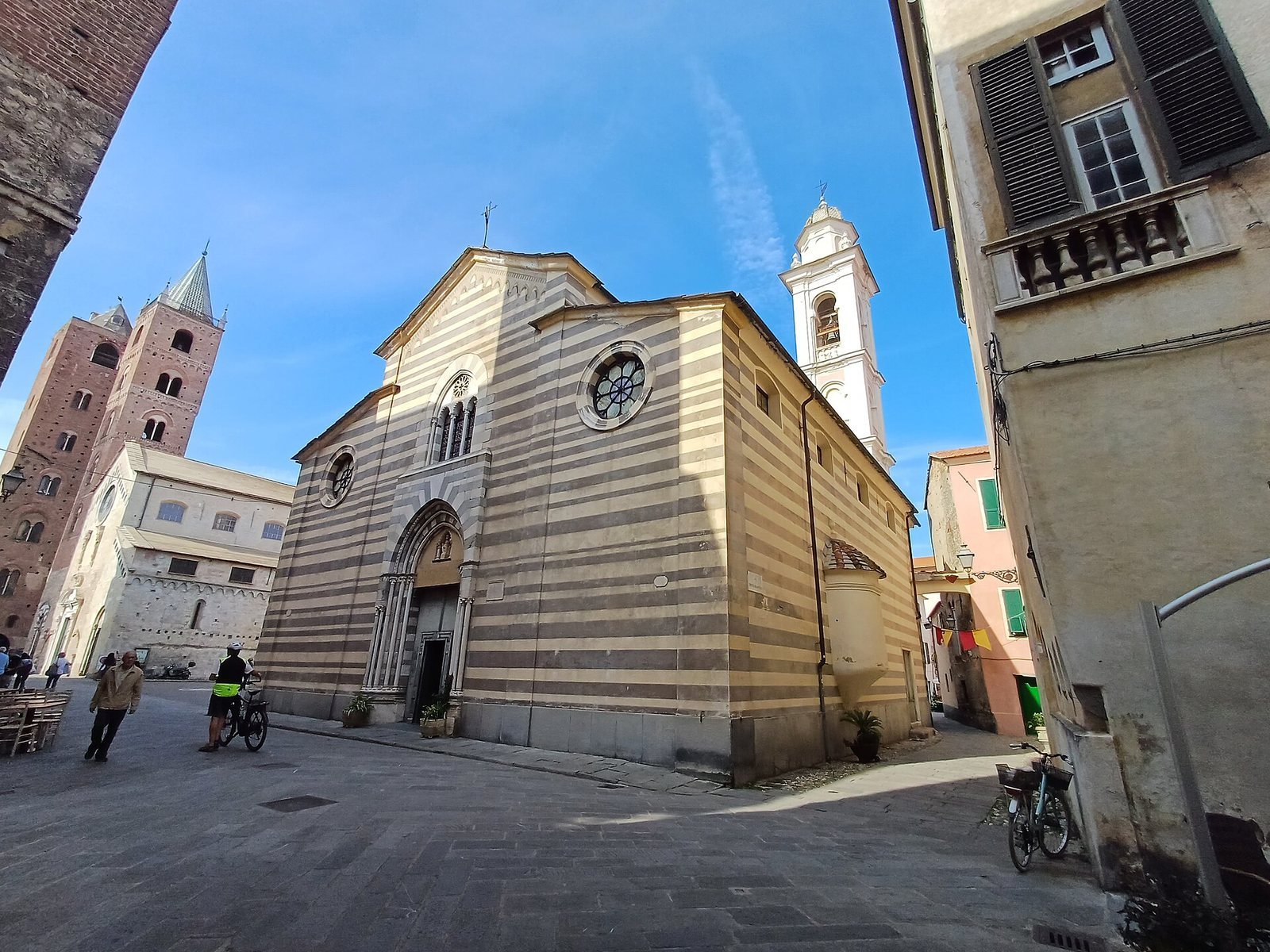
Santa Maria in Fontibus is a Roman Catholic parish church dedicated to the Virgin Mary in Albenga, Italy. It is first recorded in 1098, already serving as a parish, and its construction is attributed to Benedictine monks, members of a Catholic monastic order shaped by the Rule of Saint Benedict. The church belongs to the Albenga vicariate of the Diocese of Albenga-Imperia and gave its name to the historic Santa Maria quarter. Its façade is Gothic in style.
Origins and medieval setting
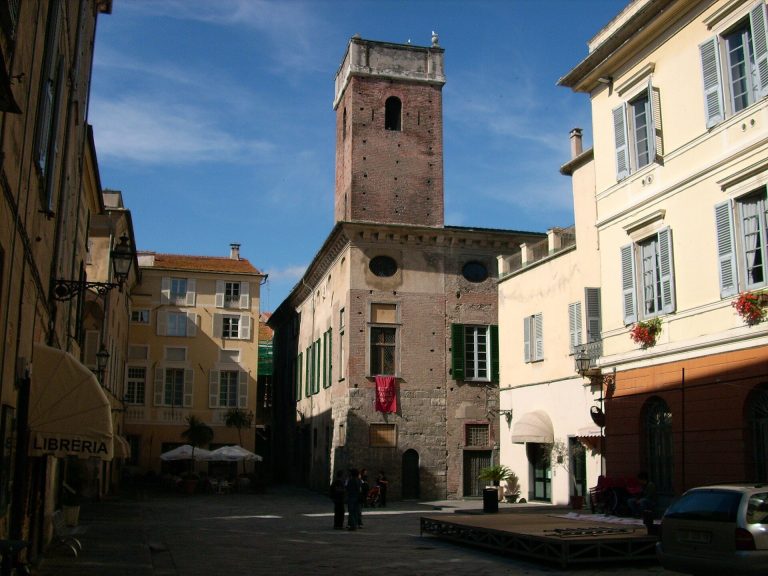
The Latin title in Fontibus, meaning “at the fountains,” may refer to a tradition about miraculous fountains beneath the sanctuary. The church once stood beside the cloister of the clergy of Albenga Cathedral, San Michele Arcangelo. Their proximity has led to the suggestion that the two buildings formed a single monumental complex. The cloister was demolished in the early twentieth century.
A tradition links the church with Benedetto Revelli, a monk and bishop who died in eastern Liguria. His body was brought to Albenga by ship. The two oxen drawing it stopped in front of Santa Maria and refused to move toward the nearby cathedral. Those present understood this as Revelli’s wish to be buried at the church.
Rebuilding and later changes
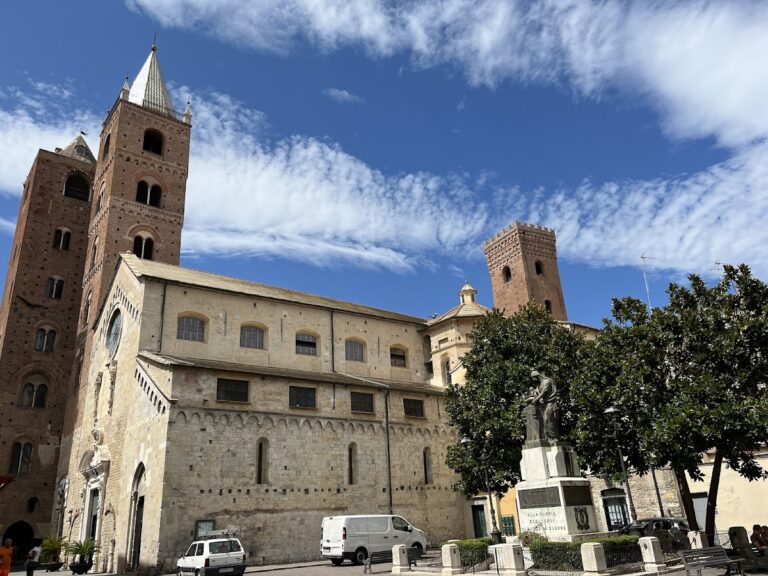
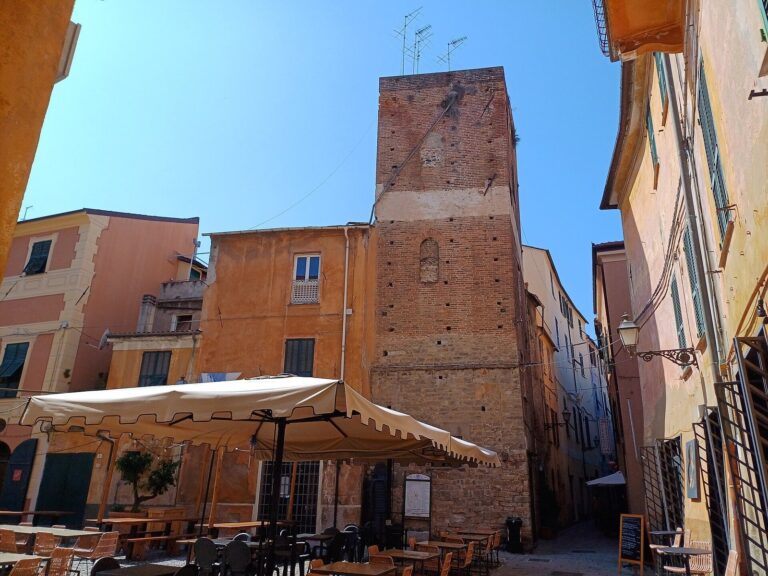
The church was rebuilt between 1612 and 1625. Early-twentieth-century urban redevelopment brought further changes: the building’s first structural section was removed, and its façade was reconstructed in a medieval style. Street works set the historic façade back by about two metres opposite Cazzulini Tower, demolished part of it, and led to the organ’s removal.
A Lourdes grotto was added in the left aisle in 1935. The eighteenth-century altars were replaced in 1960, and a memorial plaque to Bishop Giuseppe Fenocchio was installed in 1997. Fratelli Carrara restored the former organ that year. It was a small seventeenth-century pipe organ of the Ligurian school, with one keyboard and a foot pedalboard; some of its pipes remained beside the entrance walls for a time after its removal.
Remains
Plan, structure, and façade
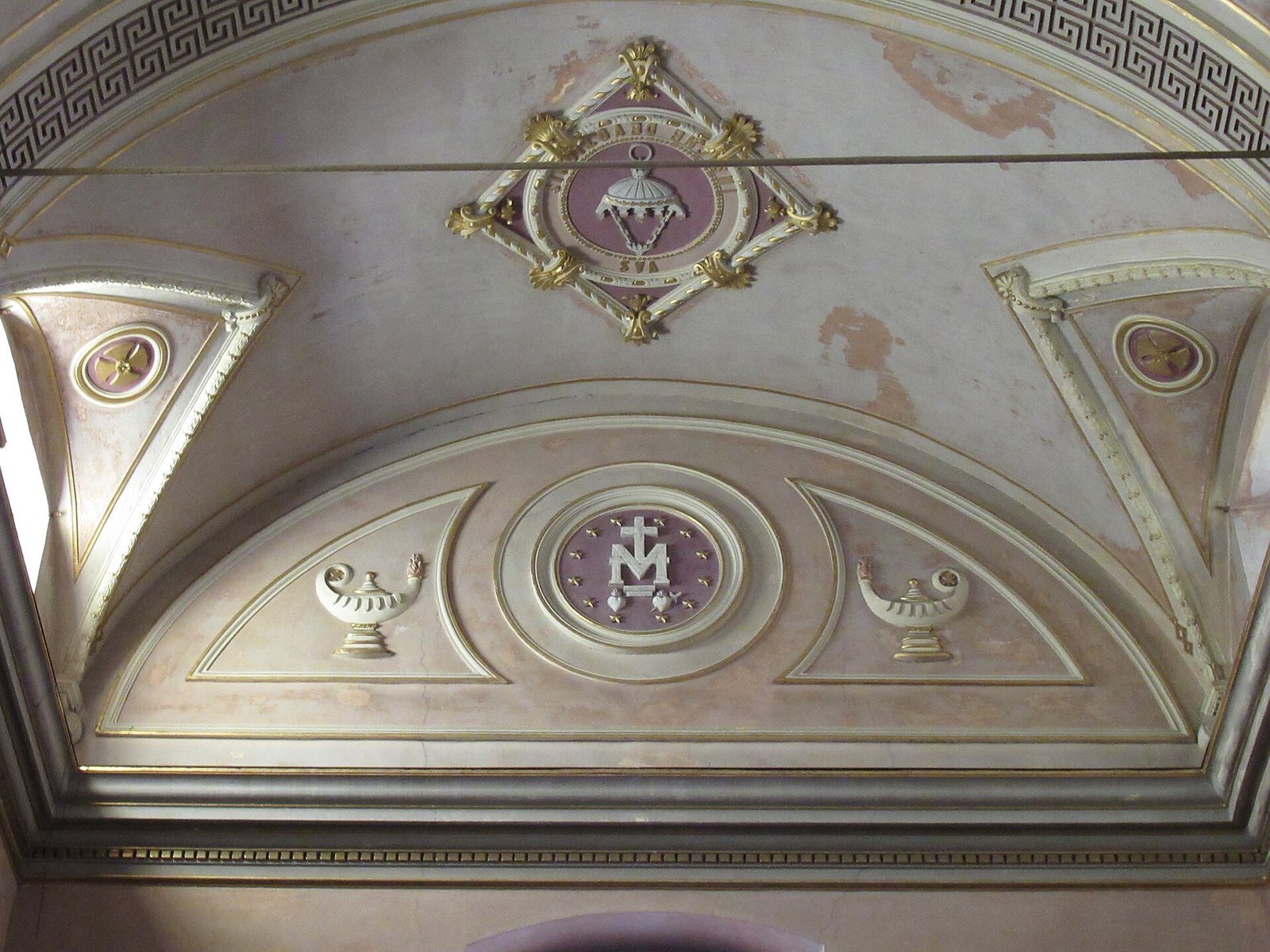
The church stands in Albenga’s historic center between Via Bernardo Ricci and Via Ernesto Rolandi Ricci. Its basilican layout has three aisles, a central nave flanked by two side aisles, separated by pillars with tall pilasters (shallow, flat wall supports) and round arches. The central nave has a barrel vault, a continuous arched ceiling, with lunettes, curved sections where a vault meets another surface, and leads to the sanctuary. The side aisles have successive groin vaults, ceilings formed where two barrel vaults intersect, and end at straight rear walls containing altars and side chapels. The Gothic-style façade retains its medieval entrance portal.
Artworks and memorials
High altar and artworks
A marble statue of the Virgin Mary, dated 1622, stands on the high altar. The church also preserves a wooden crucifix dated 1638 and a painting of the Madonna with Saints Cosmas and Damian by Orazio De Ferrari, a seventeenth-century Ligurian painter. Cosmas and Damian were early Christian saints traditionally associated with medicine.
Lourdes grotto and memorial plaque
The Lourdes grotto is located in the left aisle, and the plaque commemorating Bishop Giuseppe Fenocchio is inside the church.
Benedetto Revelli’s remains
Benedetto Revelli’s body is displayed in a case in the church.