Santa Maria della Passione Church: A Late Renaissance Landmark in Milan


Site at a Glance
- Rating
- 4.6
- Popularity
- Low
- Country
- Italy
- Primary era
- Early Modern
- External website
- Open
- Eras represented
- Medieval, Early Modern
- Civilizations
- Duchy of Milan, Habsburg, Spanish
- Site type
- Religious
- Remains
- Church
On this page21 sections
History
Santa Maria della Passione Church is a Roman Catholic church in Milan, Italy, founded for the Canons Regular of the Lateran in the late fifteenth century. Its first stone was laid in 1486, and the building developed from a Renaissance centralized plan into a larger church shaped by the Counter-Reformation, the Catholic reform movement that emphasized preaching, clear doctrine, devotional art, and stricter religious discipline. Dedicated to the Passion of Christ, it followed the Roman rite rather than Milan’s Ambrosian rite until 1782.
Foundation and Renaissance development
Daniele Birago, a Sforza ducal councillor and Archbishop of Mytilene, financed much of the first phase from his personal fortune. The original project was probably conceived by Giovanni Antonio Amadeo and carried out by Giovanni Battagio. Its first form was an octagonal centralized structure surrounded by eight chapels, an arrangement later incorporated into the more extensive church.
The monumental tribune and dome belonged to this early development. From 1573, at the request of Carlo Borromeo, Archbishop of Milan and a major Catholic reformer, the building was reorganized as a longitudinal church with three naves. This change made the interior more suitable for preaching and for the practices promoted by the Counter-Reformation. Vincenzo Seregni and Martino Bassi directed the later work, with Bassi succeeding Seregni.
Later construction and institutional change
The seventeenth-century campaign brought a Baroque facade and a rebuilt main altar, while the church itself was completed only in the eighteenth century. Giuseppe Rusnati began the facade campaign at the end of the seventeenth century, producing its sculptures and reliefs, although the upper part remained unfinished.
The original tribune had a funerary purpose. The mausoleum of Daniele and Francesco Birago stood beneath the dome at the centre of the octagon before being transferred to a side chapel. The relocation followed Counter-Reformation opposition to private funerary monuments placed inside churches. In 1782, at the request of its canons, Santa Maria della Passione became a collegiate church.
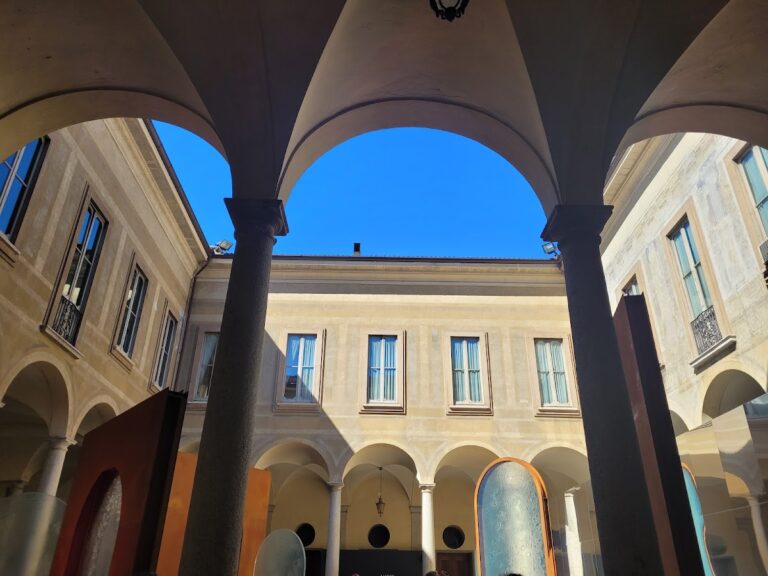
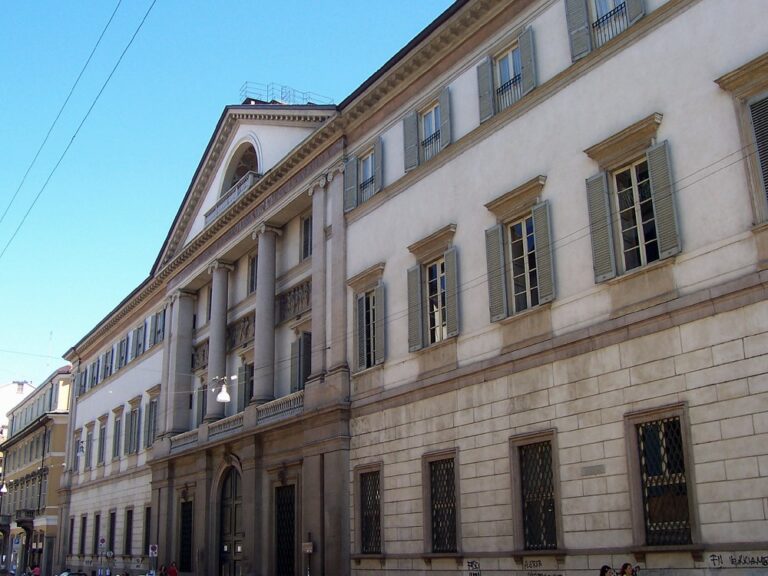
The adjoining convent, formerly occupied by the Lateran canons, became the seat of the Milan Conservatory in the early nineteenth century. Its classrooms are now occupied by the Giuseppe Verdi Conservatory. The church is recognized as an Italian cultural property and is regarded as an important monument of Milanese late Renaissance architecture.
Remains
Plan, dome, and exterior
The church combines an octagonal centralized core with a later longitudinal extension of three naves. Eight chapels were attached to the original octagon, alternating between semicircular and rectangular plans. The monumental tribune culminates in a dome raised on an octagonal drum, attributed to Giovanni Battagio. Above it, Cristoforo Lombardo built the tiburio, a tower-like structure that rises around a church dome and helps define its exterior profile. Its two orders of half-columns, Tuscan and Ionic, alternate with niches and windows, while terracotta decoration enriches the outer surface.
Facade
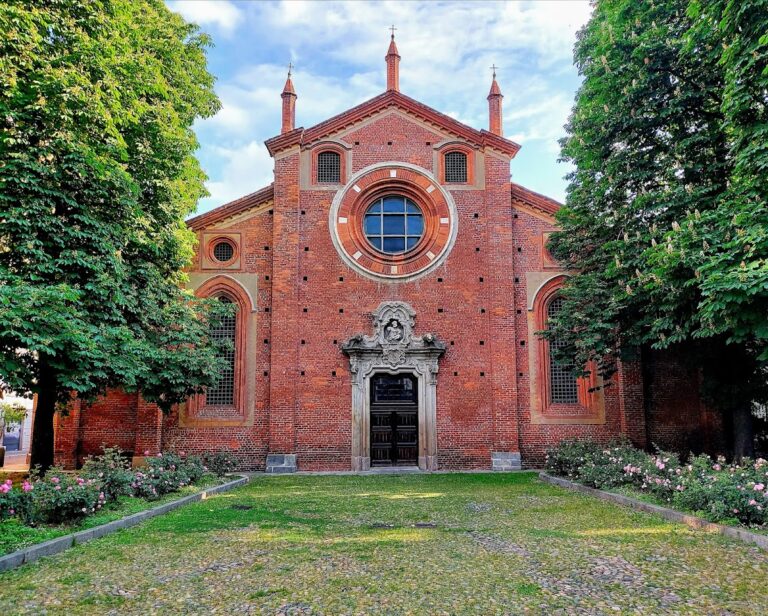
The facade is arranged in five fields, with the two outer sections lower than the three central ones, and is articulated by Tuscan half-pilasters. Marble reliefs and sculptures present episodes from the Passion of Christ. The central portal is crowned by a relief of the Deposition, with two angels above it. The side portals carry oval medallions showing the Profile of Christ on the left and the Profile of the Virgin on the right. Their lunettes depict Christ at the Column and the Crowning with Thorns. Above these elements, the unfinished upper section consists of simple bases arranged on a Greek-cross plan.
Nave and principal sanctuary
Nave decoration
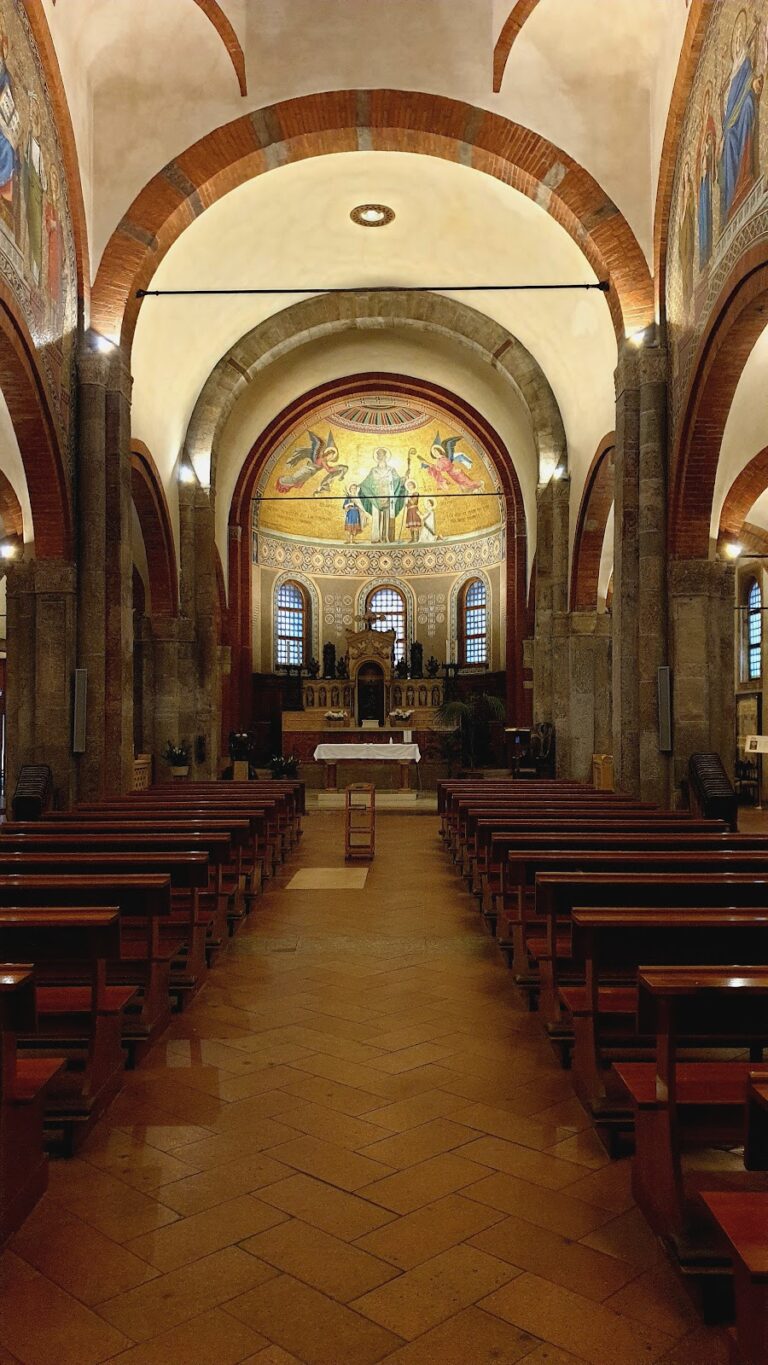
The nave is covered by a barrel vault frescoed by Giuseppe Galberio at the end of the sixteenth century. The paintings use delicate grey and gold tones. Octagonal canvases attributed to Daniele Crespi and his school decorate the pilasters. They depict saints and distinguished members of the Lateran Order and were formerly hung in the convent refectory.
Main altar and apse
The main altar contains Gaudenzio Ferrari’s Last Supper, still set within the monumental gilded frame commissioned in 1544 by the prior Aurelio da Milano. The painting is noted for its physiognomic and psychological characterization, naturalistic expressions, and unusual architectural background based on a central plan. Its composition prompted numerous copies, including Bernardino Lanino’s version in San Nazaro in Milan. The chapel also contains Simone Peterzano’s Madonna with Child and Saints and four canvases by Giuseppe Vermiglio depicting the Doctors of the Church, Christian theologians recognized for the authority of their teaching. Vermiglio’s paintings show the influence of Caravaggio through dramatic lighting and closely observed realism.
The Baroque main altar has a frontal decorated with semiprecious stones and polychrome marble. Above it rises a small temple with onyx medallions painted by Cerano and Giulio Cesare Procaccini. In the apse, a choir with twenty-nine intarsia stalls, decorative wood inlay, is attributed to Cristoforo Solari. Two canvases depict the Resurrection and the Ascension, while Panfilo Nuvolone’s fresco of the Coronation of the Virgin fills the apse basin, the curved semi-dome above the apse. The Trinity crowns the Virgin, who is surrounded by four prophets and four sibyls. The imagery brings the Passion cycle to a conclusion through the victory over pain and death.
Chapels and Passion imagery
First chapel
The first chapel contains Tommaso Formenti’s seventeenth-century canvases of the Flight into Egypt and the Workshop of Nazareth. It also has Daniele Crespi’s St Charles Borromeo Fasting, which shows the saint with a prayer book, a sparse meal, and an altar bearing a crucifix that emerges from a dark background. Simone Peterzano’s Madonna with Child and Saints stands on the chapel’s main altar.
Second chapel
The second chapel contains the fresco Duelling Knights in Architectural Spaces, attributed to Gherardini and Castelli. Baroness Brebbia commissioned it in honour of her son Carlo da Vattevil, field commander of the King of Spain.
Third chapel
The third chapel contains Giulio Cesare Procaccini’s Flagellation, a work transferred from the demolished monastery of Santa Prassede. It belongs to the artist’s early period and is dated to the first decade of the seventeenth century. The twisting figure of Christ, imposing executioners, forceful drama, and animated composition reflect Lombard late Mannerism while anticipating Baroque developments. Paolo Camillo Landriani’s signed and dated Saint John the Baptist, from 1602, is also held in this chapel.
Fifth and sixth chapels
The fifth chapel preserves the fifteenth-century fresco Madonna della Passione. It came from a small church demolished at the end of the fifteenth century to make way for the present building and was restored and repainted in later centuries. The chapel also contains a canvas of Saint Francis of Assisi Receiving the Stigmata, attributed to Camillo Procaccini, and Giuseppe Vermiglio’s Deposition of Saint Thomas Becket. Signed and dated 1625, the latter combines Caravaggesque realism and lighting with monumental figures influenced by Zurbaran.
The sixth chapel contains Simone Peterzano’s Assumption of the Virgin and Pietro Bacchi da Bagnara’s Ascent to Calvary.
Right transept and Birago monument
Passion cycle
The chapel in the right transept contains a Passion cycle commissioned from Carlo Urbino in 1560. Frescoes, stucco figures, and frames on the entrance arch, vault, and walls use characteristic Mannerist motifs, while the Taverna family arms occupy the centre of the entrance arch. The cycle includes the Raising of Lazarus, Expulsion of the Merchants from the Temple, Expulsion from Nazareth, Mary Magdalene, Prayer in the Garden, Arrest, Jesus before Pilate, Ascent to Calvary, Resurrection, and Noli me tangere, or Touch Me Not. The final two scenes occupy the apse basin.
The organ doors extend the cycle with further Passion scenes. On the exterior of the right-hand doors, Carlo Urbino painted the Crowning with Thorns; their interior carries the Flagellation and Ecce Homo. Daniele Crespi painted the Washing of the Feet on the exterior of the left-hand doors and the Crucifixion and Deposition on their interior.
Deposition altar
The right transept altar holds a Deposition altarpiece formerly placed on the church’s main altar. It was moved in the seventeenth century when the present polychrome-marble altar was built. The canvas remains in its monumental sixteenth-century wooden frame, whose predella, the lower section of an altarpiece, shows Saints Peter and Paul and scenes of the Discovery of the True Cross. The central predella compartment was recently stolen. Vegetal-patterned columns support a broken pediment crowned by the Risen Christ.
The central Deposition is attributed to Bernardino Ferrari and was formerly assigned to Bernardino Luini. Its classical arrangement and delicate figures recall Luini, while the crenellated city in the background recalls the enigmatic landscapes of Bramantino. Four canvases on the chapel pilasters depict the Greek Church Fathers Gregory of Nazianzus, John Chrysostom, and Basil. Their painter is unknown. Four further canvases by Giuseppe Vermiglio represent the Doctors of the Church.
Birago monument
Beneath the right organ stands the funerary monument of Daniele Birago, carved by Andrea Fusina da Campione in 1495. It originally occupied the centre of the octagon beneath the dome before being moved to the side chapel.
Organs and convent spaces
Organ galleries
The organ gallery to the right of the presbytery contains Mascioni opus 1155, built in 2001 using the case of an earlier Baroque instrument. It has mechanical action, two keyboards, a pedalboard, and twenty-eight stops, the controls that select different sets of pipes and their timbres. The instrument was designed for the German Baroque repertoire. The symmetrical gallery holds a seventeenth-century Baroque pipe organ restored by Mascioni in 1985. It has mechanical action, one manual, a pedalboard, and fourteen stops.
Chapter house and refectory
The chapter house contains a monumental cycle by Ambrogio Bergognone, dated approximately 1510 to 1515. Painted panels and frescoes of Christ and the Apostles cover the walls, while the lunettes show saints and popes of the Lateran Order. Grotesques and a starry sky decorate the vault. The former refectory once contained Giovan Paolo Lomazzo’s fresco Sacrifice of Melchizedek, which is now lost. The adjoining convent is occupied by classrooms of the Giuseppe Verdi Conservatory.