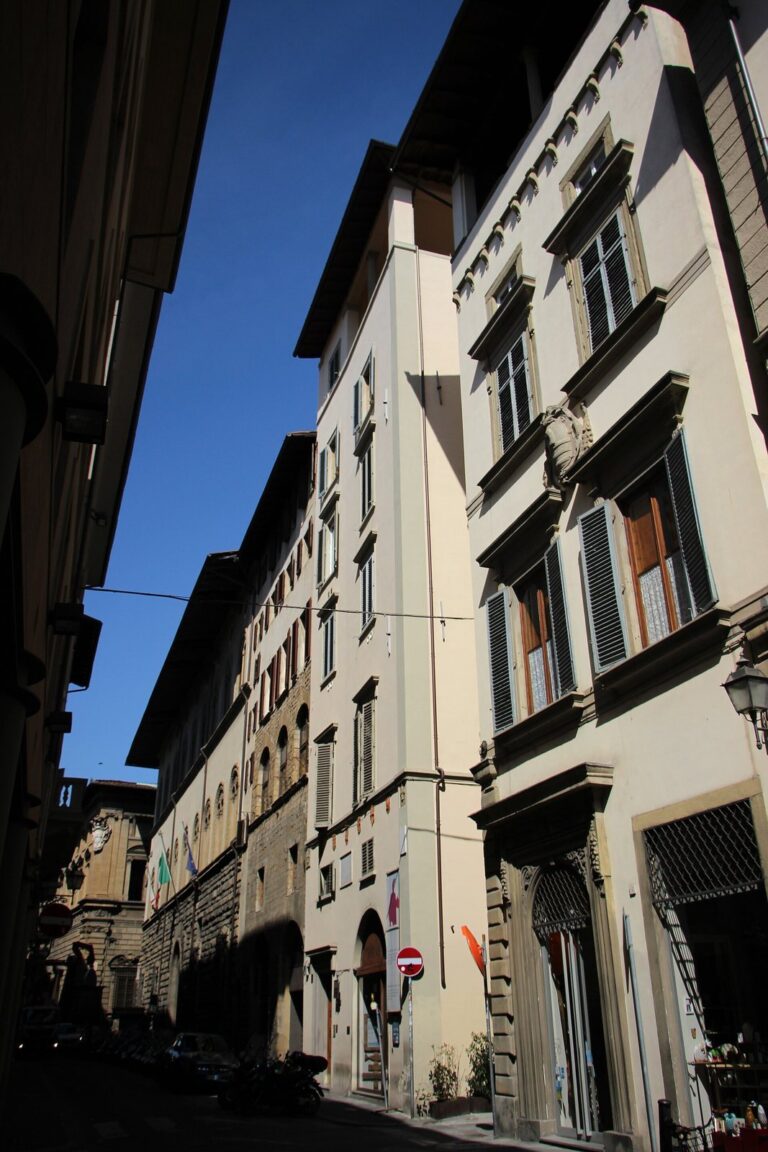
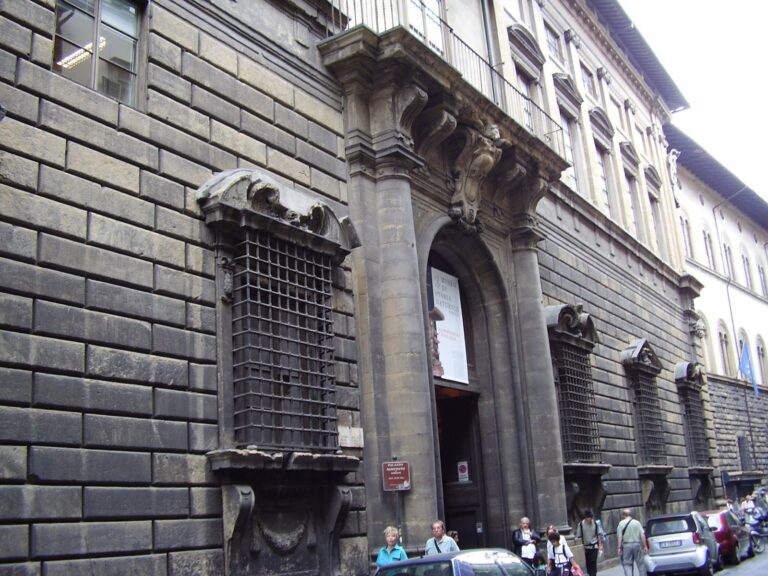
Santa Maria dei Ricci: A Roman Catholic Church in Florence
Site at a Glance
- Popularity
- Low
- Country
- Italy
- Primary era
- Early Modern
- Eras represented
- Medieval, Early Modern
- Civilizations
- Grand Duchy of Tuscany, Republic of Florence
- Site type
- Religious
- Remains
- Church
On this page13 sections
History
Santa Maria dei Ricci is a Roman Catholic church in Florence, Italy, founded in 1508 under the patronage of the Ricci family and completed in 1772. It follows the Roman rite, the principal liturgical tradition of the Latin Church, and belongs to the Archdiocese of Florence. The church is also known as Santa Margherita in Santa Maria dei Ricci and Madonna dei Ricci. Its titular saint is Margaret of Antioch, an early Christian martyr venerated as a saint.
Profanation and foundation
On 21 July 1501, Antonio Giuseppe Rinaldeschi, drunk, half-dressed, and angry after losing heavily at dice, wandered through streets near Florence Cathedral, cursing. After spending the night at the Osteria del Fico in Chiasso degli Agolanti, now Vicolo del Giglio, he threw horse dung at an image of the Annunciation in a lane beside Santa Maria degli Alberighi. Citizens reported him to the Otto di Balia, a Florentine magistracy with judicial and policing powers. Imprisoned in the Bargello, a civic palace also used as a prison, he was tried for sacrilege. Despite pleading and expressing remorse, he was sentenced to death and hanged from the palace windows as a warning.
The Ricci family founded the church in 1508 in reparation for the profanation and to provide proper shelter for the Marian image, which had stood at the Ricci corner before the church was built. A nine-compartment tempera panel, painted with pigment bound in an emulsion, depicts the episode and is now in Florence’s Museo Stibbert, a museum known for its historic arms and armor.
Renovations and religious use
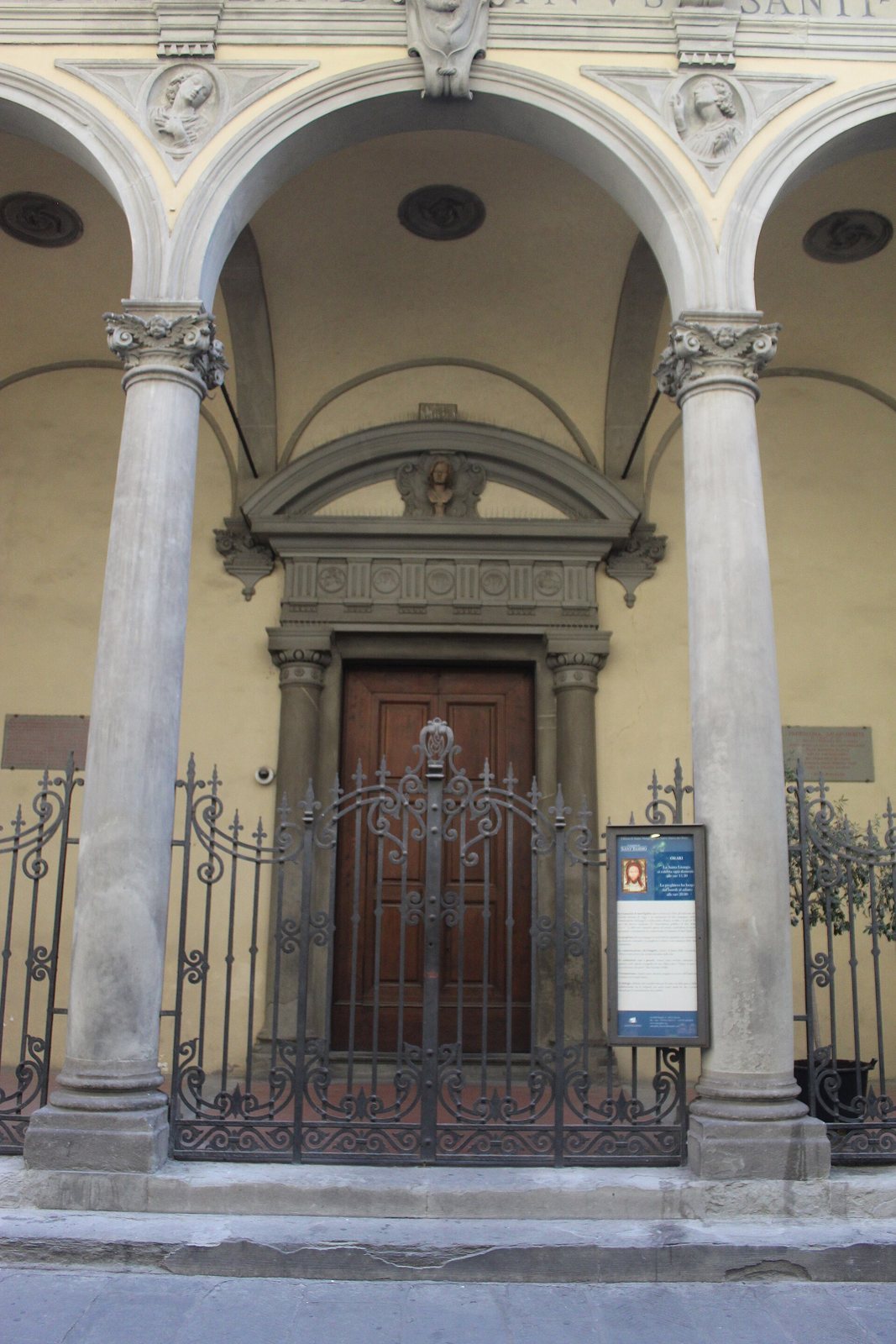
In 1610, around the time the church passed to the Camillians, Gherardo Silvani renovated it and added a covered entrance porch. The Camillians are a Catholic religious order associated with care for the sick and dying.
From 1769 to 1772, Zanobi del Rosso designed a late-Baroque renovation. Baroque is an artistic and architectural style known for dramatic forms and elaborate ornament. The building’s construction was completed in 1772.
Remains
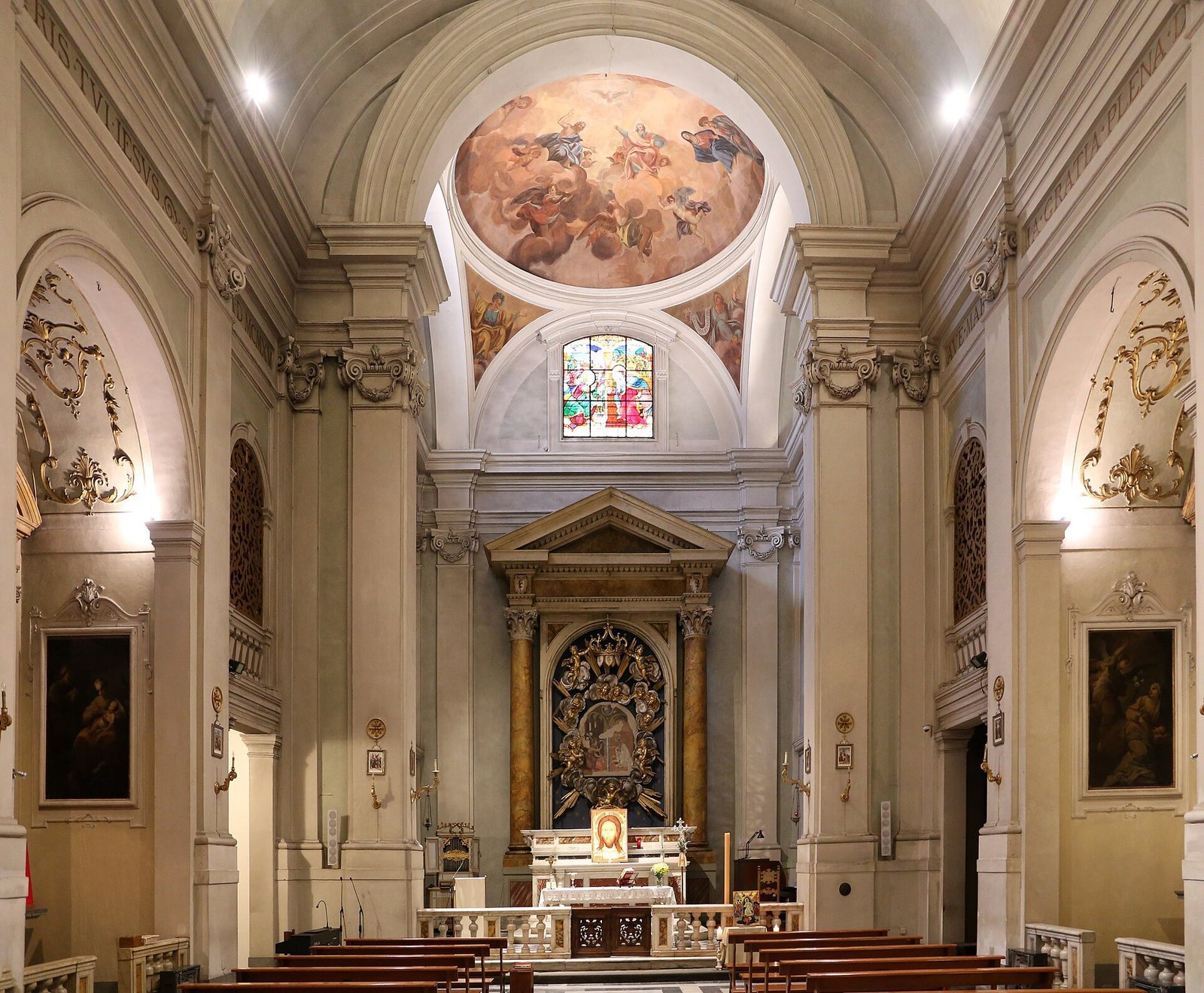
The church has a single nave, with two side chapels on each side, and ends in a square-ended apse, the sanctuary end of the building, beneath a domed vault. Its surviving features include a two-level façade, a marble-bounded main altar, paintings, and an organ.
Architecture
Façade
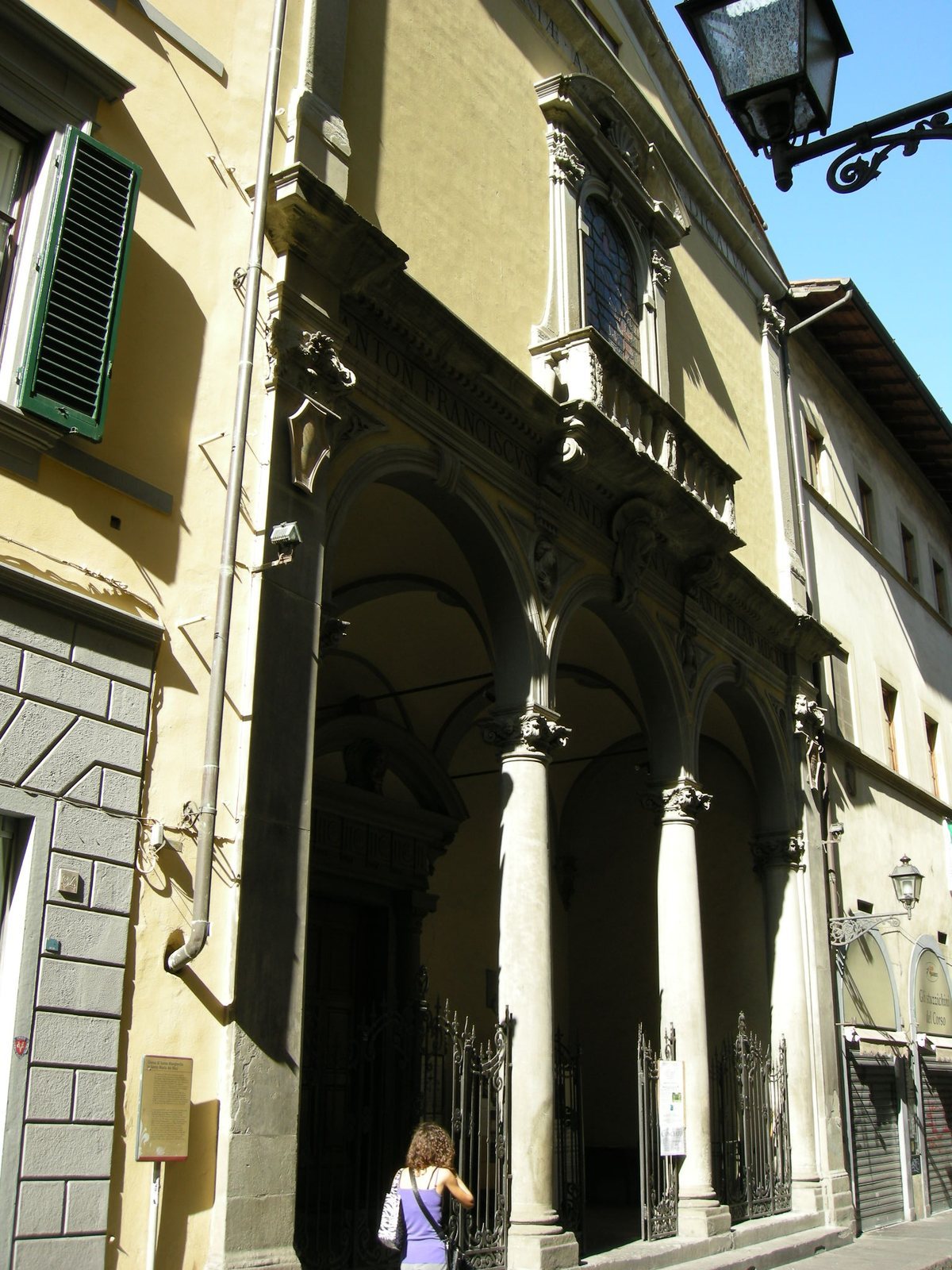
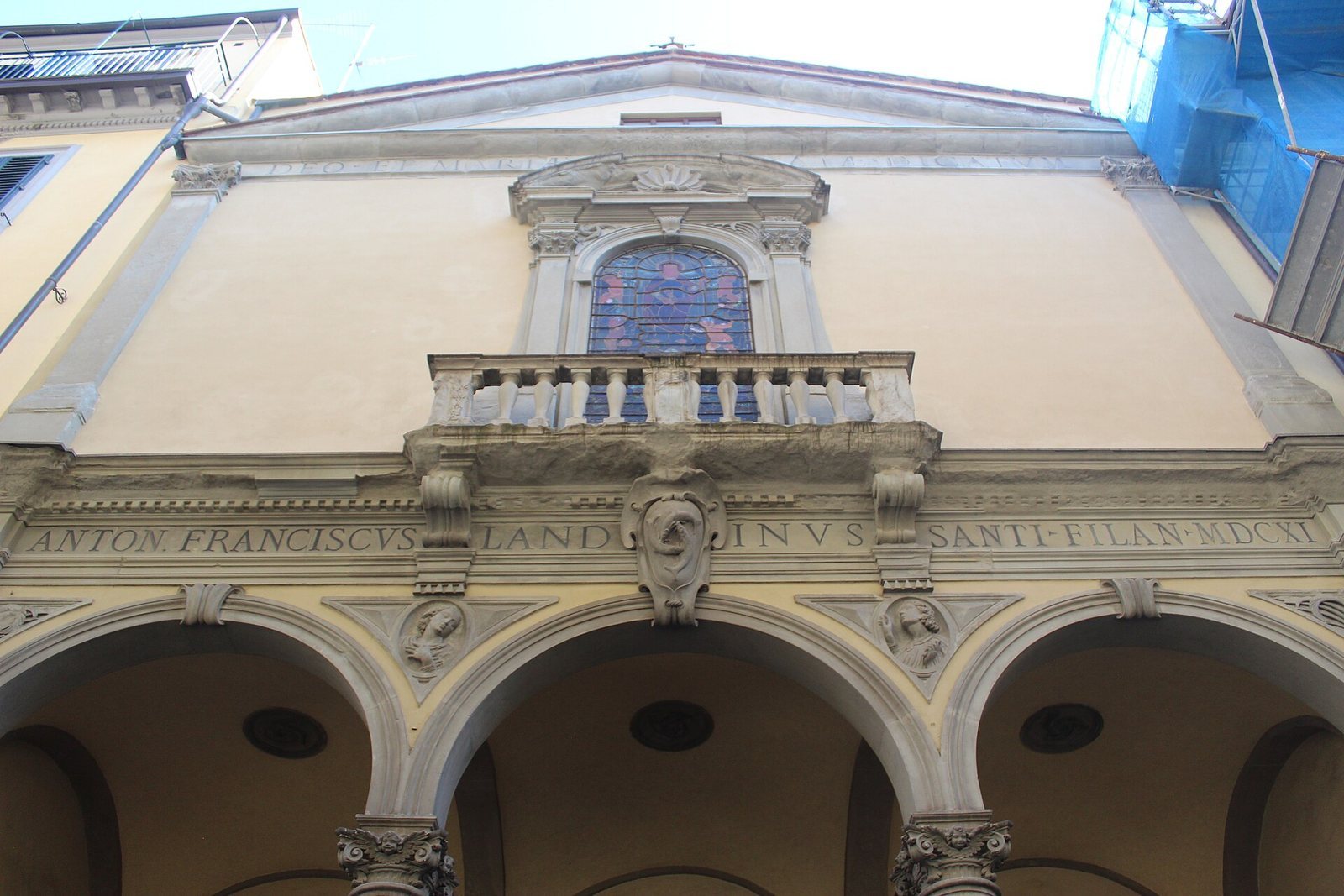
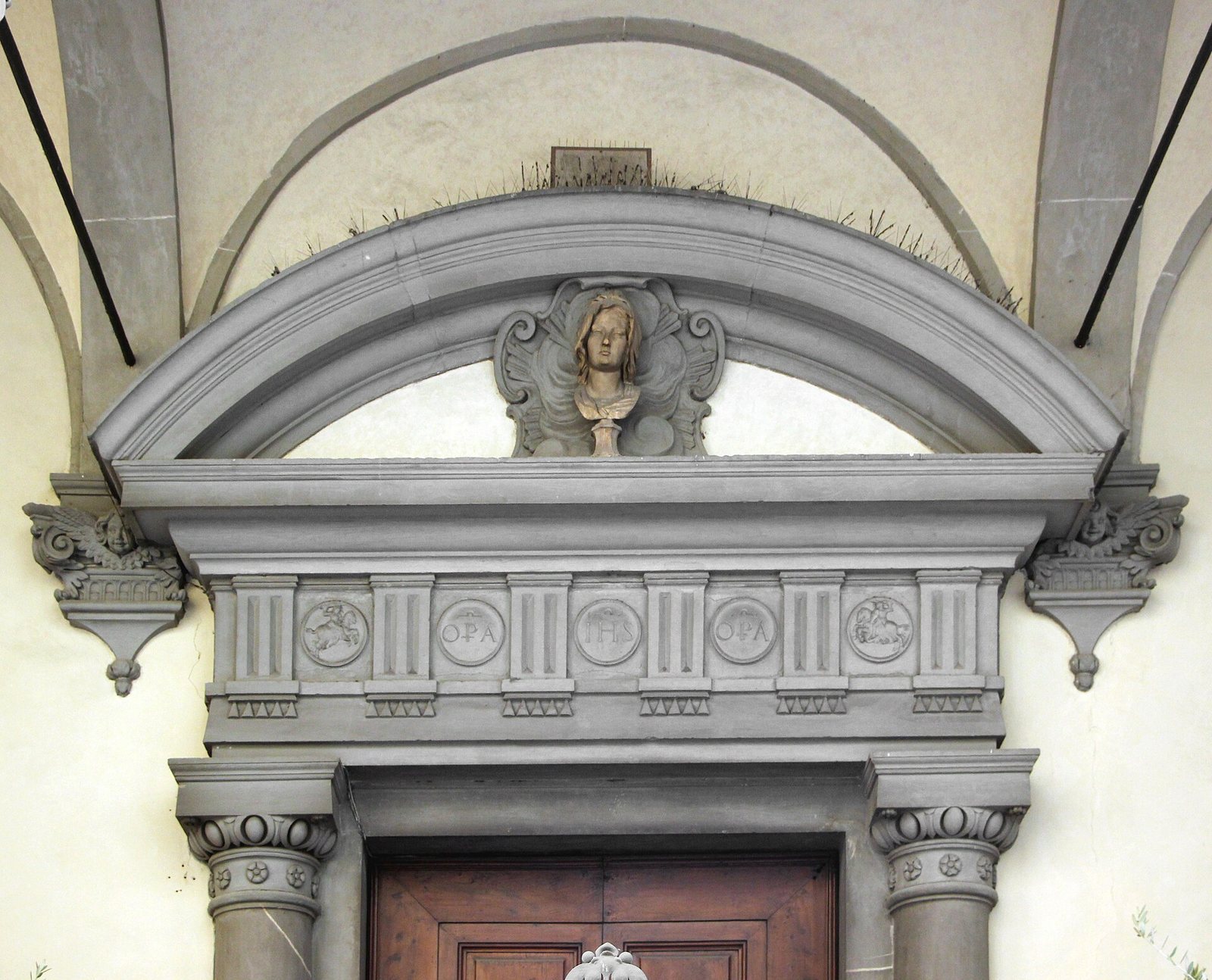
A horizontal band divides the façade into two levels. The lower level has a street-facing covered porch with three round arches supported by columns with carved capitals. Above it, a large arched window is framed by Corinthian pilasters, flat supports topped with ornate classical capitals. They support a tympanum, the central field of a pediment. The otherwise undecorated pediment contains a small rectangular window.
Nave and apse
The single nave is flanked by two chapels on either side. At its end, the square apse is covered by a domed vault.
Interior furnishings and art
Main altar
The main altar stands in the presbytery, the area around the altar, enclosed by a marble balustrade. Its shrine-like architectural frame, or aedicule, has a triangular pediment carried by two Corinthian columns. A carved Baroque frame at its center holds a fifteenth-century fresco of the Annunciation, a painting made on wet plaster, also called the Madonna dei Ricci. The tabernacle that once held the fresco now contains a copy.
Side chapels
A fourteenth-century panel of Margaret of Antioch hangs in the first chapel on the right, within a canvas depicting the Healing of a Disabled Man. Signed by Cosimo Gamberucci, the canvas came from the Church of Santa Margherita and was installed here in 1831. The second chapel on the right contains Francesco Mati’s painting of Saint Augustine distributing the Church’s goods to the poor. Signed and dated to about 1590 to 1595, it came from the Church of San Clemente on Via San Gallo. Its iridescent colors and strong contrasts of light and shade reflect the approach of Mati’s teacher.
Paintings on the chapel walls and apse
Giovanni Camillo Sagrestani painted scenes from the life of the Madonna on the side walls of the chapels. Lorenzo del Moro’s painting on the apse vault depicts the Assumption of the Virgin, the Christian belief that Mary was taken into heaven.
Sacristy canvas
The sacristy holds a large canvas by Francesco Mati, painted in 1602 to 1603. It shows God the Father in glory sending Gabriel to tell Mary that she would bear Jesus. The work was made to frame the Annunciation at the main altar and was removed during the eighteenth-century renovation.
Organ
The organ, maker’s instrument number 168, was built in 1989 by Chichi Rosario & Figli and later enlarged. Its two sections stand on the choir loft, one on either side of the large window opposite the façade. A control console in the presbytery operates electrically and controls three keyboards and their foot pedals. A second console on the loft uses electromechanical controls and operates the main and expressive groups of pipes, the second and third keyboards, and the pedals.