Palace of Misericordia: Headquarters of Florence’s Charitable Archconfraternity
Site at a Glance
- Popularity
- Low
- Country
- Italy
- Primary era
- Modern
- Eras represented
- Early Modern, Modern
- Civilizations
- Grand Duchy of Tuscany, Italian
- Site type
- Civic
On this page16 sections
History
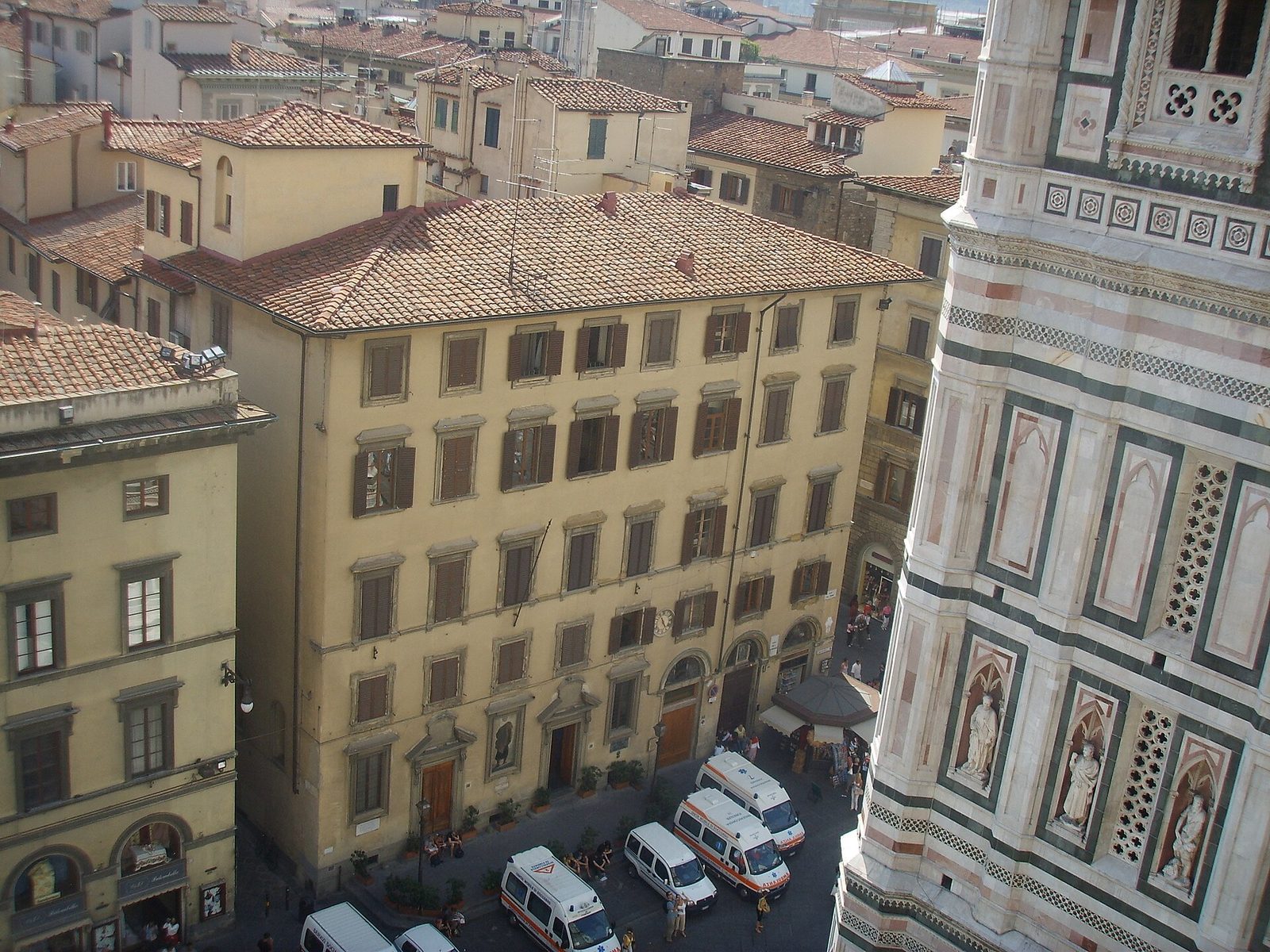
The Palace of Misericordia is the headquarters of the Venerable Archconfraternity of the Misericordia of Florence, at Piazza del Duomo in Florence, Italy. A confraternity is a religious association whose members share devotional or charitable work; an archconfraternity holds a higher institutional rank. Founded in 1244, the organization cared for the sick and buried the dead. The palace serves as both its representative and operational base.
From charitable association to headquarters
Florence’s commune recognized the Misericordia as a public institution in 1329. From the mid-fourteenth century, it occupied rooms in the Bigallo, a historic open-sided loggia. The present palace later incorporated two separate buildings that had stood farther into the piazza. One was a tower at the corner of Via dei Calzaiuoli, possibly first owned by the Ferrantini family and later associated with the Bardi and Barbigi families. The adjoining house was long linked to the Sassetti family.
The house’s ground floor had served first as the premises of the Guild of Armorers and Swordmakers, and then as the office of the Officials of the Wards, who administered Florence’s wards. When those officials moved to the Uffizi in 1575, the rooms were granted to the Misericordia. The archconfraternity has maintained its headquarters in the palace since that year. Adaptation work followed from 1576 to 1578, based on a design by Alfonso Parigi the Elder.
Bernardino Poccetti painted the facade with scenes representing the Seven Works of Mercy. The paintings were destroyed in 1780, when rebuilding the wall made it possible to enlarge a room. Between 1780 and 1782, an oratory, or small chapel, was erected on the commission of Pietro Leopoldo of Lorraine and to a design by Stefano Diletti.
Unification and later changes
From 1826, a plan by Gaetano Baccani brought the separate buildings together. Work continued in 1843, and the joined facade incorporated the eighteenth-century front of Diletti’s oratory. The side facing Via dei Calzaiuoli was also altered as the street was widened. The improvement began in 1842 under Grand Duke Leopold II and was completed in 1844. Luigi de Cambray Digny was Florence’s senior civic officeholder when the work began; Piero Francesco Rinuccini held the office at its completion.
Architect Luigi Buonamici restored the building in 1910. Interior work during the 1920s, completed in 1930, added a basement changing room and rearranged offices on the upper floors. Giovanni Paciarelli was initially responsible, with Ezio Cerpi and Gaetano Berni later overseeing the work. A museum at the headquarters opened in January 2005, and its exhibition spaces and layout were comprehensively reorganized in 2016.
Remains
Exterior and street fronts
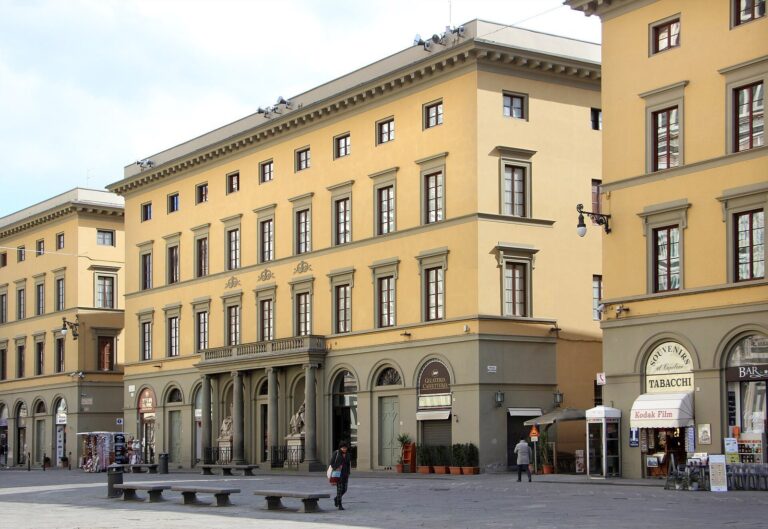
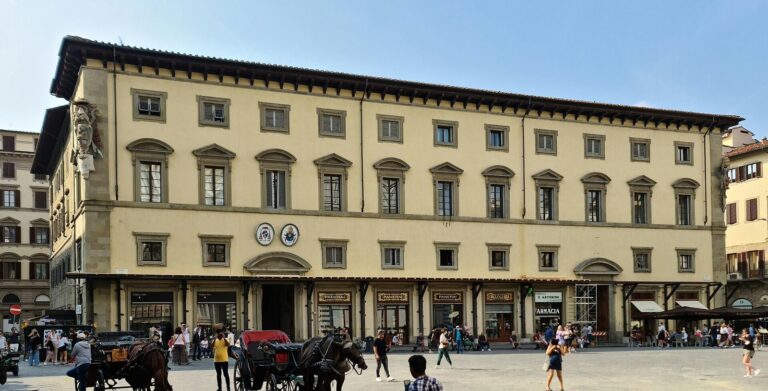
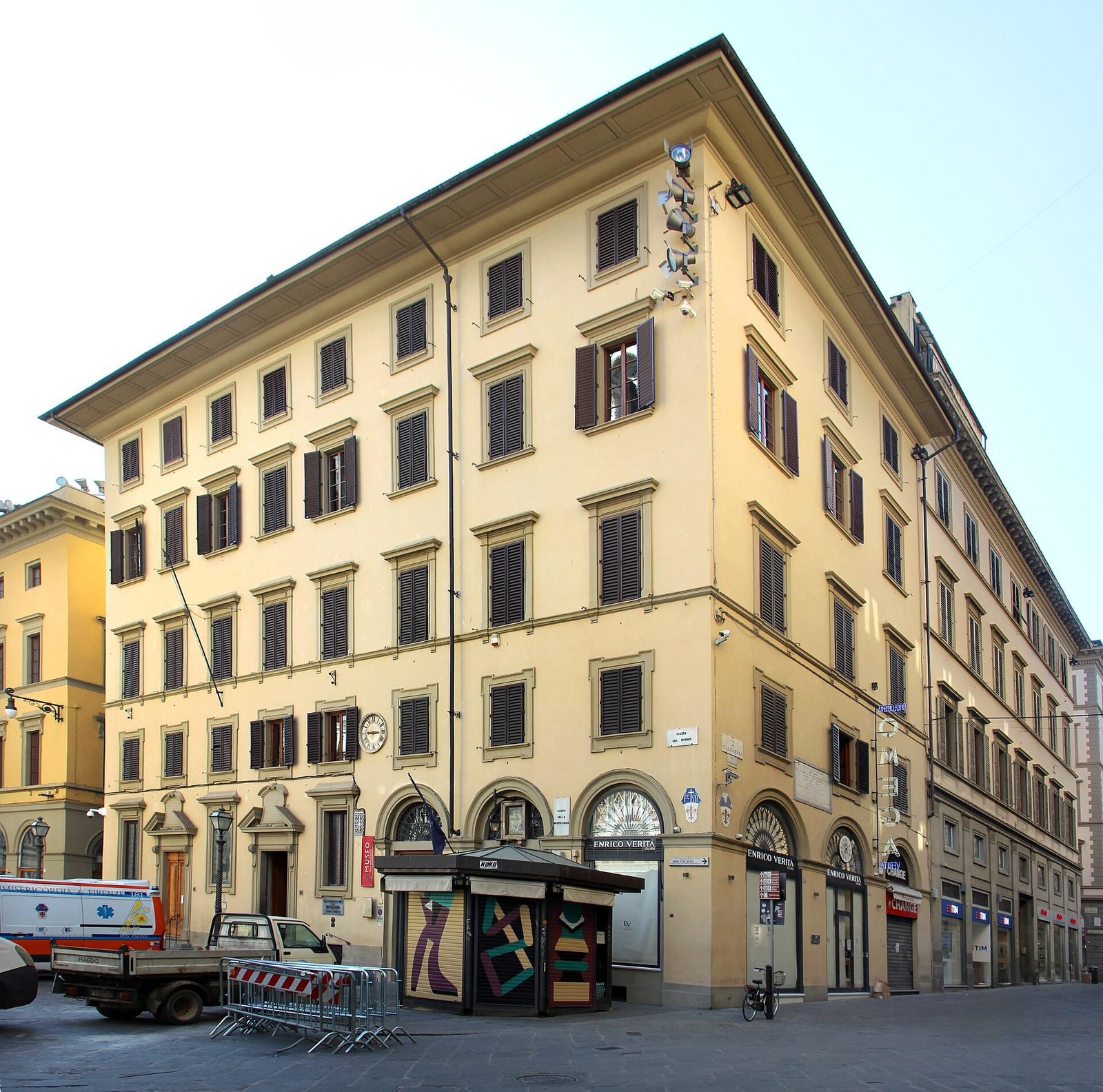
The palace stands at the corners of Via dei Calzaiuoli and Via del Campanile. Its simple facade is divided into eight vertical sections, with three arches at ground level on the Via dei Calzaiuoli side opposite the oratory. The Via dei Calzaiuoli front also carries a large marble plaque commemorating the street-widening work of 1842–1844.
Inscriptions and charitable fittings
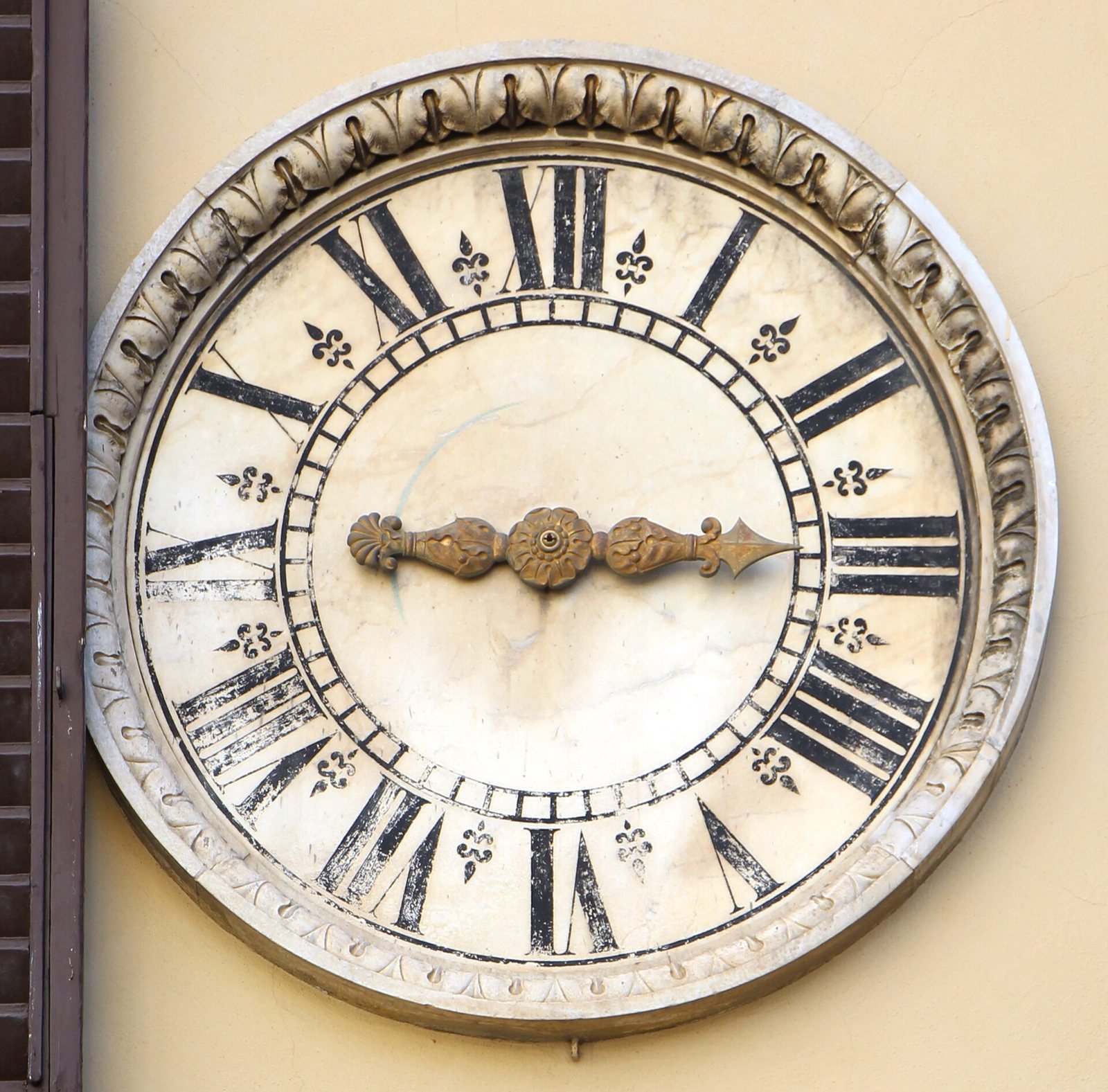
Two inscriptions dated 1781 are set into the oratory’s eighteenth-century pediments. They recall Francesco I de’ Medici’s donation of the original building, Pietro Leopoldo’s promotion of its expansion, and a bequest by Lorenzo Gabbugiani. Elsewhere on the facade, a marble plaque bears Dante’s prayer of Saint Bernard to Mary; it was installed in 1954, a year designated for devotion to Mary. A marker records the flood level reached on 4 November 1966. Between the doors, a marble surround frames an alms box for sick people in need, while a higher surround on the right once held the clock from the Ferrantini tower.
Facade shrine and painted record
A small shrine on the facade contains Pietro Annigoni’s painting Charity, which he donated in 1972. It shows a confraternity member carrying an injured person on his shoulders in a wicker carrying frame with a seat. The former facade paintings by Poccetti are known through a copy by Antonio Fedi. A separate painting of the plague in Florence in 1630 also preserves a view of the oratory’s exterior.
Shrines along Via del Campanile
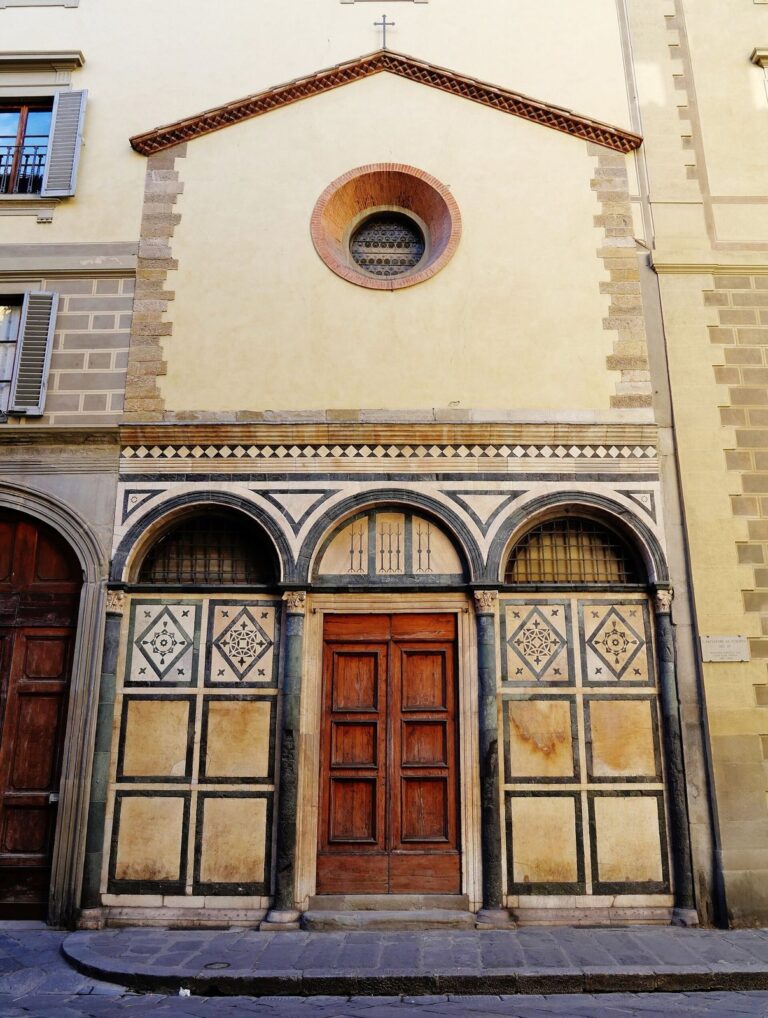
One Renaissance shrine, a small architectural structure for a religious image, stands on Via del Campanile opposite Via della Canonica, at the left edge of the facade. Its fresco of Mary between Saint John and Saint Tobias, attributed to Andrea del Verrocchio, has been replaced by a photographic reproduction; the original remains in the palace. A small plaque below bears a prayer to Mary and an engraved cross above a skull, with another alms box nearby.
A second shrine on Via del Campanile contains a photographic copy of a late-fifteenth-century Florentine-school fresco showing Mary and the Christ Child enthroned with Saints John the Baptist and Anthony Abbot. The original is kept in the palace. Below the shrine are a plaque dedicated to Mary and a white-marble plate carved with a skull and crossed bones, topped by a dark-gray marble cross.
The oratory
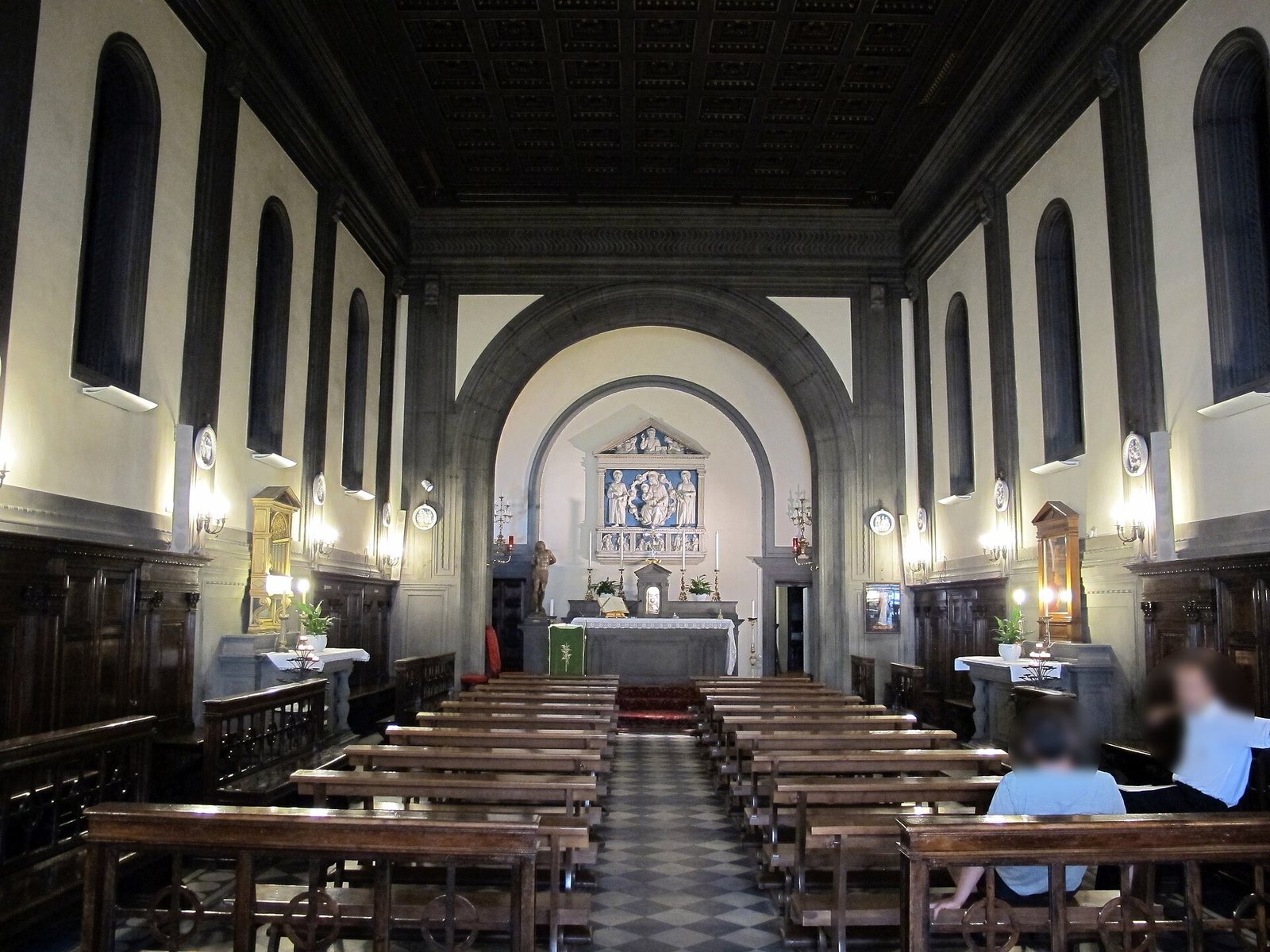
The oratory has one main worship space. Its sanctuary arch, pilasters (flat features resembling columns), and frames for non-opening windows are made of gray sandstone, set against white plaster.
Paintings and sculpture
The altar holds a glazed-terra-cotta Robbia altarpiece showing Mary enthroned with saints. Its lower panel, called a predella, may have been made by Andrea della Robbia. A sculpture of Saint Sebastian by Benedetto da Maiano is also in the oratory. A series of lunettes, curved spaces above the walls, depicted episodes from the life of Saint Tobias, a figure in the biblical Book of Tobit. Clemente di Filippo Santini began the paintings; after his death in 1631, Giovanni Montini, Jacopo Tarchiani, Lorenzo Mariani, and Stefano Cascetti completed them.
Organ and other works
On the raised choir loft opposite the entrance is a small fixed organ built by Serafino Paoli in 1846. The oratory’s paintings and sculpture form part of the wider collection associated with the confraternity’s headquarters.
Museum and works preserved by the confraternity
Exhibition rooms and collection
The Museo della Misericordia occupies the palace’s fourth floor. Fourteen rooms cover about 600 square metres and display roughly 80 objects, including manuscripts, paintings, sculptures, coats of arms, furnishings, everyday objects, and Florentine craftwork. Many of the works received restoration. The headquarters also preserves the confraternity’s historical archive.
Renaissance and sixteenth-century works
The collection includes Benedetto da Maiano’s fifteenth-century painted-wood Crucifix. A small crucifix from the group of sculptures he left to the confraternity was long kept in the Guard Captains’ room. Among the sixteenth-century works are a glazed-terra-cotta Christ Child and the Young Saint John the Baptist from the Della Robbia workshop, and a tempera-and-gold Madonna and Child attributed to the Sienese School. Giovanni Antonio Sogliani’s oil painting Madonna and Child with the Young Saint John the Baptist was a gift from Grand Duke Pietro Leopoldo. Other panel paintings include Bacchiacca’s Holy Family with the Young Saint John the Baptist, from about 1550, and a similar subject attributed to Francesco del Brina, dating to about 1567.
A processional banner with Saint Ambrose and Saint Michael the Archangel, attributed to Francesco Mati, dates to about 1584. It was commissioned by the School of Christian Doctrine, an organization for religious instruction established at the Oratory of the Company of Saint Michael of Peace that year. Santi di Tito’s panel Altarpiece with Saint Sebastian, Saint Tobias, and the Seven Works of Mercy dates to 1578–1580.
Seventeenth-century and later works
The early-seventeenth-century paintings include Dirck van Baburen’s Christ among the Doctors and Valentin de Boulogne’s Return of the Prodigal Son, both oils on canvas. The collection also holds a station crucifix from the workshop of Giambologna and Carlo Dolci’s seventeenth-century panel painting Saint John the Baptist. Francesco Collina’s Saint Sebastian appears in bronze and terracotta versions dated 1885. Twentieth-century works include Elisabeth Chaplin’s oil painting The Beatitude and two works by Pietro Annigoni from the 1970s, the oil-on-canvas Saint Jerome Penitent and Saint Jerome, made with mixed media on paper.
Works in other headquarters spaces
An unfinished Madonna and Child by Benedetto da Maiano, completed by one of his pupils, is displayed in the ground-floor hall where confraternity members wait to be called to service. The headquarters also contains other works of art alongside its archive.