Santa Maria Corteorlandini, Lucca: A Roman Catholic Church Shaped by Renaissance and Baroque Renewal


Site at a Glance
- Rating
- 4.6
- Popularity
- Low
- Country
- Italy
- Primary era
- Early Modern
- External website
- Open
- Eras represented
- Medieval, Early Modern
- Civilizations
- Republic of Lucca
- Site type
- Religious
- Remains
- Church
On this page13 sections
History
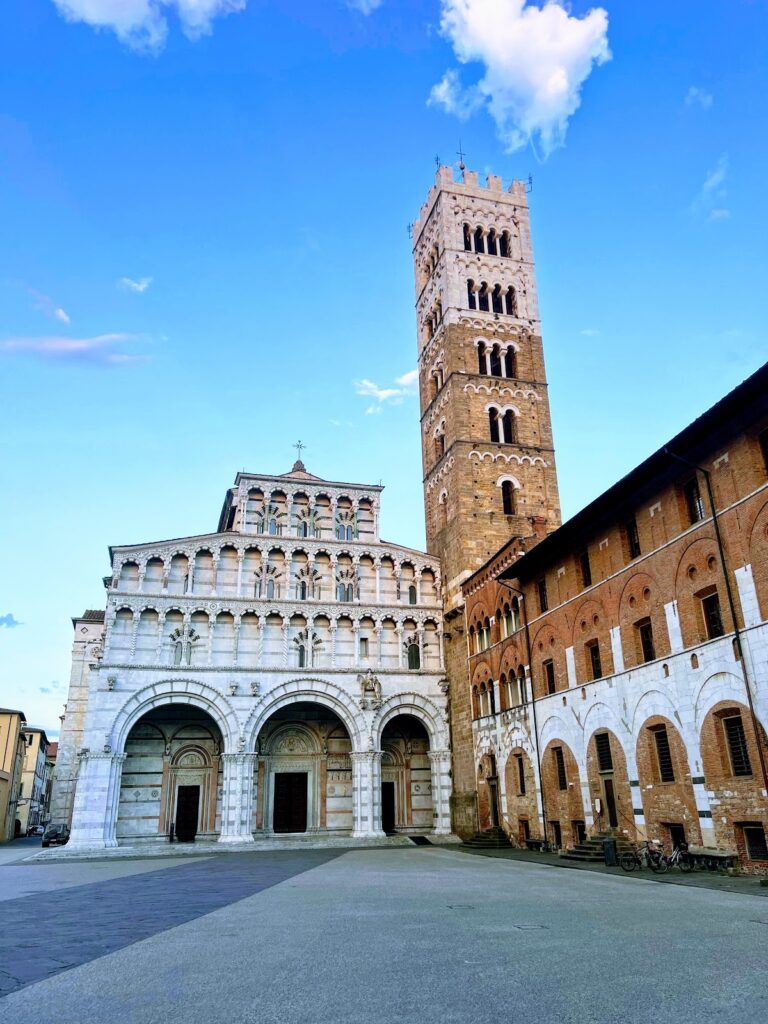
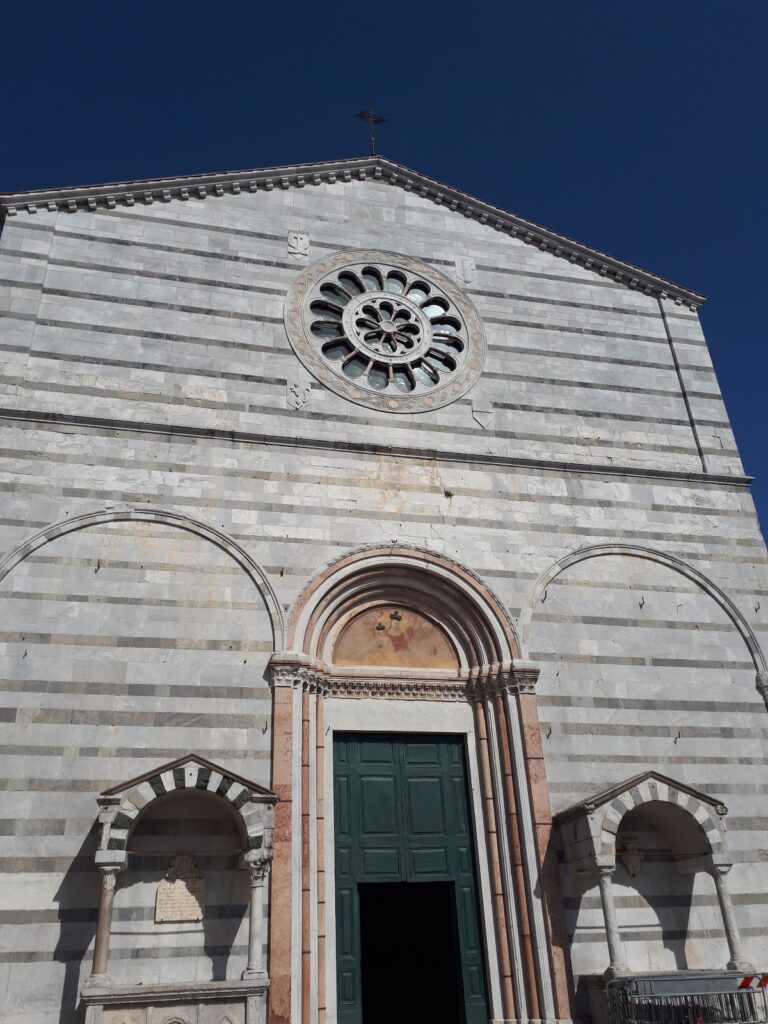
Santa Maria Corteorlandini is a Roman Catholic church in Italy, dedicated to the Virgin Mary and associated with the Clerics Regular of the Mother of God of Lucca. The building combines medieval Romanesque elements with Renaissance planning and elaborate Baroque decoration. It is also called Santa Maria Nera because it preserves an image of the Madonna of Loreto, a Catholic image associated with devotion to the Virgin at the sanctuary of Loreto.
Medieval origins
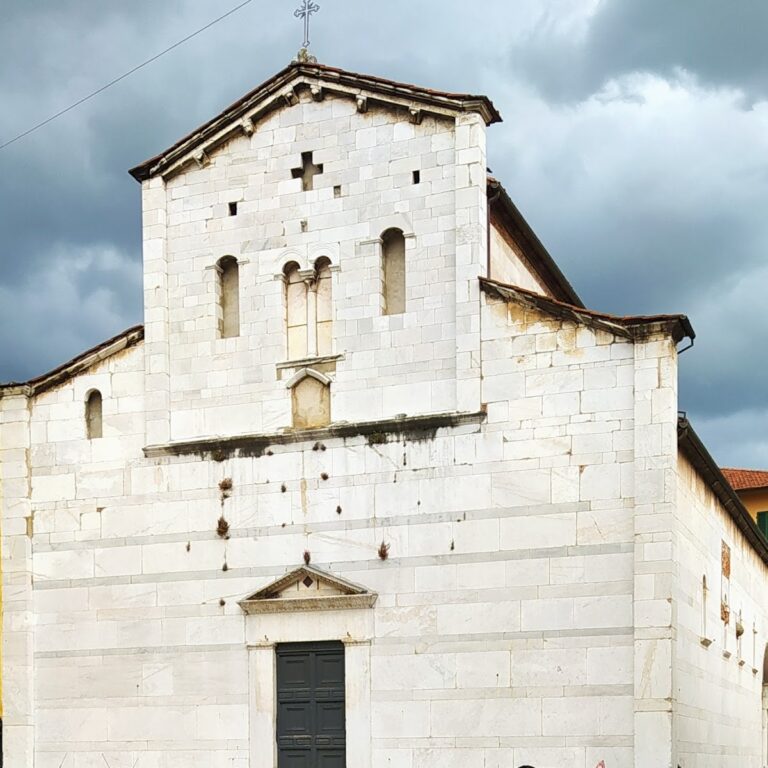
A church occupied the site by the ninth or tenth century, and its existence is recorded by 1099. It belonged to the Rolandinghi family before being rebuilt in 1188. Parts of that medieval building survive in two minor apses and sections of the right side, including a Romanesque portal with an arched band of molding decorated by a vegetal frieze and flanked by projecting lions.
The arrival of the Clerics Regular
In 1580 the church was entrusted to the Clerics Regular of the Mother of God, a Catholic congregation founded for clerical ministry, education, and religious reform. The congregation took possession on 31 December and began establishing conventual spaces around the church. San Giovanni Leonardi, the Italian priest who founded the congregation, had seen similar choir arrangements in churches in Rome, and this experience influenced the reorganization of Santa Maria Corteorlandini.
During the reorganization of the choir in 1583, the old wooden choir was demolished and the floor was brought to a single level. The work exposed foundations belonging to very ancient buildings. A new choir was placed above the main entrance beside the organ, following the Roman arrangement associated with Leonardi. The Lucchese architect Agostino Lupi advised the project. The tribune, an elevated area associated with the choir or liturgical display, was also redecorated. Earlier imagery of Christ as Savior with Saints Peter and Paul gave way to a scene of the Assumption of the Virgin, with the Virgin crowned by the Holy Trinity in a niche above. Agostino Ghirlanda of Fivizzano carried out the new decoration.
Expansion and structural crisis
In 1593 the major altars were removed and reconsecrated on 8 June by Alessandro Guidiccioni the Elder, bishop of Lucca. Relics of Saint Bartholomew, Saint Andrew, and Saint Thomas the Apostle were placed in them. On 17 August of the same year, work began on additional conventual rooms above the central nave and the left lateral nave under Lupi’s supervision. Caterina Bertolani donated a silver lamp for the Blessed Sacrament in 1597.
These alterations placed heavy demands on the building. After the Christmas Eve Mass of 1600, a column carrying the principal weight of the church and convent cracked, opened, and lost two large pieces. The church was made usable again within a day, so services could resume for the feast of Saint Stephen the Protomartyr. The failure prompted the consolidation of the other supports and the replacement of the existing pillars with columns. The first two were replaced in 1602, with medals and other memorial objects set at their bases, and six further columns of Carrara marble were ordered.
At the same time, Orazio Vannucci laid the foundations for a portico intended to support a masonry choir. This replaced the wooden choir, whose durability had become doubtful. The columns were installed by 1604, and a Te Deum, a hymn of thanksgiving, was sung on Saint Lawrence’s Day to mark the completion of the work and the church’s recovery from the earlier crisis. The new choir was finished five years later.
Baroque decoration and later ownership
Reorganization and decoration continued through the seventeenth and eighteenth centuries, giving the church a place among Lucca’s notable examples of Baroque decoration. Luca Giordano was commissioned to paint the Virgin for the high altar, while Guido Reni provided works for the two side altars. The paintings became important models for seventeenth-century Lucchese painting and strongly influenced its development.
In 1866, after Italian laws suppressed religious corporations, ownership passed to the Fondo per il Culto, the state body responsible for ecclesiastical property. The church remains in its ownership.
Remains
Plan and medieval fabric
Santa Maria Corteorlandini stands on the street and square that bear its name. Its interior is arranged in three naves ending in a major chapel flanked by two smaller chapels. Conventual rooms rise above the central nave and the left lateral nave, reflecting the extensive reorganization carried out after the arrival of the Clerics Regular. The surviving medieval fabric is concentrated in two minor apses and the right flank. That flank contains a Romanesque portal whose arched molding carries a vegetal frieze and whose sides are guarded by two projecting lions. Its execution has distinctive characteristics in comparison with late twelfth-century Lucchese work.
Interior decoration
Central nave and counterfacade
The vaults of the central nave bear frescoes by Pietro Paolo Scorsini. On the counterfacade, a substantial fresco attributed to Giovanni Marracci depicts Jesus expelling the profaners from the Temple. Together, these works form part of the later pictorial scheme that overlays the church’s medieval structural elements.
Presbytery and high altar
The presbytery, the part of the church reserved for the altar and clergy, was decorated by Angelo Michele Colonna. Its elaborate high altar has an altarpiece showing the Assumption of the Virgin. The present painting is a copy of Luca Giordano’s original, which was destroyed in a nineteenth-century fire. The two presbytery altars also now contain copies of works originally painted by Guido Reni.
Right presbytery altar
The right presbytery altar is documented from 1622. Its original altarpiece showed Christ Crucified between Saints Catherine of Alexandria and Julius. Giulio and Cesare Franciotti commissioned the work, which was probably painted in the following year. The painting is now held in Lucca’s National Museum of Villa Guinigi.
Left presbytery altar
The left presbytery altar originally held Guido Reni’s Madonna of the Snow with Saints Lucy and Mary Magdalene. The title refers to a Marian devotional tradition connected with the dedication of the Basilica of Saint Mary Major in Rome. Duke Charles Louis of Bourbon removed the painting in the 1830s, and it is now in the Uffizi Gallery in Florence.
Side altars and Marian image
The first altar on the right contains an altarpiece by Antiveduto Gramatica depicting the Madonna and Child with Saint Charles Borromeo and Blessed Giovanni Bonvisi. An inscription on the pedestal to the left of the altar table gives a date of about 1614 by referring to the earlier wooden altar. The second altar on the left contains an altarpiece by Francesco Vanni. The preserved image of the Madonna of Loreto gives the church its alternative name, Santa Maria Nera.