Palazzo Orsetti: A Historic Palace and Municipal Building in Lucca
Site at a Glance
- Country
- Italy
- Primary era
- Early Modern
- Eras represented
- Medieval, Early Modern, Modern
- Civilizations
- Republic of Lucca
- Site type
- Civic
- Remains
- Town Hall
On this page17 sections
History
The Diodati family
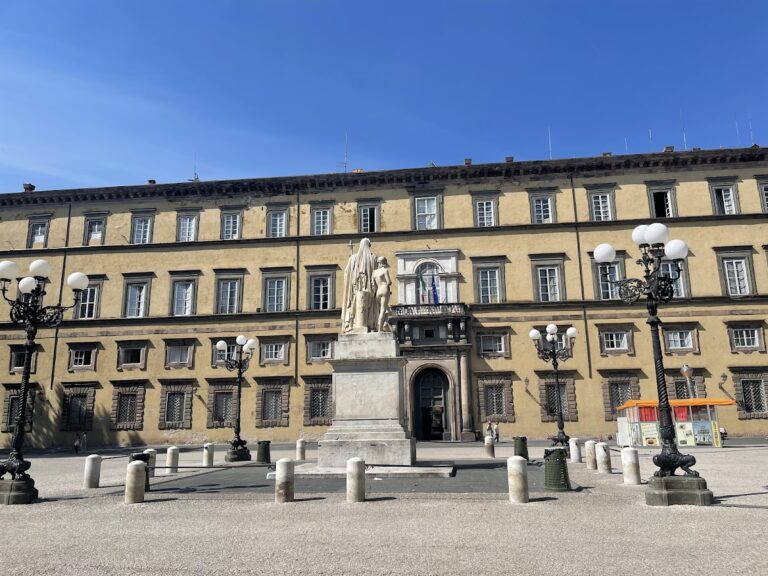
Palazzo Orsetti, also known as Palazzo Diodati Orsetti, is a sixteenth-century palace in Lucca, Italy, built by the Diodati family on the foundations of a medieval palace. Carlo Diodati was born there on 17 September 1541. Tradition holds that Pope Paul III, head of the Roman Catholic Church from 1534 to 1549, baptized him in the palace, with Charles V, a Holy Roman Emperor, as his godfather. Both were in Lucca at the time.
Suspected of heresy, Carlo emigrated to Geneva in 1567. His son Giovanni, born in 1576, became a Protestant theologian and Bible translator.
Orsetti ownership and municipal use
In 1661–1662, Lelio Orsetti bought the palace from the Diodati heirs, including its furnishings and paintings by Pietro Paolini on historical subjects associated with Wallenstein, a prominent military commander. In 1963, the Orsetti family transferred the building and its surviving furnishings to the Municipality of Lucca. The palace now houses the offices of the mayor and the municipal executive committee.
Remains
The palace’s surviving layout is organized around two main facades, monumental entrances, long internal corridors, and staircases connecting its rooms. Sandstone entrance frames, enclosed garden space, and decorated interiors from several periods make up its principal physical features.
Exterior and circulation
Garden
Across the public street from the palace, a garden enclosed by high walls contains trees and a well at its center.
Main facades and entrances
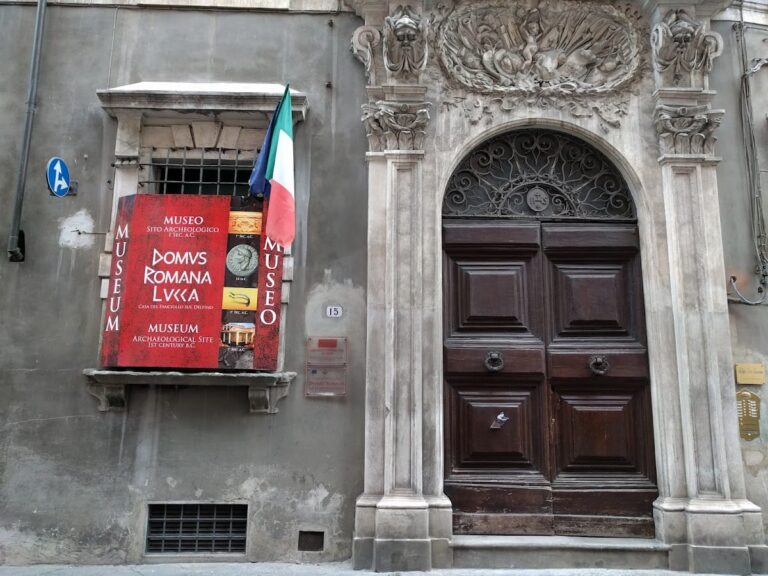
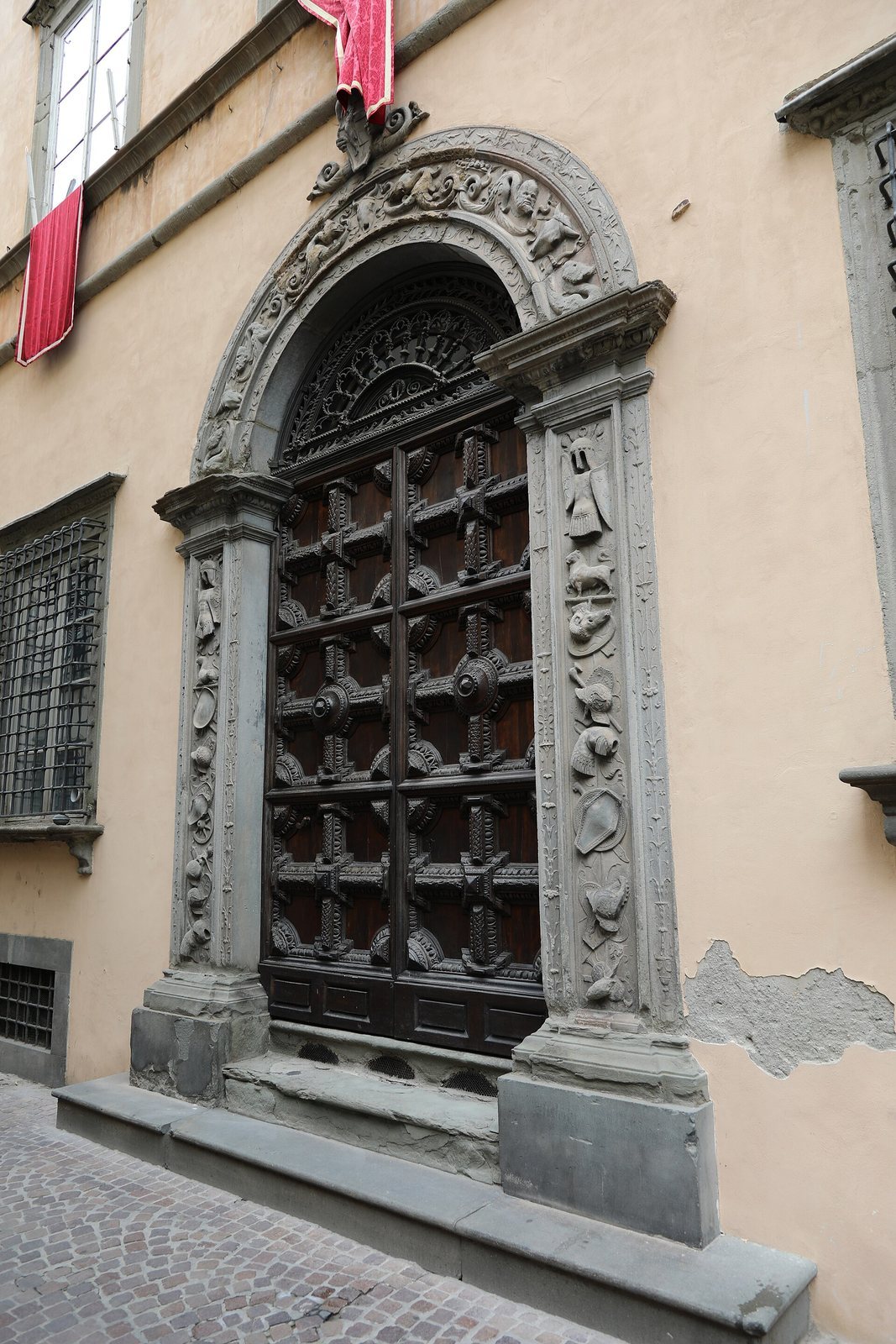
Each of the palace’s two principal facades has a monumental entrance. Their sandstone frames are decorated with relief trophies, with a triton crowning one portal and a mermaid the other. Each entrance opens onto a long corridor, from which a staircase branches off midway.
Secondary entrance
A small courtyard reached from Via Santa Giustina leads to a secondary entrance, where a painting of Saint Cecilia by Onofrio Avellino is located.
Ground-floor interiors
Northern wing
Rooms in the northern wing retain nineteenth-century wall paintings.
Staircase and landing
Portraits of Elders, members of Lucca’s governing magistracy, gonfaloniers, civic officials whose title referred to a banner, and senators of the Republic of Lucca decorate the staircase. On the landing are Pietro Paolini’s The Conspiracy Against Wallenstein and Pontormo’s painting Love and Psyche. A surviving Wallenstein-related painting by Paolini depicts the death of the general’s followers.
Principal-floor rooms
Hall of Mirrors
Once the palace ballroom, the Hall of Mirrors retains original eighteenth-century decorative elements and Empire-style furniture. Empire style is a decorative style associated with the Napoleonic era. The room is now used for official meetings.
Green Room
Formerly the palace sitting room, the Green Room takes its name from its green curtains and green brocade wall covering. It is used for civil wedding ceremonies.
Music Room
The Music Room retains its original furniture and wall coverings, along with a large eighteenth-century chandelier and elaborate red curtains. Its architect carefully designed the room’s acoustics.
Other rooms
Other rooms on the principal floor have Neoclassical decoration. One contains a seventeenth-century painting that represents the Republic of Lucca, the city’s historic republican government. Its motto translates as “Charity and Truth, Justice and Peace Have Kissed.”
Uppermost floor
Long internal corridors provide access to rooms on the uppermost floor and receive light through openings in the roof. Two rooms in the north wing retain sixteenth-century ceilings with decorated wooden beams.