Santa Maria Assunta Church: Montagnana’s Principal Place of Worship
Site at a Glance
- Popularity
- Medium
- Country
- Italy
- Primary era
- Medieval
- Eras represented
- Medieval, Early Modern, Modern
- Civilizations
- Holy Roman Empire, Italian, Venetian
- Site type
- Religious
- Remains
- Church
On this page9 sections
History
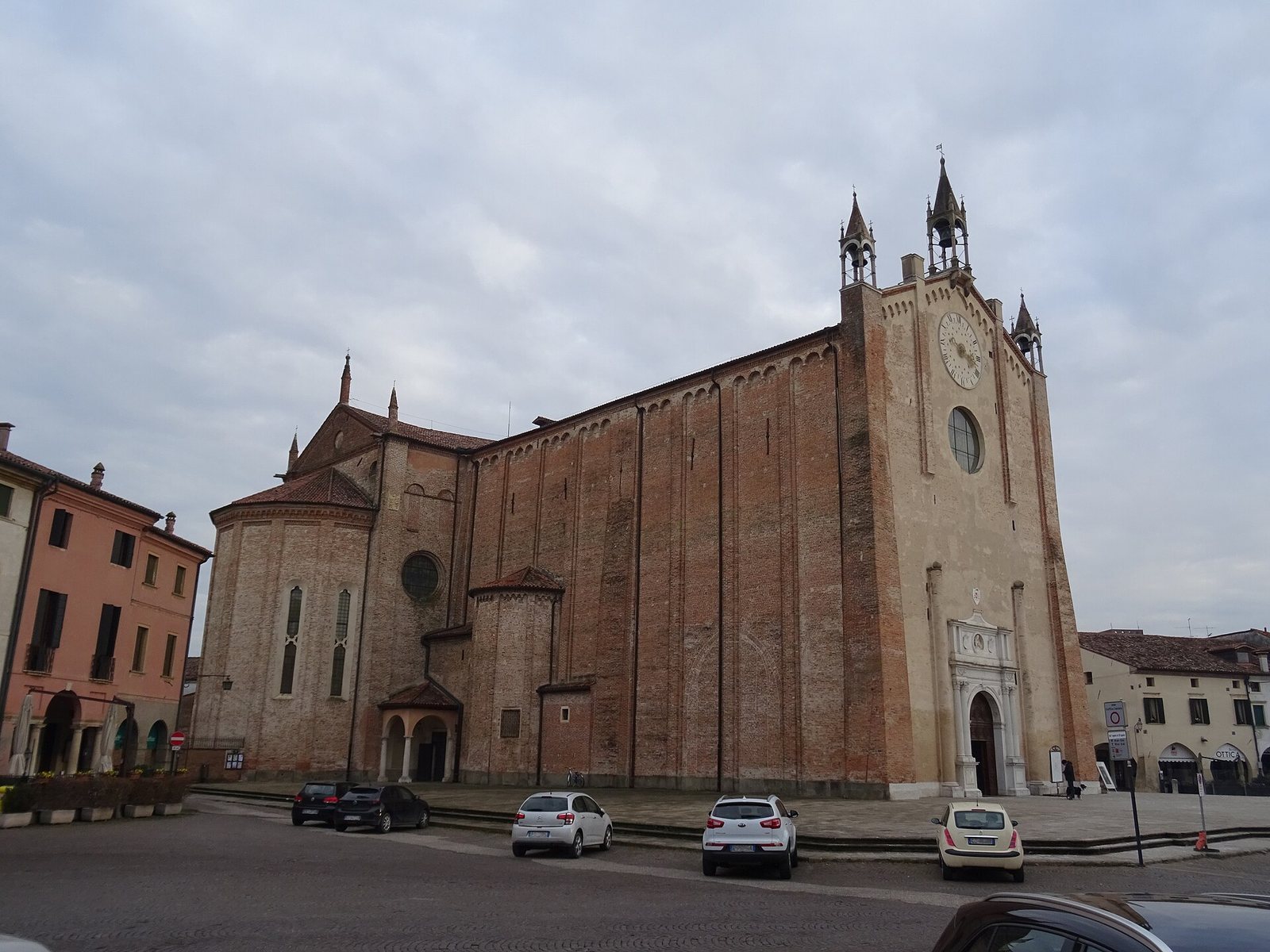
Santa Maria Assunta is a Catholic church in Montagnana, Italy, begun in 1431 in a Late Gothic tradition and later given Renaissance additions. Dedicated to the Assumption of Mary, the Catholic teaching that she entered heavenly glory in body and soul, it became the town’s principal place of worship. The church follows the Roman Rite, the principal liturgical tradition of the Latin Church, and belongs to the Diocese of Padua, a church district overseen by a bishop.
Earlier church and fifteenth-century rebuilding
An earlier church stood on the site, probably from the eleventh century. It was built in the Romanesque style, a medieval tradition often marked by rounded arches and massive masonry. In the fifteenth century, Montagnana’s community chose to replace it with a larger and more prestigious church, reflecting the town’s growing importance.
Construction began in 1431 at the request of Bishop Pietro Barozzi and the local community. The first architect is uncertain, although the building work was entrusted that year to Cristoforo da Bolzano. Progress was slow until Lorenzo da Bologna took charge in 1489. He revised the roof design and introduced Renaissance elements into the existing Gothic work.
Consecration and devotional use
Barozzi followed the construction during pastoral visits, and the church was consecrated in 1502. He also consecrated seven altars, establishing the church’s original devotional arrangement. The history of one of those altars is reflected in the surviving Rosary altar, described below.
Changes to the organ
The church’s organ was replaced and altered over time. The first instrument was built in Venice in 1566 and was moved and modified several times. Following a final restoration in the late eighteenth century, it was installed in the nearby Church of San Francesco. A successor, made in 1837, stood in a choir loft at the rear of Santa Maria Assunta. Both the instrument and loft were dismantled in the 1930s. The present organ was built by Malvestio and restored and enlarged in 2021–22.
Remains
Plan and façade
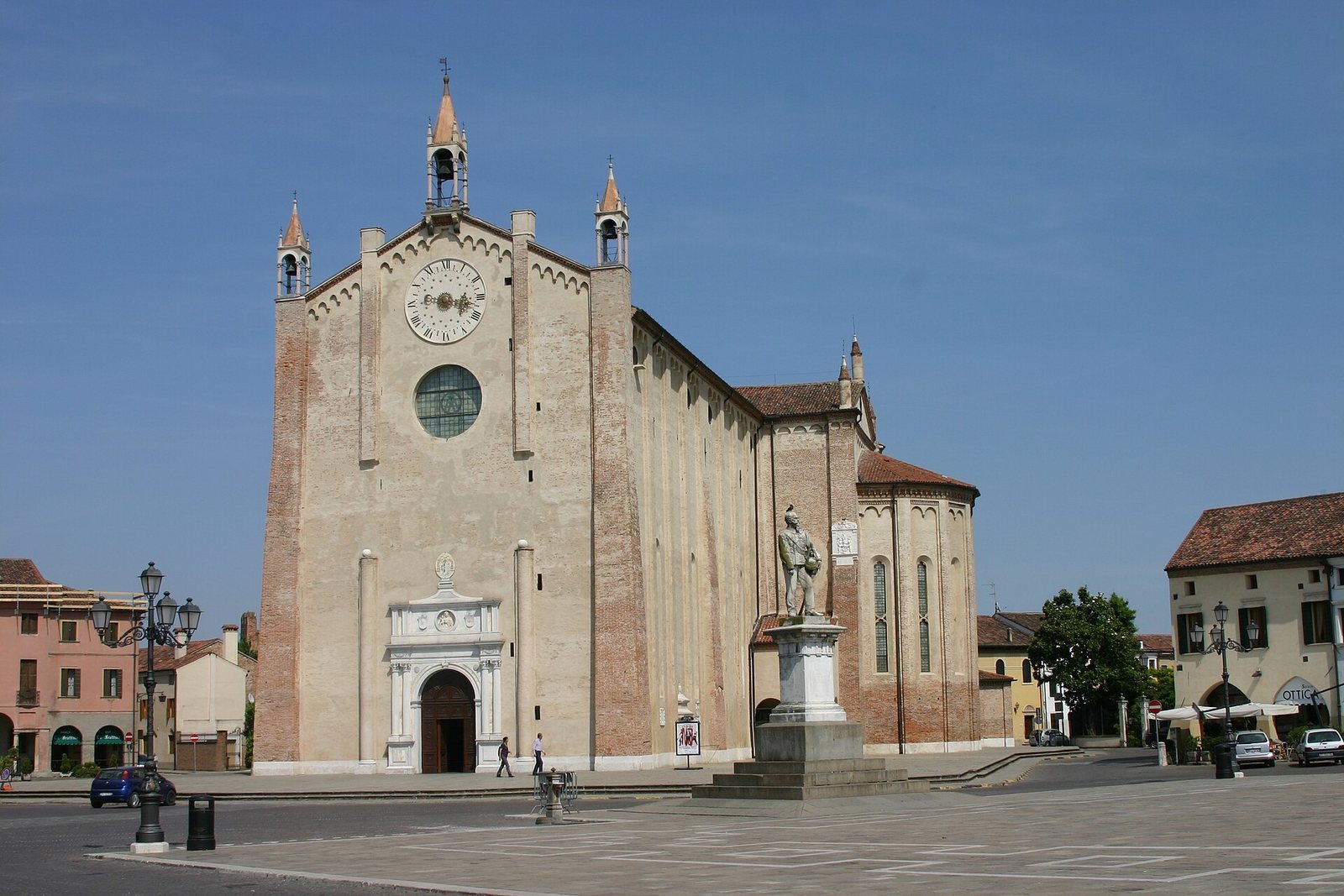
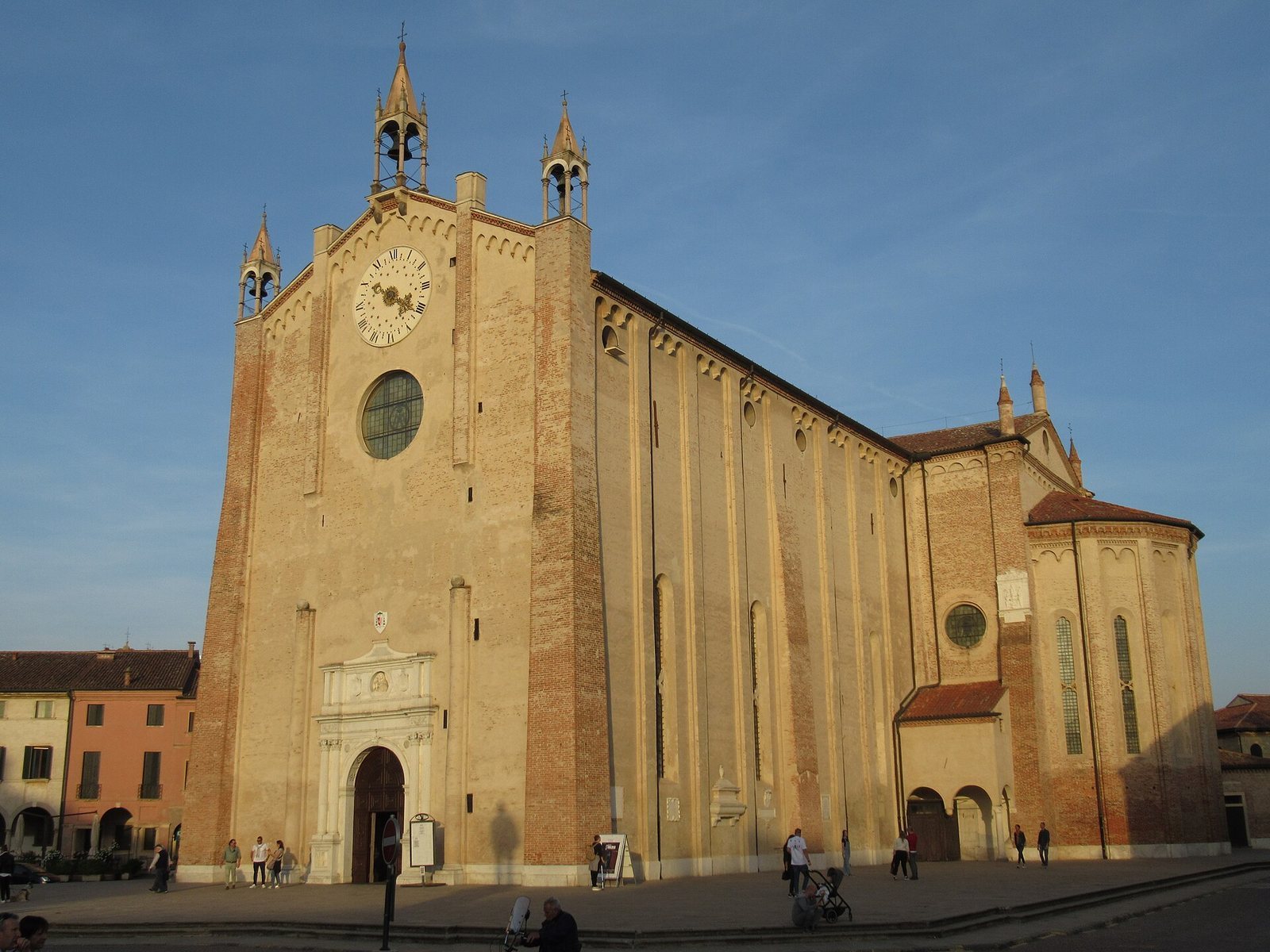
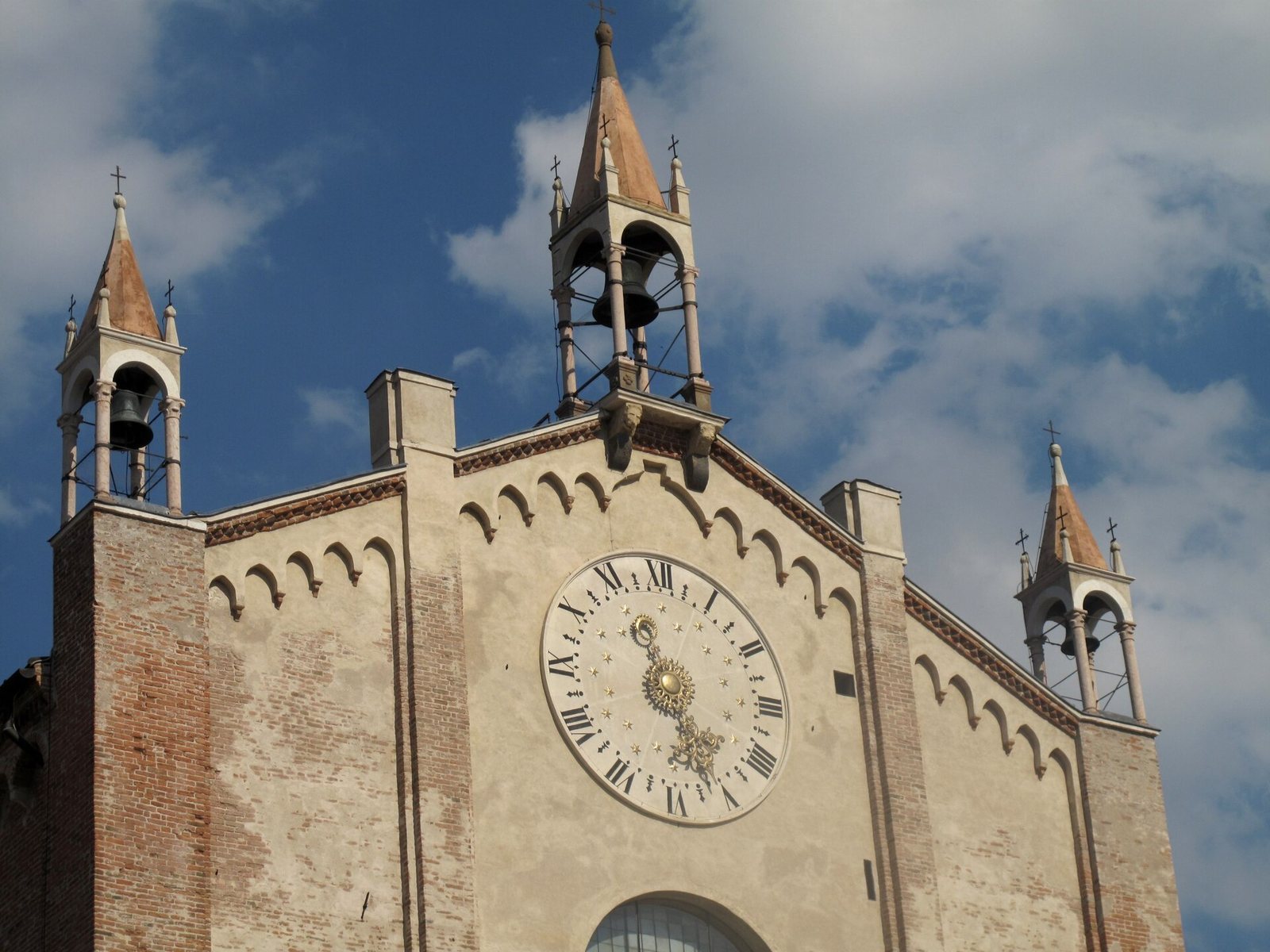
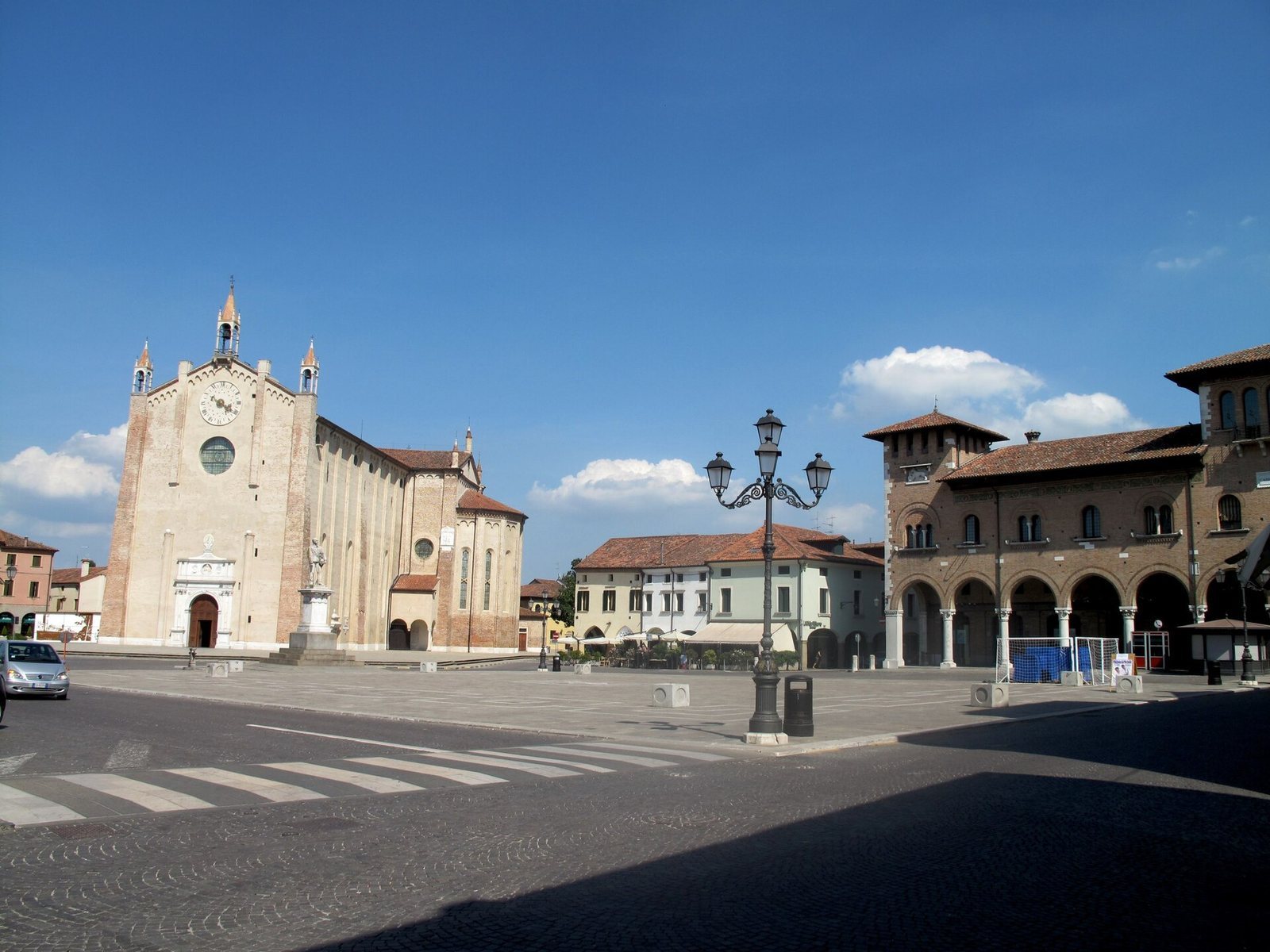
The church follows a Latin-cross plan, with a long main axis crossed by a shorter transept, and is aligned with the cardinal directions. Its large scale and asymmetrical position shape its relationship to the town’s Liston, a paved public promenade or central street. At midday, sunlight falls on two white-stone spheres on the façade. Above the main portal, a round relief depicts the Madonna and Child. Lorenzo Bregno left the sculpture unfinished when he died in 1523, and Antonio Minello completed it by 1525.
Tower and bells
Santa Maria Assunta has no bell tower of its own. Five bells for liturgical services hang in a tower within the northern town walls, probably raised in the nineteenth century and enclosed to form a bell chamber. They are rung in the Veronese style, in which bells swing through a full circle. Their pitches are D-flat 3, E-flat 3, F 3, G-flat 3, and A-flat 3, the first five notes of a D-flat major scale. They were probably cast by the Daciano Colbachini and Sons Pontifical Foundry of Padua.
Altar and paintings
The Rosary altar retains the core of the earlier Annunciation altar and was rebuilt in 1681. The church’s artworks include Paolo Veronese’s Transfiguration of Christ, three sixteenth-century panels by Giovanni Buonconsiglio, known as Marescalco, and a large votive canvas offered in thanks or fulfillment of a vow, depicting the 1571 Battle of Lepanto. That naval battle was fought between the Ottoman Empire and a Christian coalition. Two wall paintings on wet plaster, depicting the biblical figures David and Judith, are attributed to Giorgione; art historian Sergio Alcamo reaffirmed the attribution in 2020.
Organ
The present organ stands behind the Sansovinian altar in the main apse, the end of a church that commonly contains the sanctuary. The altar’s Sansovinian style draws on Renaissance forms associated with classical sculpture and architecture. The organ has 52 stops, which select different sound qualities, across two 61-note manuals, or hand-played keyboards. Its concave-radial pedalboard is played with the feet and has 32 notes; electrical signals operate the instrument’s mechanisms.