Greek Catholic Church in Orelec: An Eighteenth-Century Wooden Church
Site at a Glance
- Popularity
- Very Low
- Country
- Poland
- Primary era
- Early Modern
- Eras represented
- Early Modern, Modern
- Civilizations
- Habsburg, Polish–Lithuanian Commonwealth
- Site type
- Religious
- Remains
- Church
On this page7 sections
History
Construction and Greek Catholic use
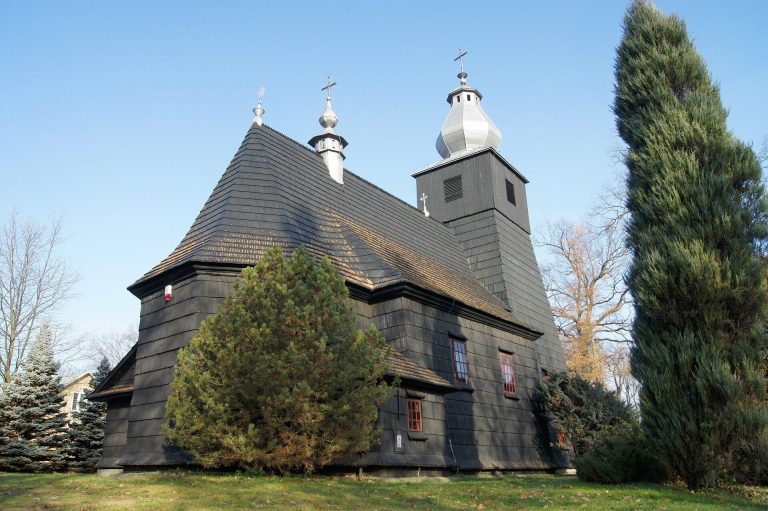
The Greek Catholic Church in Orelec is a wooden church in Poland, built in 1759, although 1757 is also given as its construction date. Greek Catholic refers to an Eastern Catholic tradition in communion with Rome. Local tradition holds that the building timber came from a church dismantled in nearby Uherce.
Changes in use
The church was repaired in 1933, when a porch was probably added. After 1947 it was no longer used for worship and became a storage place for forestry cones. In 1967 the Roman Catholic Church took it over as a dependent church, meaning it was linked to a parish rather than serving as the parish’s main church. Its earlier dedication was the Nativity of Saint Anne, traditionally regarded as Mary’s mother; it was rededicated to Saint Joseph, traditionally understood as Mary’s husband and Jesus’ foster father.
The church was initially attached to the parish in Uherce, then to the parish of the Sacred Heart of Jesus in Bóbrka from 1975 to 2009. After a new church was built in 2009, the older building ceased to serve for worship and became inactive as a religious site.
Remains
Church building
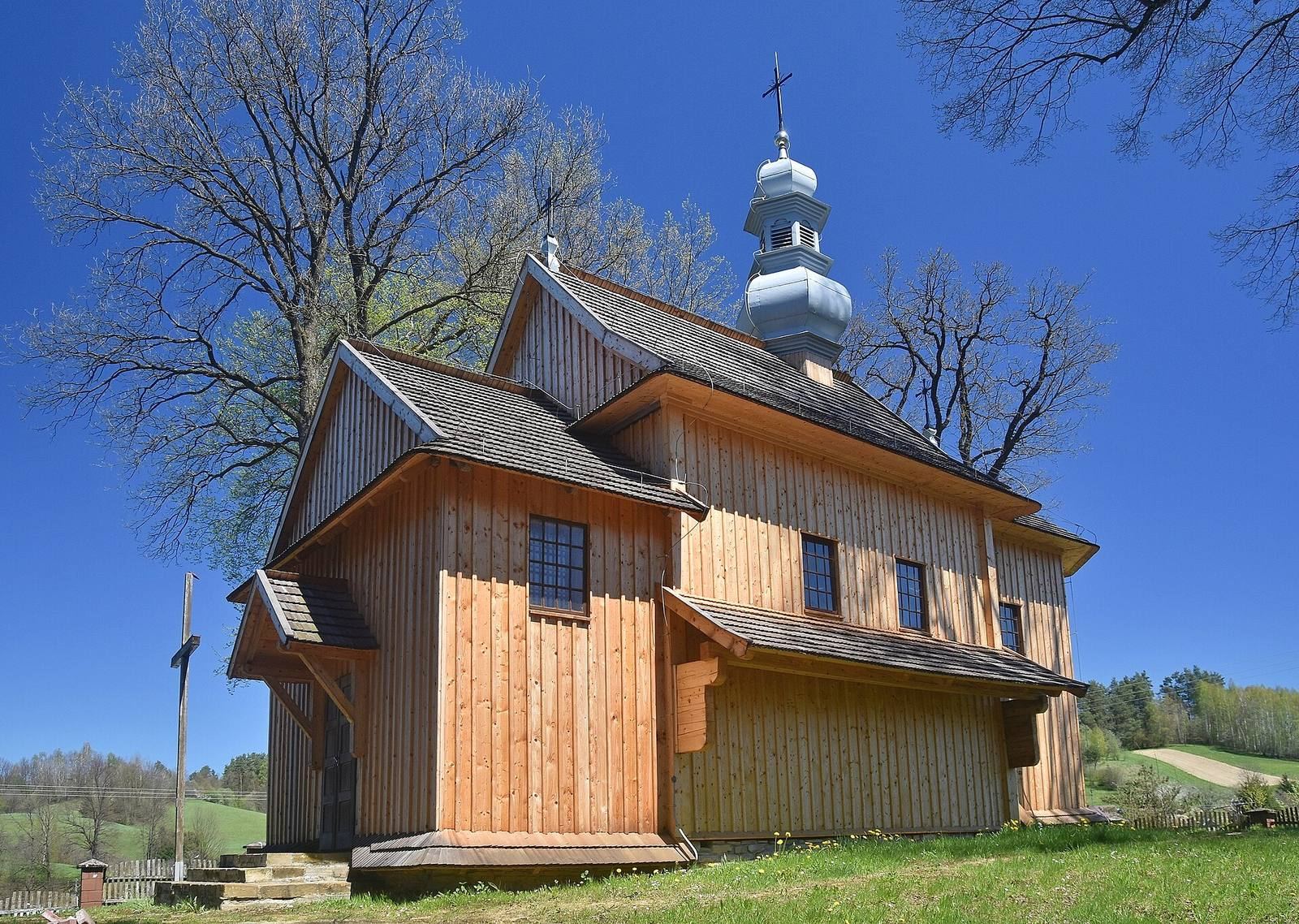
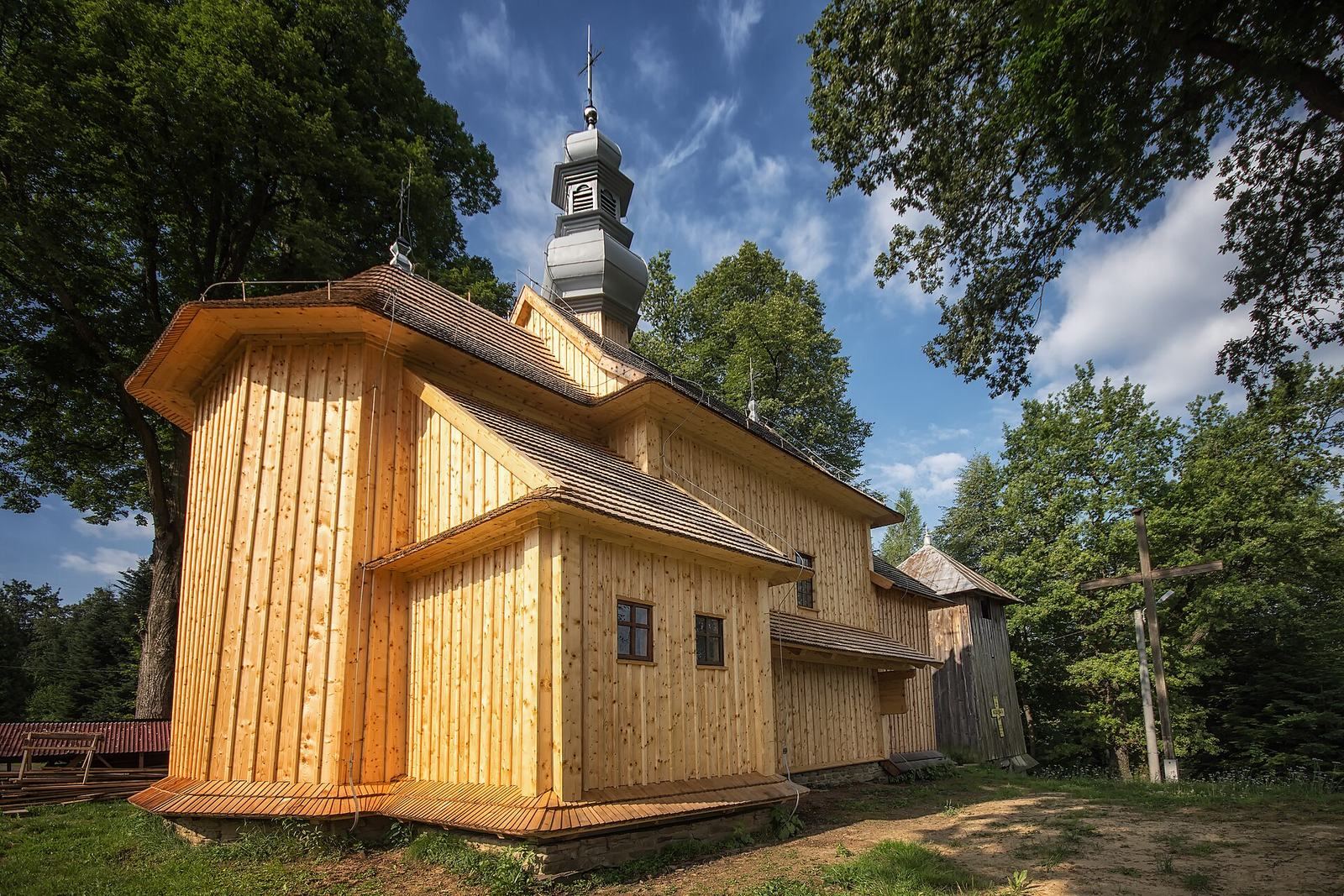
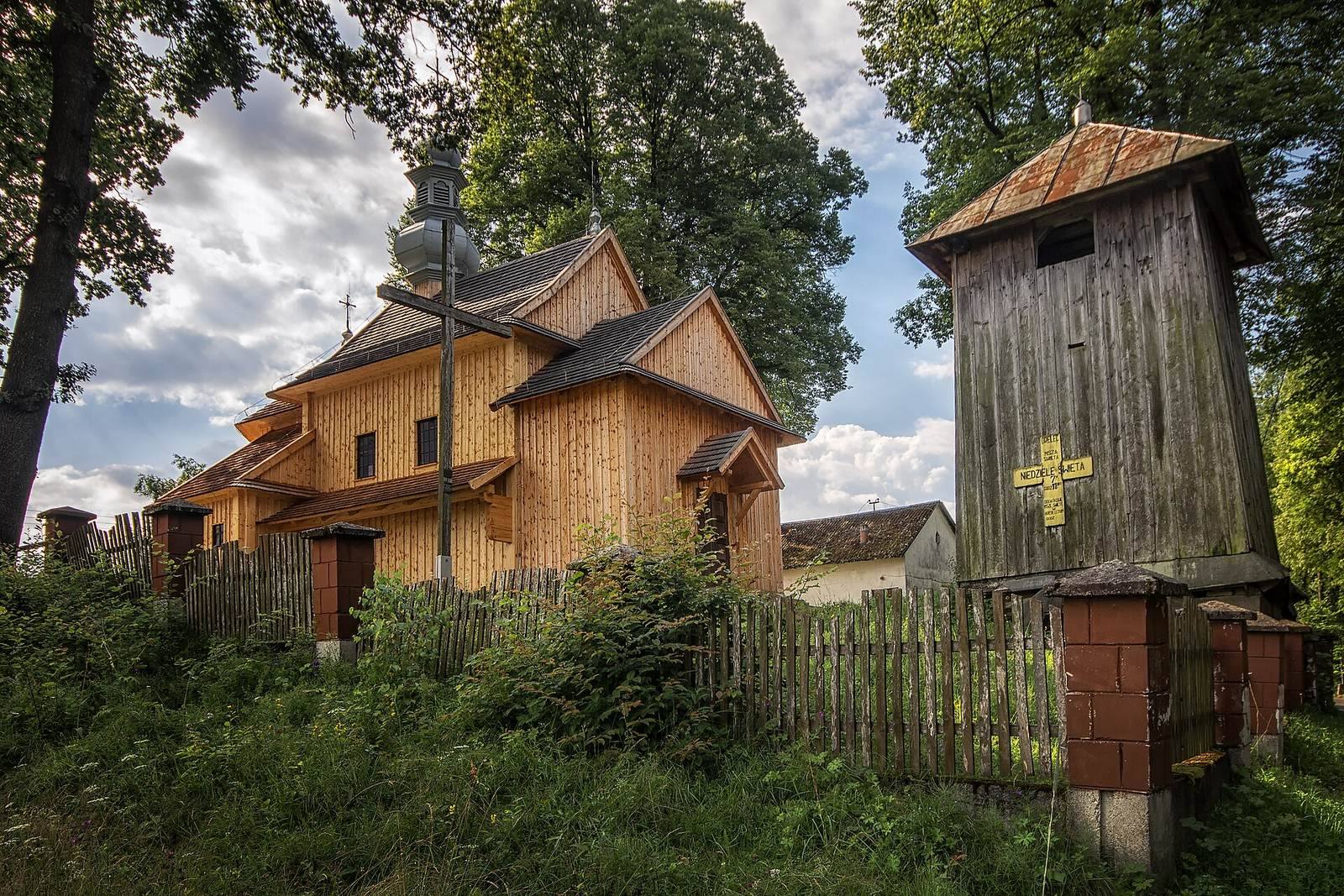
The church is a two-part timber structure built using log construction and aligned east to west, with its sanctuary at the east end. A rectangular nave adjoins a chancel, the area around the altar, which is closed on three sides. A sacristy, a room for clergy’s vestments and liturgical objects, stands on the chancel’s north side, while a later porch adjoins the nave. The roof has two ridges and an onion-shaped turret. Forged-iron grilles from the nineteenth century cover the sacristy windows. Inside, flat ceilings carry modest painted ornamental and floral decoration. Repairs in either 1981 or 1985 included removal of the roof apron that had surrounded the building.
Bell tower
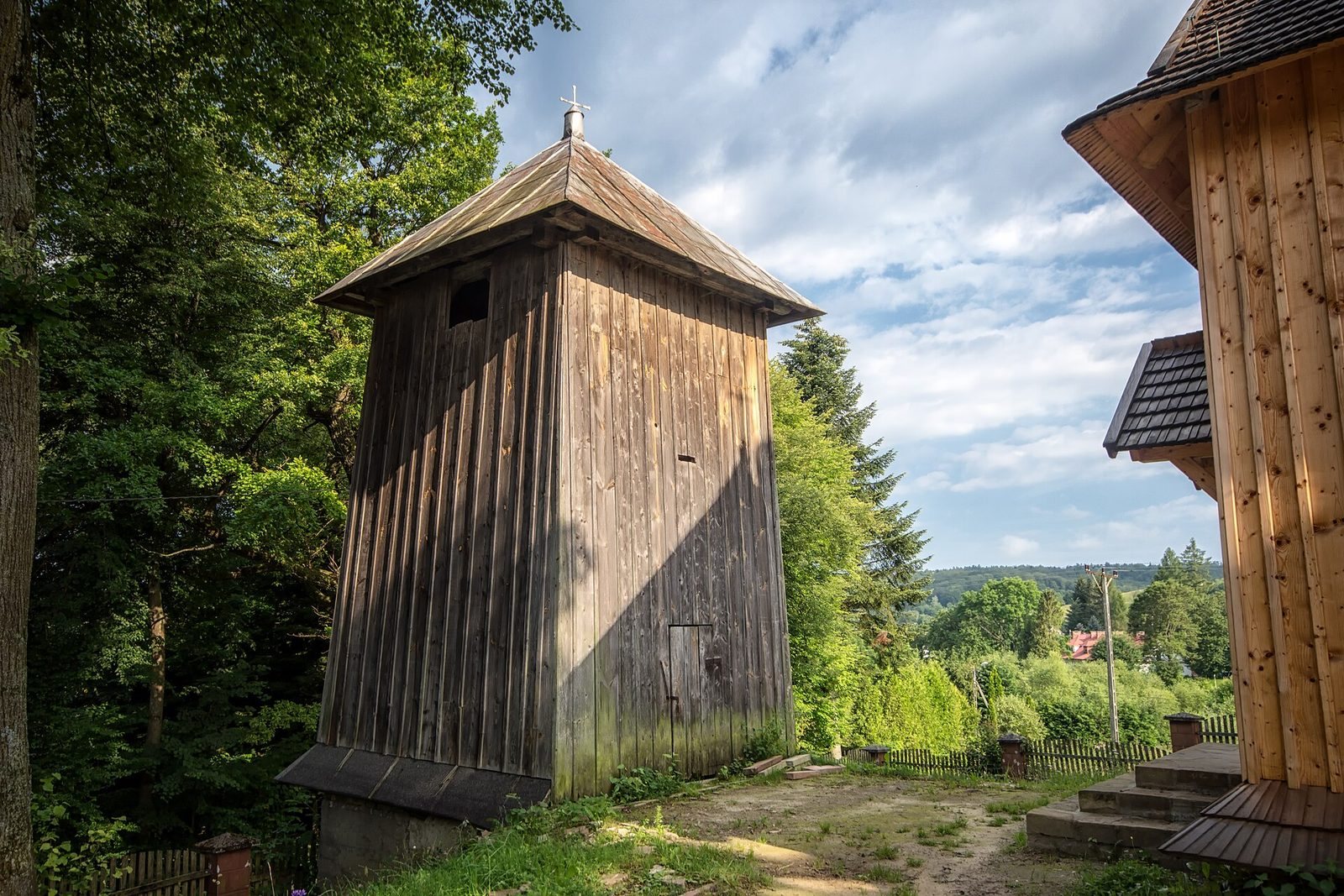
A wooden bell tower stands on the church’s axis. It has a square plan and post-frame construction, a framework supported by upright posts, beneath a tent-shaped roof.
Church-related artworks
Three works associated with the church are now held by the Department of Church Art at the Museum in Łańcut: angel figures from an eighteenth-century altar, a relief of God the Father, the first person of the Christian Trinity, and a nineteenth-century figure of Saint John of Nepomuk, a fourteenth-century Bohemian priest and martyr venerated as a Catholic saint.