Santa Maria Assunta: The Parish Church of Bagno di Romagna
Site at a Glance
- Popularity
- Medium
- Country
- Italy
- Primary era
- Medieval
- Eras represented
- Medieval, Early Modern
- Civilizations
- Unclassified
- Site type
- Religious
- Remains
- Church
On this page7 sections
History
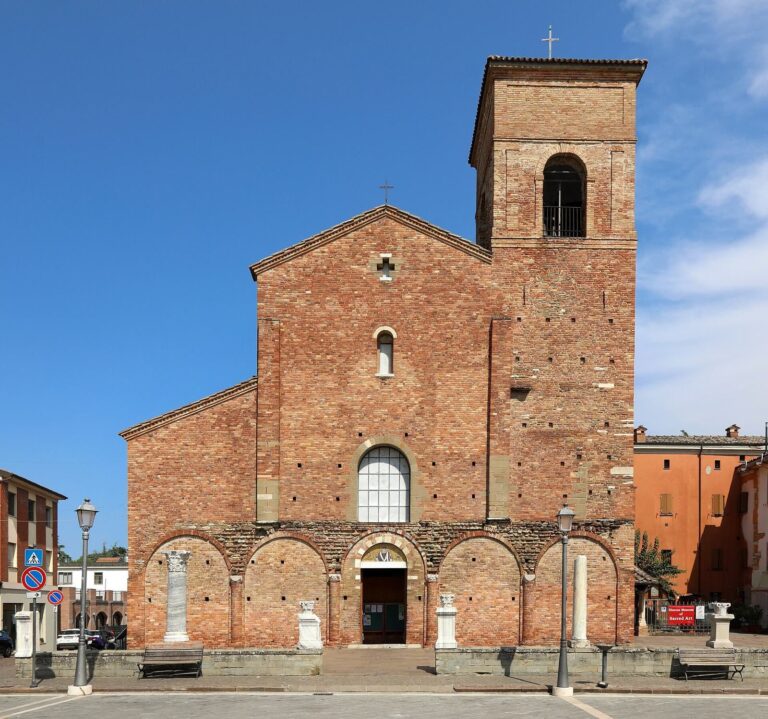
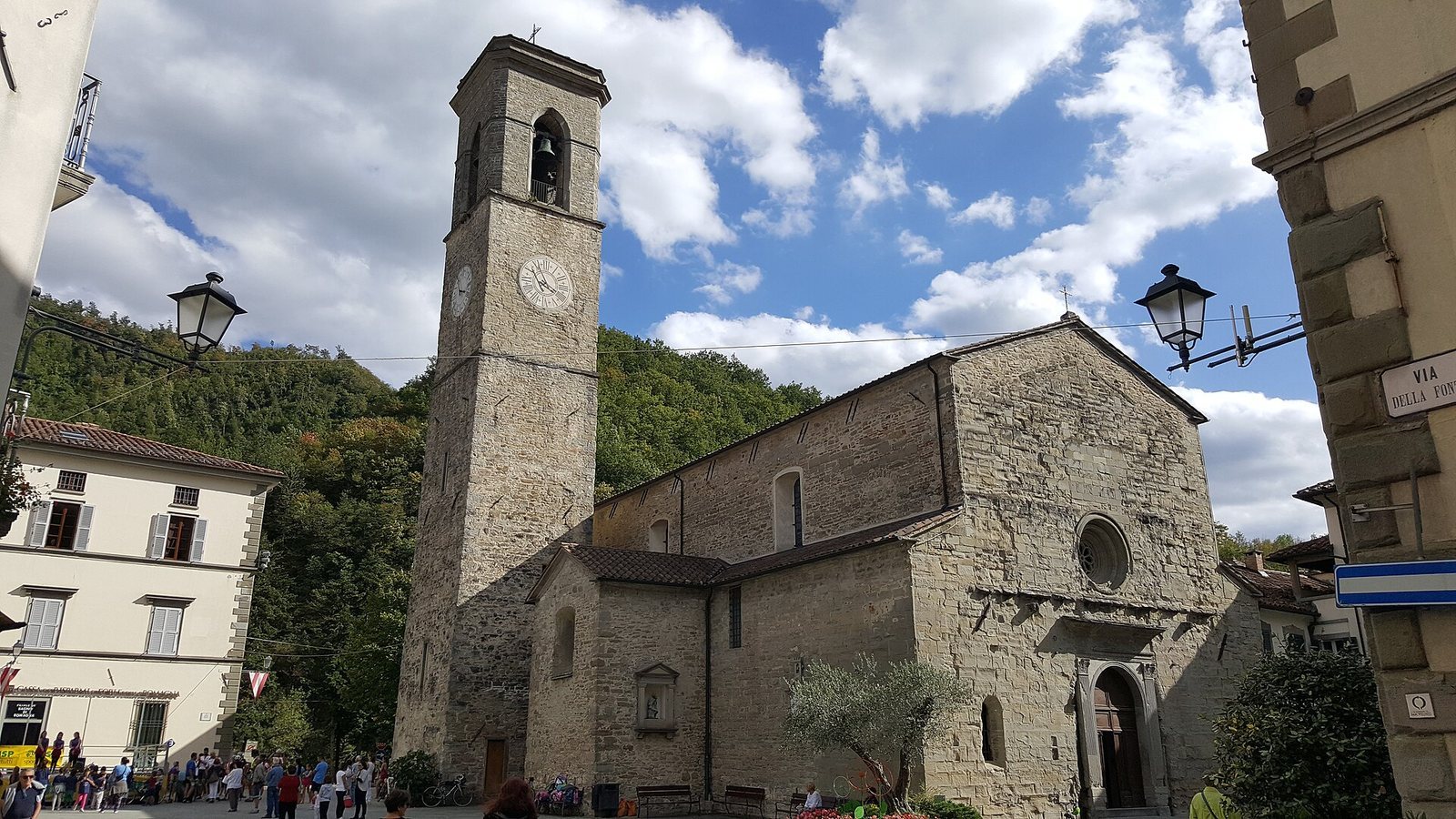
Santa Maria Assunta is the Roman Catholic parish church of Bagno di Romagna, Italy, dedicated to the Assumption of Mary, the Christian belief that she was taken into heaven. The church is first attested in 861 at the site of an ancient pagan temple. Its façade combines Romanesque, a medieval architectural style, with a Renaissance portal from a period of renewed interest in classical art and architecture.
Early church and monastery
On 13 November 872, Pope Adrian II, whose pontificate ran from 867 to 872, instructed Giovanni, bishop of Arezzo, to rebuild the church.
A monastery was established in the tenth century. Benedictine monks, who followed the Rule of Saint Benedict, served there until about 1100. The Camaldolese, a Benedictine congregation associated with Camaldoli in Tuscany, then took over and remained for centuries.
Parish changes and earthquake damage
In 1808, the Napoleonic suppressions, measures that closed or restricted religious institutions, forced the Camaldolese to give up pastoral care of Bagno. Clergy from the Diocese of Sansepolcro, a church jurisdiction governed by a bishop, then took charge. The church became part of the Diocese of Cesena in 1975. It now belongs to the Diocese of Cesena-Sarsina and the Sarsina–Upper Savio Valley pastoral zone, a grouping for organizing pastoral care.
An earthquake in 1918 damaged the church, and repairs were completed the following year. A rectory was built in 1920, and the church underwent restoration in 1959–1960.
Remains
Church layout and entrance
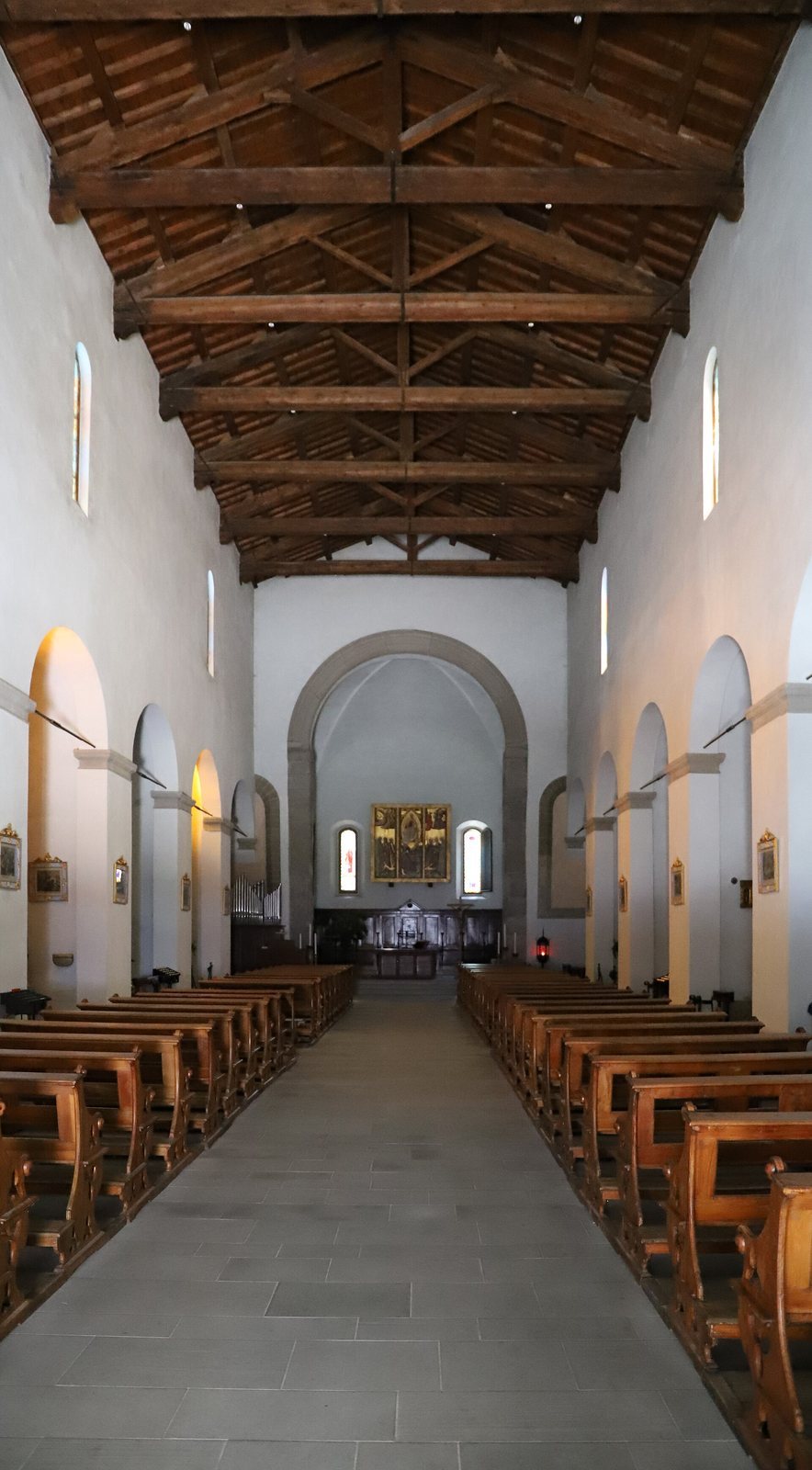
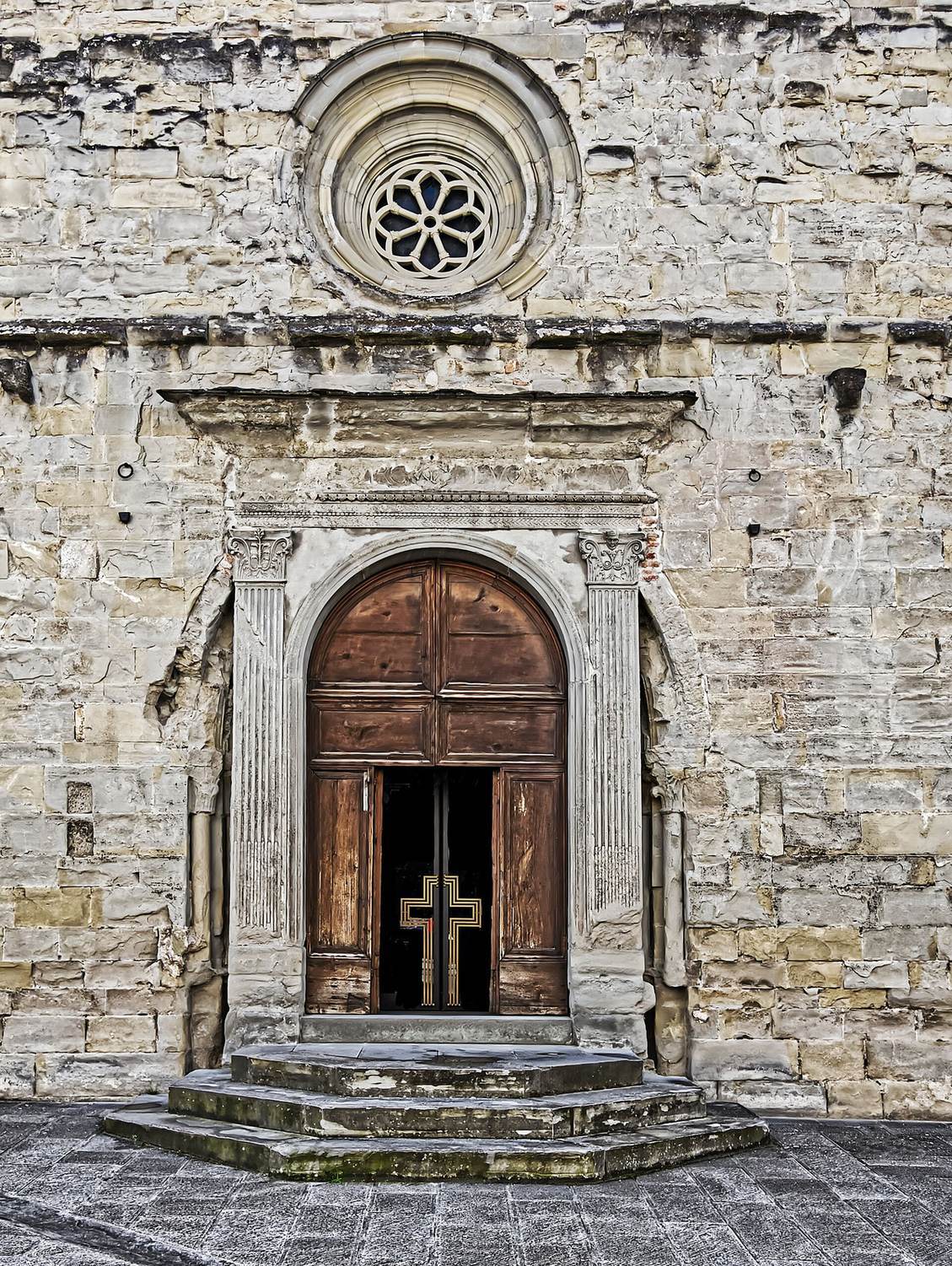
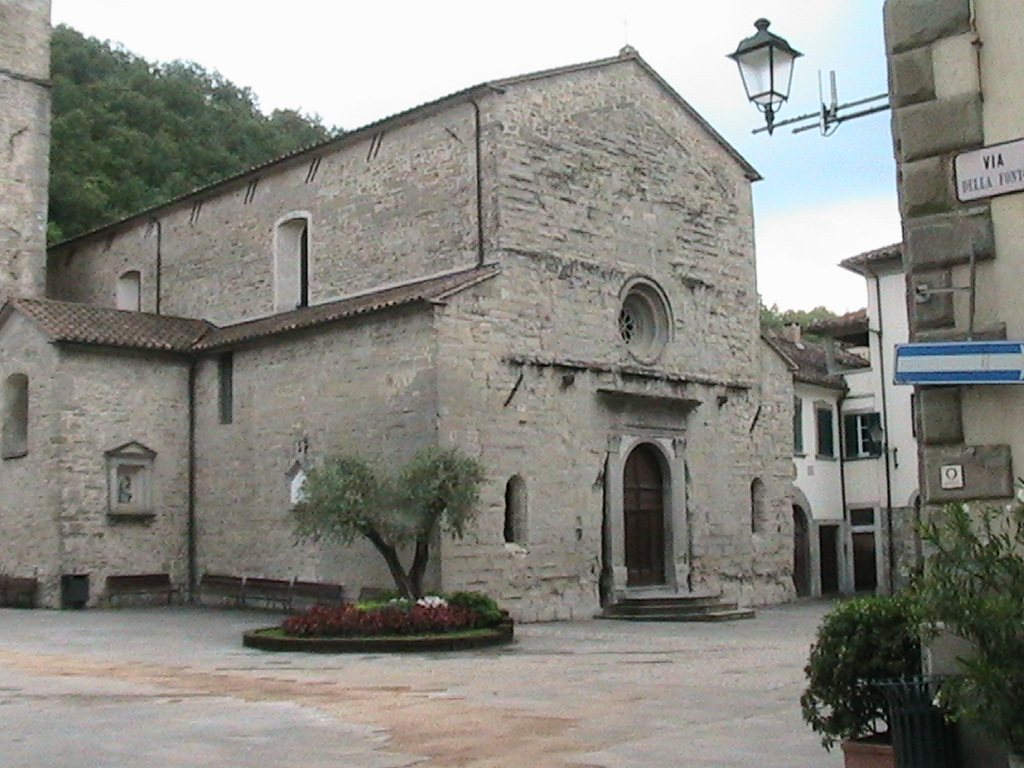
The church has a single rectangular main hall opening onto seven side chapels. Its stepped façade has a small window on either side and a central entrance approached by three steps. Two pilasters, shallow upright projections from the wall, flank the entrance. Their Corinthian capitals, the decorated tops of the supports in a classical style, feature two masks. A horizontal beam above them carries the partial inscription VIRGINI DEVOTI POSVI. Above the entrance, a circular window contains an eight-petalled floral design. The petals are interpreted as representing the seven days of Creation and the day of the Last Judgment.
Monastery
A monastery was attached to the church. Its old convent building was destroyed in the 1918 earthquake.
Artworks and sacred object
The church holds a statue of Saint Agnes, an early Christian virgin martyr, sculpted by Andrea della Robbia. Its paintings include a Madonna and Child made around 1410 by the artist conventionally called the Master of Sant’Ivo; a 1467 polyptych, a painting made up of multiple panels, by Neri di Bicci depicting the Assumption with saints; a Nativity scene by the artist known as the Master of the Borghese Tondo; and a canvas of the Madonna and Child with saints painted around 1560 by Michele Tosini. The Master of Sant’Ivo and the Master of the Borghese Tondo are conventional names for unidentified artists. A sacred corporal, a liturgical cloth placed beneath the Eucharistic elements, is also kept in the church. Tradition holds that it was the object of a Eucharistic miracle in 1412, an event regarded by believers as a miraculous manifestation associated with the Eucharist.