Sant’Omobono: A Roman Catholic Church in Rome, Italy
Site at a Glance
- Popularity
- Medium
- Country
- Italy
- Primary era
- Medieval
- Eras represented
- Iron Age, Medieval, Early Modern, Modern
- Civilizations
- Italian, Papal States, Roman
- Site type
- Religious
- Remains
- Church
On this page9 sections
History
Roman and early Christian setting
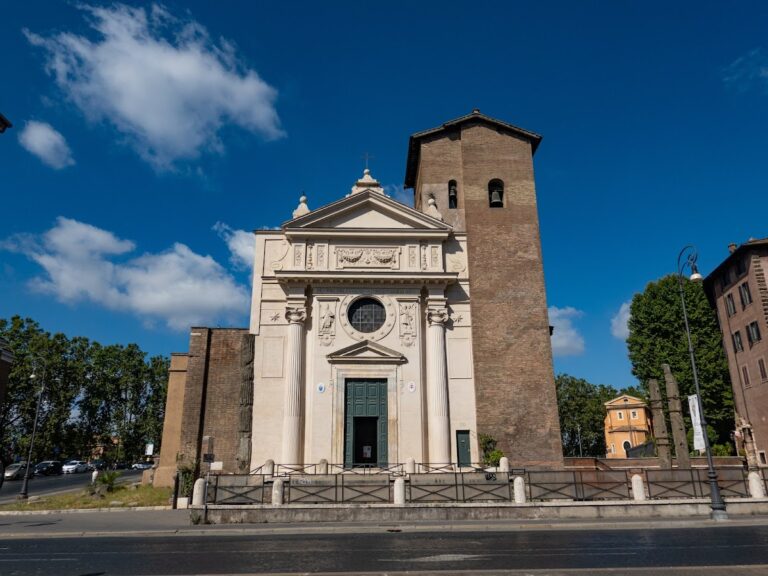
Sant’Omobono is a Roman Catholic church in Vico Jugario, Rome, Italy, at the foot of the Capitoline Hill. Its earliest Christian predecessor dates to the sixth century and was dedicated as San Salvatore in Portico. The phrase “in Portico” has been linked to the Portico of Octavia, the ancient Porticus Crinorum, or a hospital associated with Santa Maria in Portico. Christian Hülsen identified Sant’Omobono with San Salvatore in Statera, but Christoph Reusser rejected that identification.
Medieval and early modern changes
The church was restored and repaved in the twelfth or thirteenth century, then reconstructed in 1482 and restored in 1510. In 1575 it was assigned to the Tailors’ Association, known as the Università dei Sarti, and rededicated to its patron, Saint Homobonus, a medieval Italian lay saint honored by tailors. Associations of stocking makers, tailors, and doublet-makers also established themselves there. A Roman church list compiled between 1575 and 1583 gives its name as Sant’Omobono de Sartori. Giovanni Battista Nolli’s 1748 map of Rome marks the church as number 1046.
Restoration and modern change
Further restoration took place in 1767 and in the middle of the nineteenth century, followed by another campaign in 1940. Until the early twentieth century, the surrounding district remained modestly built up and served producers approaching Rome’s market along the Via Appia and Via Ostiense, whose routes converged at Piazza Montanara near the Theatre of Marcellus. In the mid-nineteenth century, Via di Sant’Omobono had six taverns, an inn, and a café. Twentieth-century demolitions and the construction of walls along the Tiber left the area around the church nearly deserted. A small residential block survived between Via di San Teodoro, the Roman Forum, Via della Consolazione, Foro Jugario, and present-day Via Petroselli.
Excavations beside the church began in the 1930s during the removal of material from the Capitoline area and continued into the 1960s. Archaeological work in 2015 involved Rome’s cultural-heritage authority, the University of Calabria, and the University of Michigan. Sant’Omobono belongs to the Diocese of Rome and the parish of Santa Maria in Portico in Campitelli.
Remains
The site brings together the standing church and an archaeological area beside it. The church’s foundations lie over ancient temple remains, while the excavated area preserves evidence of Rome’s earlier buildings and street levels.
Archaeological area
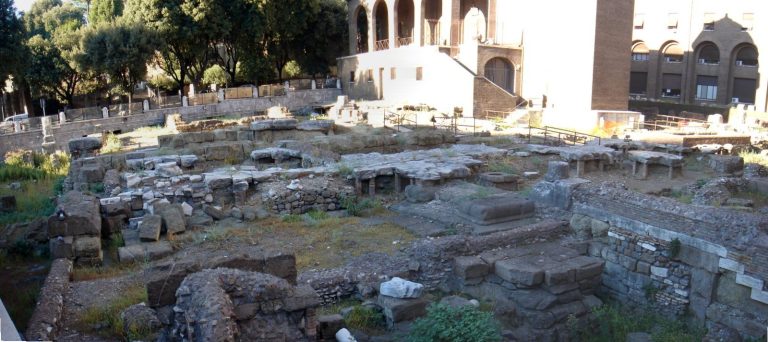
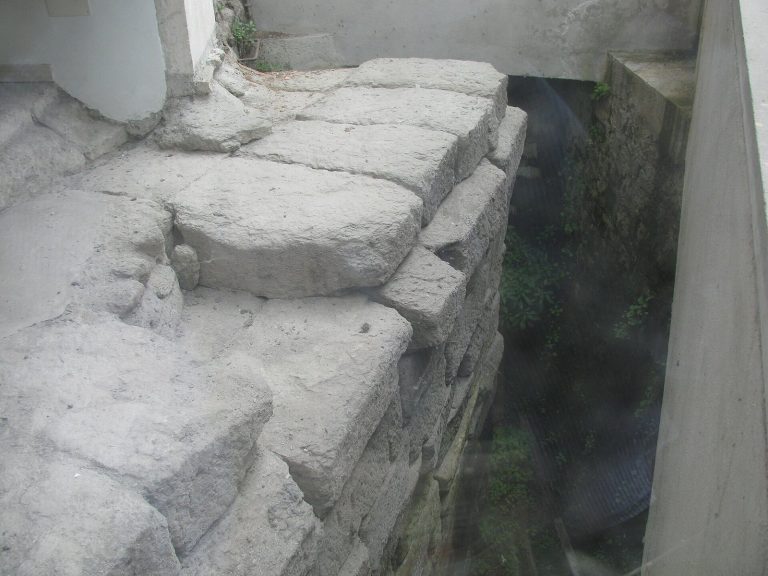
The remains beside the church include temples identified as those of Fortuna, a Roman goddess associated with fortune, and Mater Matuta, associated with dawn and motherhood. Roman altar and temple remains in the area date to the sixth century BCE. The archaeological zone also contains the Porta Triumphalis, a gate associated with Roman triumphal processions. The church’s foundations rest on the remains of the Temple of Mater Matuta.
The church
Façade and elevation
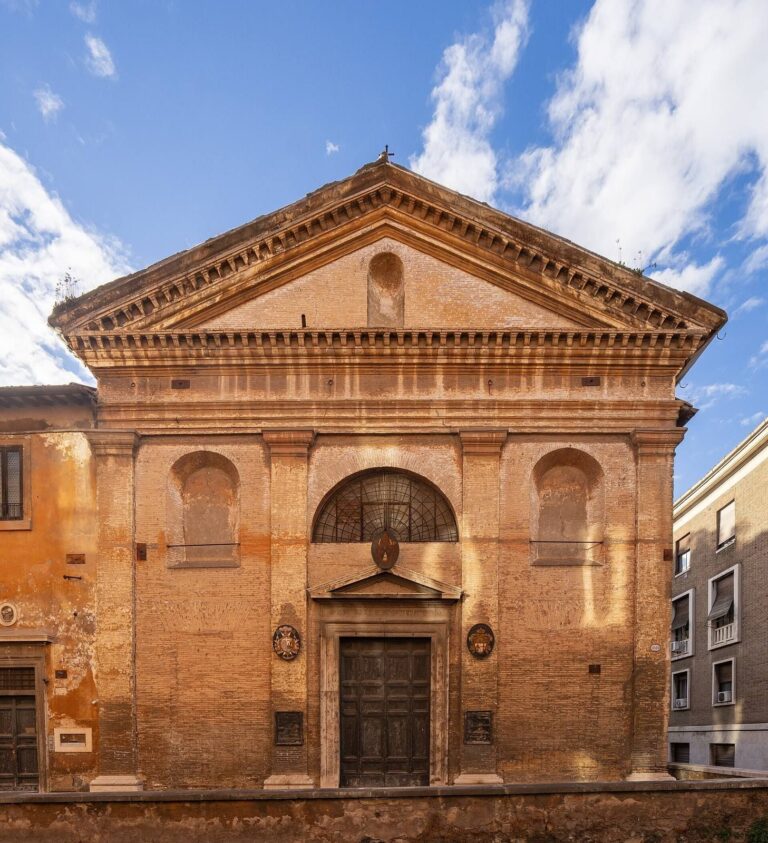
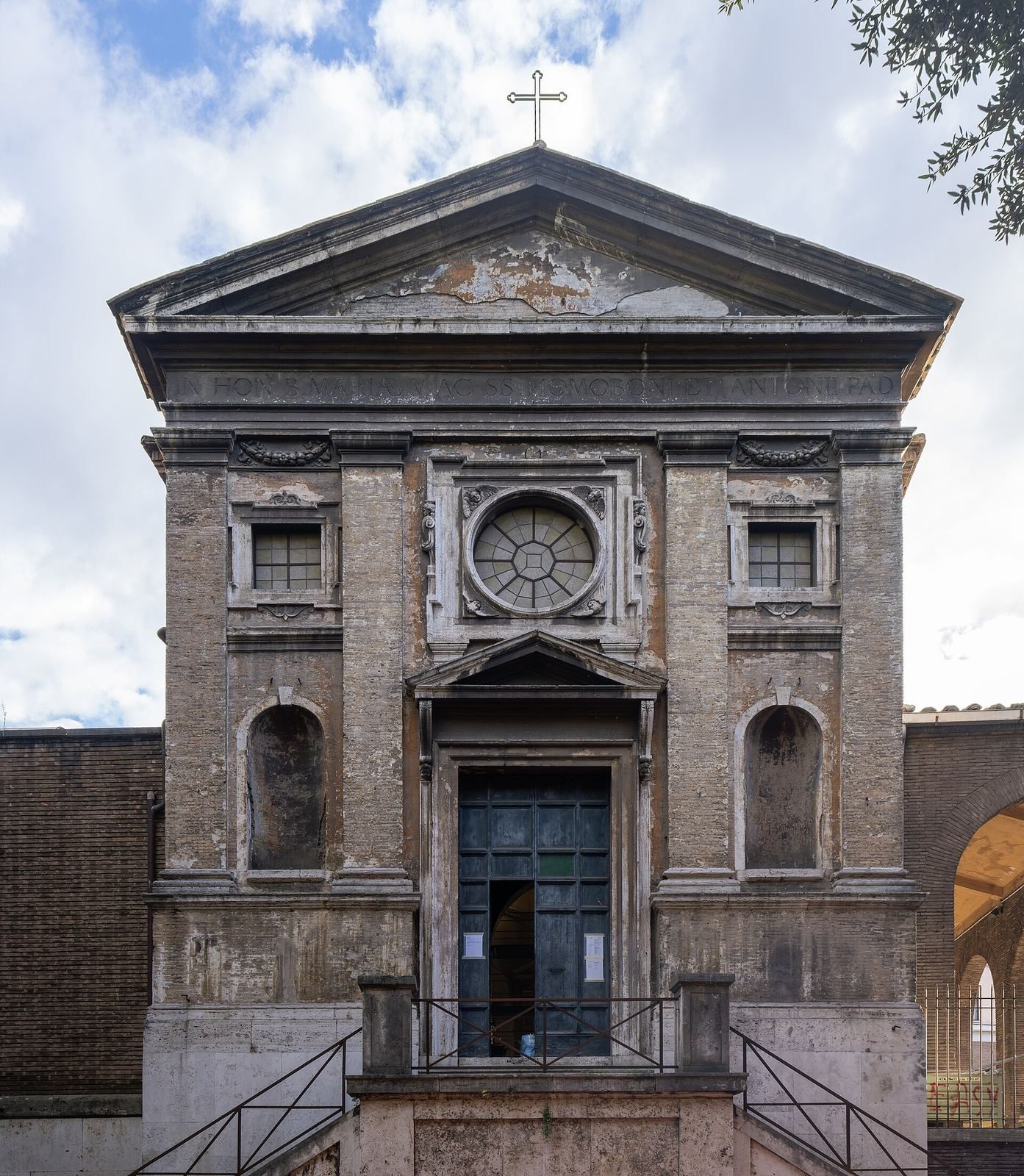
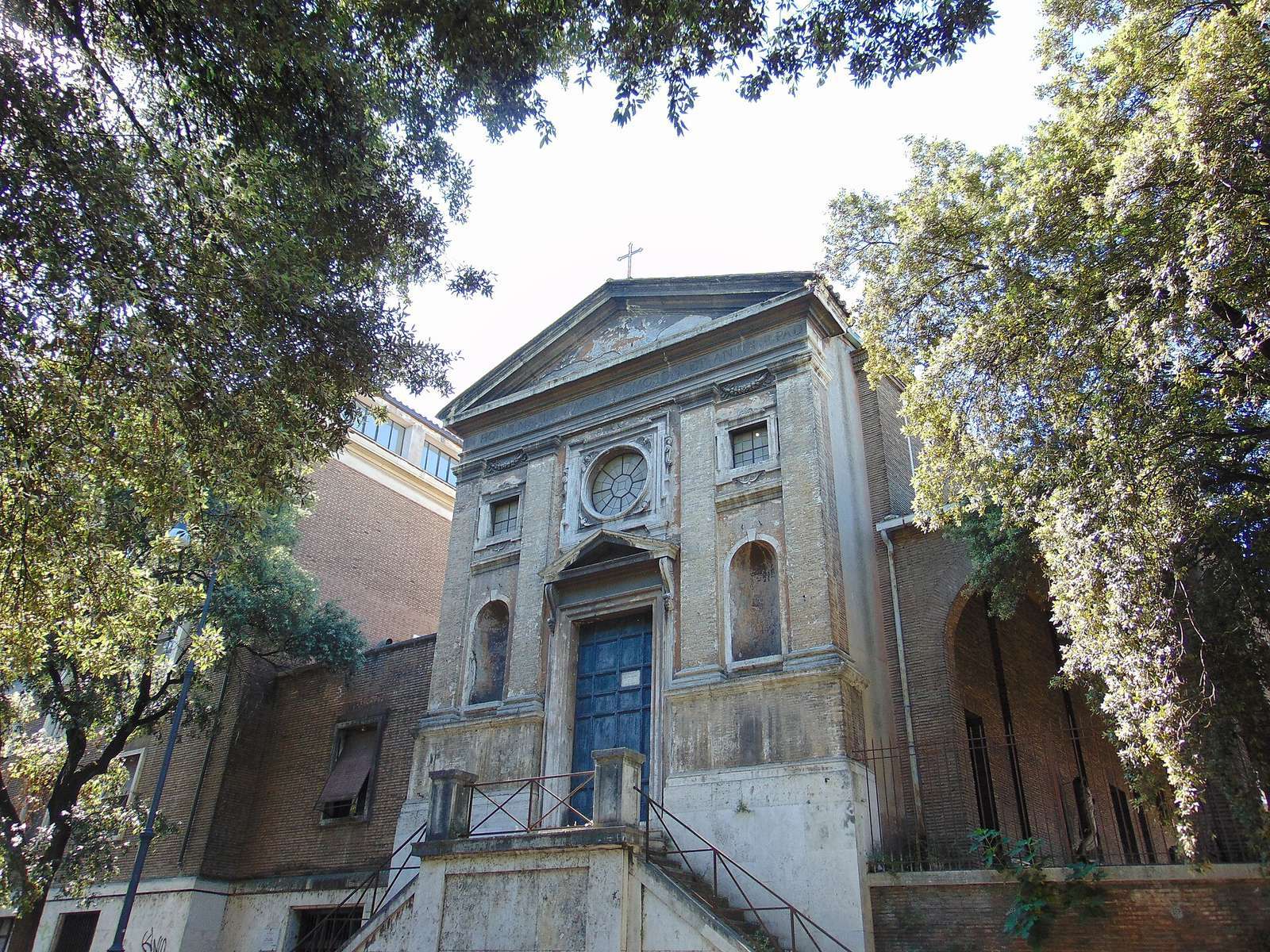
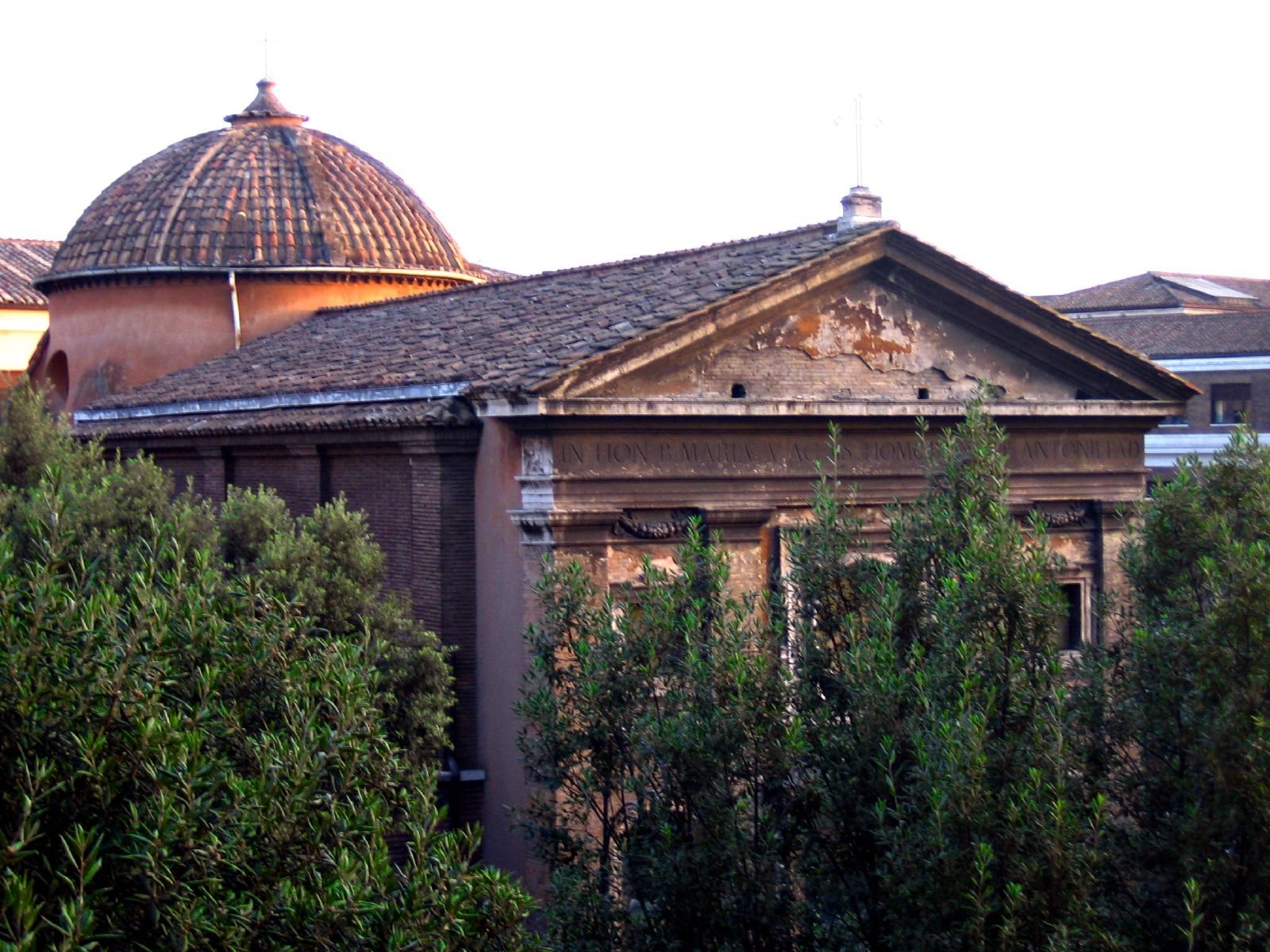
The façade has four large pilasters, flat column-like supports attached to a wall, a circular opening, and a crowning inscribed band. The church floor stands about two metres above the modern street and connects to it by a recent staircase. The difference in level also reflects how ancient Roman walking surfaces across the city became buried beneath four or five metres of rubble and debris, sometimes more, as later buildings accumulated on top before excavation exposed the earlier levels.
Interior and artworks
The interior has a single main hall and an apse, the rounded sanctuary end. Its floor was repaved in the twelfth or thirteenth century with Cosmatesque inlay, a medieval Roman technique that arranges colored stones in geometric patterns; it was repaved again in 1940. A ceiling painting by Cesare Mariani, dated 1877, shows the Coronation of the Virgin as Queen of Heaven with Saints Homobonus and Anthony of Padua, a thirteenth-century Franciscan friar and preacher. The high-altarpiece, attributed to Pietro Turini and dated to the early sixteenth century, depicts Christ enthroned above the Virgin and Child. A curved wall panel on the church’s left side shows God the Father fitting Adam with a fur-trimmed mantle, presenting him as a divine tailor.