Sant’Eligio Maggiore: An Angevin Gothic Church in Naples
Site at a Glance
- Popularity
- High
- Country
- Italy
- Primary era
- Medieval
- Eras represented
- Medieval, Early Modern, Modern
- Civilizations
- Kingdom of Naples, Kingdom of Sicily, Kingdom of the Two Sicilies, Spanish
- Site type
- Religious
- Remains
- Church
On this page13 sections
History
Foundation and early purpose
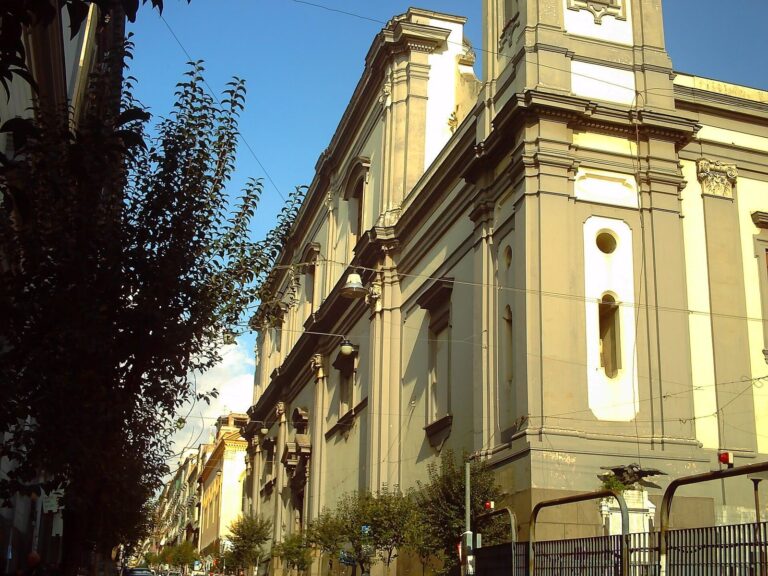
Sant’Eligio Maggiore is a Gothic church in Naples, Italy, founded in 1270 under the Angevin dynasty. Its Angevin Gothic architecture belongs to the Gothic style associated with Angevin rule. It was the earliest Angevin church in Naples and the first church built there by the dynasty. At the request of three French merchants, Charles I of Anjou, the French-born ruler who established Angevin rule in southern Italy, granted land for a church and hospital in Campo Moricino.
The church was first dedicated to Saints Eligius, Denis, and Martin. Eligius was a Frankish goldsmith and bishop, Denis was traditionally regarded as Paris’s first bishop, and Martin was bishop of Tours. From 1279, the dedication was to Eligius alone. The church stood near the place associated with the 1268 execution of Conradin of Swabia, the last Hohenstaufen claimant to the kingdom of Sicily, on Charles I’s authority. The location was chosen partly to counter the area’s reputation for violence.
The church and adjoining hospital also provided burials for foreigners, particularly French and Provençal people from the region of Provence, including merchants, soldiers, and workers who had no family or home in Naples. The complex stood just beyond the city walls, in keeping with its hospital and burial functions.
Royal protection and changing institutions
The complex received royal protection and privileges under the successive queens Joanna I and Joanna II of Naples, and Alfonso I of Aragon, an Aragonese monarch who also ruled Naples. In the first half of the sixteenth century, Pedro de Toledo, the Spanish viceroy of Naples, established a school for girls there to prepare them for nursing work at the hospital. By the late sixteenth century, public banking had joined the complex’s charitable and hospital activities.
Restoration and continued use
The church underwent important restoration in the fifteenth century, including work on its ceiling. Architect Orazio Angelini altered that ceiling in 1836. Engineers Bartolomeo Vecchione and Ignazio di Nardo restored the hospital between 1770 and 1780; Di Nardo designed its neoclassical façade facing Piazza Mercato.
An American bombing on 4 March 1943 damaged the church and part of the complex. Restoration in the following decades moved the church back toward its Gothic character and stripped away stucco added over the centuries. Sant’Eligio Maggiore remains in Roman Catholic use under the Archdiocese of Naples.
Remains
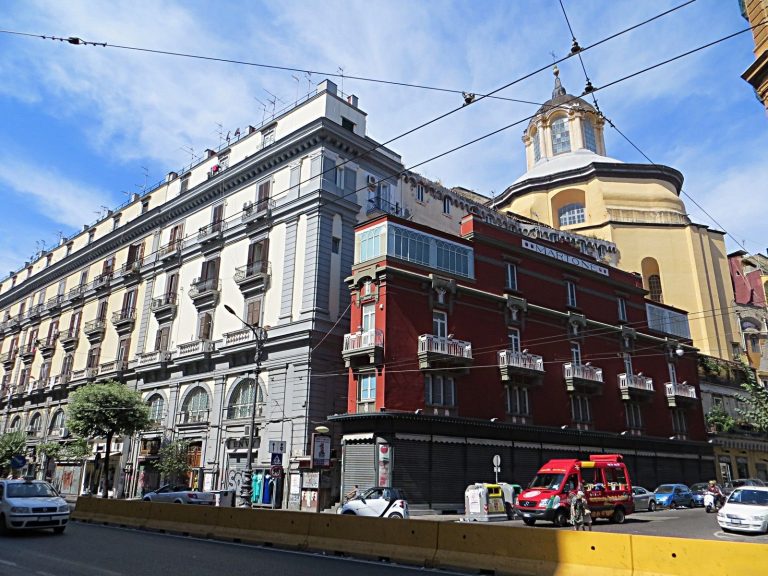
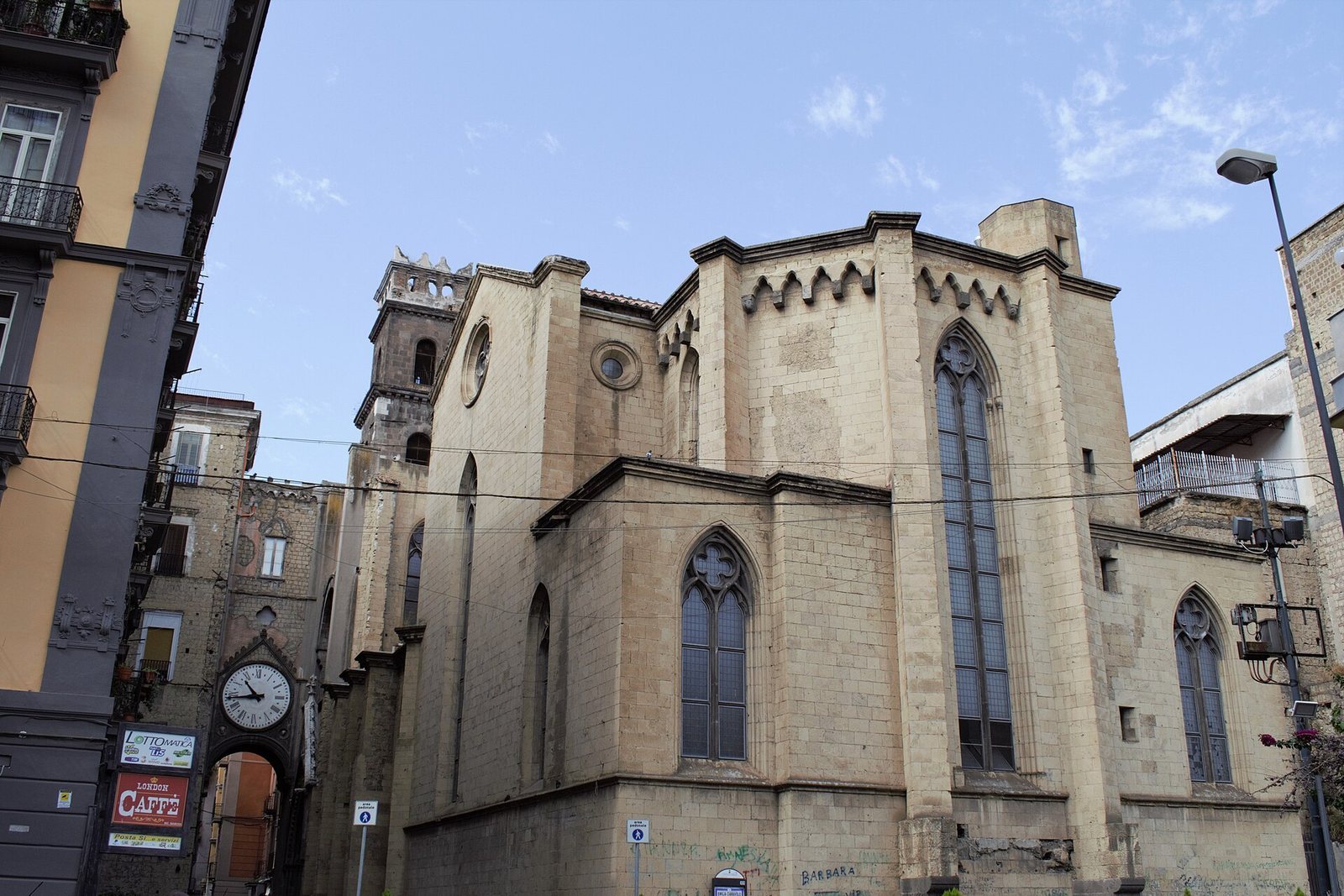
The surviving complex brings together the Gothic church, a passage linking its bell tower to a neighboring building, and the former hospital frontage on Piazza Mercato. The church’s fabric combines yellow tuff, rock formed from consolidated volcanic ash, with layers of gray piperno, a dark volcanic building stone from Campania.
Church and adjoining structures
Church portals and interior
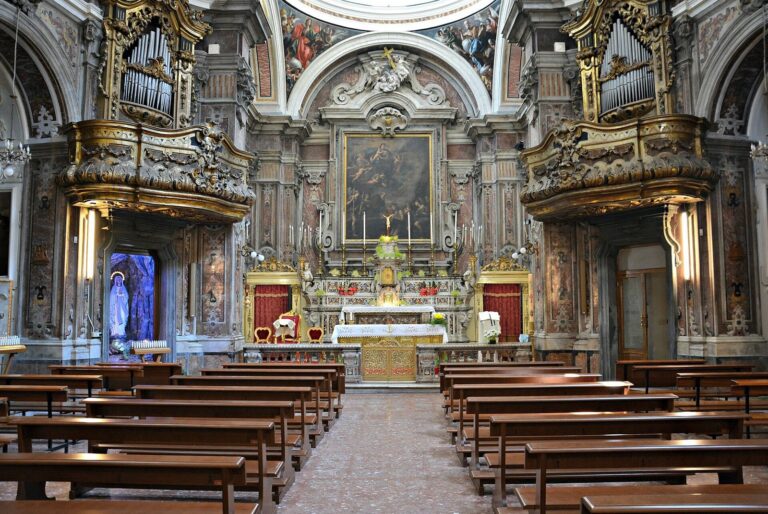
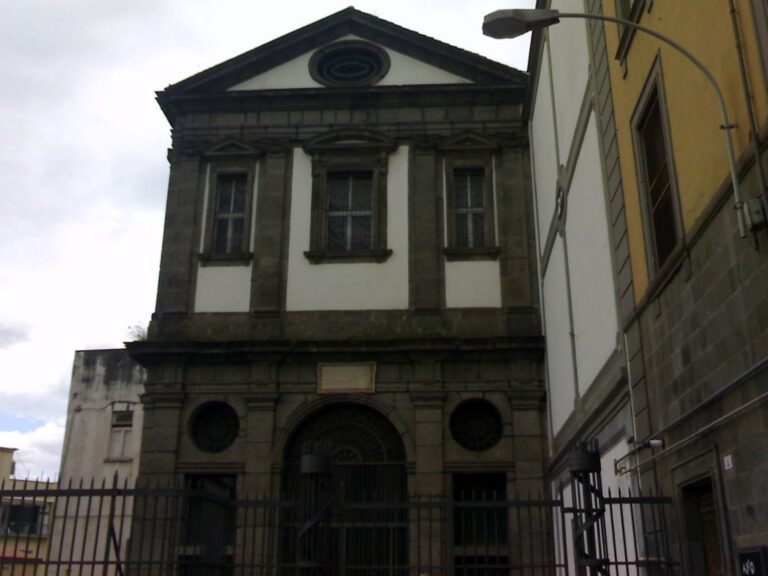
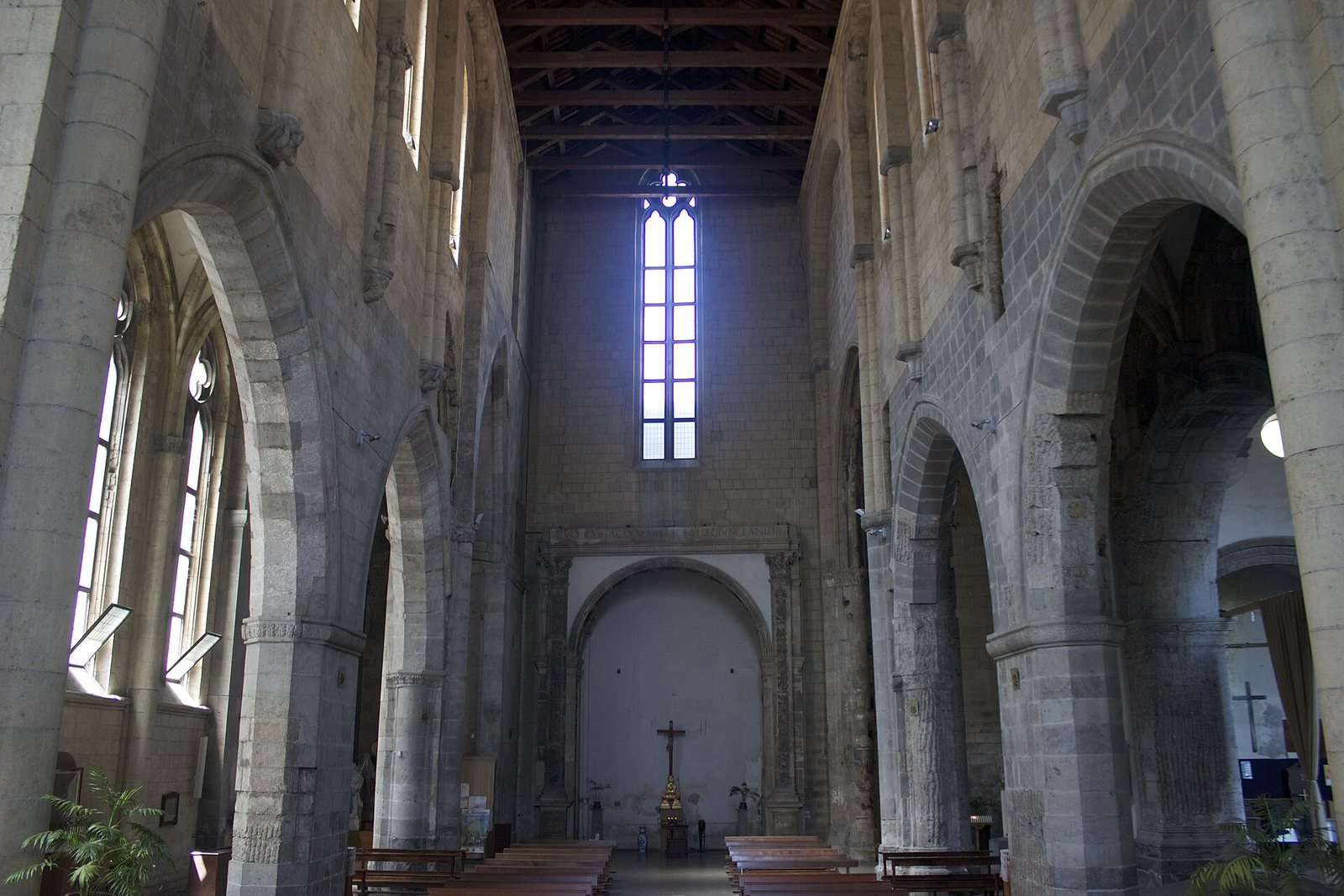
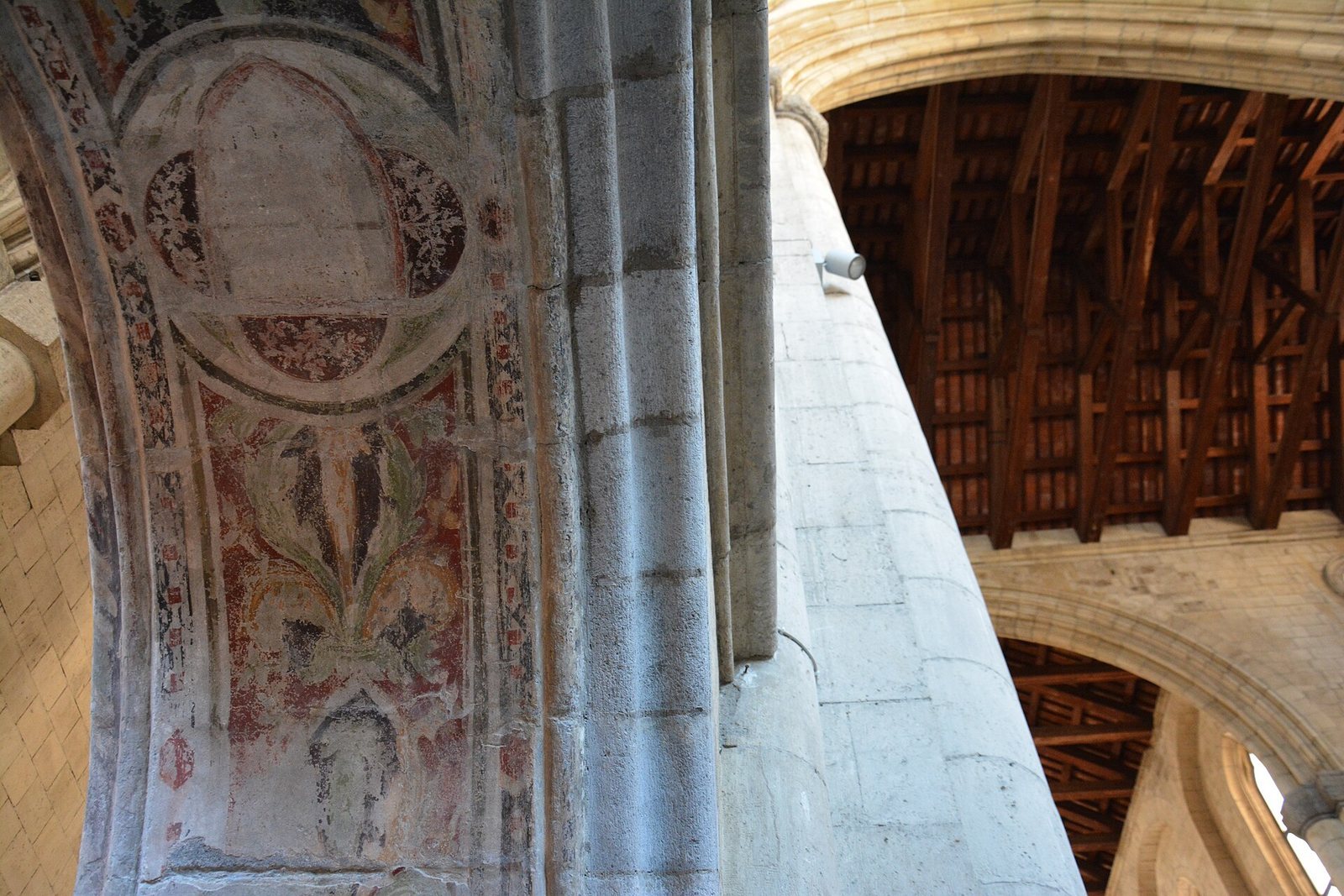
The church’s present main entrance is a portal on its right side, a French Gothic work set within a deeply recessed opening. The portal in the main façade no longer serves as the entrance after structural alterations. Inside, the building retains an austere, elegant character, with its tuff and piperno masonry forming the visible fabric.
Passageway and clock
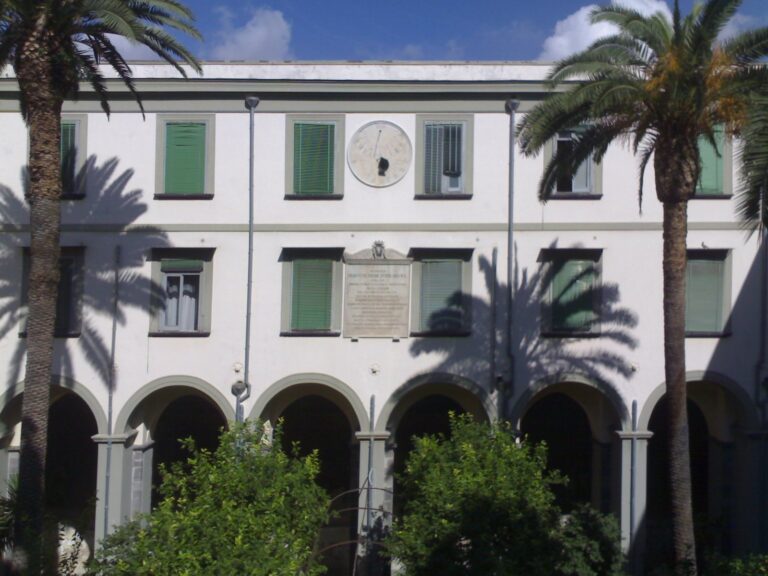
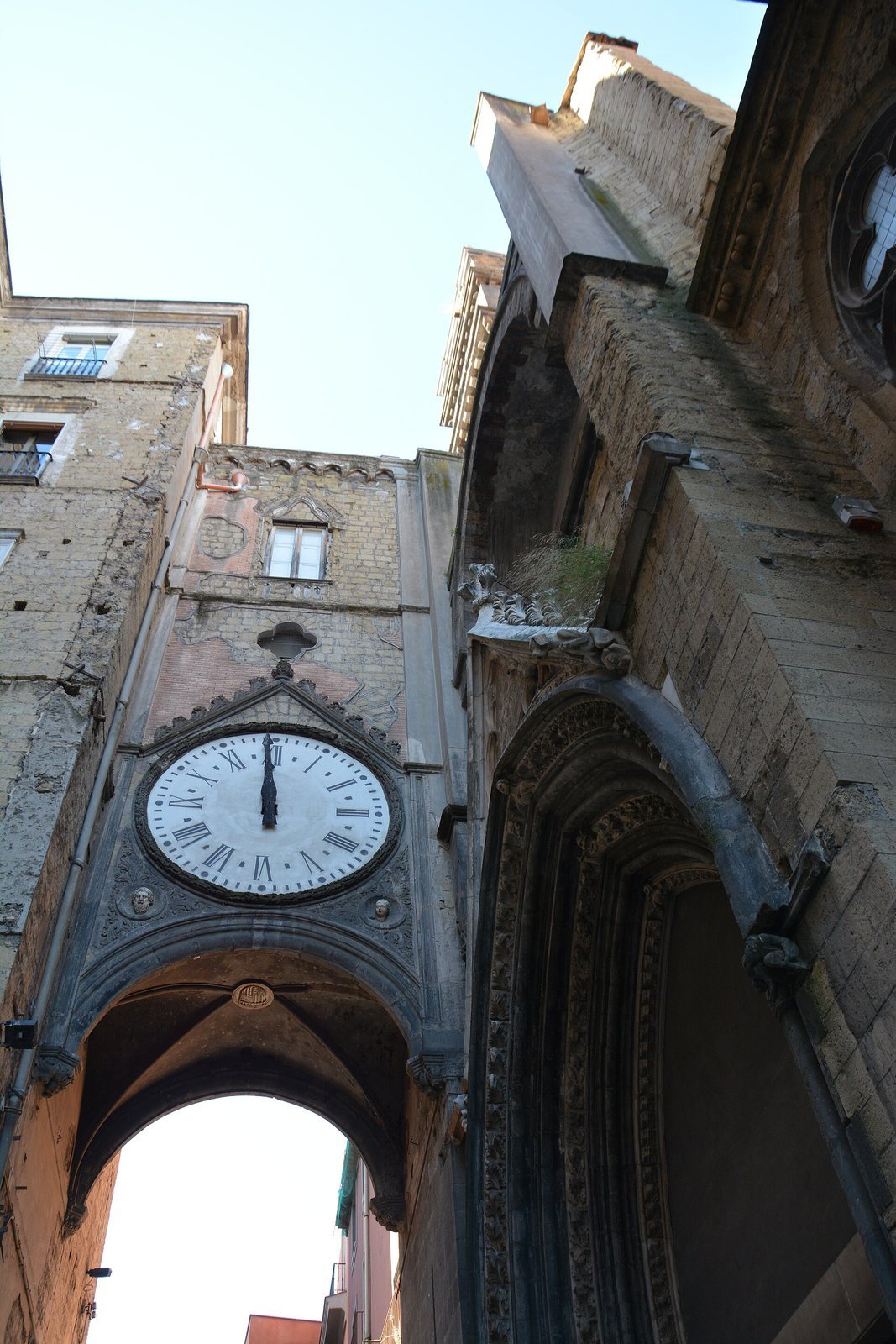
A fifteenth-century arched passage rises over two levels between the bell tower and a neighboring building. It opens onto Piazza Mercato and passes through the original church façade, which became part of the old hospital structure. A clock is set into the passage’s lower level. Two sculpted heads beneath its cornice are traditionally identified as Irene Malarbi and Duke Antonello Caracciolo, figures in a sixteenth-century legend.
Former hospital frontage
The former hospital has a neoclassical façade facing Piazza Mercato, designed by Ignazio di Nardo during the restoration carried out between 1770 and 1780.
Artworks and furnishings
Church paintings and organ
The church’s recorded paintings include Massimo Stanzione’s depiction of Saints Eligius, Denis, and Martin, and a work by Cornelis Smet copying Michelangelo’s Last Judgment. Francesco Solimena’s canvas, once in the Chapel of Saint Mauro, is now held at the Civic Museum of Castel Nuovo. An organ made by Giovanni Francesco Donadio and Giovanni Mattia was installed in 1505.
Chapel of Saint Angelo
Work on the Chapel of Saint Angelo began in 1531. Its paintings include works by Giovan Paolo de Lupo and Giovanni Antonio Endece.
Painting in the former girls’ institution
The former educational institution preserves a painting of Our Lady of Mercy with a cut across the Virgin’s face. A legend says that blood flowed miraculously from the wound.