Sant’Anna: A Discalced Carmelite Church and Convent in Genoa
Site at a Glance
- Rating
- 4.6
- Popularity
- Low
- Country
- Italy
- Primary era
- Early Modern
- External website
- Open
- Eras represented
- Early Modern, Modern
- Civilizations
- Genoese, Italian, Kingdom of Sardinia
- Site type
- Religious
- Remains
- Monastery
On this page17 sections
History
Sant’Anna is a Roman Catholic church and convent in Genoa, Italy, founded in 1584 by the Discalced Carmelites during the late Renaissance. It was the order’s first foundation outside Spain and followed the reform associated with Teresa of Avila and John of the Cross. The institution became both a religious centre and a focus for the development of the Bachernia district in Genoa’s Castelletto area.
Foundation beyond Genoa’s walls
The convent was established outside Genoa’s fourteenth-century walls on the site of an itinerant chapel dedicated to Saint Anne. The chapel stood along the route from the Portello gate toward the Ligurian Apennines and the Po Valley. Nicolò Doria, a Genoese Carmelite religious, had returned from Spain with fellow friars intending to establish a convent in Rome. Opposition from the papal nuncio of Gregory XIII led him to remain in the Republic of Genoa instead.
With financial support from the Doria, Cattaneo, Spinola, and Pallavicini families, Doria founded the new institution. Local residents petitioned for the chapel of Sant’Anna at Bachernia to be assigned to the Discalced Carmelites, and the foundation deed was signed on 1 December 1584. The original chapel was demolished soon afterward so that the church could be enlarged.
A school for the friars initially operated at Sant’Anna, but it moved in 1613 to the abbey of Madonna della Sanità. The Carmelites returned for periods between the nineteenth and twentieth centuries. During the Napoleonic suppressions of 1810–1816, and again under laws suppressing religious orders between 1859 and 1871, most of the friars had to leave the convent. Some continued to celebrate Mass, temporarily moving to the abbey of Pia and to private houses.
Growth of the Bachernia district
Two nearby chapels, dedicated to Saint Erasmus and Saint Bernard, were lost in 1626 when Genoa’s New Walls enclosed the area within the city’s fortifications. From the seventeenth century, the protected area became increasingly urbanized, and Sant’Anna developed into the religious and social reference point of a growing village. The surrounding district extended along a creuza, a traditional Ligurian pedestrian route surfaced with cobbles and brick, and included houses and villas such as the original nucleus of Villa Acquarone, now Villa Madre Cabrini.
Late nineteenth-century expansion brought the Circonvallazione a Monte, Corso Magenta, and the Sant’Anna funicular immediately below the church. The funicular was built in 1905, while the historic character of the hamlet remained substantially intact. From 1933, the church and pharmacy could also be reached from the Magenta-Crocco elevator complex by a private lift. During the Second World War, the access tunnel served as an air-raid shelter.
Pharmacy, library, and continuing religious use
A convent pharmacy was established soon after the foundation and is documented from 1650. Father Martino of Saint Anthony prepared potions, medicines, and poultices for many patients. The pharmacy served private clients, medical practitioners, religious communities, and Genoa’s Pammatone hospital. In the early nineteenth century it also had contact with the Parisian physician Louis Le Roy.
The Antica Farmacia Sant’Anna remains in operation. It is described as Genoa’s oldest historic shop and Italy’s only functioning pharmacy attached to and administered by a religious community. Its original furnishings survive alongside modern laboratories producing pharmaceutical products, herbal remedies, ointments, cosmetics, and dietary supplements.
The convent library already held 800 volumes in 1600, including 400 printed before the foundation of 1584. Its historic rooms retain walnut furnishings dating from the mid-eighteenth century. The Discalced Carmelites continue to live in the convent and maintain the church’s devotional function. The church has been protected as cultural heritage since 1993.
Remains
Church exterior and main interior
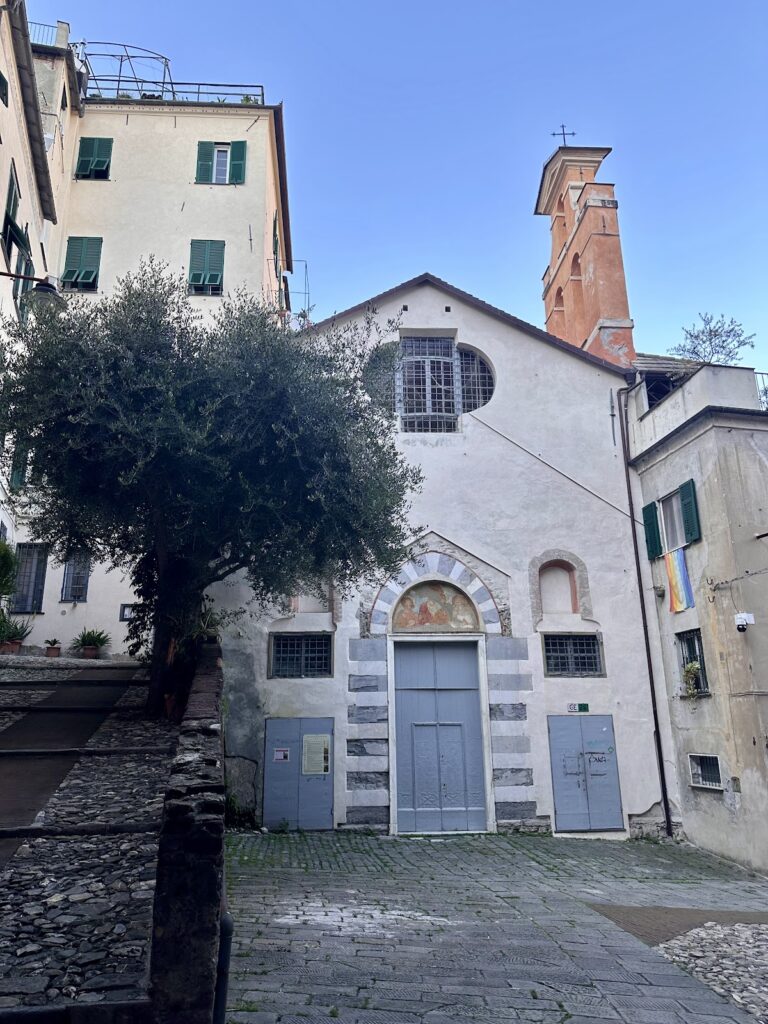
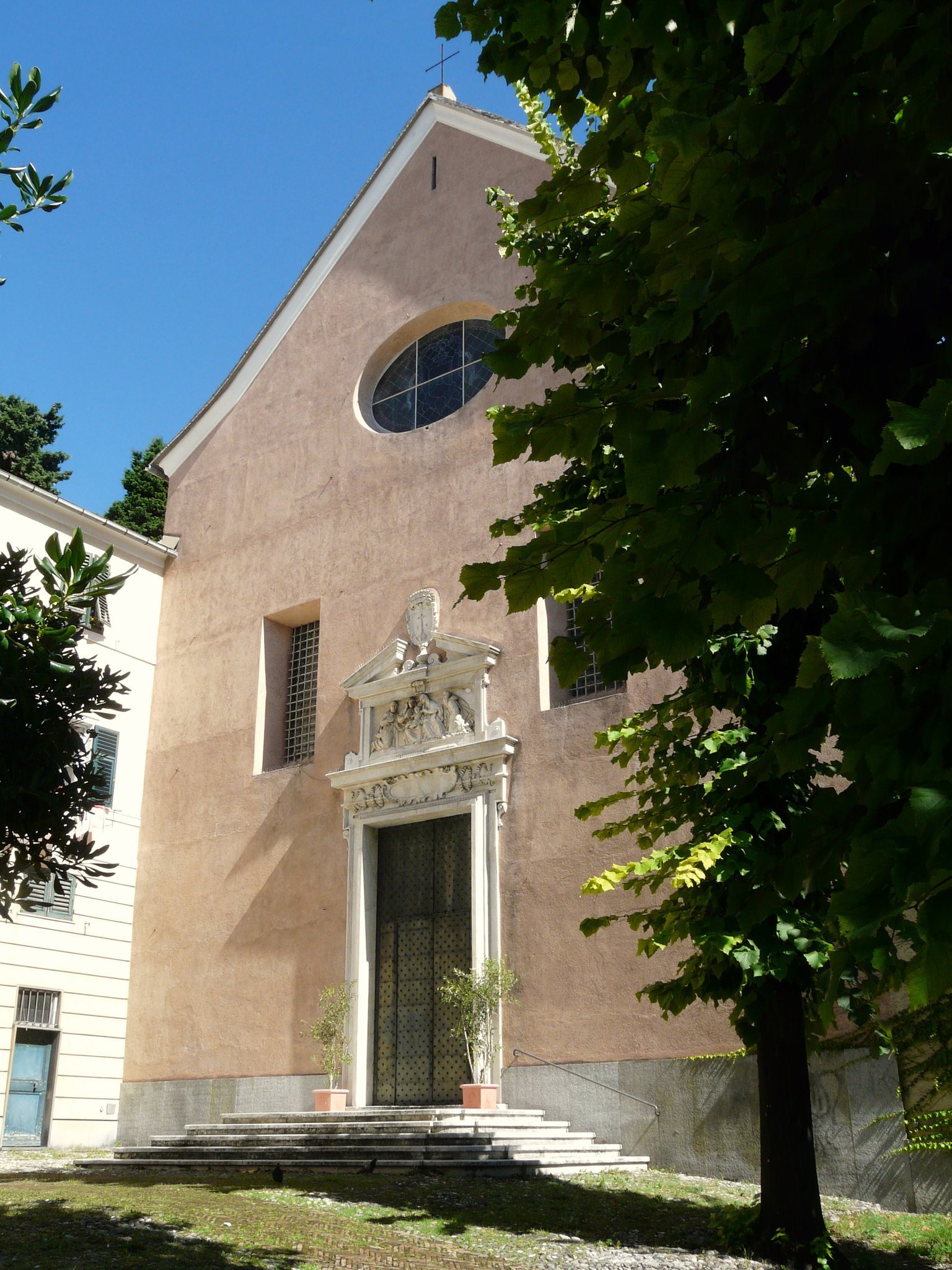
Sant’Anna stands beside Piazza Sant’Anna, a small paved forecourt of cobbles and brick bordered by tall plane trees and connected with the Bachernia route. The exterior preserves the character of its sixteenth- and seventeenth-century construction, with a smooth vertical facade, a steep-pitched gable roof, a bell tower, and domes. Inside, the church has a single nave, six lateral chapels, a deep presbytery, and a flat-ended apse. The late-Renaissance nave is covered by a barrel vault enriched with Genoese Baroque decoration.
Entrance portal and nave
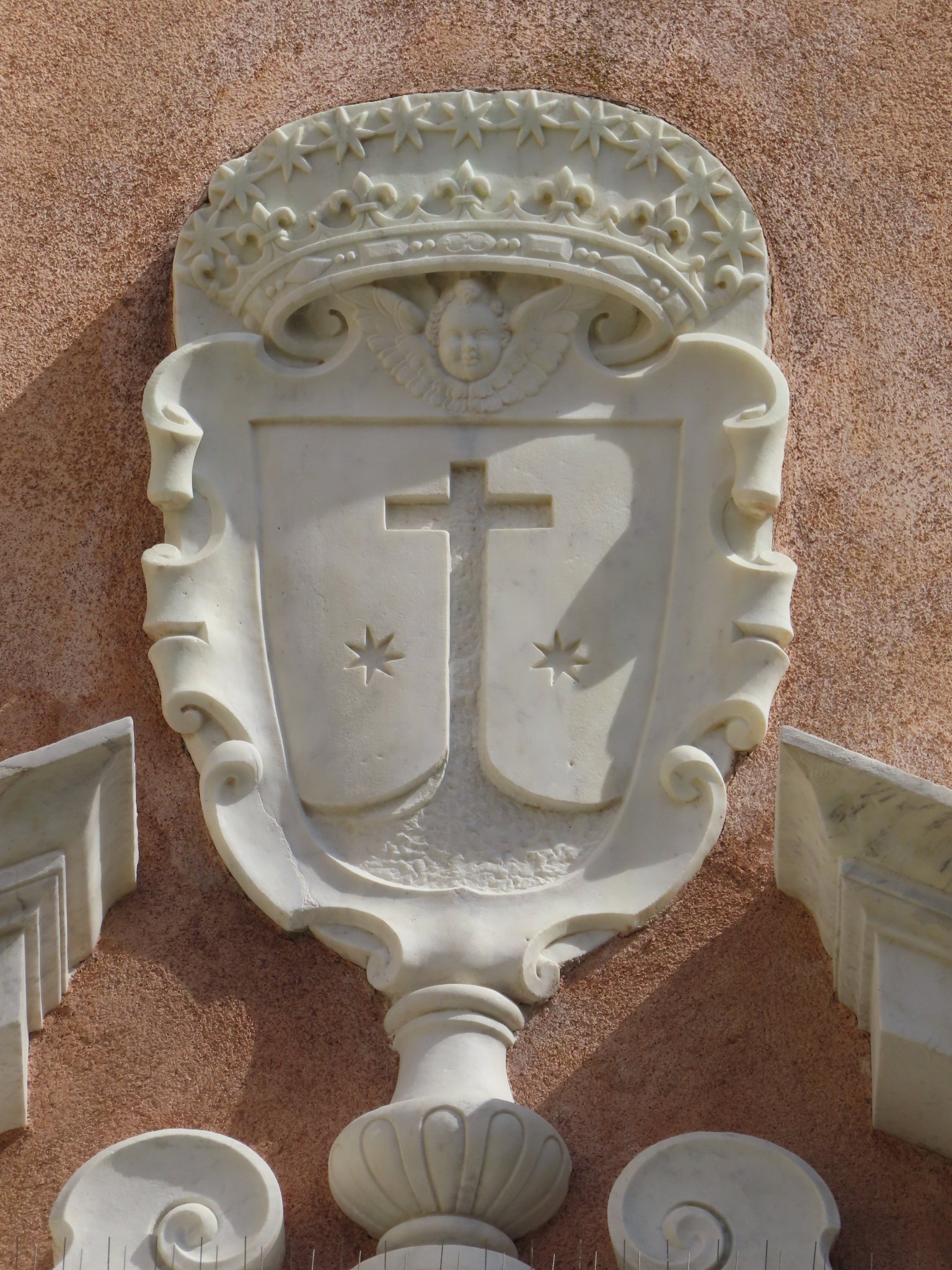
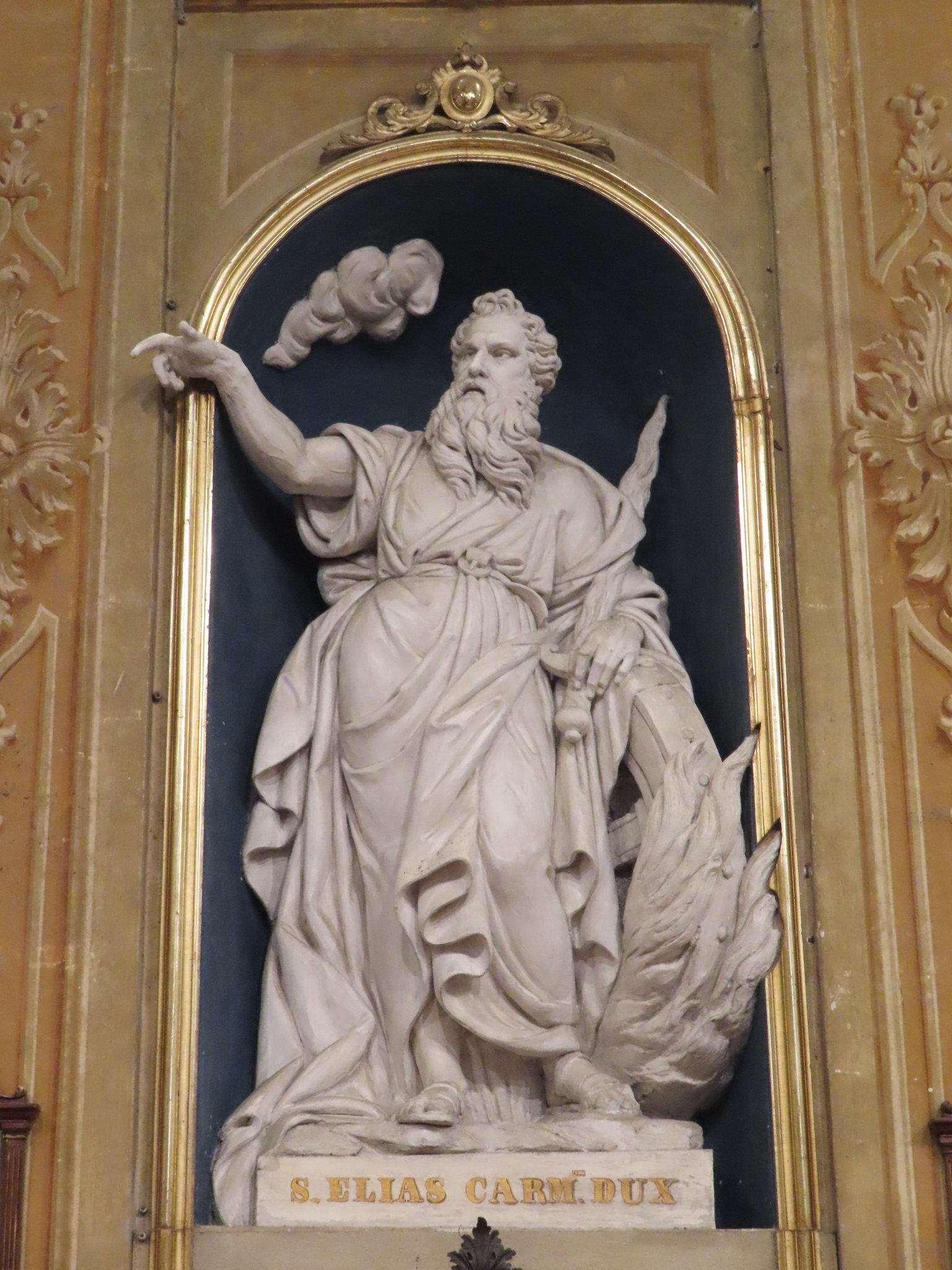
The entrance portal is made of white Carrara marble and has a late-Renaissance architrave. Its sixteenth-century relief of the Holy Family shows Joseph, Mary, the Christ Child, Saint Anne, and a Carmelite-clad figure probably representing the prophet Elijah with a flaming sword. The coat of arms of the Discalced Carmelites appears above the relief. Four principal pillars carry stucco statues made by Giovanni Battista Garaventa in 1837, representing Teresa of Avila, John of the Cross, Joseph, and Elijah. Santo Bertelli painted the frescoes on the nave vault in 1882.
Presbytery and choir
The presbytery was completely renovated in 1775 under the patronage of the Cattaneo family, in accordance with architectural principles associated with the Council of Trent, the Catholic Church council held from 1545 to 1563 that addressed doctrine and ecclesiastical reform. Francesco Maria Schiaffino made the altar, the two monumental portals separating the presbytery from the choir, and the large marble group of Saint Anne with the Child Mary.
The choir is raised approximately four metres above the floor. It contains a large painting of Saint Anne attending the marriage of the Virgin Mary, painted in 1586 by the Carmelite friar Giovanni della Miseria. The church also preserves a veil embroidered by Teresa of Avila and several tombs dating from the sixteenth to the eighteenth centuries.
Organ
Nicomede Agati built the organ in 1852, and Alessandro Corno restored it in 1992. It has mechanical action, one 50-key manual with an extended chromatic first octave, and a lectern pedalboard with 17 pedals and an extended chromatic first octave.
Family chapels
Chapel of Saint Ursula
The Chapel of Saint Ursula is associated with the religious name of Anna Grimaldi Doria. It contains Domenico Fiasella’s altarpiece of the Martyrdom of Saint Ursula, based on the account in the Golden Legend, a widely circulated medieval collection of saints’ lives associated with the Genoese archbishop Jacobus de Voragine. The chapel also houses a permanent Neapolitan-style artistic Nativity scene by Silvana Giannotti and Marco Ferrigno. Its figures wear garments made from hand-sewn antique fabrics.
Chapel of Saint Teresa of Avila
The Doria family assumed patronage of the Chapel of Saint Teresa of Avila in 1616. Its marble altar was made by Tommaso Orsolino, who also provided the chapel’s stucco work. The altarpiece, Saint Teresa Crowned by Christ, is now attributed to Gerard van Honthorst, also known as Gerardo delle Notti. It was formerly attributed to Castellino Castello, but the Honthorst attribution was confirmed during restoration by the Uffizi Gallery in 2015. Santo Bertelli painted the frescoes in the chapel vault.
Chapel of Our Lady of Mount Carmel
The Chapel of Our Lady of Mount Carmel belonged to the Spinola family and was completely rebuilt beginning in 1616. Its late-Baroque altar by Tommaso Orsolino is supported by two white Carrara-marble angels and covered with polychrome marble inlay, an unusual finish in Genoa. Orsolino also made the altar statue of Our Lady of Mount Carmel. Anton Maria Vassallo painted the lateral lunettes. The chapel includes relics of Saint Cyriacus and Saint Honoratus, together with paintings associated with Simon Stock receiving the scapular and the apparition of the Virgin to Pope John XXIII.
Chapel of the Crucifix
The Chapel of the Crucifix is the church’s oldest chapel and was under Doria patronage. It contains an eighteenth-century Spanish processional crucifix and an eighteenth-century statue of the Infant Jesus of Prague. During the twentieth century, the crucifix was moved to a side wall to make room for an altar dedicated to Teresa of Lisieux after her beatification in 1923 and canonization in 1925 by Pius XI.
Chapel of Saint Joseph
The Pallavicini family built the Chapel of Saint Joseph. A refurbishment associated with 1771 gave it refined gilded Rococo stucco. Its altarpiece, The Dream of Saint Joseph, was painted by the Tuscan artist Agostino Ciampelli, who was associated with the Caravaggio school.
Chapel of Saint Andrew
The Chapel of Saint Andrew was originally dedicated to Elijah and initially belonged to the Spinola family. It passed to the Doria family in the seventeenth century and was rededicated to Saint Andrew in honor of Andrea Doria, the Genoese admiral and statesman. Domenico Fiasella’s altarpiece depicts Saint Andrew on the way to martyrdom.
Convent cloisters and collections
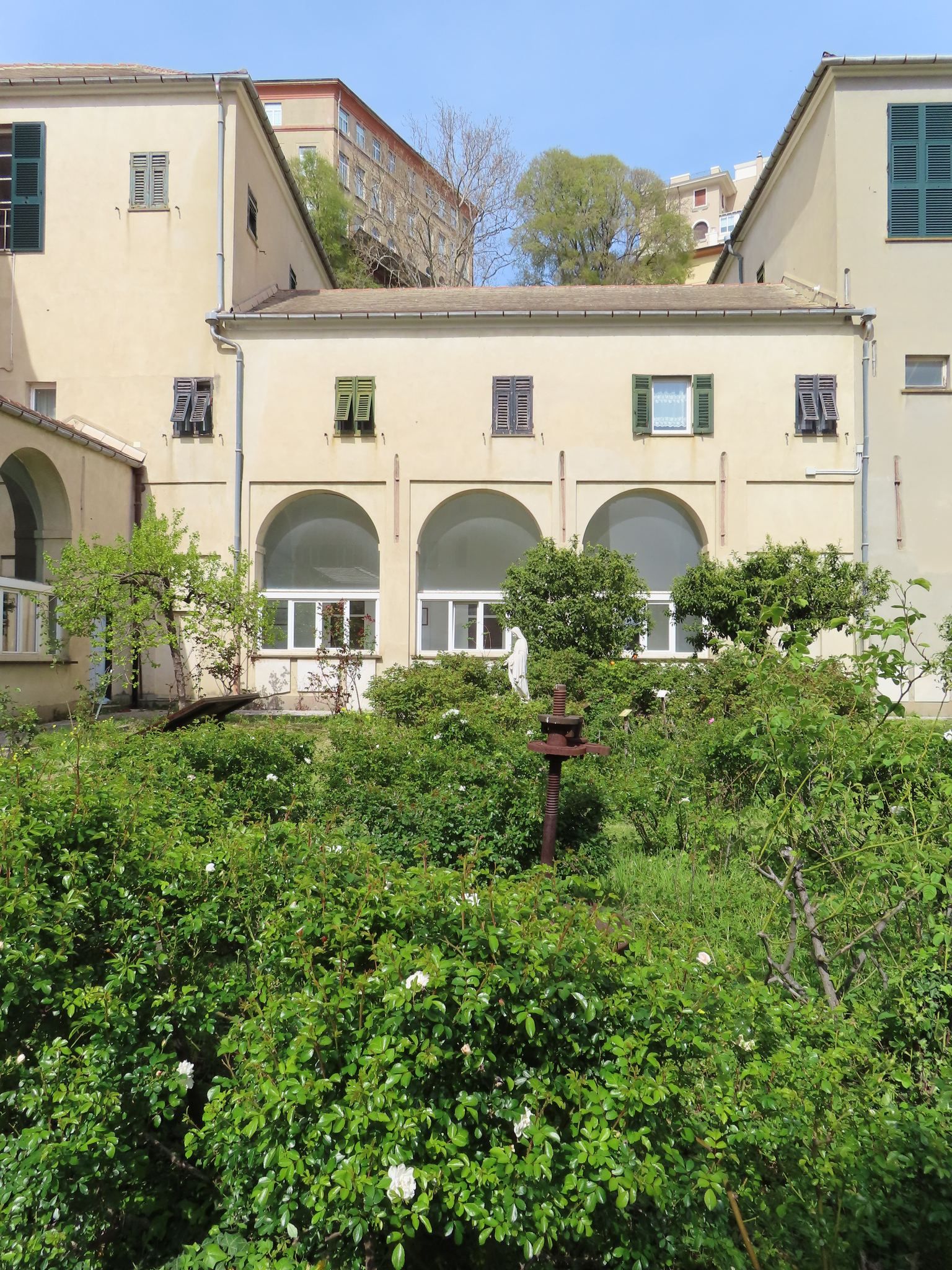
The convent contains three cloisters. The Well Cloister was used to collect rainwater and retains an original geometric risseu pavement, a Ligurian mosaic technique made with arranged pebbles. The Lemon Cloister is a small garden enclosed by a portico that follows Carmelite architectural principles.
The Rose Cloister was formerly a medicinal-plant garden serving the pharmacy and is now a rose garden. At the end of the sixteenth century, potatoes from the Americas were first cultivated there in Italy after Nicolò Doria brought them from the Spanish court of Philip II.
The convent also contains a portrait of Teresa of Avila by Giovanni della Miseria, described as one of only two portraits of the saint painted from life. Its portrait gallery represents twenty-two Carmelite fathers, beginning with Nicolò Doria and extending through the eighteenth century. The gallery includes members of the Salvago, Acquarone, Durazzo, Doria, Centurione, Grimaldi, and Spinola families.