Palazzo Pallavicini Cambiaso: A Mannerist Palace in Genoa


Site at a Glance
- Rating
- 4.6
- Popularity
- Very Low
- Country
- Italy
- Primary era
- Early Modern
- Eras represented
- Early Modern, Modern
- Civilizations
- Genoese, Italian
- Site type
- Domestic
- Remains
- Elite Residence
On this page11 sections
History
Palazzo Pallavicini Cambiaso is a sixteenth-century Mannerist palace in Genoa, Italy, built for the diplomat and Spanish-court ambassador Agostino Pallavicino. Construction began in 1558, probably making it the first palace built along the Strada Nuova, now Via Garibaldi. The building was completed between 1560 and 1565.
Construction and the Pallavicino family
The architect was Bernardino Cantone, who worked with Galeazzo Alessi on the arrangement of Piazza delle Fontane Marose and the opening of the Strada Nuova. The palace was once attributed to Alessi, but it is now assigned to Cantone. Agostino’s brother, Tobia Pallavicino, commissioned another palace at Via Garibaldi 4 during the same period.
Agostino’s son Niccolò Pallavicino maintained the family’s cultural connections. During Peter Paul Rubens’s stay in Genoa, Niccolò hosted the artist and commissioned portraits of himself and his wife, Maria Serra Pallavicini. The palace itself was included in Rubens’s 1622 publication on Genoese palaces.
The Rolli system
From 1576 to 1664, Palazzo Pallavicini Cambiaso appeared in Genoa’s Rolli, official registers of palaces whose owners could be required to lodge distinguished state guests for the Republic of Genoa. The palace was generally assigned to the first category. It was listed in the second category in 1588, returned to the first in 1599, and remained there in later registers.
Later ownership and urban change
The Cambiaso family acquired the palace around the middle of the eighteenth century, or before 1780. Ownership passed to the Banco di Napoli in 1922, and the building is now used by a banking institution for offices.
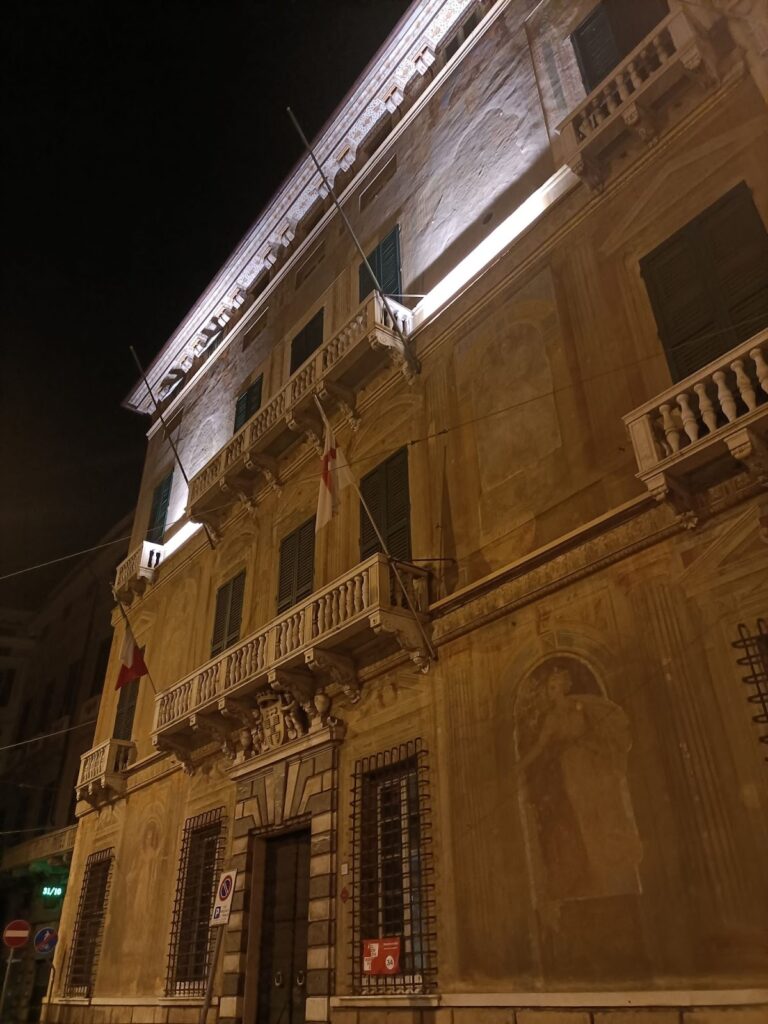
During the second half of the nineteenth century, the palace and its façade facing Piazza delle Fontane Marose were shortened by two window bays. The change allowed Via Interiano to enter the square at a width suited to modern traffic. It also removed the fountain that gave the square its name and exposed the rear side of the palace, which received a façade based on the two street fronts.
Palazzo Pallavicini Cambiaso forms part of the UNESCO World Heritage property Genoa: Le Strade Nuove and the system of the Palazzi dei Rolli. The property, which includes 42 Rolli palaces, was inscribed on 13 July 2006 under cultural criteria (ii) and (iv).
Remains
Palazzo Pallavicini Cambiaso occupies a corner at the beginning of Via Garibaldi and the northern end of Piazza delle Fontane Marose, with a view toward the sea. It is a three-wing Mannerist building whose main axis follows Via Garibaldi. The relatively small plot left no room for a garden, so the palace’s representative character is concentrated in its interior spaces.
Street façades and entrance
Façades
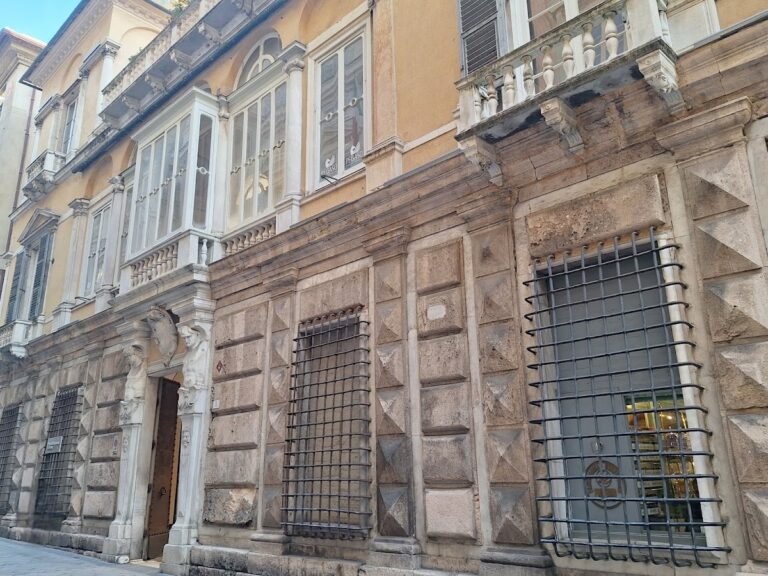
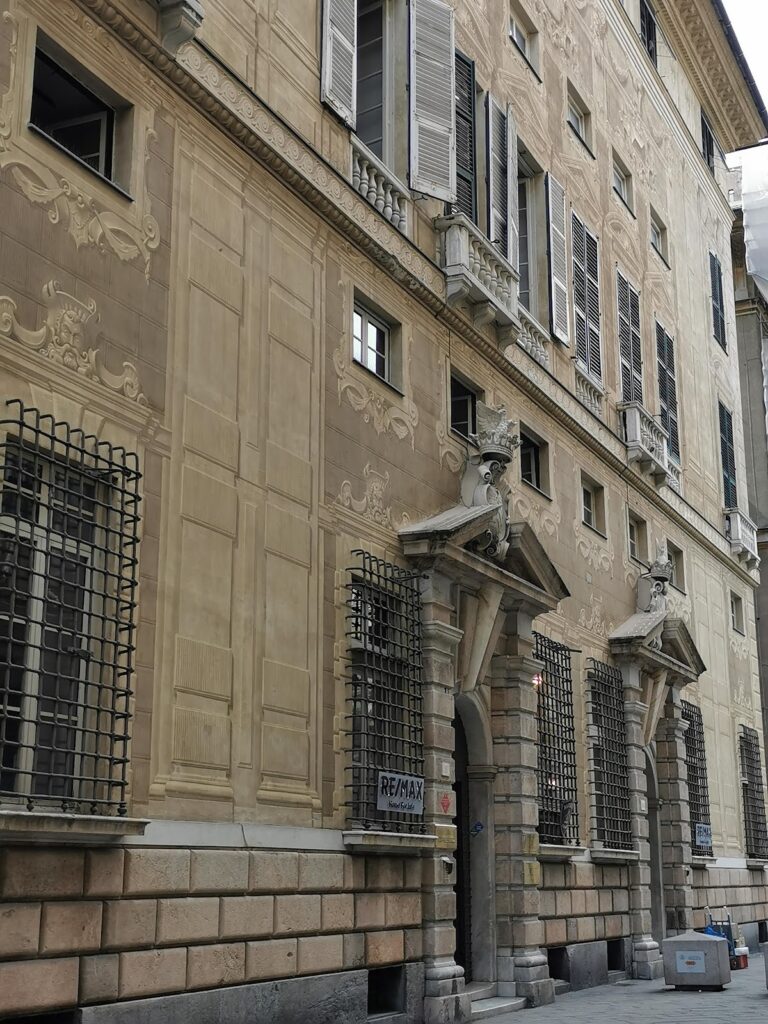
The two principal street façades are faced with monumental grey-stone ashlar masonry, in which regularly cut blocks are laid with even faces and joints. White marble plinths contrast with the stonework, while an eighteenth-century votive aedicule, a small shrine-like architectural frame, is set into the façade. The rear side, exposed after the nineteenth-century alteration, was given a façade modeled on the two street fronts.
Portal and courtyard
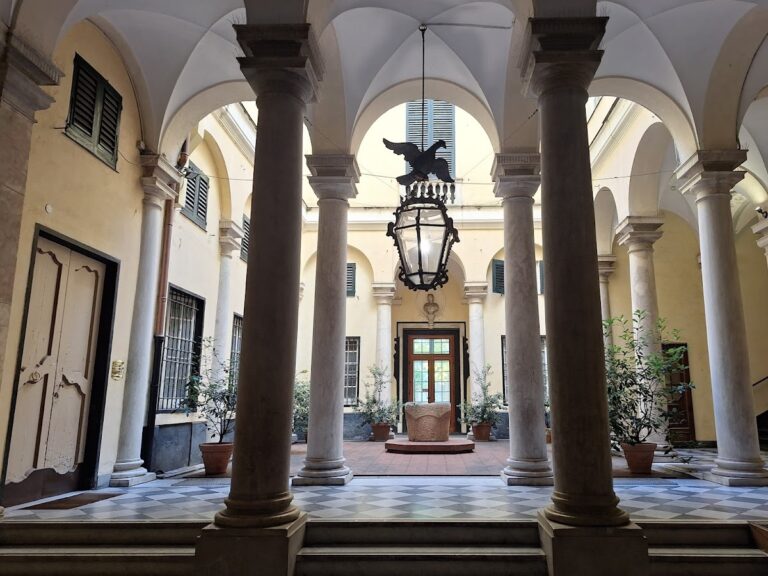
A portal with a Mannerist frieze decorated with bucrania, ornamental ox skulls or heads, leads into a vestibule and then to a square courtyard. The courtyard has three arches on each side. Its glass roof was added when the palace was converted for banking use.
Painted interiors
Piano nobile drawing room
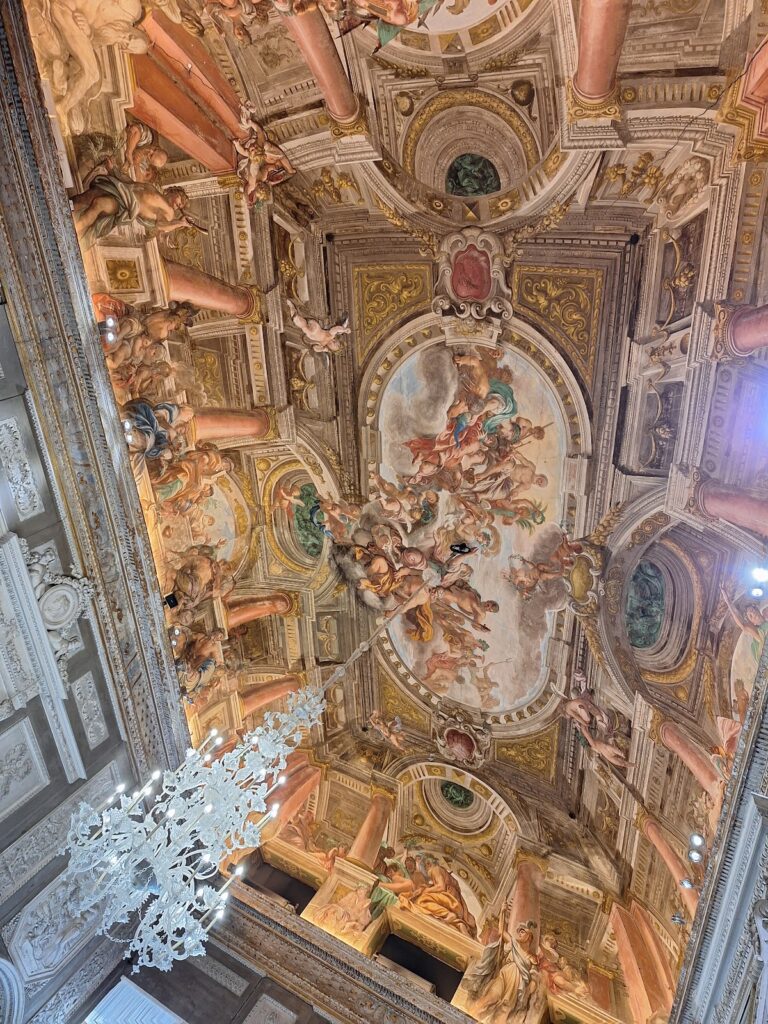
The drawing room on the piano nobile, the principal residential floor, contains a representation of the Rape of the Sabine Women by the Genoese painters Andrea and Ottavio Semino. The ceiling presents the subject in five episodes.
Great hall
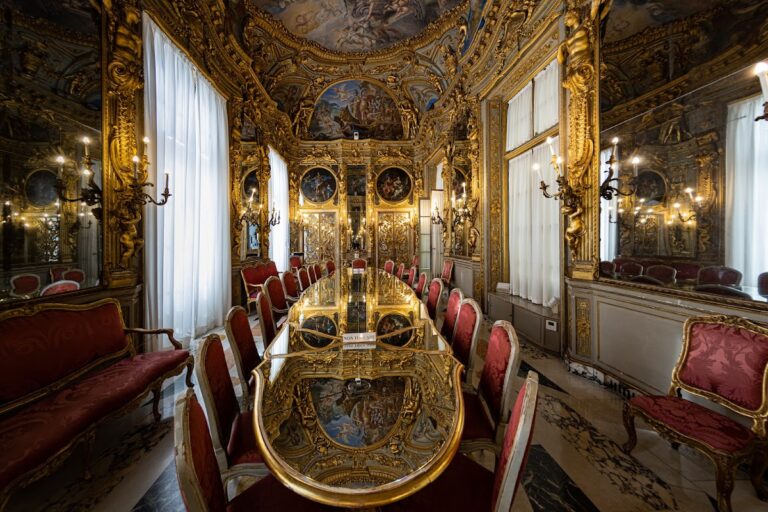
The great hall, or reception hall, contains the Story of Cupid and Psyche by Andrea and Ottavio Semino. The scenes occupy four lunettes, the curved sections of the vault. The decoration also includes brightly colored figures of Apollo and the Muses, marble busts at the doors, and landscapes framed by wall pilasters.
Nearby sites