Sant’Agata la Pedata: A Baroque Church beside Porta Sant’Agata in Palermo

Site at a Glance
- Rating
- 4.4
- Popularity
- Very Low
- Country
- Italy
- Primary era
- Early Modern
- External website
- Open
- Eras represented
- Early Modern
- Civilizations
- Kingdom of Sicily, Spanish
- Site type
- Religious
- Remains
- Church
On this page11 sections
History
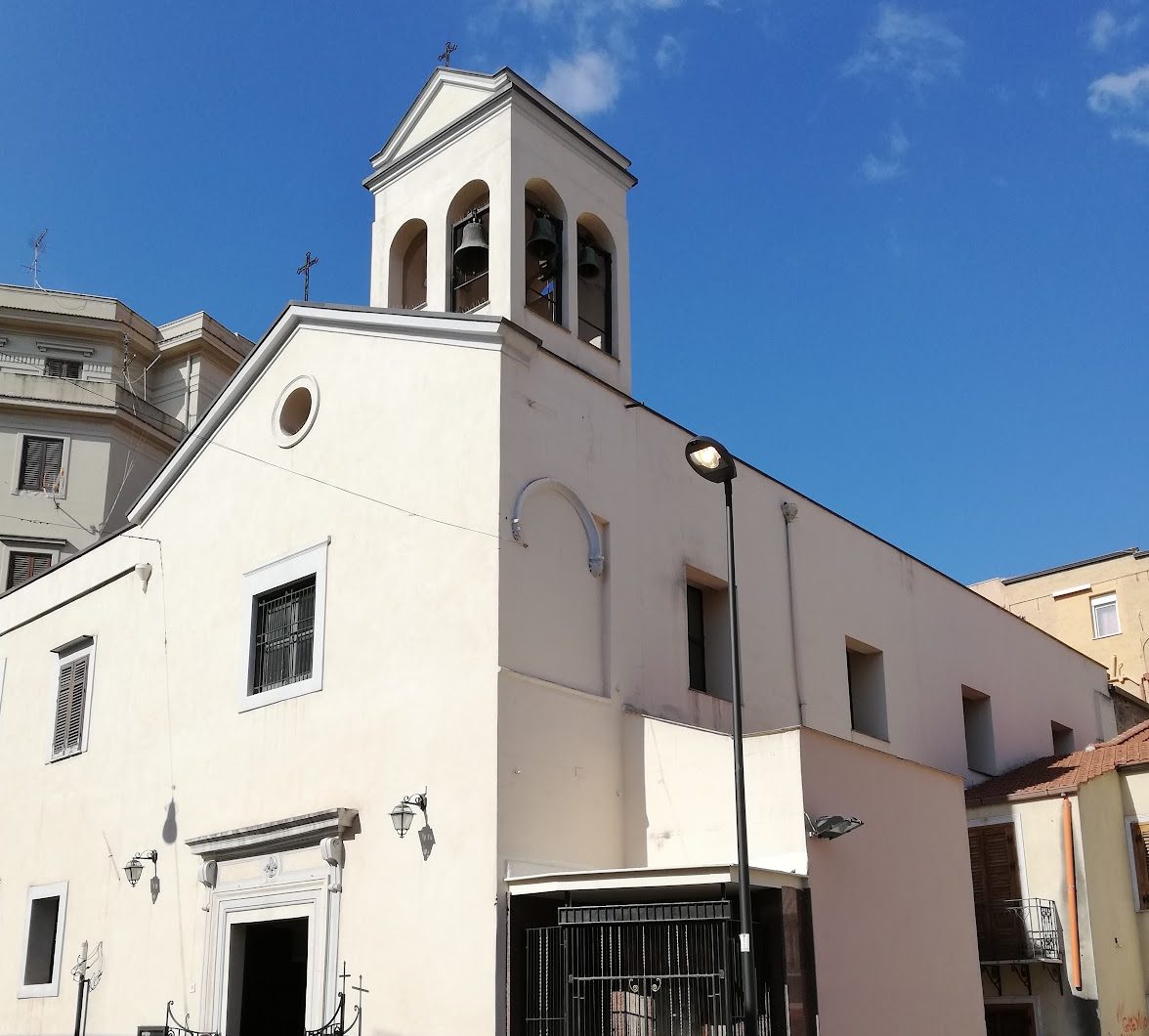
Sant’Agata la Pedata is a small Roman Catholic church in Palermo, Italy, enlarged in 1518 and identified as a Baroque building. Dedicated to Saint Agatha and belonging to the Archdiocese of Palermo, it stands beside Porta Sant’Agata in the historic center and once formed a single monumental complex with the convent of the Reformed Augustinian Order’s Congregation of Centorbi.
Origins and medieval records
Local tradition places an earlier church over a wonder-working stone connected with Saint Agatha, a Christian virgin and martyr traditionally believed to have died at Catania in AD 253. According to the legend, the stone softened during the tortures inflicted by the Roman governor Quintianus after Agatha remained firm in her faith. The earliest documentary evidence for the church consists of notarial records from 1275 and 1279, which identify a church dedicated to Agatha beside a gate in the city walls. A will from 1324 also names the church.
The church was once called Sant’Agata de Porta, referring to its position beside the gate, and Sant’Agata de Petra, referring to the petrified imprint associated with the martyr. Its later name, Sant’Agata la Pedata, likewise preserves the connection with the footprint stone.
Expansion and religious patronage
Restoration works in 1518 enlarged the church and led to the construction of the adjoining convent. The intervention removed the building’s earlier architectural elements, which had belonged to a simple rural-style church. As a result, the present architectural character is difficult to classify, although the church is also described as Baroque.
In 1575, the church was granted to a united guild of blacksmiths, locksmiths, gunsmiths, cutlers, and coppersmiths. These metalworking craftsmen honored Saint Eligius, traditionally regarded as the patron of metalworkers and related trades, and supported the Chapel of Saint Eligius. In 1622, the guild transferred the church to the Reformed Discalced Mercedarian Order, a Catholic order historically devoted to the redemption of captives.
After three years, the Mercedarians moved to the Church of the Immaculate Conception at Cartari in the Lattarini district, where they built a new convent complex. They attributed the move to the exhaustion of the water source and the presumed unhealthiness of the site. In 1663, Reformed Augustinian religious of the Congregation of Sant’Adriano, together with members of the Congregation of Centorbi, obtained use of Sant’Agata la Pedata. The Augustinians followed a religious rule attributed to Saint Augustine. Before 1680, the church was also held by the confraternity of farriers. That year, the farriers separated from the group of guilds and remained distinct until 1821.
The processional tradition
In 1499, a confraternity formed by leather-tanning craftsmen began organizing the annual procession of Saint Agatha’s processional float. The Palermo Senate later formalized an alternating annual procession with the church of Sant’Agata alle Mura. By the beginning of the nineteenth century, the procession started directly from Palermo Cathedral, changing the church’s place within the public observance of the saint’s festival.
Remains
Sant’Agata la Pedata is a small church beside Porta Sant’Agata on Via del Vespro. The present building incorporates the enlarged hall created by the 1518 works, while the adjacent convent belongs to the later history of the religious communities that used the complex. The alterations left the church with a character described both as Baroque and as difficult to define.
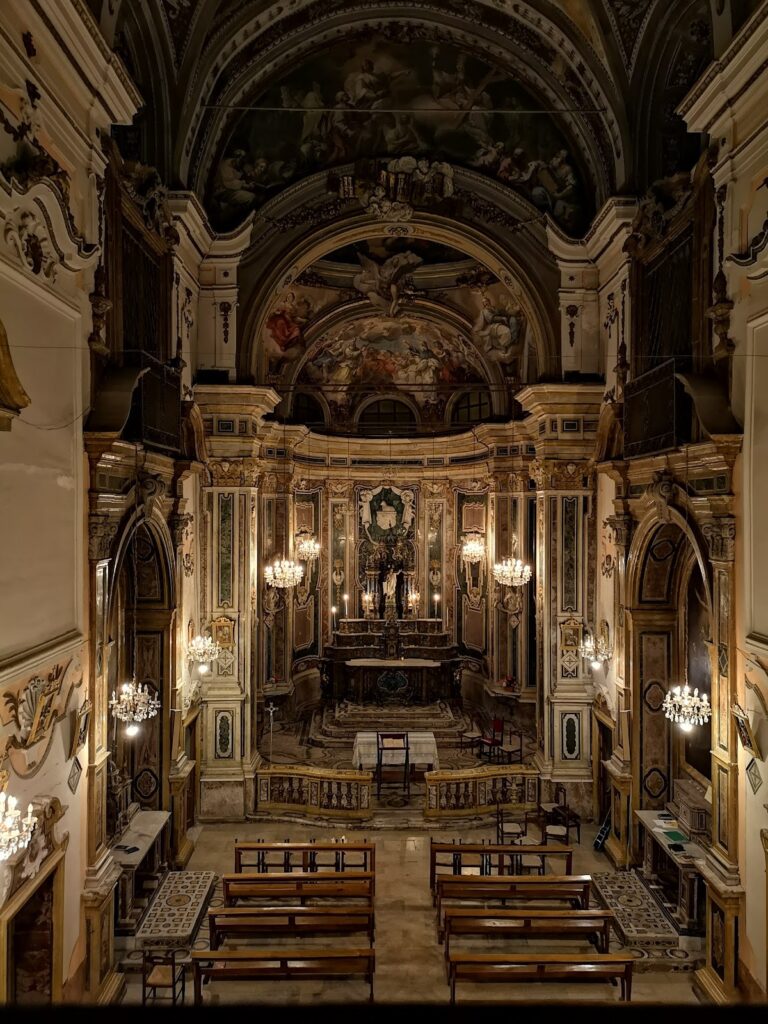
Church interior
Three-bay nave
The interior has a small nave on the left, divided into three bays. The first bay contains the Altar of the Virgin and a niche with a marble statue in the Gagini style, the sculptural tradition associated with the Gagini family and their influence on Renaissance marble sculpture in Sicily. The second bay has a wall compartment containing a relic of Pope John Paul II. The third contains the burial of the Venerable Maria Chiara Magro. In Catholic usage, Venerable is a title granted during the formal process of recognizing a person’s holiness before possible canonization.
Chapel of Saint Agatha
The left apsidiole contains the Chapel of Saint Agatha. A secondary altar stands to the left of the high altar, and beneath the marble slab forming its altar table is the stone bearing the martyr’s footprint.
Footprint stone
The footprint stone has changed position within the church. It was first set into the wall to the right of the main entrance, then placed in a niche near the secondary entrance. It was later moved to a very small chapel with its own altar on the right side of the entrance, where services could be celebrated more conveniently. A plaque installed in 1642 recorded its position, while that small chapel is no longer present.
Statue of Saint Agatha
The church also preserves a standing statue of Saint Agatha measuring 165 centimeters in height. The figure is painted in polychrome, with multiple colors applied across its surface.
Porta Sant’Agata
Porta Sant’Agata is an opening in the southern curtain of Palermo’s walls, immediately beside the church. Its approximate counterpart on the northern fortifications was Porta Sant’Agata la Guilla, a gate belonging to the earlier Punic and Arab enclosure and facing the course of the Papireto River.