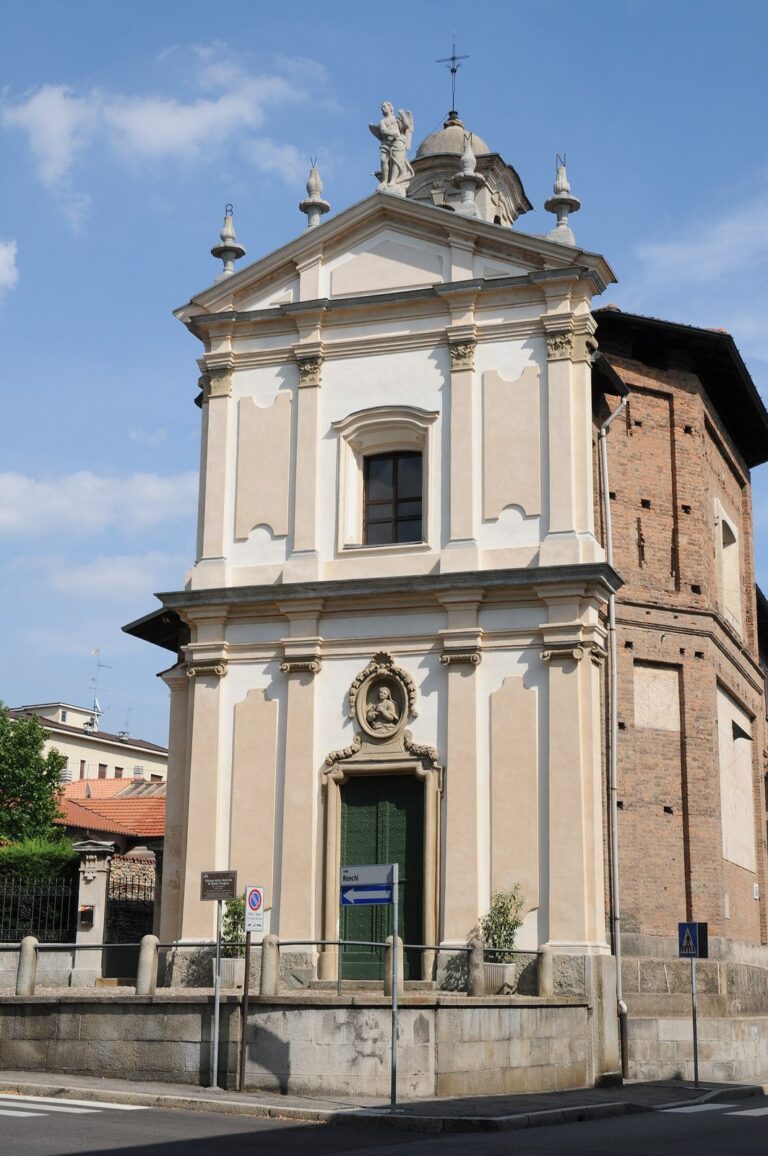
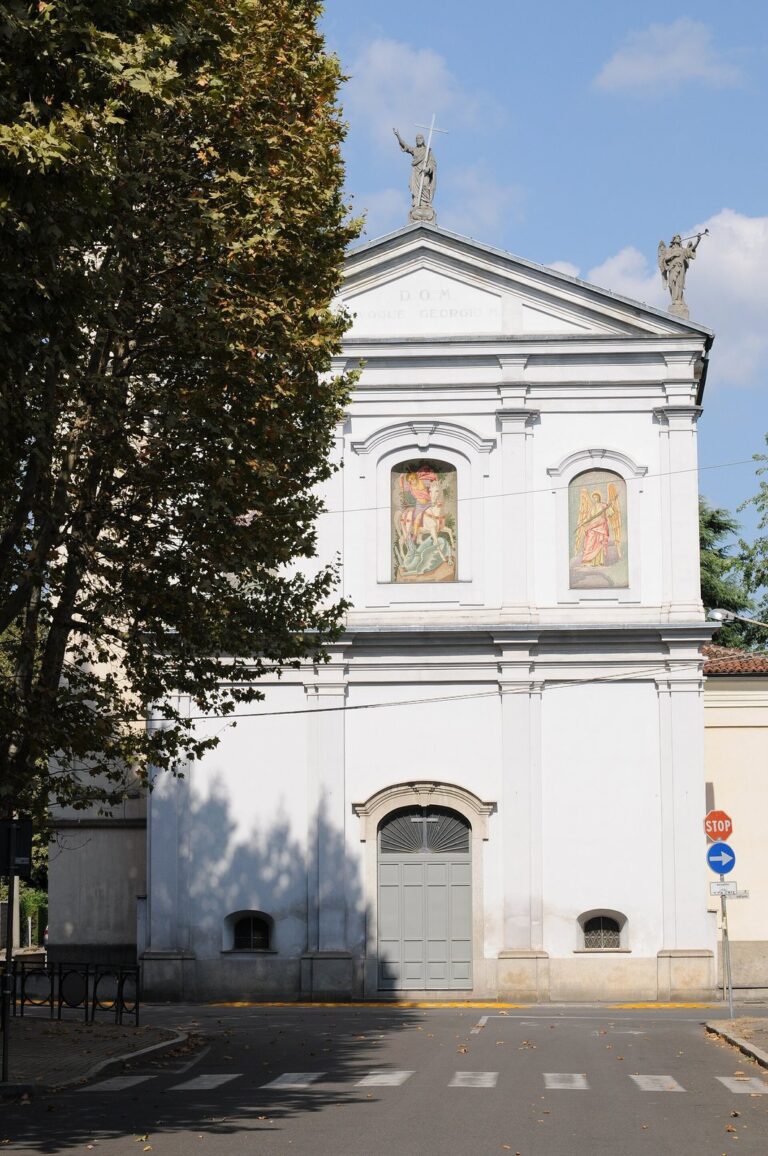
Sanctuary of the Madonna delle Grazie: A Catholic Church in Legnano
Site at a Glance
- Popularity
- Low
- Country
- Italy
- Primary era
- Early Modern
- Eras represented
- Early Modern, Modern
- Civilizations
- Duchy of Milan, Italian, Spanish
- Site type
- Religious
- Remains
- Sanctuary
On this page11 sections
History
The Sanctuary of the Madonna delle Grazie is a Catholic place of worship in Legnano, Italy, whose first church was built in 1582–1583. It is associated with the Archdiocese of Milan, an ecclesiastical jurisdiction led by an archbishop, and the Ambrosian rite, a Western Christian liturgical tradition associated with Milan.
The roadside shrine and first church
A local tradition links the sanctuary’s beginnings to two deaf and non-speaking sons of a wealthy landowner. During a severe storm in the late sixteenth century, the boys took shelter beneath a small canopy protecting an image of the Madonna and Child with Saints Roch and Sebastian. The Madonna was said to have appeared and asked them to tell their father to build a small covered entrance there, giving people better shelter. Their parents regarded the boys’ account as a miracle.
Donations made after the reported apparition funded a church, and the new place of worship attracted pilgrims. Their growing numbers created a need for a larger building.
Construction of the larger sanctuary
Cardinal Federico Borromeo, the archbishop of Milan, authorized a new church in 1610. The first proposal had an octagonal plan and a large, segmented dome, but people in Legnano rejected it as too ambitious. They chose instead a square building with sides measuring nine metres. Its foundation stone was laid on 4 October 1611.
The dome collapsed during construction in 1614. The design was recast as a Greek-cross plan, with four arms arranged around a central space, and four side chapels. A further revision provided three small chapels on each side. Work ended in 1650, with the final design drawing inspiration from the Church of the Gesù in Rome, a major Jesuit church whose architecture influenced Catholic churches.
Changes to the façade
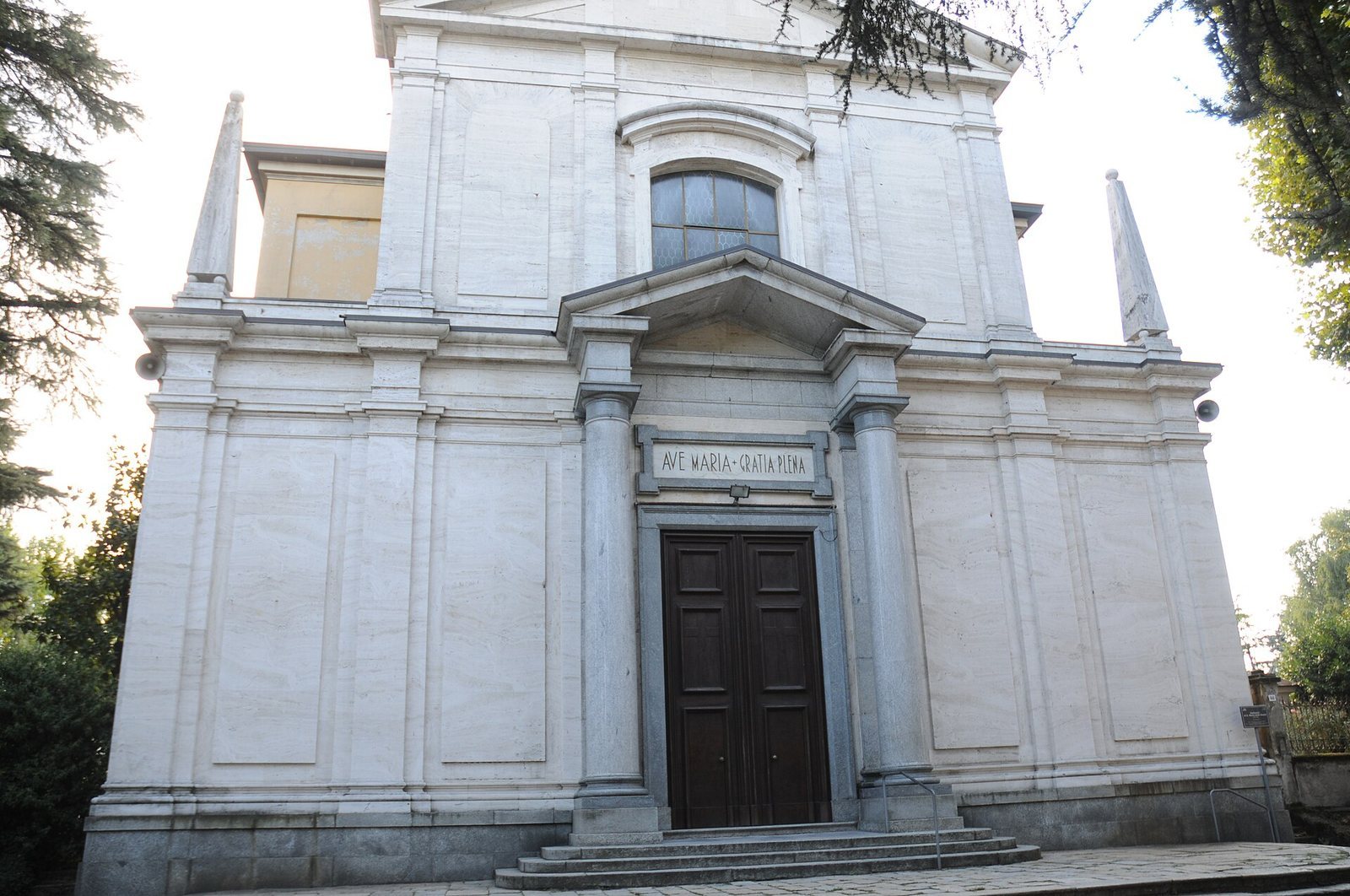
In 1863, remodelling of the façade involved removing its original portico, a covered entrance or walkway. The original marble facing was restored in 1936, when a new portico was also built.
Remains
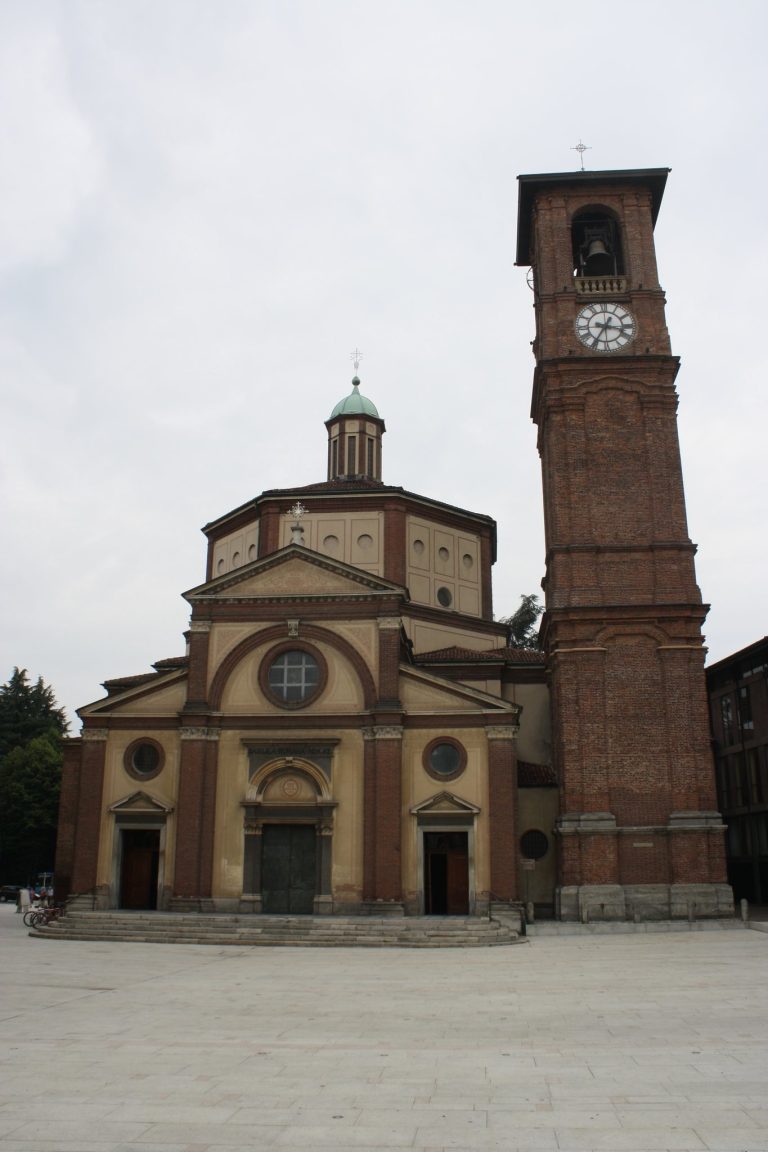
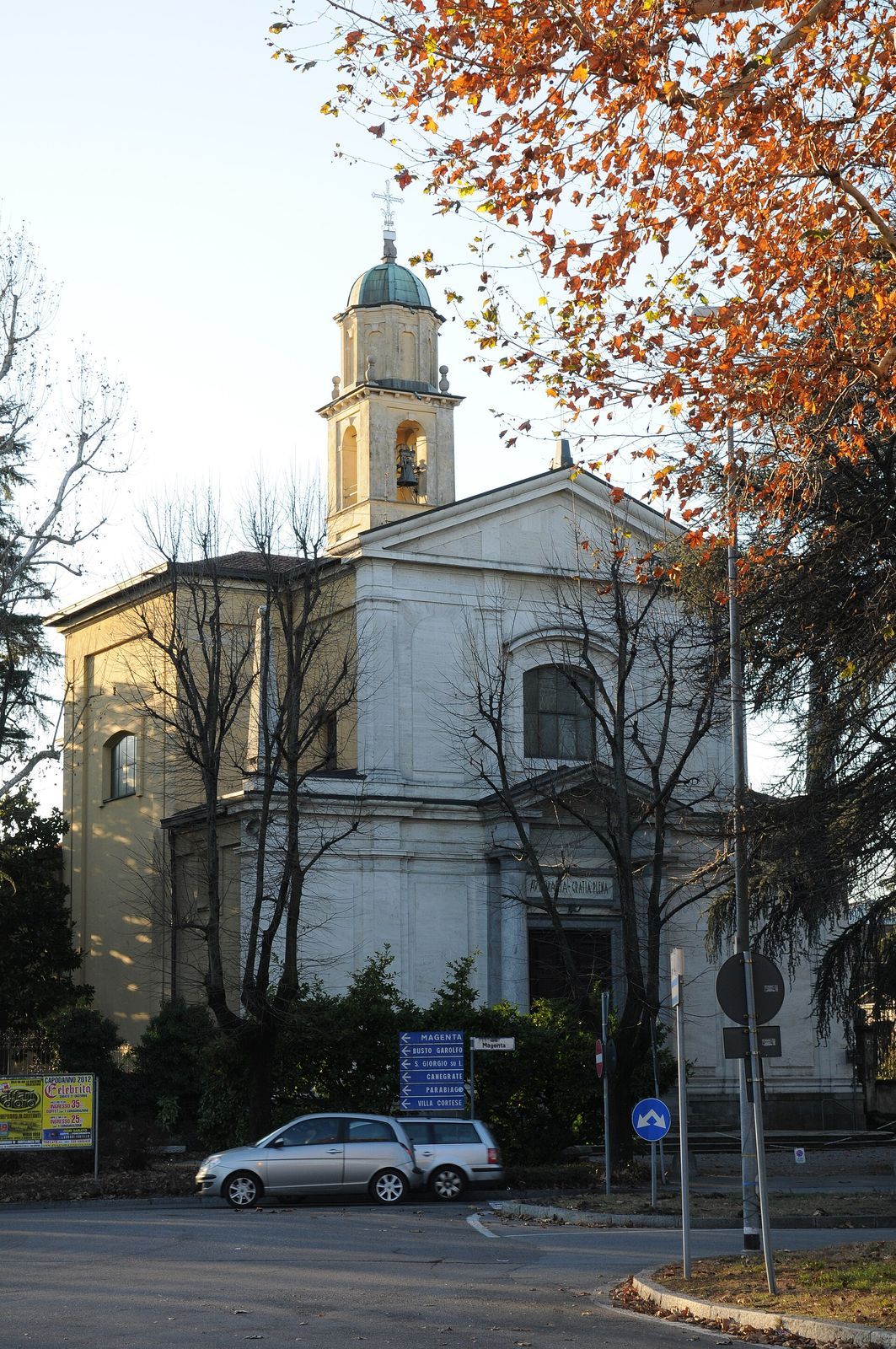
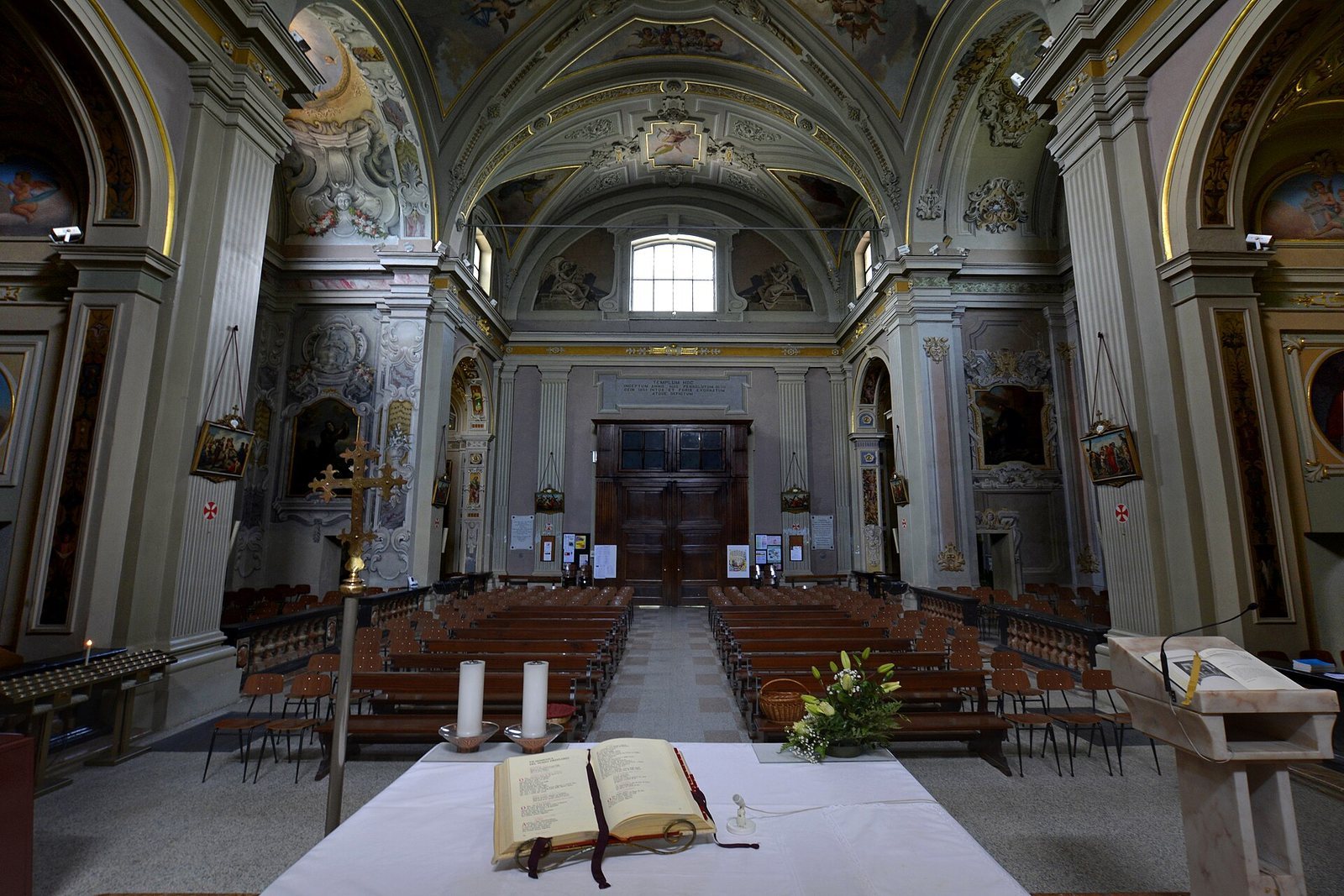
The church is arranged around a principal nave with side chapels, alongside a dome and a porticoed façade. Its decoration includes marble facing, frescoes painted on wet plaster, canvases, and gilded work at the altar.
Exterior and earlier chapel
Façade and portico
The façade has marble facing and a portico. A painting in the portico depicts the Madonna appearing to the deaf and non-speaking children in the local tradition.
The roadside chapel
Before the churches, a small chapel stood beside a road following the Olona River. The road branched from the route now called Corso Magenta, near the Bonvesin de la Riva schools. Its 1575 fresco showed the Madonna and Child with Saints Roch and Sebastian. Saint Roch was traditionally invoked against plague, and the image was intended to protect the people of Legnano from the disease.
The church interior
Nave, dome, and altar
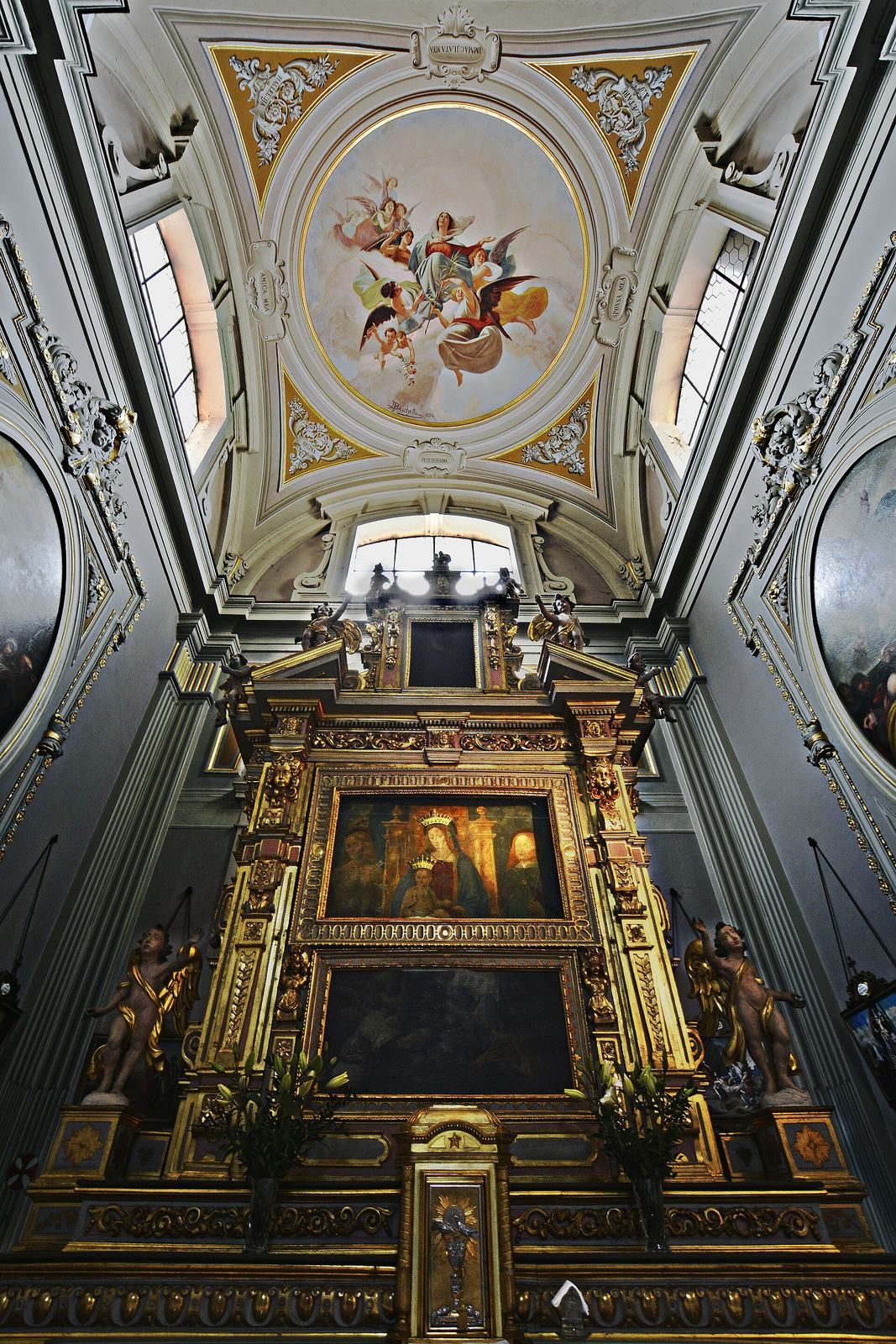
The principal nave has three chapels on the left and two on the right. Frescoes on the dome depict the Assumption of Mary, the Christian belief that she was taken into heaven. The altar is decorated with gilding. Two paintings by Francesco Lampugnani, showing the Annunciation and the Visitation of Mary, hang on the walls facing it.
Presbytery and side chapels
The presbytery, the area around the main altar, contains two canvases by Stefano Maria Legnani, known as Legnanino. They were brought from the church of the Madonnina dei Ronchi. The central chapel on the right is dedicated to Saint Anthony the Abbot and holds several eighteenth-century paintings; the chapel opposite is dedicated to Saint Maurus. Frescoes by the Turri brothers decorate the two chapels at the entrance. The first chapel on the right contains Biagio Bellotti’s painting of Saint Francis Xavier. Across from it, the chapel dedicated to Saint Anne has paintings and decorated vaults by the Turri brothers.