Chiesa dell’Assunzione di Maria Vergine: A Roman Catholic Parish Church in Grammatica
Site at a Glance
- Popularity
- Very Low
- Country
- Italy
- Primary era
- Modern
- Eras represented
- Early Modern, Modern
- Civilizations
- Duchy of Parma and Piacenza, Italian
- Site type
- Religious
- Remains
- Sanctuary
On this page8 sections
History
The Chiesa dell’Assunzione di Maria Vergine is a Roman Catholic parish church in Grammatica, a hamlet of Corniglio in Italy. Dedicated to the Assumption of Mary, the Catholic belief that she was taken body and soul into heaven at the end of her earthly life, it follows the Roman Rite, the principal liturgical tradition of the Latin Church. The parish belongs to the Diocese of Parma and the Mountain Pastoral Area, a grouping of parishes within a diocese.
From chapel to parish
The original place of worship was built at an unknown date. It began as a small chapel dependent on the church of Casarola. In 1530 it became an autonomous parish, after which Grammatica’s residents enlarged and renovated the building and gained patronage rights, formal rights associated with the church’s patron that could include a role in selecting clergy. A pastoral visitation in 1651 provides the earliest certain written reference to the church.
Renovation and sanctuary
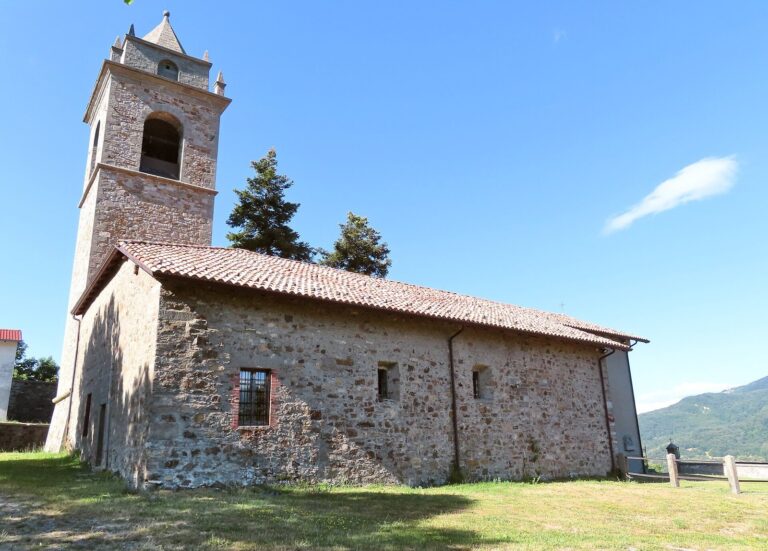
A bell tower was built in 1836, followed by interior restoration in the decades afterward. In 1908 the church underwent extensive renovation in the Neo-Romanesque style, a revival of Romanesque architecture. A fire in the presbytery in 1923 destroyed the wooden main altar, which dated to the eighteenth century.
On 15 August 1938, Bishop Evasio Colli of Parma raised the church to the status of a Marian sanctuary, a church especially associated with devotion to Mary. The change followed Monsignor Ormisda Pellegri’s gift of a statue of the Madonna of Fontanellato. The sanctuary was dedicated to the Mountains of the Blessed Virgin of Fontanellato.
Remains
Plan and exterior
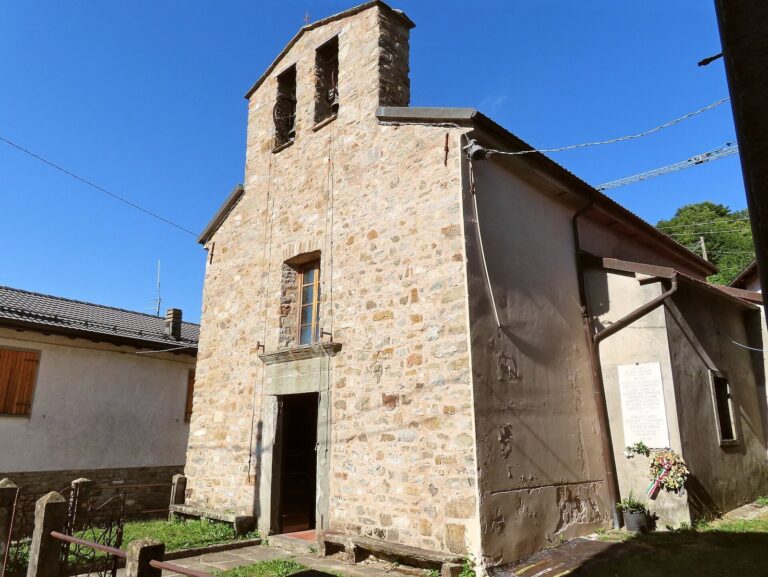
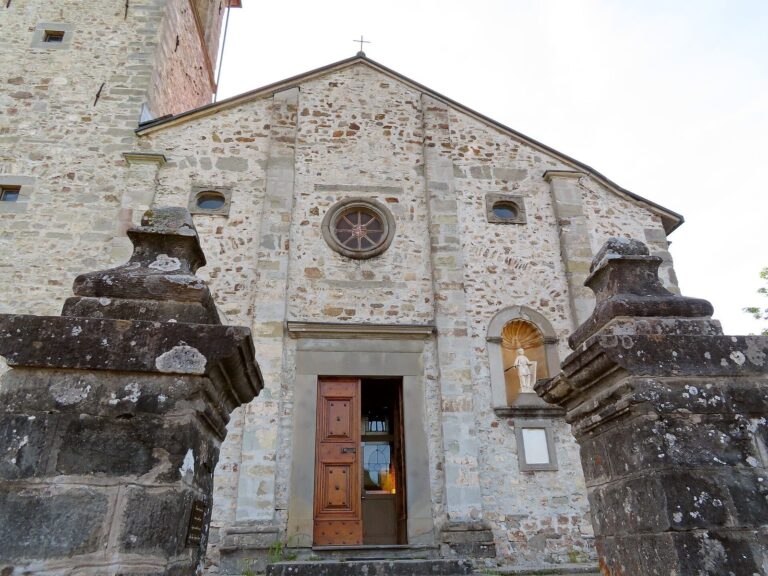
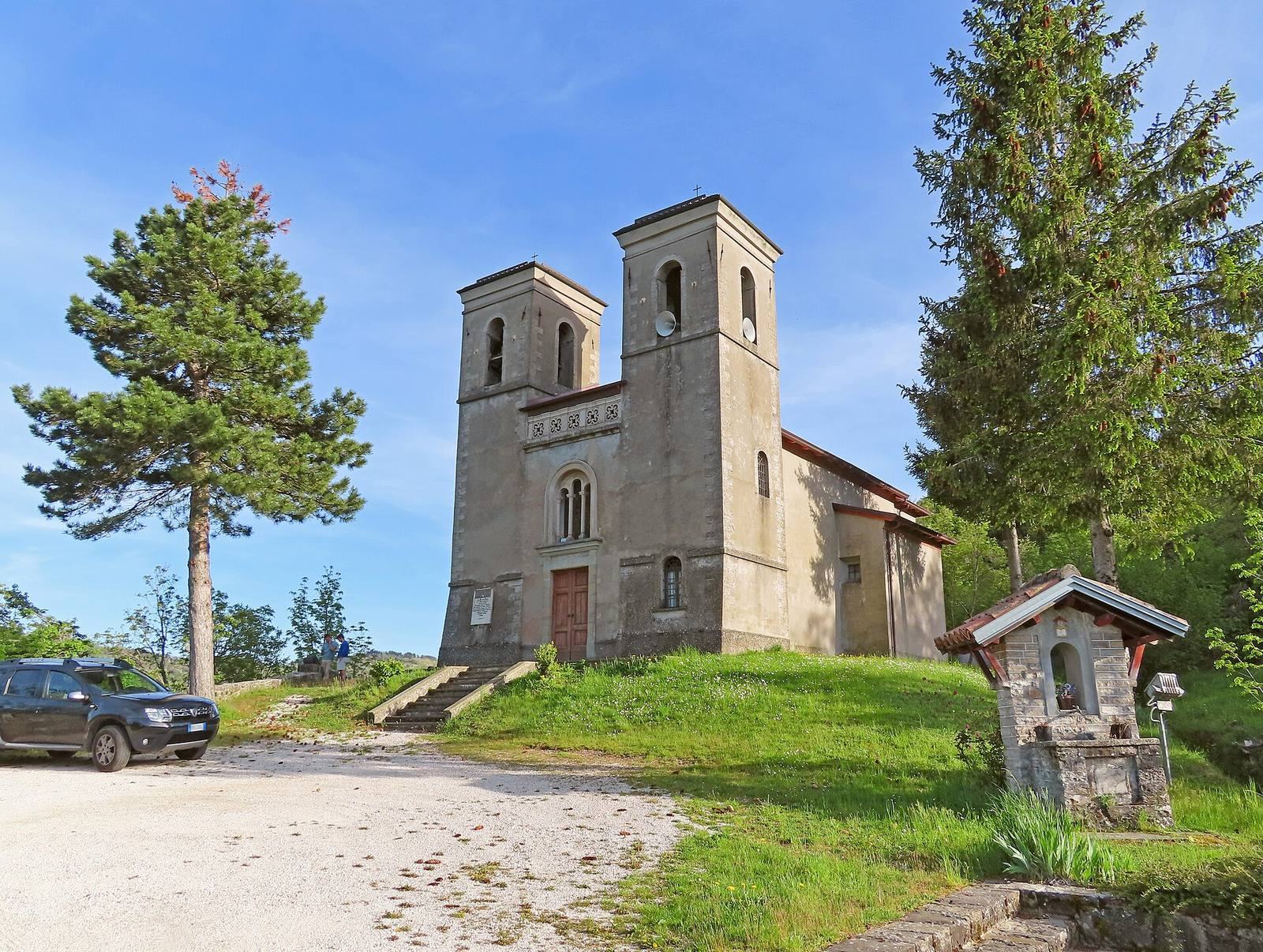
The church has a single nave, with one side chapel projecting from each flank. Its entrance is at the north end and the presbytery at the south. The symmetrical, plastered facade stands above a forecourt reached by a short central stair. A broad entrance portal has a rough-textured frame and a projecting horizontal band; above it is a round-arched window divided into three lights. An openwork frieze runs beneath the crowning cornice. Two matching bell towers flank the facade. Each has an inward-sloping base, and one has a single round-arched opening at its foot. The bell chambers have broad round-arched openings on all four sides.
Interior and furnishings
Interior arrangement
Two cross vaults, formed by intersecting vaulted sections, cover the nave. A broad round arch divides it into two bays, with a side chapel beside the second bay on each side. The chapels have barrel vaults, or continuous curved ceilings, with semicircular lunettes where the vaults meet the walls. A choir loft, a gallery for singers, occupies the interior wall opposite the facade and dates to the mid-eighteenth century. The slightly raised presbytery has a cross vault, two side windows, and a round-arched triumphal arch, which marks the transition to the sanctuary. A metal main altar shaped as a table was added around 1980.
Furnishings and sacred objects
The church preserves a stone baptismal font from the late seventeenth century, a painting of the Madonna of the Rosary, and a seventeenth-century banner depicting the Madonna of the Rosary and the Mysteries. Silver liturgical objects from the same period also survive.