Sanctuary of St. Valentine in Bieruń: A Wooden Pilgrimage Church
Site at a Glance
- Popularity
- Medium
- Country
- Poland
- Primary era
- Early Modern
- Eras represented
- Early Modern
- Civilizations
- Holy Roman Empire
- Site type
- Religious
- Remains
- Church
On this page9 sections
History
The Sanctuary of St. Valentine is an early seventeenth-century wooden Roman Catholic church in Bieruń, Poland. Its exact foundation date is uncertain. Dedicated to St. Valentine, it became a place of refuge, a focus of devotion, and a substitute parish church when Bieruń’s parish church could not be used.
Foundation and early use
The church’s first known mention is in a 1628 visitation report by Johann Hoffmann, the last Protestant ecclesiastical official responsible for the Pszczyna parish district. Hoffmann considered it likely that the church had been built between 1623 and 1626. St. Bartholomew’s church remained in Protestant hands until 1645. Until the end of the eighteenth century, the cemetery around the sanctuary was used for people regarded as unworthy of burial in the parish cemetery, including those who had died by suicide. Beliefs linking mental illness and epilepsy with madness or possession contributed to St. Valentine’s association with these conditions; people believed to be possessed could be denied ordinary burial. From its early history, the church also offered refuge and shelter.
After a city fire damaged St. Bartholomew’s, the sanctuary served as the parish church from 1677 to 1680. Devotion to St. Valentine grew during this period and spread beyond the parish.
Growth of devotion
Parish accounts from 1720 describe people travelling from nearby places and farther away for the saint’s feast. A major renovation followed in 1725. In 1787, the parish priest Jan Kanty Żychoń obtained from Rome an indulgence for the feasts of St. Bartholomew and St. Valentine. An indulgence is a Catholic spiritual benefit associated with the remission of temporal punishment for sins. The feast of St. Valentine thereafter attracted large crowds.
Devotion to the saint has been known in Silesia since the seventeenth century, and a medieval song about him is still sung. Bieruń’s survival of plague in 1831 was attributed to St. Valentine’s intercession. When a major fire destroyed the parish church in 1845, religious life again moved to the sanctuary, which served as the parish church.
Modern history and continuing devotion
The church was recognized as a historic monument in 1929 and received state legal protection after the Second World War, later entering Poland’s register of protected monuments. At the initiative of priest Jan Trocha, its interior underwent extensive renovation in 1942.
The church has held a relic of St. Valentine since 1961, with its authenticity certified by a document from that year. On 14 February, pilgrims attend Mass, kneel around the presbytery, the area around the main altar, and kiss the relic. The custom of having a bishop celebrate the principal feast-day Mass began after the war; between the wars, children were excused from school for the feast.
Faulty electrical wiring caused a fire on 2 May 1971, which was extinguished before repair work began. Arson caused a more destructive fire on 14 March 1972. The roof and ceiling burned, ceiling beams had to be replaced, and the upper parts of the side walls were damaged. Restoration, including reconstruction to the church’s pre-fire condition, was completed in 1984. Work in 1991 renewed the roof and added fire and burglary protection.
St. Valentine became Bieruń’s patron in 2003, and in 2015 the church was designated a shrine, a sacred place recognized as a focus of pilgrimage and devotion. It is a subsidiary church of the parish of St. Bartholomew the Apostle in Bieruń, within the Bieruń deanery and the Archdiocese of Katowice.
Remains
Plan and exterior
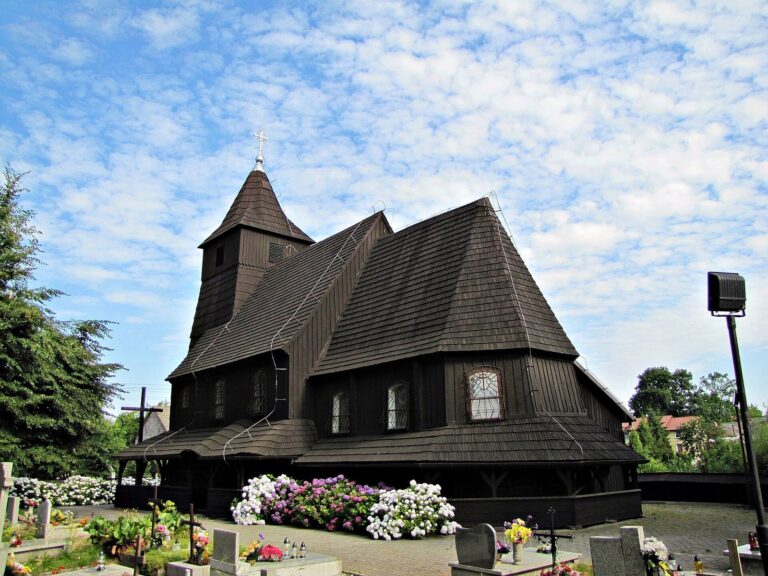
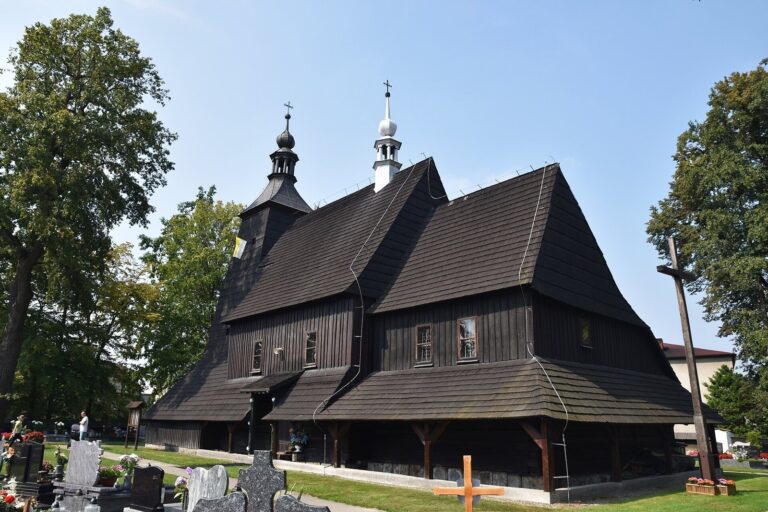
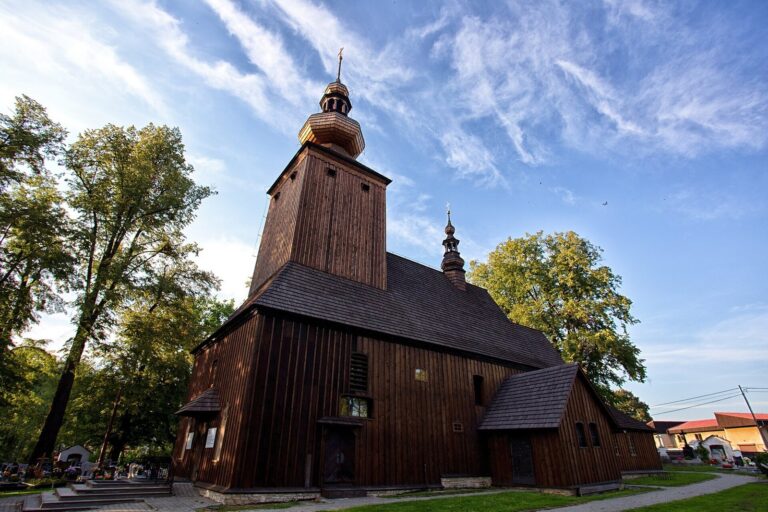
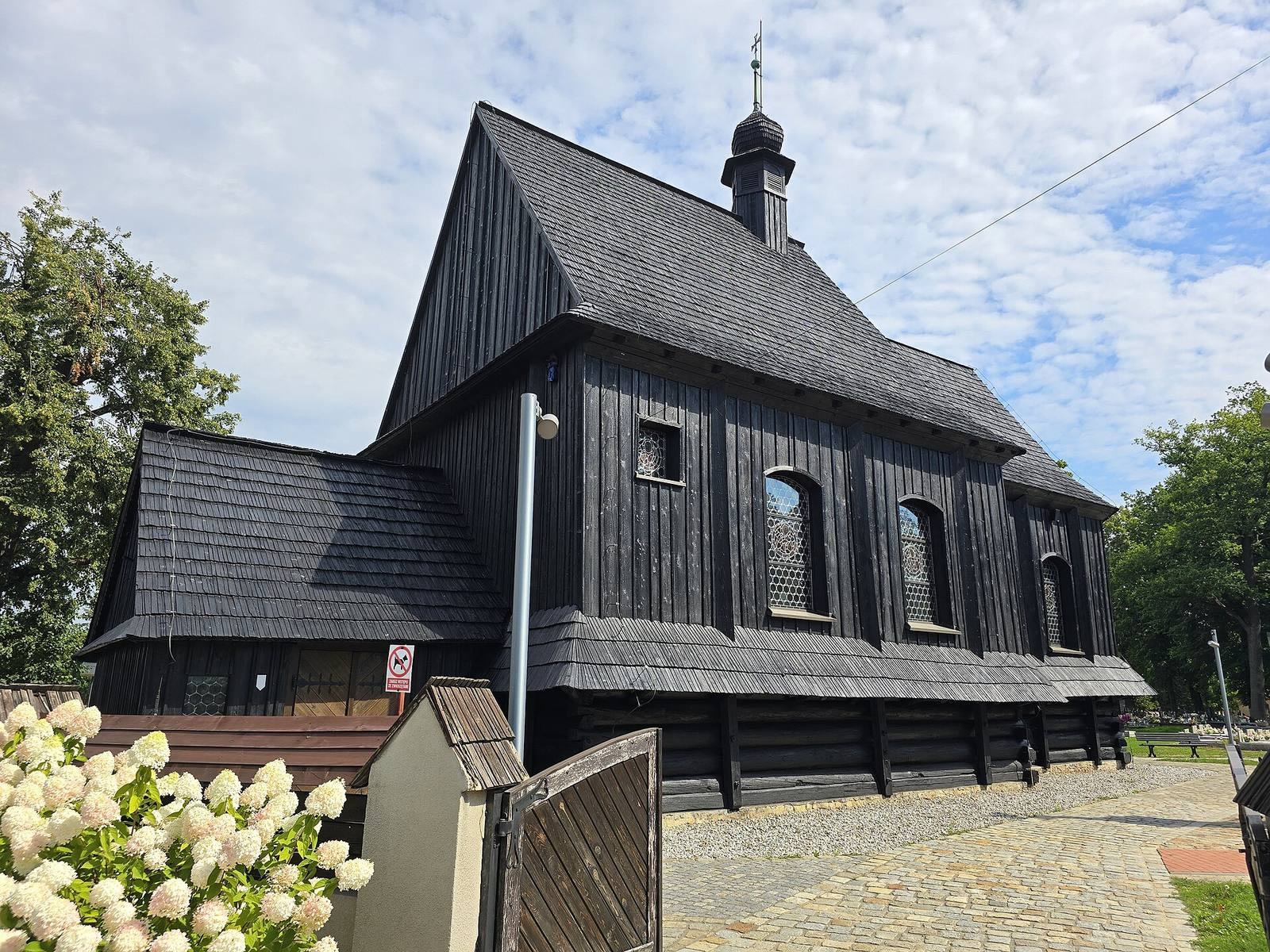
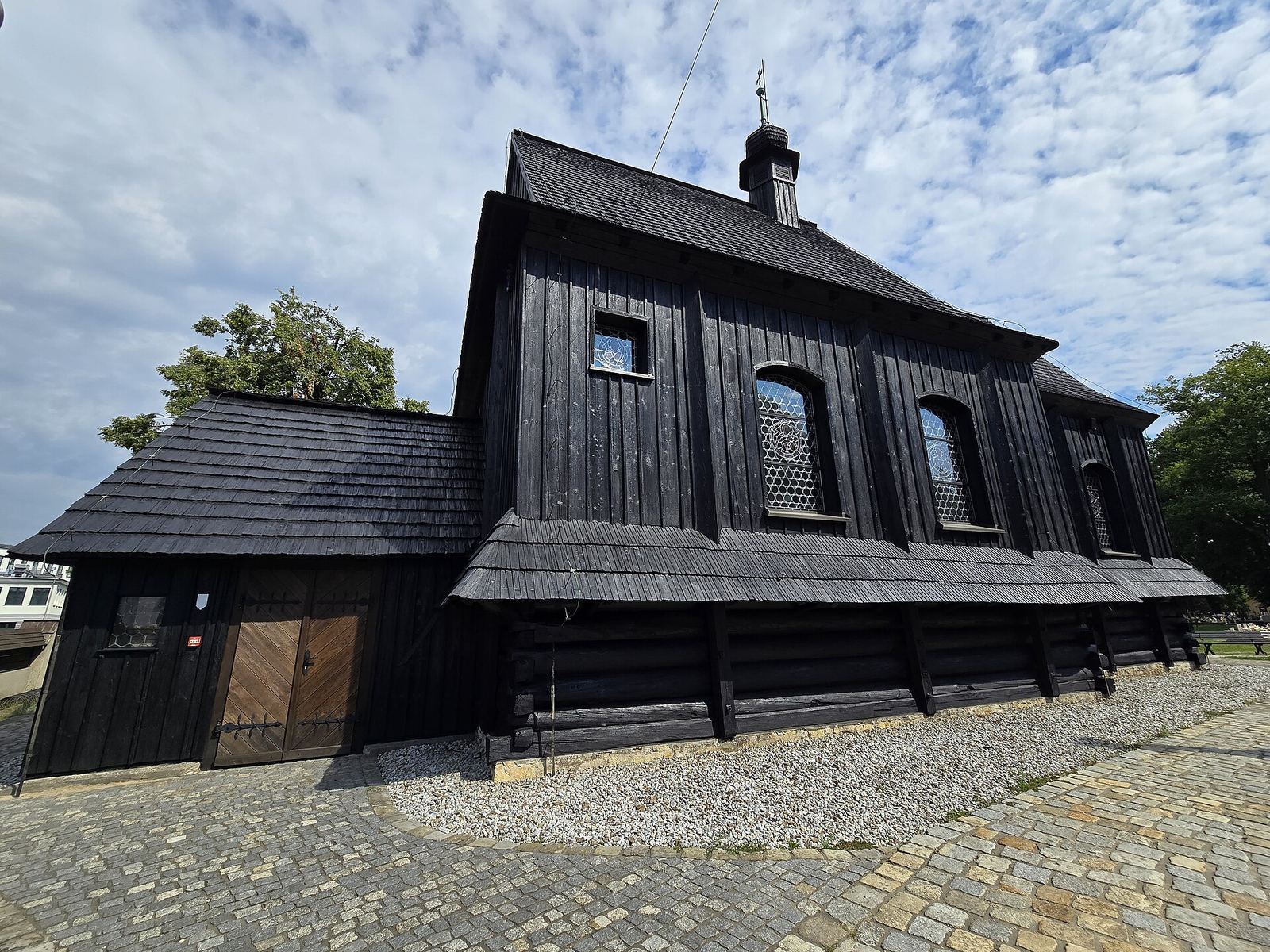
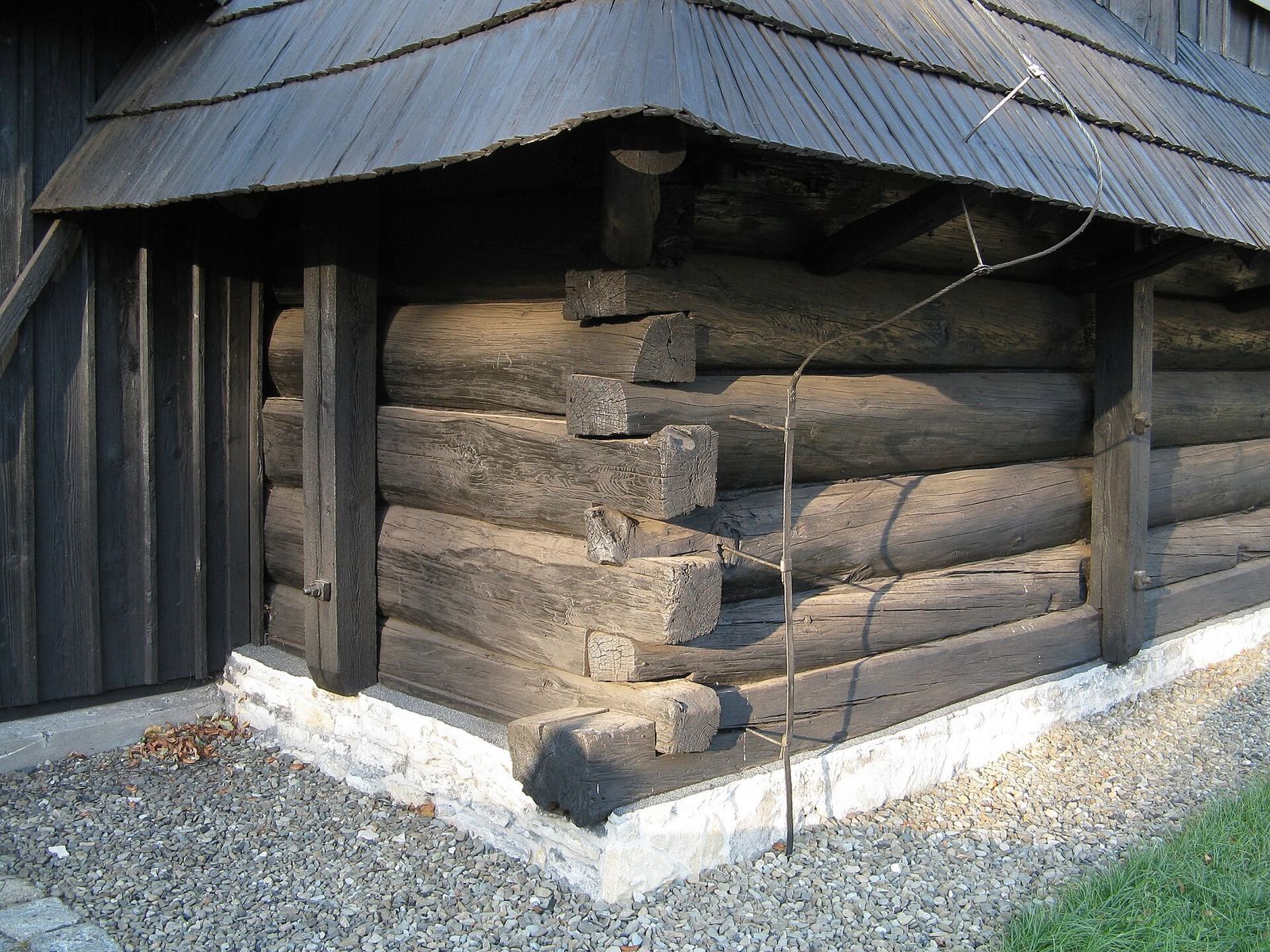
The timber church stands in a cemetery on a site that lay beyond Bieruń’s historic boundaries, on the town’s eastern outskirts. The area is now within the town centre. The single-nave building is constructed from logs, with plank-clad walls; its nave, the main space for the congregation, ends in a chancel, the area around the altar. This construction belongs to the Upper Silesian wooden church tradition. A shingled gable roof covers the building, and a small bell turret has a six-sided upper section beneath a cupola.
Interior
Altars and devotional furnishings
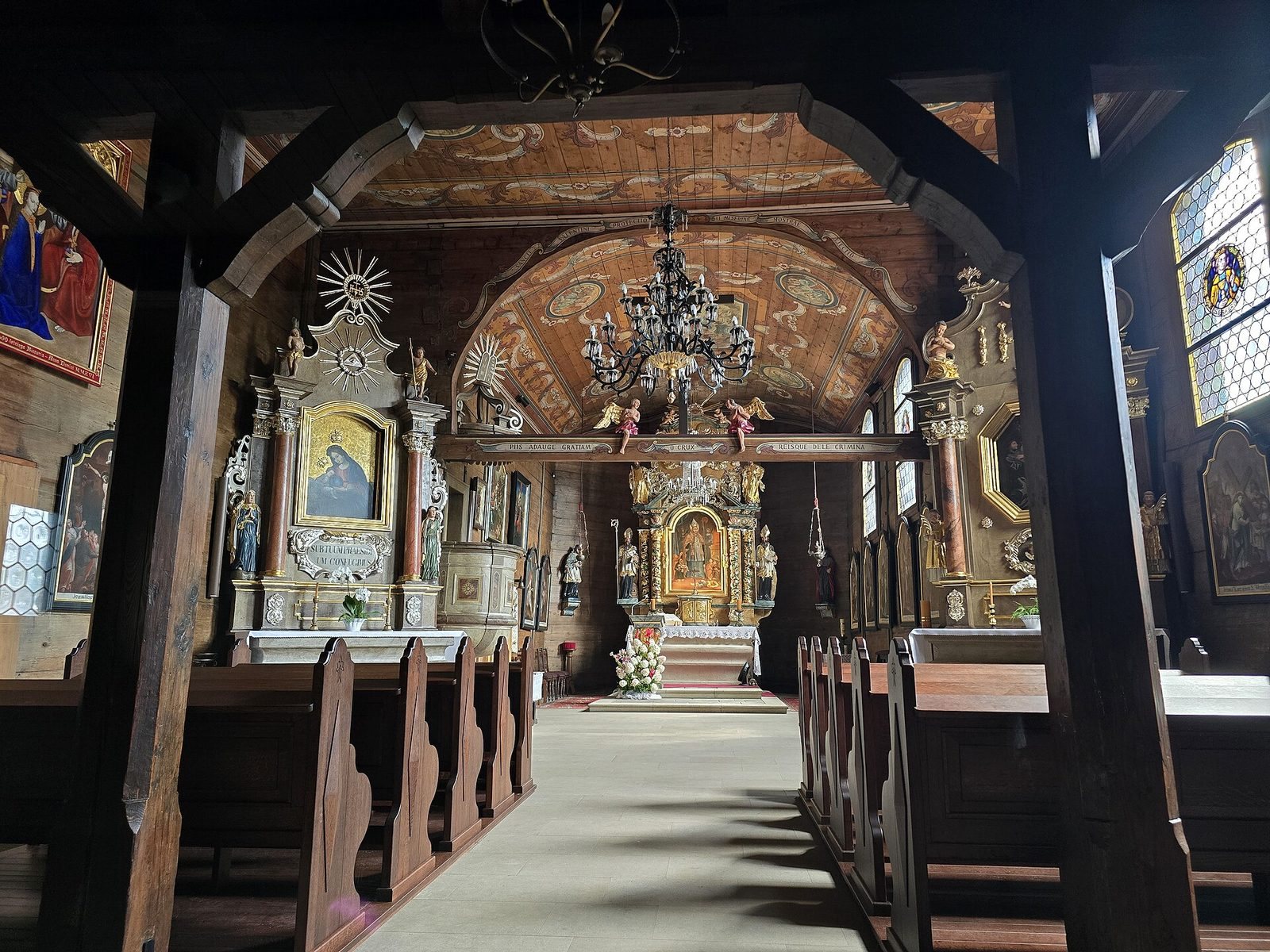
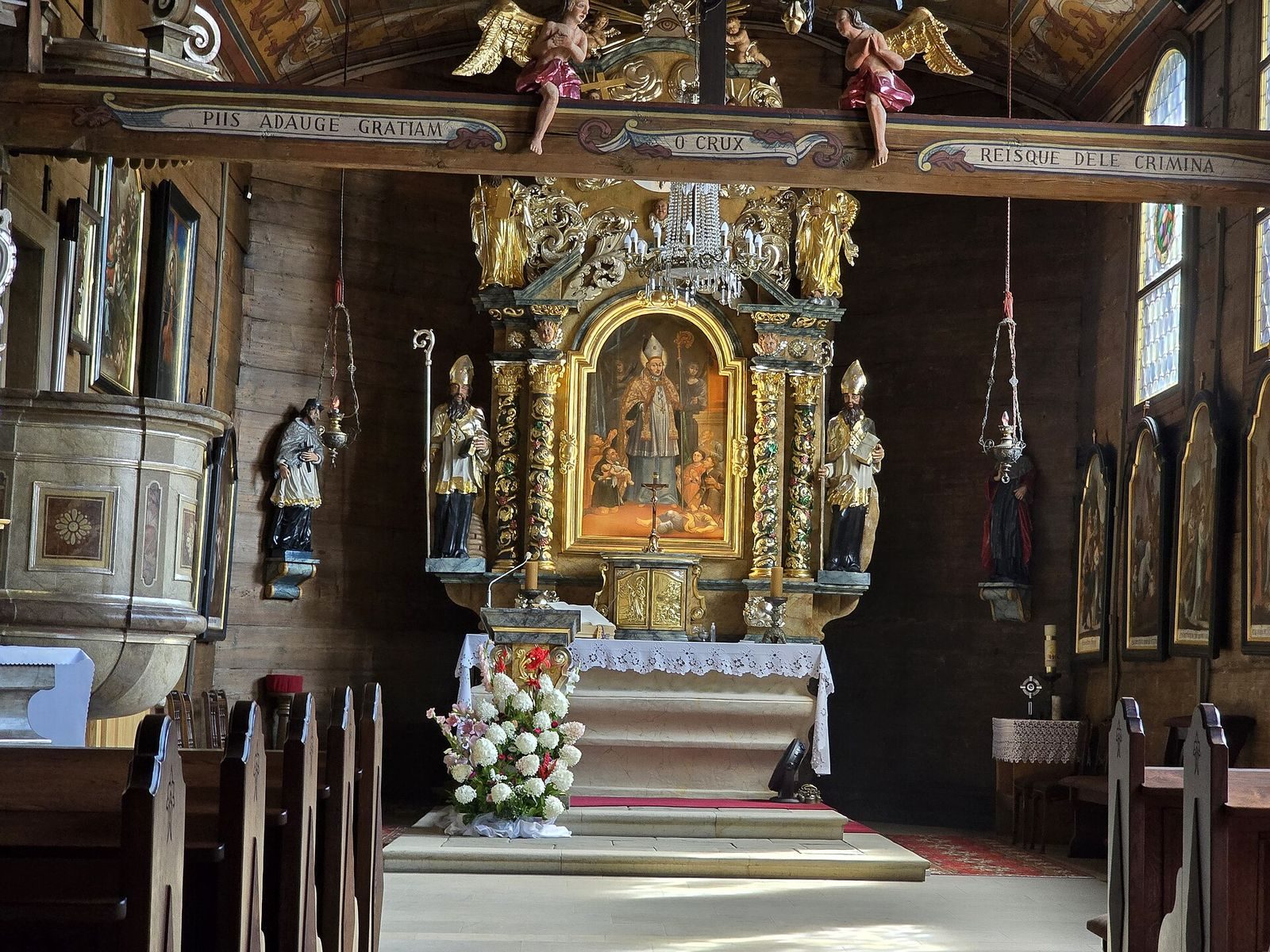
The church has three altars. Its side altars are dedicated to the Virgin Mary and St. Anthony of Padua; the altar on the Gospel side, associated with the liturgical reading of the Gospel, is dedicated to Mary. The main altar holds an image of St. Valentine as a bishop among the sick, dated 1722 to 1723, and a 1907 painting by Jan Nyga showing the saint healing a blind girl. These two especially venerated images are unveiled in turn. Carved, brightly painted statues of St. Ambrose and St. John Chrysostom stand beside the main altar. A crucifix stands above the tabernacle, the altar’s sacred container, whose base holds the saint’s relic. An aisle between the altar and the apse, the projecting end of the church, allows worshippers to process around the altar on their knees.
Gallery and ceiling decoration
A raised choir gallery rests on two wooden columns and contains a small seventeenth-century organ. The ceiling carries extensive painted decoration within a leafy ornamental border. Images of the Virgin Mary associated with shrines at Silesian Piekary, Pszów, Lourdes, and Fatima occupy its corners. A canopy is set above the Baroque pulpit.