Sulek Petroglyphs: A Medieval Rock-Art Monument in Southern Siberia
Site at a Glance
- Popularity
- Medium
- Country
- Russia
- Primary era
- Medieval
- Eras represented
- Medieval
- Civilizations
- Unclassified
- Site type
- Civic
- Remains
- Rock Art
On this page9 sections
History
Medieval rock art
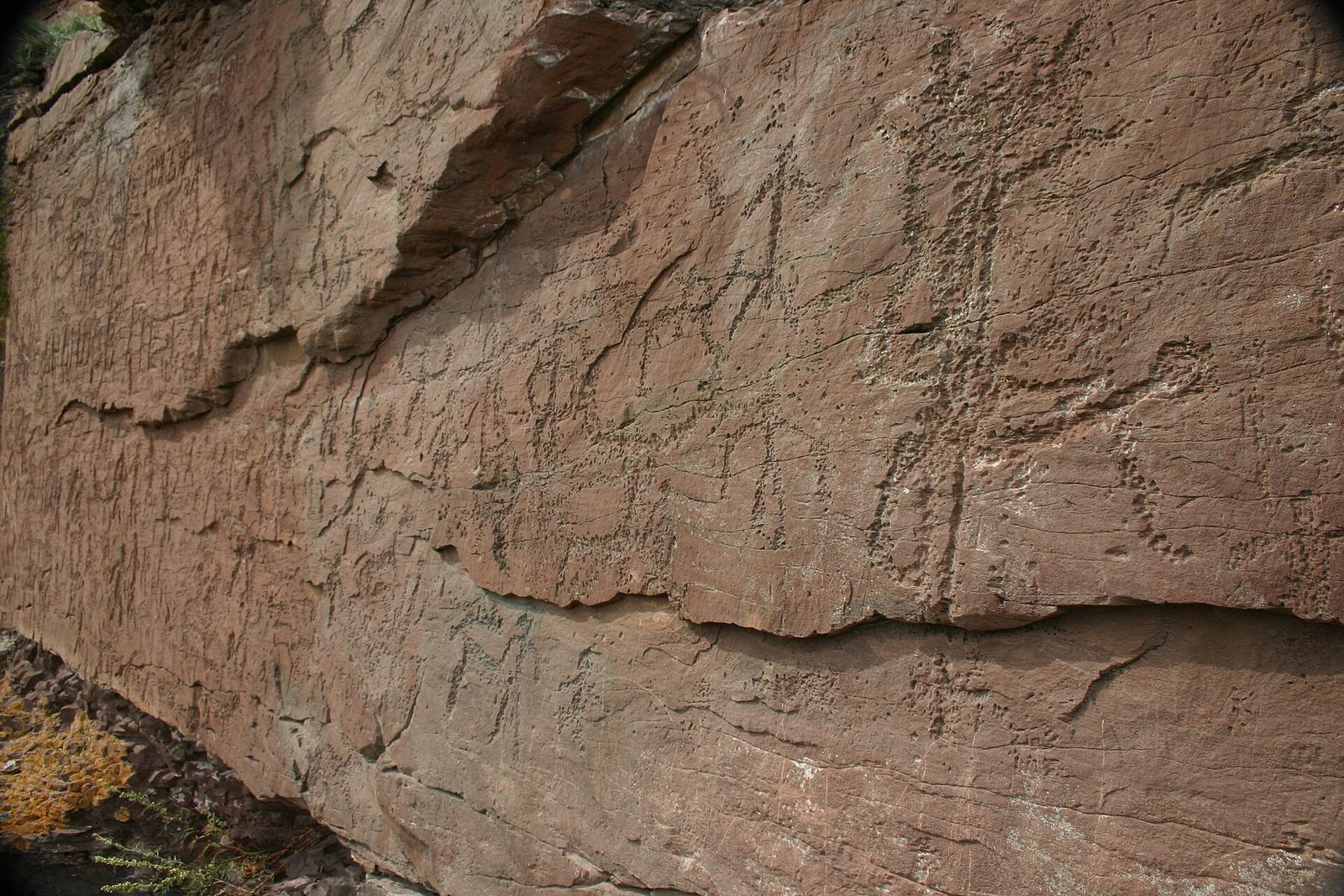
The Sulek petroglyphs are a rock-art monument in Southern Siberia, Russia, with images dating from the seventh to ninth centuries. Most were made during the Kyrgyz Khaganate, a medieval state ruled by a supreme leader called a khagan. The site takes its name from the Sulek ulus, a term for a community or territory. The Khakass, an Indigenous people of Southern Siberia, call it Pichiktig-Tag, meaning “Written Mountain.”
Study and protection
The first scientific description of the petroglyphs appeared in 1847. A Finnish Society for the Study of Antiquities expedition worked in Khakassia from 1887 to 1889, during which its artist, Otto Hjalmar Appelgren-Kivalo, drew the engravings from life. Russian archaeologist Alexander Vasilyevich Adrianov carried out research at the site later.
The Sulek petroglyphs are recognized as a federal-level cultural heritage property, a designation for sites acknowledged at the national level under Russian heritage law. They are described as the largest monument in northern Khakassia, with importance extending beyond the region and reaching worldwide. The Suleki museum-reserve, an institution for preserving and interpreting a cultural area, was established in connection with the site.
Remains
Rock surfaces and setting
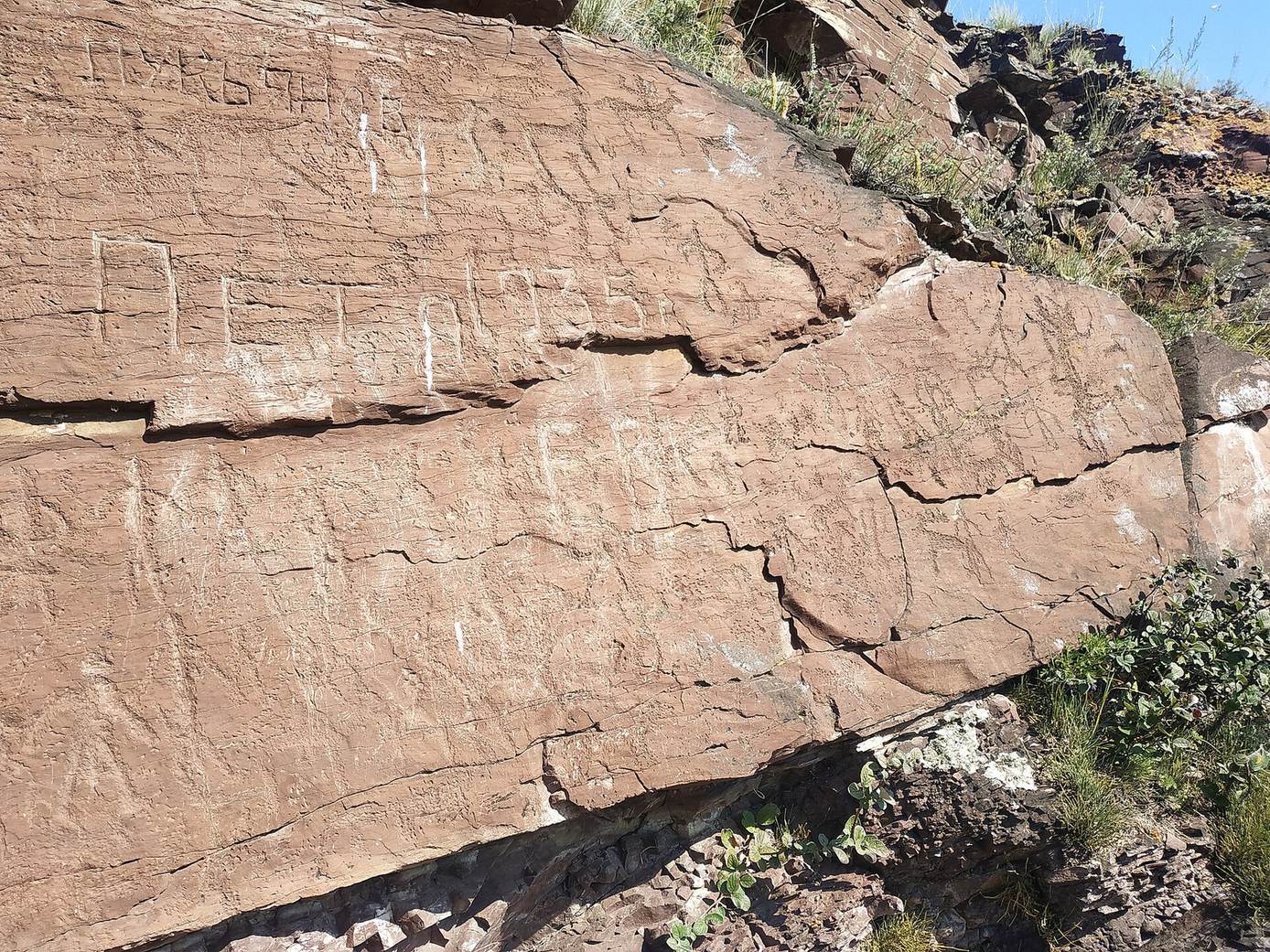
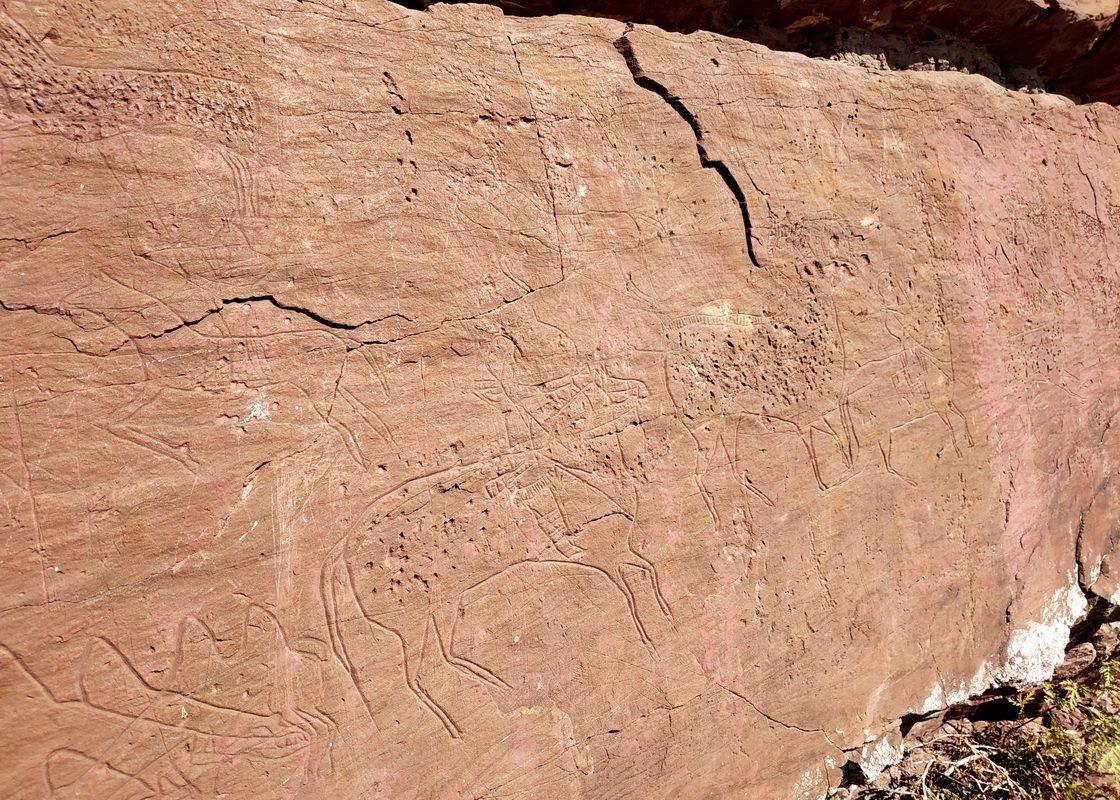
The monument consists of rock faces bearing thousands of images, made by cutting lines into the stone. It lies near the Pechishche River, about 18 kilometres from Kopyovo. Most of the engravings are on Pisanaya and Solyanaya mountains.
Engraved images and inscriptions
Hunting and animal scenes
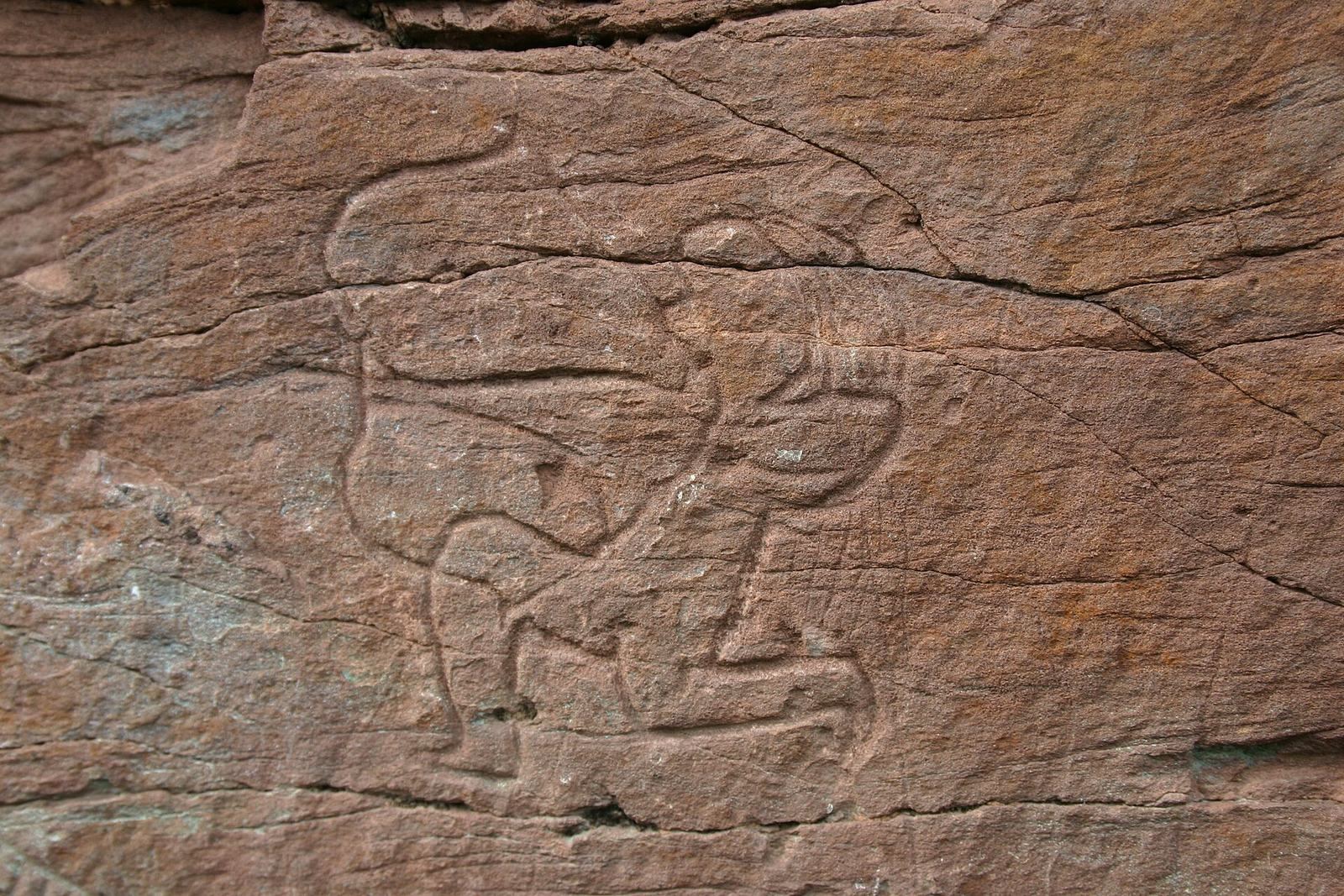
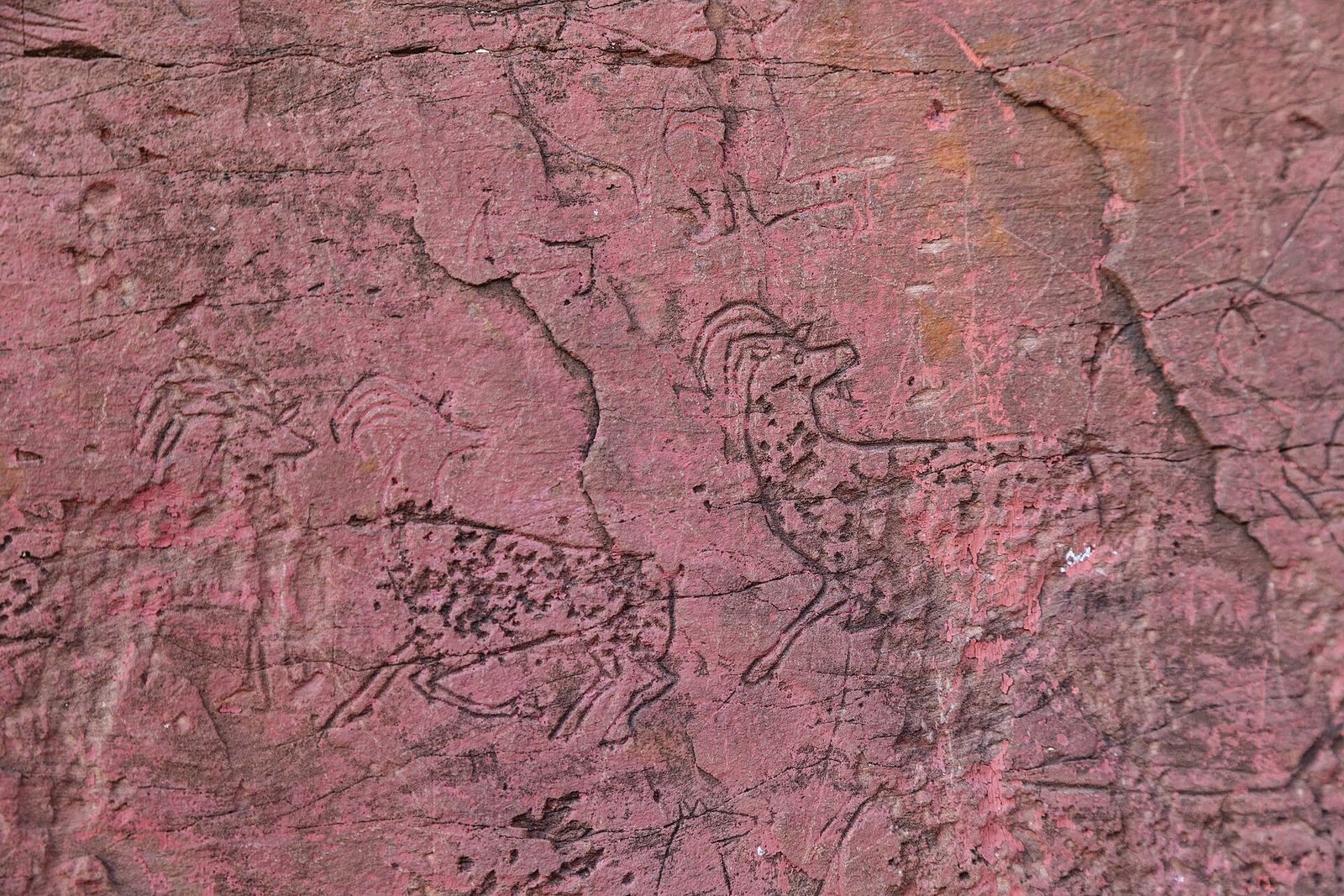
The images include hunting, battles, animal contests, and ceremonies in which a ritual specialist acted as an intermediary with the spirit world. Some scenes show mounted warriors shooting animals with bows; others depict camels biting one another, as well as boars and leopards. Camels were bred in Khakassia until the end of the nineteenth century.
Mounted figure and deity
A well-preserved engraving shows a person on horseback raising an object that resembles a mace. Another distinctive image depicts a deity wearing a three-horned headdress. The figure is associated with Umay, a female deity in ancient Turkic religious traditions linked to fertility and the protection of children.
Inscriptions
Runic inscriptions accompany the images. Runic writing uses angular character forms incised into a surface. The upper inscription is translated as “Eternal Rock.” The rock is also called the Painted Mountain or Eternal Mountain, names referring to images left there for eternity. The engravings are gradually deteriorating through human activity and natural processes.