San Prospero: A Catholic Church in Perugia, Italy
Site at a Glance
- Popularity
- Low
- Country
- Italy
- Primary era
- Medieval
- Eras represented
- Medieval, Early Modern
- Civilizations
- Etruscan, Lombard, Papal States
- Site type
- Religious
- Remains
- Church
On this page12 sections
History
Early church and medieval affiliations
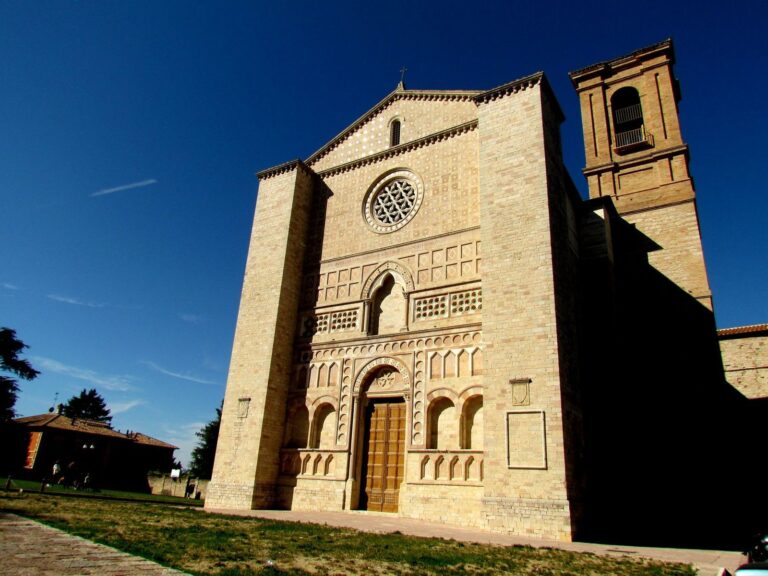
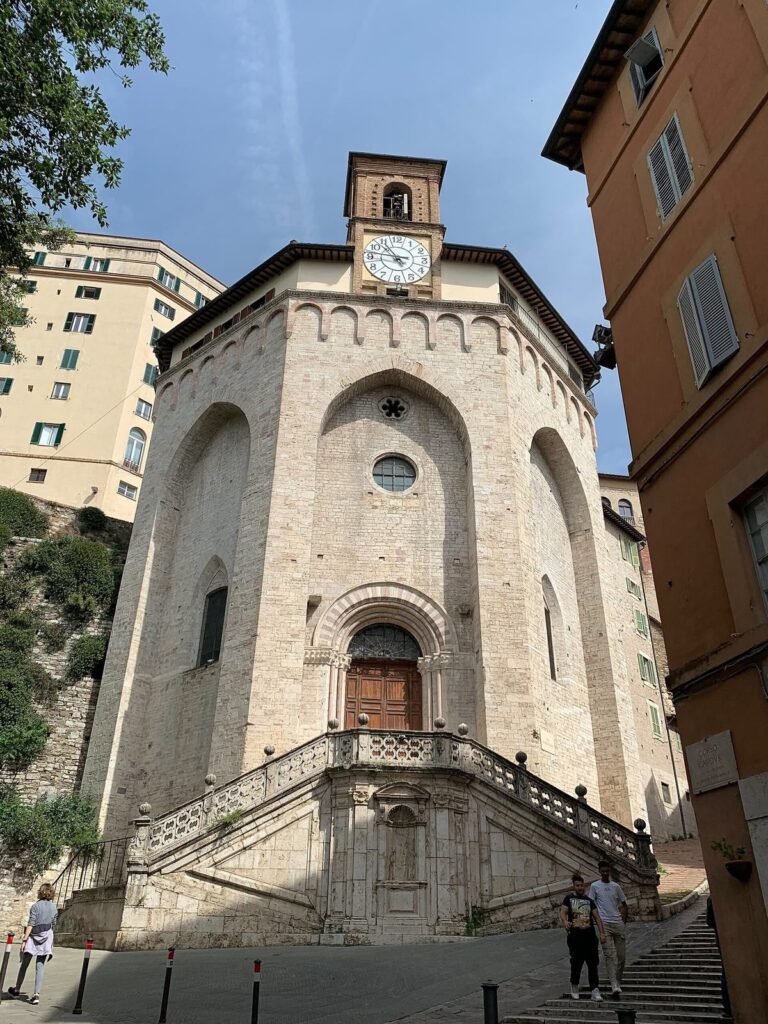
San Prospero is a Catholic church dedicated to Saint Prosper in Perugia, Italy, in the Porta Eburnea district outside the city walls. Its first church dates to the seventh or eighth century and was built over an Etruscan-Roman cemetery. It also served as a women’s monastic settlement. The church is affiliated with the Archdiocese of Perugia-Città della Pieve, a Catholic administrative district led by an archbishop. Its wall paintings are regarded as the oldest in Perugia.
In 1285 San Prospero was the parish church of Porta Eburnea. By 1303 it was dependent on Perugia’s cathedral chapter, and in 1436 it came under the authority of Pomposa Abbey.
Alteration and reuse
Roof damage in the sixteenth century led to the church’s incorporation into a larger building. It was later used as a farm outbuilding, a function that continued until the first half of the twentieth century. During the seventeenth century, the church passed to the seminary, then to the priests of the Mission, and later to the Donini family.
Ettore Ricci brought the wall paintings to light in 1910. After restoration, the church reopened for worship in 1927.
Remains
The church’s surviving form combines a single nave, a chapel on its right side, and an exterior with the appearance of a country manor. The nave’s orientation was changed during renovation, and its deteriorated wooden-truss ceiling was replaced with a masonry barrel vault, a continuous arched ceiling.
Church fabric and interior works
Walls and nave
The perimeter walls contain remains attributed to an earlier Etruscan structure, including a funerary urn bearing an Etruscan inscription. Traces of the former temple walls can be seen at the rear of the church. The nave’s altered alignment and vaulted ceiling preserve physical evidence of the later changes to the building.
Altar area and sculpture
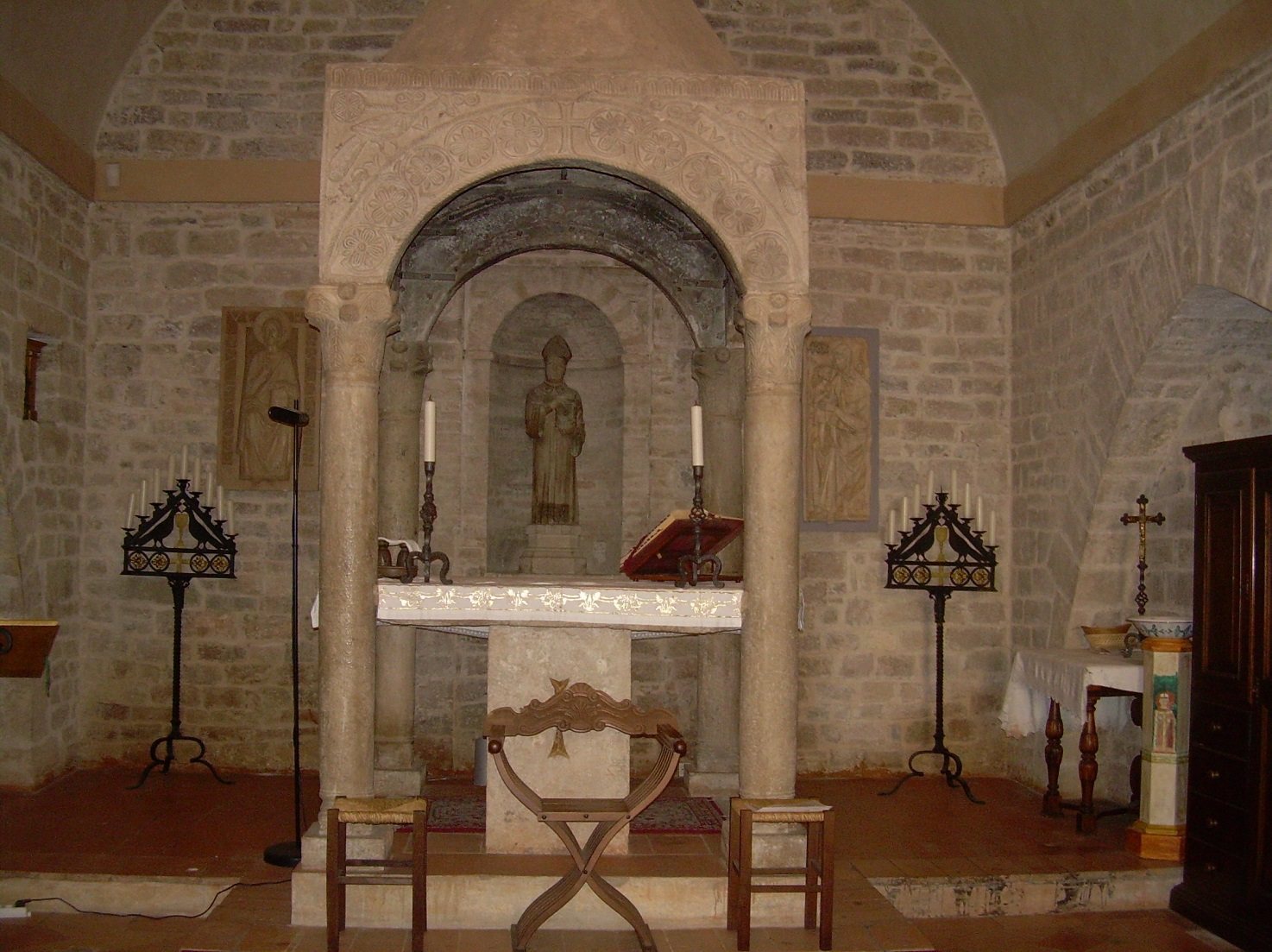
The interior contains an eighth-century Lombard marble ciborium, an architectural canopy commonly placed over an altar. Its decoration brings together early Christian and Ravenna-related themes with classical motifs, including peacocks and inverted mirrors. In the area around the altar stands a late-thirteenth-century statue of Saint Prosper, made in a style associated with the sculptor and architect Arnolfo di Cambio. Beside the statue’s niche on the rear wall are two contemporary shallow reliefs by Perugian sculptor Artemio Giovagnoni, showing Christ enthroned and blessing, and the Madonna and Child.
The chapel and its paintings
Chapel decoration and inscription
The chapel on the right has an arched entrance and wall paintings that cover its walls and vaulted ceiling. A band of plant designs divides the ceiling into two sections, while a painted imitation of drapery survives in fragments around the chapel. An inscription dates the paintings to October 1225 and names Pope Honorius III, whose papacy lasted from 1216 to 1227, and Frederick II, Holy Roman Emperor from 1220 to 1250. It also names Don Ranaldo, priest of San Prospero, and the local painter, who signed as Bonamico P. The final letter may mean “painter”; Ricci thought it more likely identified Bonamico as being from Perugia.
Saints and scenes on the chapel walls
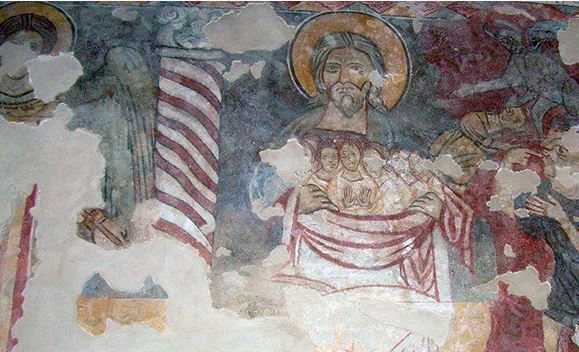
The paintings include rows of the twelve apostles, the prophets Hosea, Joel, Zephaniah, Daniel, Obadiah, Jonah, and Micah, and many saints. Perugia’s patron saints appear alongside several female saints, including Mary Magdalene, Margaret of Antioch, and Illuminata of Todi. One figure has been identified as Bridget of Sweden, although Bridget was born in 1303, well after the paintings’ 1225 date. On the chapel’s right side, Saint Herculanus, a bishop and martyr, and John the Baptist point toward the sandals of Christ; traces of an Annunciation appear above them. The entrance wall shows apostles, Benedictine nuns following the Rule of Saint Benedict, and a praying devotee turned toward John of Perugia, a Franciscan martyr from the religious movement founded by Francis of Assisi. On the church’s left wall, another Annunciation survives beside Saint Anthony the Abbot, an early Christian Egyptian monk especially venerated in rural areas.
The judgment scene
Saint Prosper, wearing a bishop’s mitre and carrying a crozier, appears among devotees frightened by the Archangel Michael, who is shown as a judge of souls. Pietro Diletti and Ettore Ricci interpreted the scene as the Last Judgment, with a particular connection to the Gospel of Luke’s story of Lazarus and a rich man. The righteous are represented in Abraham’s bosom, a biblical image of their resting place, with Lazarus at its center, unable to communicate with those in Hell. The rich man points to his parched throat. Above Hell, Lucifer, the angel of darkness, reaches for a struggling soul; the inscription “Dives” beneath him is identified with Pluto.
Artistic character and sources
Art historian Pietro Scarpellini described the paintings as simplified, graphic, and didactic, executed rapidly but effective in conveying their subjects. Ricci and Scarpellini saw echoes of fifth-century early Christian Roman art in the frontal figures wearing tunics and cloaks, comparing them with figures in Ravenna mosaics, on ancient sarcophagi, and in catacomb paintings. They also likened the prophets’ faces to those of ancient philosophers and viewed the paintings as evidence that Roman artistic features persisted in Perugia.
The saints’ compositions may also draw on Eastern or French illuminated manuscripts. Scarpellini connected the image of Mary Magdalene, clothed only in her hair, with the tradition of Mary of Egypt, an early Christian ascetic, and regarded it as the image’s first appearance in the West.