San Pietro in Valle, Fano: An Oratorian Baroque Church in Italy
Site at a Glance
- Rating
- 4.4
- Popularity
- Very Low
- Country
- Italy
- Primary era
- Early Modern
- External website
- Open
- Eras represented
- Early Modern
- Civilizations
- Papal States
- Site type
- Religious
- Remains
- Church
On this page15 sections
History
San Pietro in Valle is a Baroque Catholic church in Fano, Italy, built for the Oratorian Fathers of Saint Philip Neri during the seventeenth century. Dedicated to Saint Peter, it replaced an older church on the same site and became an important center for religious instruction, music, and devotional activity in the city.
From the Earlier Church to the Oratorian Foundation
A church dedicated to Saint Peter stood here by 778. The expression “in Valle” may refer to the building’s position in a low part of Fano, or it may derive from the Latin vallum, meaning a wall, in reference to nearby Roman remains. The origin of the name remains uncertain.
The Congregation of the Oratory of Saint Philip Neri was established in Fano in 1598 by Girolamo Gabrielli. The Oratorians combined preaching and religious instruction with care for young people, musical activities, and the singing of the lauda, a vernacular devotional song. The older church became the congregation’s first Fano headquarters, but its limited size could not accommodate the Oratorians’ expanding activities.
Gabrielli promoted a larger building in 1609, supporting it financially alongside the Montevecchio, Marcolini, Petrucci, Alavolini, Uffreducci, and Ubaldini families. Construction began in 1610 under Giovanni Battista Cavagna. After Cavagna’s death, Giovanni Maria Pazzaglia, Giovanni Branca, and Girolamo Caccia continued the work.
Seventeenth-Century Construction and Religious Use
The church was consecrated in 1617, although construction and decoration continued for decades. Pietro Solari completed the vault stucco in 1619, and Antonio Viviani directed a major fresco campaign between 1618 and 1620. Regular religious music began at San Pietro in Valle in 1626. This emphasis on accessible preaching, instruction, and active worship reflected the priorities of the Counter-Reformation, the Catholic reform movement that followed the Protestant Reformation.
A commemorative inscription honoring Gabrielli was placed above the entrance on the inner facade in 1679, and his portrait was installed inside the church. The dome was erected by Girolamo Caccia in 1696 and decorated internally by Lauro Buonaguardia in 1699 and 1700. The long building process therefore brought together several generations of patrons, builders, painters, sculptors, and craftsmen.
Napoleonic Seizures and Later Preservation
The church lost several major paintings during the Napoleonic seizures, when artworks were removed from Italian religious institutions and taken to France. Three works catalogued at Fano were sent there, and none was returned. Guido Reni’s Christ Giving the Keys to Saint Peter, painted in 1626, remained in France after the Congress of Vienna. The original is now in the Louvre, while a copy by Carlo Magini remains at San Pietro in Valle. Another copy, painted by Giuseppe Ceccarini in 1786, is preserved in Sant’Agostino in Fano.
San Pietro in Valle remains a Catholic church dedicated to Saint Peter and retains its historic association with the Oratorian Fathers of Saint Philip Neri. It is recognized as an Italian cultural property.
Remains
Plan, Exterior, and Central Space
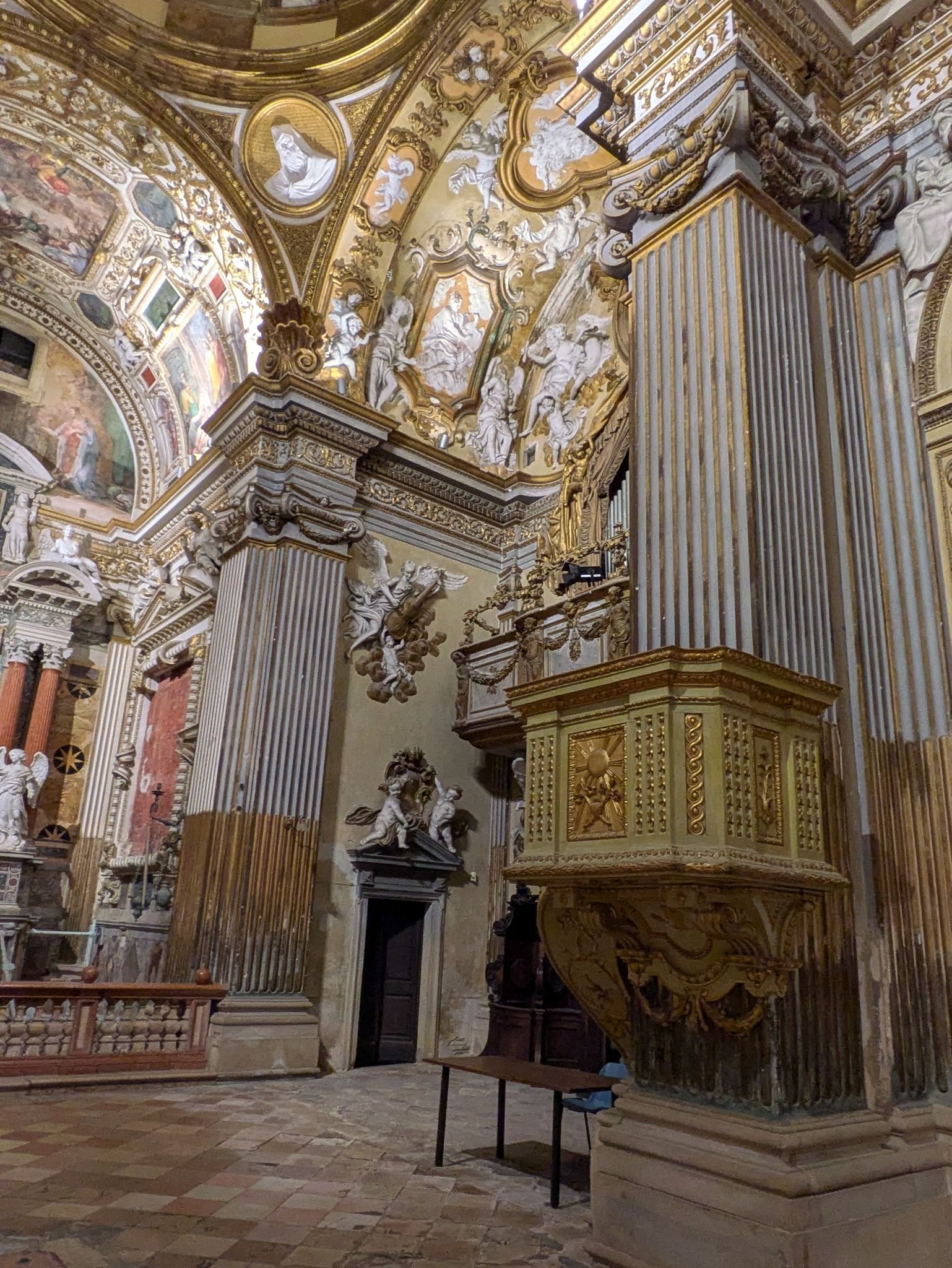
San Pietro in Valle has a Latin-cross plan, in which a long nave meets a shorter cross-arm, and a single nave opens toward a broad transept. A barrel vault covers the main interior. High fluted Ionic pilasters with festooned capitals divide the walls and frame six recessed side chapels, three on each side of the nave.
The transept contains two opposing choir galleries and supports a dome on a tall, octagonal, windowed drum. The dome, built by Girolamo Caccia in 1696, was painted internally by Lauro Buonaguardia in 1699 and 1700. Its four curved supports, called pendentives, carry roundels of the four Evangelists. Niches in the drum contain sculpted angels between pairs of pilasters, while higher terraces hold statues of apostles and blessed figures. Four larger angels and six smaller flying angels occupy the summit among painted clouds, creating an illusionistic transition between sculpture and painting.
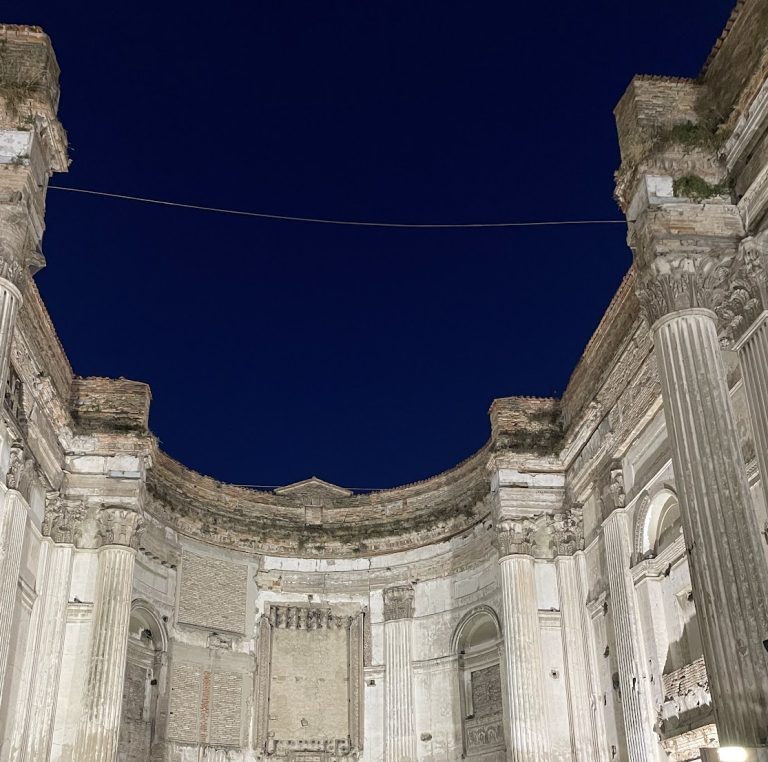
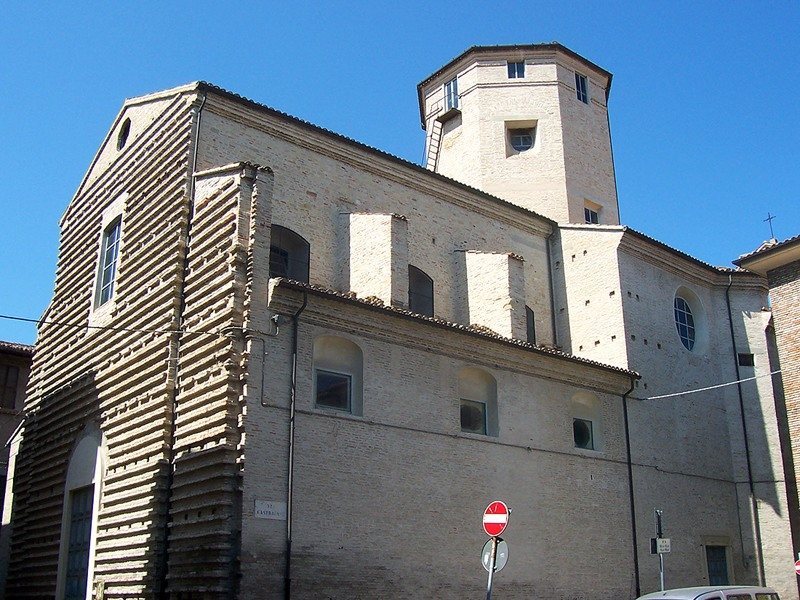
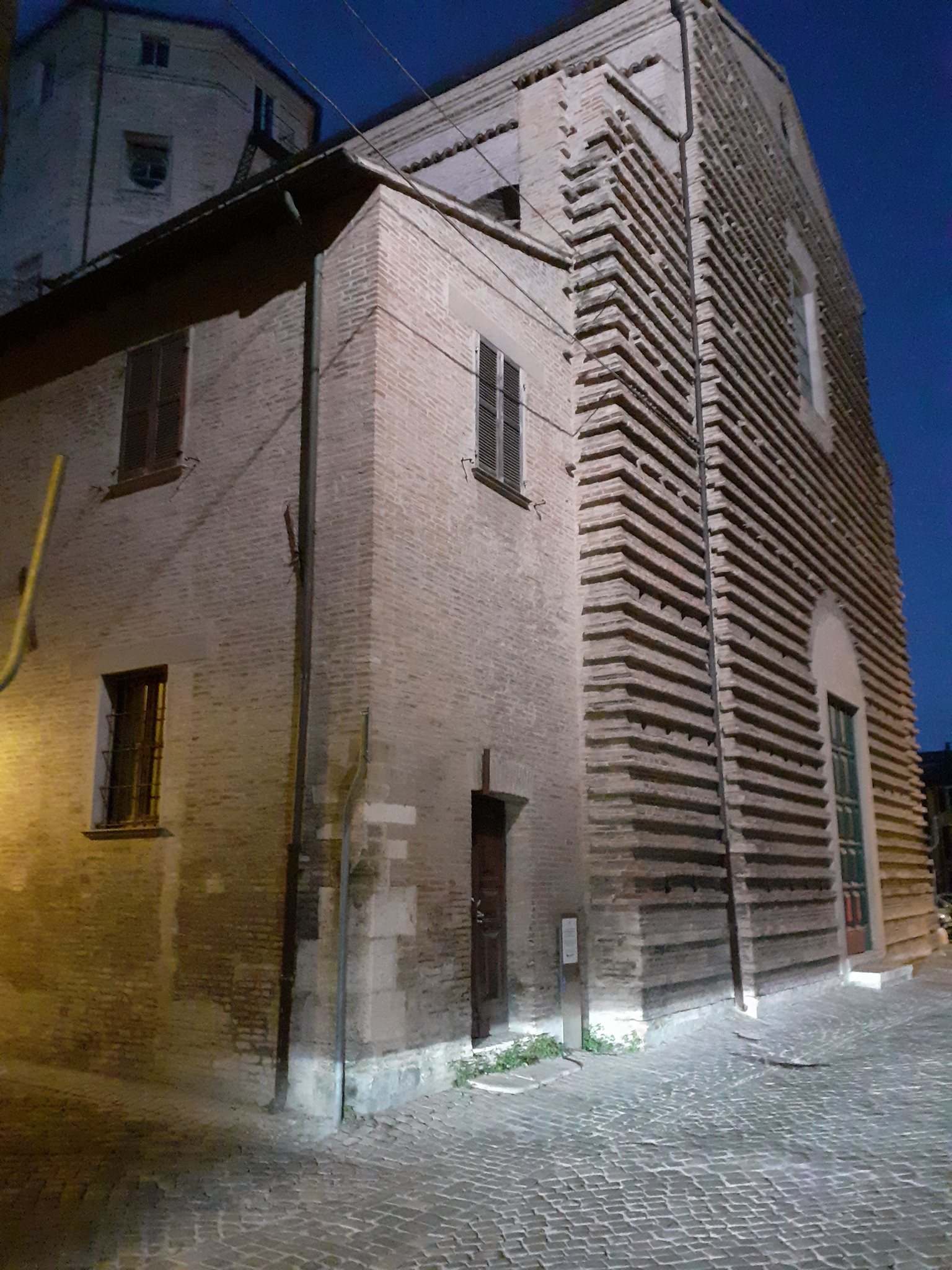
The brick facade remains unfinished. Its intended stone facing was to include two pairs of semicircular niches, a design known from a surviving drawing. The relatively plain exterior contrasts with the interior’s gilding, stucco, marble, painting, and carved wood, which together create a dominant white-and-gold effect.
Vaults, Presbytery, and High Altar
Antonio Viviani painted two frescoes above the entrance on the inner facade. Quo Vadis is on the left and The Landing of Saint Paul in Malta on the right, with a window between them lighting the nave. The principal panels of the vault show the meeting of Saint Peter and Saint Paul, the Crucifixion of Saint Peter, and Saint Peter in Glory. Other scenes depict the fall of Simon Magus, Christ walking on the water, the liberation of Saint Peter from prison, and episodes from the lives of the two apostles.
The presbytery and high altar were originally associated with three major paintings. Guido Reni’s Christ Giving the Keys to Saint Peter of 1626 shows Christ handing Peter the keys of the Kingdom of Heaven before a Roman forum. Simone Cantarini’s The Miracle of Saint Peter Healing the Lame, painted between 1635 and 1645, depicts Peter healing a lame beggar at the Temple. Matteo Loves’s Saint Peter Raising Tabitha, from 1633 and 1634, represents Peter restoring to life Tabitha, a charitable woman of Joppa.
Viviani’s presbytery frescoes include the Annunciation, the fall of Simon Magus, Christ walking on the water, and the liberation of Saint Peter from prison. One work once associated with the presbytery is displayed at the Palazzo Malatestiano in Fano, while other original altarpieces have entered civic collections.
Side Chapels
Uffreducci Chapel
The Uffreducci Chapel is also dedicated to Saint Philip Neri. Its principal painting is Luigi Garzi’s The Virgin and Child Appearing to Saint Philip Neri, commissioned by Domenico Federici in 1699 to replace an earlier image. Stefano Bagni of Siena is associated with the vault frescoes, whose central figure is Saint Philip Neri.
Alavolini Chapel
The Alavolini Chapel contains vault and wall paintings by Giovanni Giacomo Pandolfi, including The Birth of Saint John the Baptist and The Beheading of Saint John the Baptist. Its central altarpiece by Sebastiano Ceccarini replaced Guercino’s Saint John at the Fountain, which was taken during the Napoleonic period and is now in the Musée Fabre in Montpellier.
Marcolini Chapel of the Crucifix
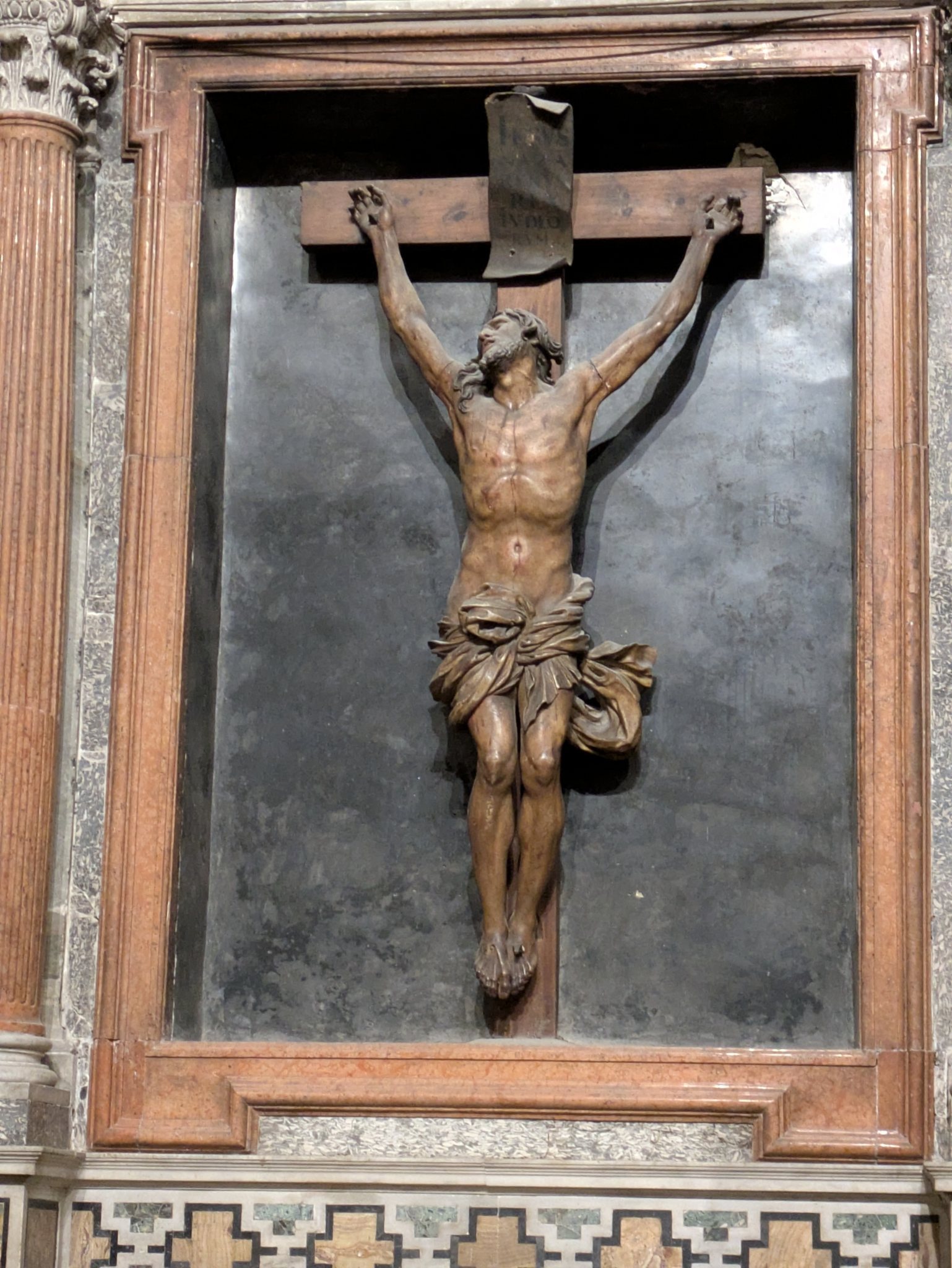
The right-hand Marcolini Chapel, also known as the Chapel of the Crucifix, contains a wooden Crucifix attributed to the Venetian sculptor Pietro Liberi and dated to 1600. Domenico Federici probably donated it to the church in 1706. Alessandro Vitali’s Deposition and Ascension occupy the side walls.
Gabrielli Chapel
The first chapel on the left is the Gabrielli Chapel. It contains Guido Reni’s Annunciation, Giovanni Francesco Guerrieri’s Dream of Joseph, and Francesco Gabuzio’s Flight into Egypt. Reni’s painting uses strong contrasts of light and shade, with illumination entering from the left. Guerrieri’s work focuses on the sleeping Joseph, the suddenly appearing angel, and the opposition between darkness and light.
Petrucci Chapel
Giovanni Francesco Guerrieri frescoed the Petrucci Chapel throughout. The vault shows the apotheosis of Saint Charles Borromeo, the noble Petrucci with Saint Charles, and the saint kneeling. Associated paintings include the 1635 Vision of Saint Charles, Saint Charles Borromeo and the Noble Petrucci Dressed as a Beggar, and The Miracle of the Born-Blind Child.
Marcolini or Ubaldini Chapel of Saint Paul
The later Marcolini Chapel, also associated with the Ubaldini family, is dedicated to Saint Paul. Antonio Viviani painted scenes from the apostle’s life on its vault, together with The Beheading of Saint Paul and The Conversion of Saint Paul. The central canvas, Lorenzo Garbieri’s Saint Paul Raising Eutychus, shows the dead Eutychus after his fall from a balcony and uses pronounced contrasts of light and shadow.
Woodwork, Sculpture, and Music
The church retains locally made wooden furnishings, including the pulpit, kneeling desk, prie-dieux, benches, choir galleries, confessionals, and two organs. Their manufacture reflects Fano’s woodworking tradition, which was also connected with shipbuilding. Giorgio Ferretti made the pulpit and the two choir galleries in 1710.
The pulpit stands on the right side of the nave. It is made of painted and gilded wood, enclosed on three sides, and equipped with a seat, turned balusters, carved ornament, and gilt-leaf frames. The choir galleries incorporate life-size musical instruments associated with Baroque practice, and the space around them contains numerous large musical angels. One of the two organs was made by the eighteenth-century organ builder Gaetano Callido.
The kneeling desk is supported by four putti and has rounded, cushion-like edges. Described in 1873 as finely carved walnut, it has been attributed by Maddalena Trionfi Honorati to the French woodcarver Dionisio Plumier. It is now in the Pinacoteca.
A bust of Saint Peter stands on the left nave pilaster opposite the pulpit. Some attributions connect its head with Daniele da Volterra. Guido Nolfi, a senior official of the Roman Curia, probably acquired the head from an antiquarian, had it incorporated into a wooden bust, and donated it to the Oratorians in 1619. The supporting shelf bears a Latin inscription recording Nolfi’s gift of a bronze head of Saint Peter and its installation by the priests in that year.