San Pietro in Carnia: A Historic Pieve and Episcopal Church
Site at a Glance
- Popularity
- Medium
- Country
- Italy
- Primary era
- Medieval
- Eras represented
- Medieval, Early Modern
- Civilizations
- Holy Roman Empire, Venetian
- Site type
- Religious
- Remains
- Church
On this page14 sections
History
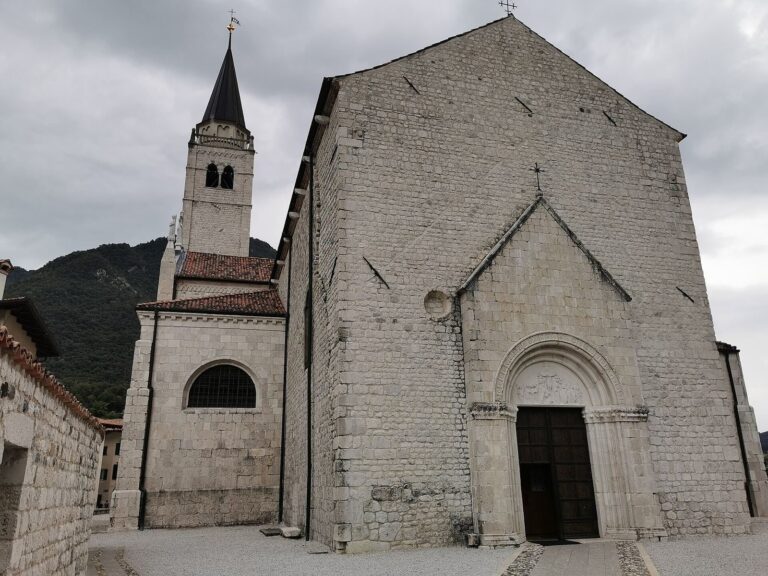
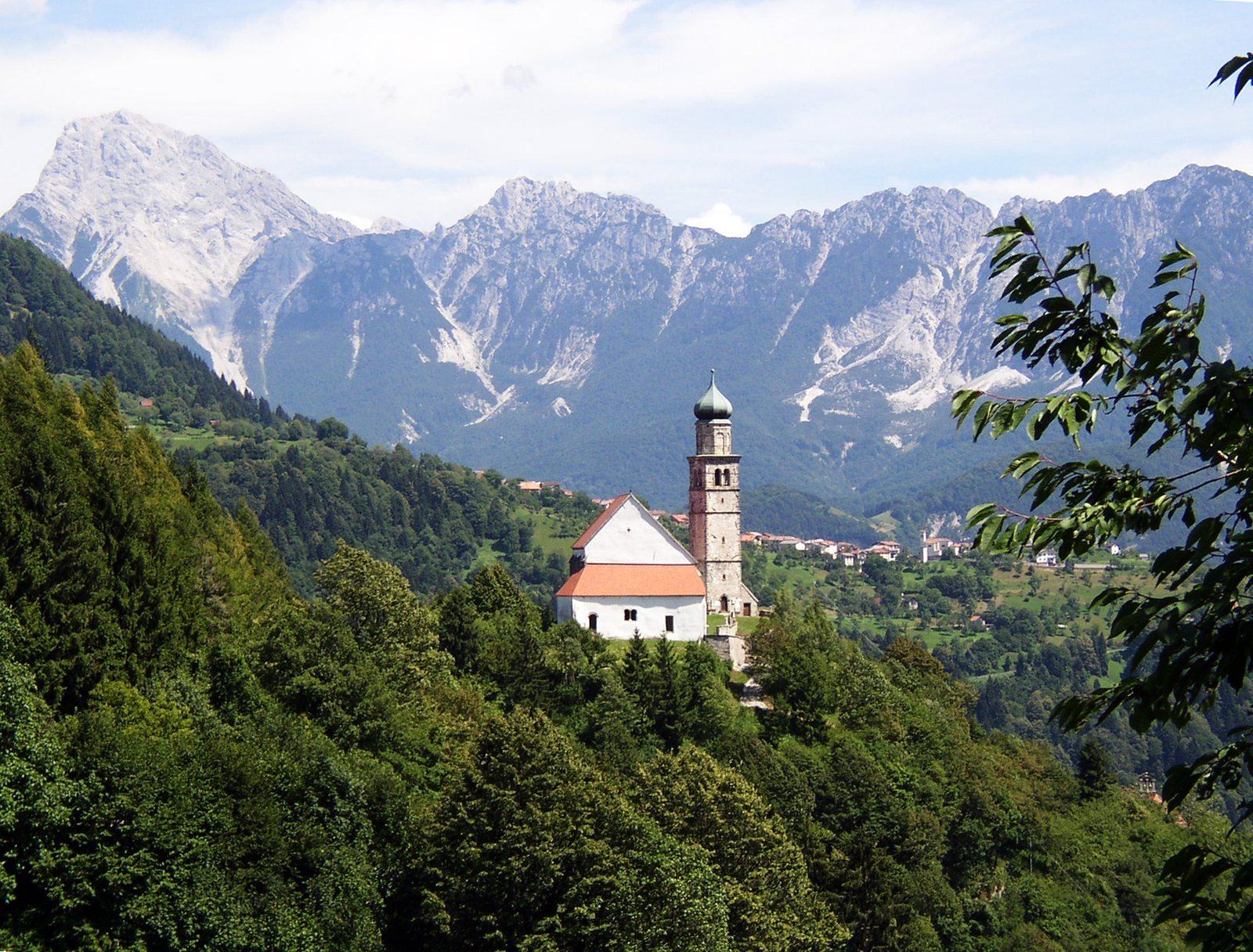
San Pietro in Carnia is a Gothic church above the But Valley in Italy; the present building was erected in 1312 at the initiative of Ottobuono di Razzi, patriarch of Aquileia. Its earlier history reaches back to an early Christian center, and it later became the principal religious building of the But Valley.
Early Christian episcopal center
From the fourth century, San Pietro was linked to Aquileia, a major Christian center in the northern Adriatic and a center of Christian evangelization in the Roman administrative region of Venetia and Histria. At the initiative of Bishop Cromatius of Aquileia, two early Christian basilicas were built here in the fourth or fifth century. One served as the cathedral of the Diocese of Zuglio, whose episcopal seat was at San Pietro from the fourth through the eighth century.
The Diocese of Zuglio was suppressed during the eighth century, when its cathedral was destroyed. The pieve, a historic parish church serving surrounding communities, is first recorded in 808, when it took the place of a basilica destroyed by the Avars, a people who established power in central and eastern Europe during the early medieval period.
Medieval pieve and later rebuilding
San Pietro’s pieve is described as the oldest of Carnia’s 11 historic pievi and their mother church. The present church was built on earlier settlements in 1312, under the initiative of Ottobuono di Razzi, the senior ecclesiastical leader of Aquileia.
Alterations and continuing religious role
Major work from the late fifteenth to the early sixteenth century added a southern aisle and altered the roof and bell tower. Plans from this period also proposed a pulpit facing the sacristy, a stairway to the upper sacristy, a raised main doorway, and a modernized roof. Further changes followed in the early eighteenth century.
Two thefts, in 1970 and 1981, took sculptures by Domenico da Tolmezzo from the high altar. Excavations by the University of Trieste brought sculptural furnishings from the early Christian basilica to light. San Pietro belongs to the Roman Catholic tradition, is dedicated to the Apostle Peter, and is part of the Archdiocese of Udine.
Each year on the Feast of the Ascension, the “Kissing of the Crosses” brings processional crosses from churches once within the pieve’s jurisdiction to honor San Pietro’s fourteenth-century silver cross. The procession reaches the church for a Mass celebrated with the Archbishop of Udine and clergy from Zuglio and the But Valley.
Remains
Set above the But Valley near a former route between the Adriatic Sea and Aguntum, in present-day Austria, the church stands above a plateau at the foot of the site. Its Gothic form is an asymmetrical complex shaped by successive additions.
Plan and architectural fabric
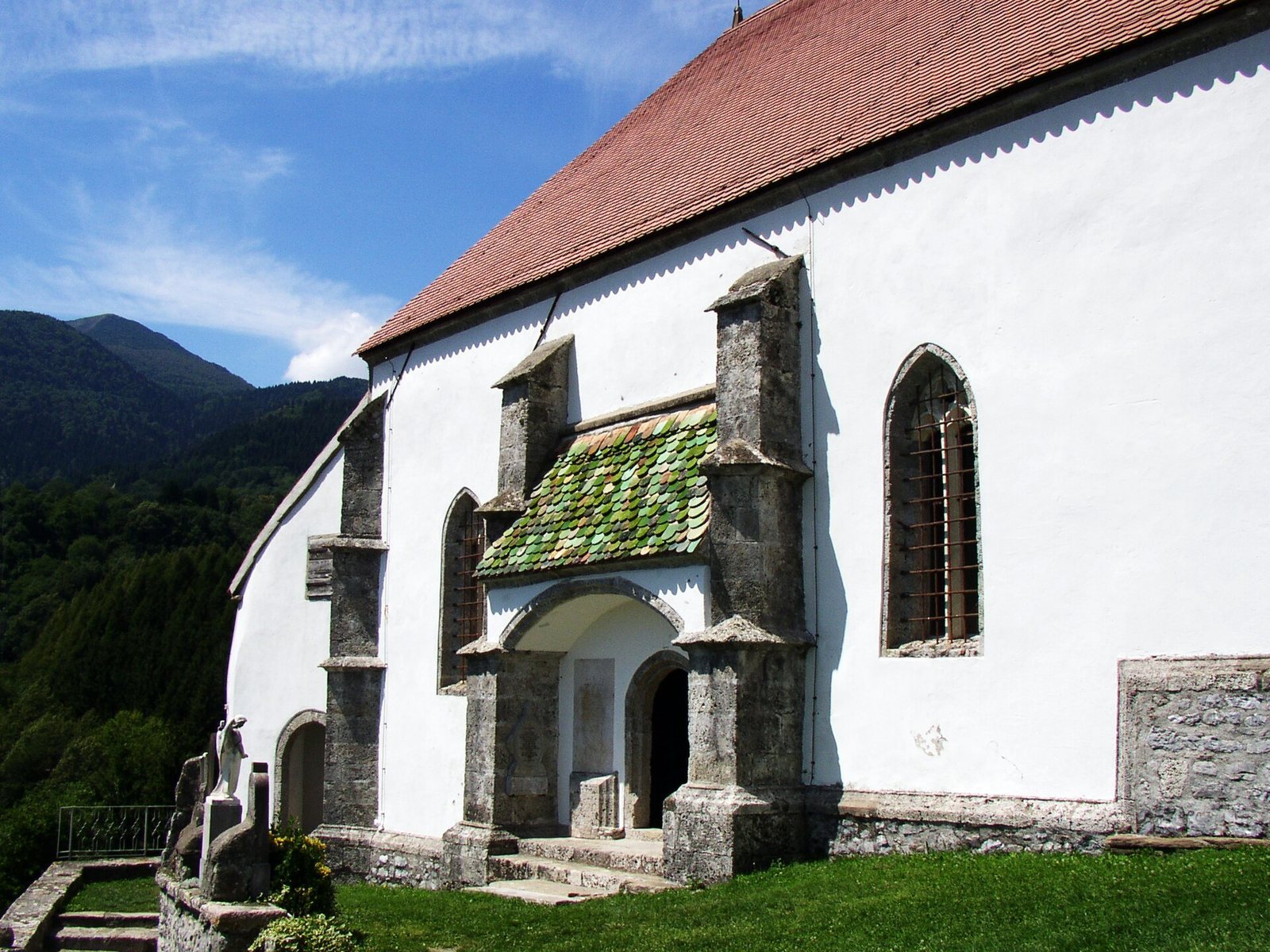
The original church had a single nave, the main body of the building, and three altars. The interior has a raised presbytery, the area around the main altar, with a sacristy behind it and an older sacristy to its right. An atrium, or entrance space, precedes the church and contains a Romanesque paired window divided by a central support. Buttresses reinforce the side walls. The original trussed roof was replaced by ceilings supported by projecting ribs. The southern aisle follows the Gothic character of the earlier nave, and two columns of porous volcanic tuff replaced a wall that obstructed it.
Early medieval sculptural fragments
Fragments of early medieval sculpture have been reused in the masonry in several parts of the building. Some remain visible in the church, while others are held at the Iulium Carnicum Civic Archaeological Museum in Zuglio.
Interior furnishings and decoration
Sacristies and frescoes
A walnut staircase dated 1740 leads to the upper sacristy. Its fresco cycle was painted by Giulio Urbanis in 1582 and is one of five in Friuli that remains wholly original and intact.
Altars and paintings
The Rosary altar, made by painter and woodcarver Giovanni Antonio Agostini, dates to 1590. A painting of the Conversion of Saint Paul, dated to the sixteenth or seventeenth century, is stylistically associated with Il Pordenone, the sobriquet of Renaissance painter Giovanni Antonio de’ Sacchis. Another painting, the Giving of the Keys to Saint Peter, was made by Giovanni Francesco Pellizzotti in 1791. Small windows and fresco underdrawings remain visible in the wall behind the altar.
Carved wooden works
A wooden figure of Christ, made in 1550 by a northern workshop, is mounted on the lintel of the main arch and stands almost two metres high. A wooden Renaissance-style altarpiece of Saint Anthony Abbot, also dated 1550, is attributed to Gian Domenico Dall’Occhio of San Vito al Tagliamento and is enclosed by two Baroque frames. A fifteenth-century statue of Saint Peter, made by a German artist, also survives.
Baptistery
The baptistery contains a red-stone basin made in 1659 by an unknown artist and a wooden tabernacle made by Vincenzo Comuzzo in 1661.
Choir stalls
The choir stalls were made in 1734 by Antonio Leschiutta of Zuglio.
Portal and entrance fittings
The portal and doorway are Gothic in style. Nicolò Jancilli of Tolmezzo made the iron door in 1449. Beside the entrance, a Baroque organ took the place of an earlier instrument dating to the sixteenth century.