San Pietro di Sorres: A Medieval Cathedral and Benedictine Abbey in Sardinia
Site at a Glance
- Rating
- 4.9
- Popularity
- Very Low
- Country
- Italy
- Primary era
- Medieval
- External website
- Open
- Eras represented
- Medieval, Modern
- Civilizations
- Italian
- Site type
- Religious
- Remains
- Cathedral
On this page9 sections
History
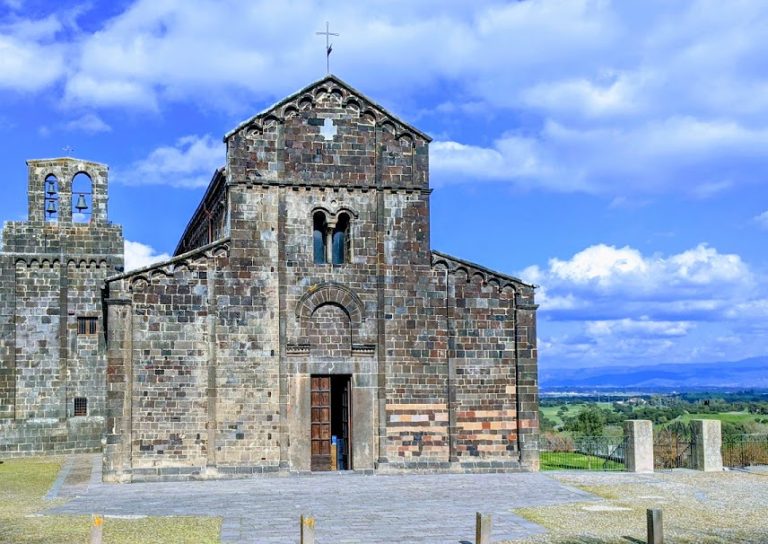
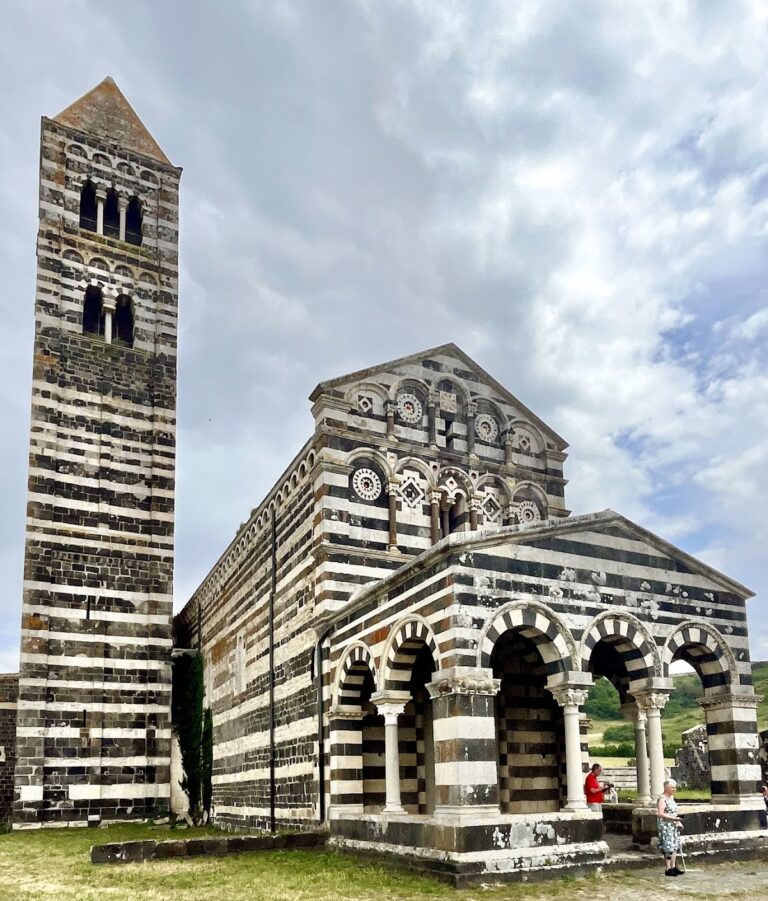
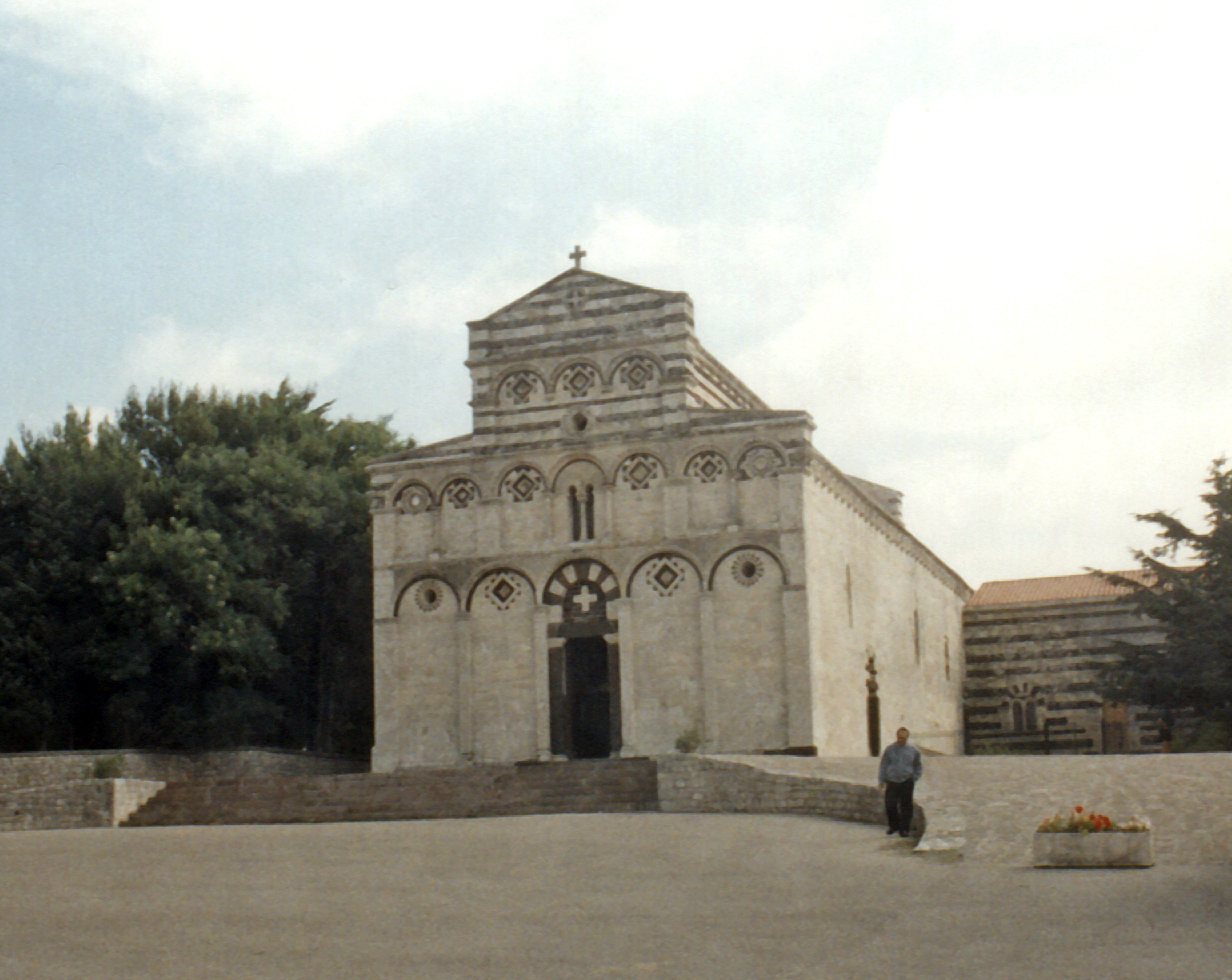
San Pietro di Sorres is a Roman Catholic church in Italy, located at Borutta in Sardinia, and a medieval cathedral built in the Pisan Romanesque style between 1171 and 1178, with completion during the first half of the thirteenth century. It served as the cathedral of the Diocese of Sorres until that diocese was incorporated into the Archdiocese of Sassari in 1505.
Early settlement and the medieval bishopric
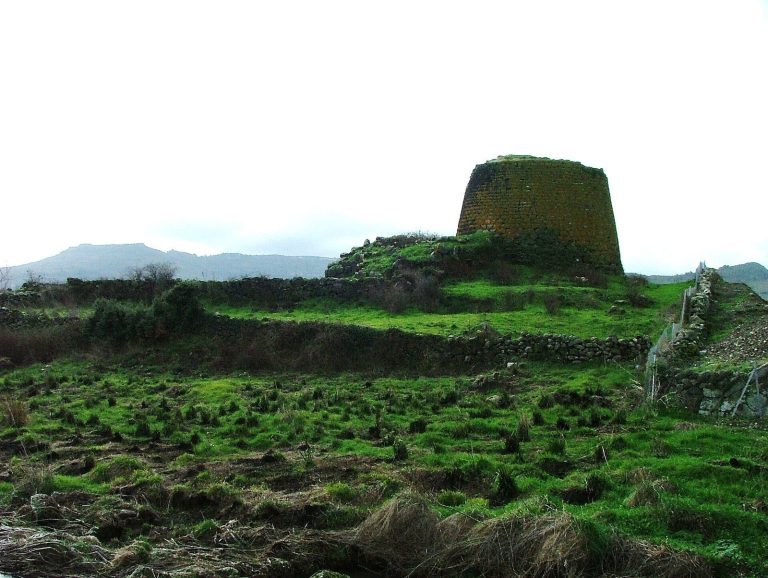
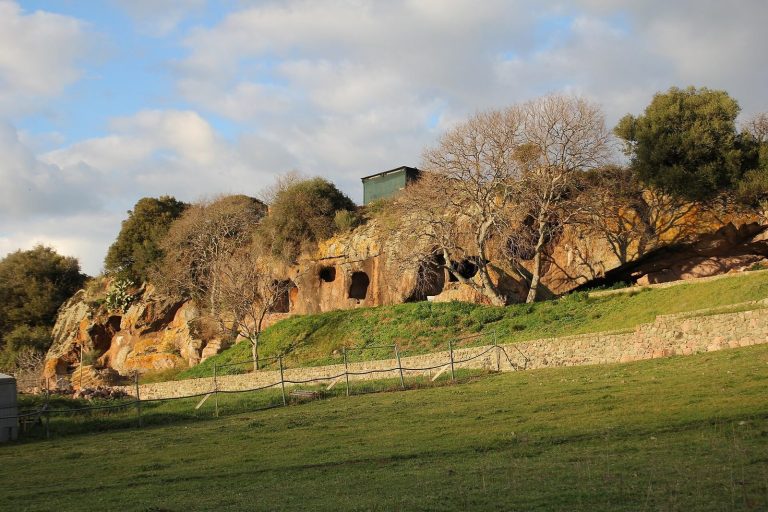
The hill had been inhabited since at least the Neolithic period. Archaeological discoveries also show Punic or Carthaginian and Roman presence in the area. When construction began, the territory belonged to the Judicate of Torres, one of medieval Sardinia’s autonomous kingdoms, ruled at the time by Barisone II, son of Gonario II.
A settlement called Sorres and a bishopric occupied the hill during the twelfth century. Bishop Goffredo di Meleduno began the cathedral between 1171 and 1178, and the building was completed in the first half of the thirteenth century. The church served as the seat of the bishop, while the nearby canonica provided accommodation associated with the cathedral chapter.
Decline and the end of the diocese
Sorres began to decline in the fourteenth century after Sardinia came under Aragonese rule. The settlement was destroyed, but the cathedral and nearby canonica survived. Its inhabitants moved to neighbouring centres, including Borutta, which became the bishop’s residence.
After the diocese was suppressed in 1505, the cathedral chapter continued to hold services in the church until its members died. The church and adjoining canonica then entered a prolonged period of decay, and several artworks and documents were lost. A series of restorations took place in the late nineteenth century. The church had already been designated a national monument in 1894.
Benedictine revival
In 1947, Father Agostino Lanzani, a monk and engineer, selected San Pietro di Sorres as the site for a Benedictine monastery in Sardinia. Restoration of the old buildings began in 1950 with financial support from Ninetta Bartoli, the mayor of Borutta. The monastic complex became active in 1955, when monks arrived from the Abbey of Saint John the Evangelist in Parma.
The former cathedral and adjoining monastery have housed a Benedictine community since 1950. The complex became an abbey in 1974, while the monastery has contained an important book-restoration laboratory since 1970. In spring 2011, a cathedral museum opened in the former monastic guesthouse. Its displays cover the history of Sorres from its first Christianization to the present and include a section on the Diocese of Sorres.
Remains
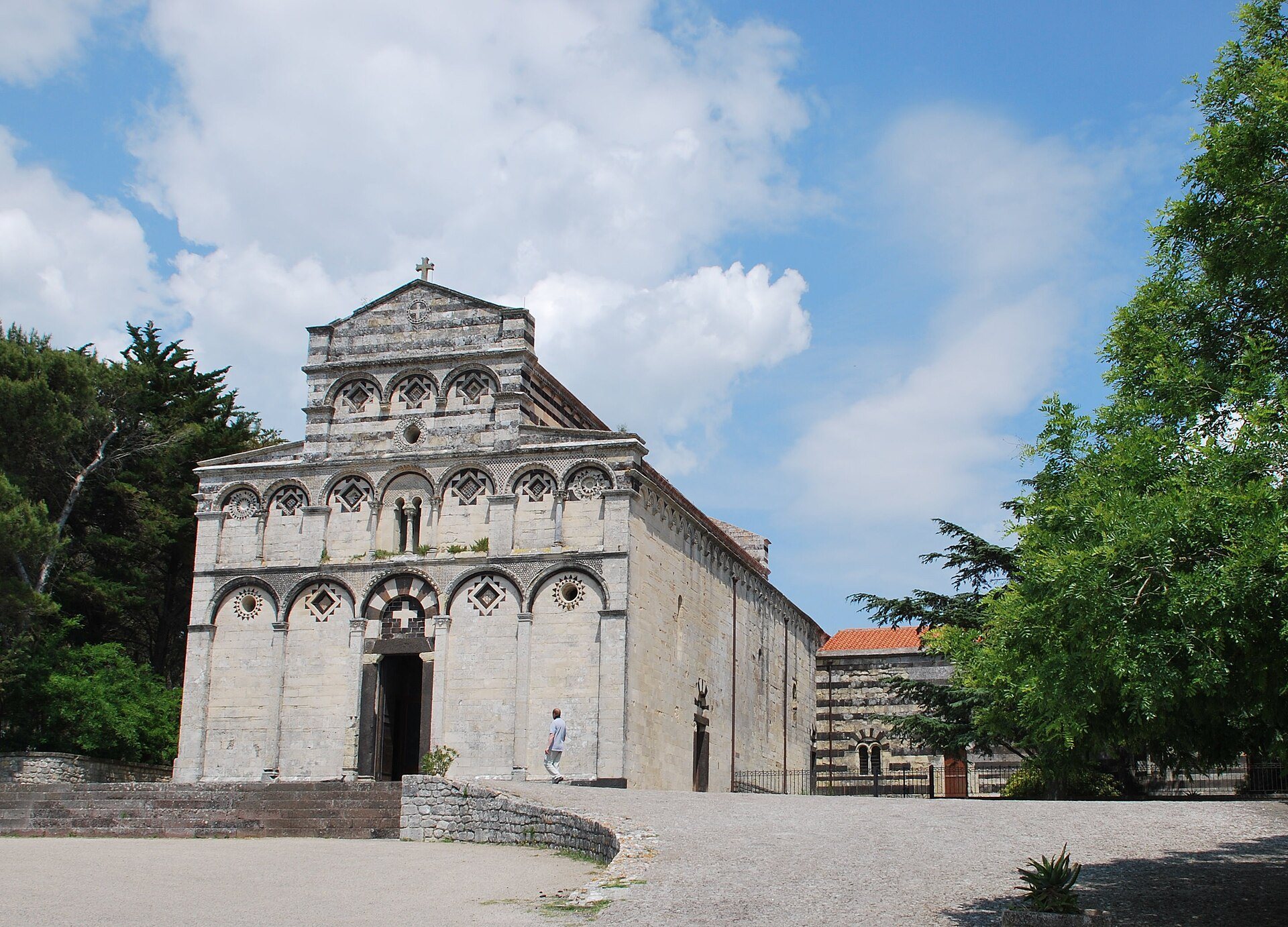
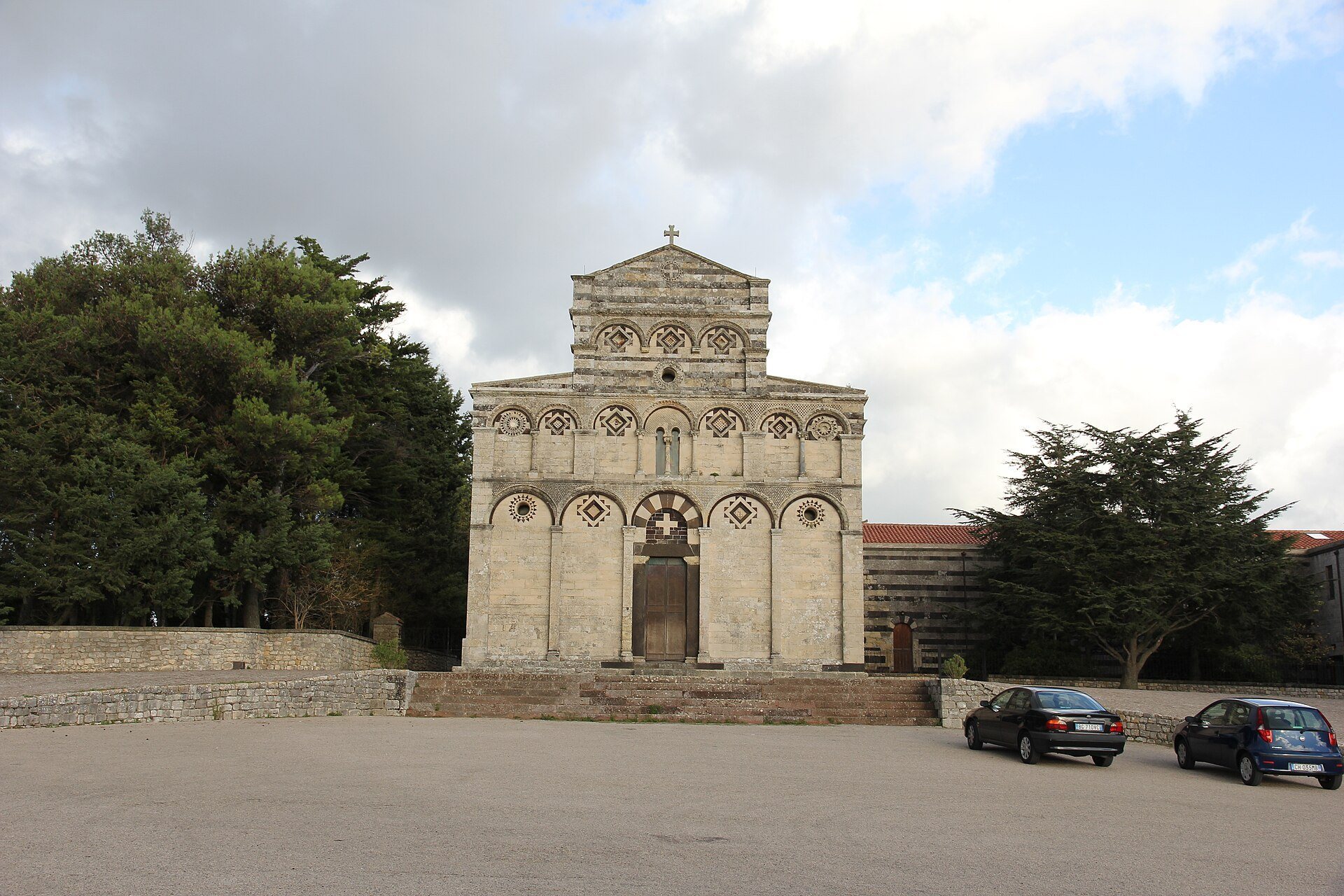
The church and monastery stand on a plateau at the summit of a volcanic hill about 540 metres above sea level, reached across a large square. The former cathedral is built in the Pisan Romanesque tradition, whose bichromatic masonry and arcaded decoration are closely associated with Pisa and its cultural sphere. Alternating bands of light white-golden sandstone and dark basalt give the exterior its strong two-colour appearance.
The cathedral exterior
The west façade is arranged in four horizontal levels and reflects the division of the interior into a central nave and two side aisles. The portal occupies the lowest level. Above it, the second and third levels contain arcades and blind loggias decorated with diamond motifs. A double window and an oculus bring light to the façade area. The first step of the portal carries the inscription “Mariane maistro,” probably identifying the master mason who directed the work. Lombard bands, narrow vertical strips joined by small arches, decorate the side walls and semicircular apse.
The interior and furnishings
Inside, eight cruciform piers divide the central nave from the two side aisles. Alternating black-and-white stone bands cover the piers, which support broad round arches. Cross vaults cover the aisles, and windows in the side walls provide light. The north aisle contains a fifteenth-century statue of the Madonna and Child, venerated as Our Lady of Sorres.
A Gothic marble pulpit stands beside the third pier on the right. Its date is uncertain, but it probably belongs to the fourteenth century. The presbytery rises several steps above the nave and contains the high altar and a wooden choir made for the monks in 1967. In the semicircular apse, a niche marks the former position of the bishop’s cathedra, the official chair of the bishop.
Monastery and chapter house
The neo-Romanesque monastery beside the church incorporates the few surviving rooms of the earlier buildings that once surrounded the cathedral. The chapter house contains fifteen lithographs showing the Stations of the Cross, made by the Italian painter and sculptor Aligi Sassu.
Museum collections
The museum occupies the former Benedictine guesthouse and extends across two floors. Its collections include religious artworks from different periods, a substantial numismatic collection, and architectural artefacts from the former episcopal palace and from the cathedral’s late-nineteenth-century restoration. An archaeological section concerning the prehistoric Grotta Ulari, the protohistoric Nuraghe San Pietro, and the Roman period was being prepared.