San Pietro di Castello: Venice’s Former Patriarchal Cathedral
Site at a Glance
- Country
- Italy
- Primary era
- Early Modern
- Eras represented
- Classical, Medieval, Early Modern, Modern
- Civilizations
- Byzantine, Roman, Venetian
- Site type
- Religious
- Remains
- Cathedral
On this page23 sections
History
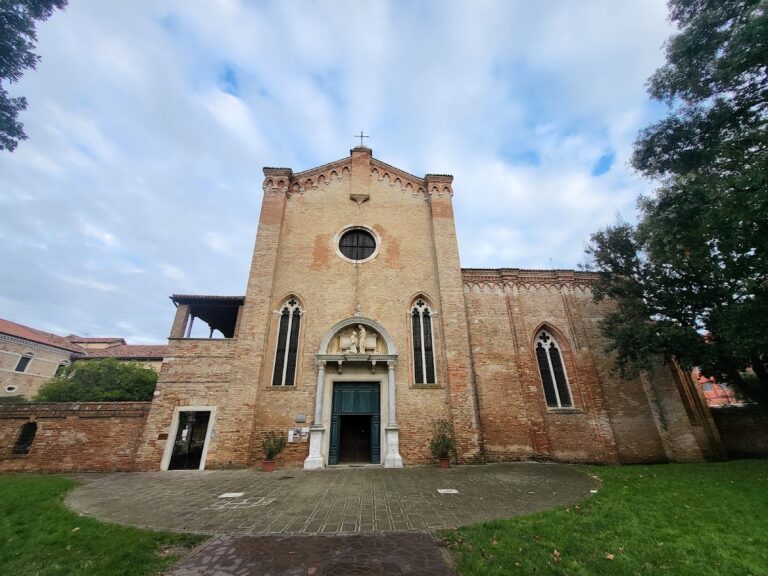
San Pietro di Castello is a church in Venice, Italy. Its earliest church is traditionally dated to 775, while archaeological dating places construction around 822–823 and completion around 831–832. The building developed over many centuries, including a Renaissance phase associated with Andrea Palladio. From 1451 to 1807, it served as Venice’s patriarchal cathedral.
Early foundations and the lagoon setting
The island, formerly called Olivolo, had a strategic role long before the present church. In 132 BC, the Roman consul Popillius established a camp, port, and ship dock there to protect the Via Popilia, a road linking Ravenna and Aquileia. A later Eastern Roman fortified settlement probably controlled approaches from Sant’Erasmo and San Nicolò di Lido. Lagoon channels and tidal currents connected Olivolo by boat with Altinum, while grain from Istria could reach it without crossing open sea.
Tradition credits Magnus, bishop of Oderzo, with founding an early church as one of eight he established. In its foundation legend, the apostle Peter tells Magnus to build where an ox and a sheep graze together. Other traditions connect the earliest church with Saints Sergius and Bacchus. The bishopric of Olivolo was established between 774 and 776, and Obelarius is identified as its first bishop. The church is dated to 775, but archaeological dating places its construction around 822–823, with completion around 831–832. Orso, bishop of Olivolo from 822, said that he laid its foundations. In 841, Bishop Orso Particiaco rebuilt or refounded the church and dedicated it to Peter.
In 836, Doge Giovanni I Particiaco, Venice’s chief elected ruler, was captured by men led by the Mastalici family after leaving the church. They forced him to become a monk and sent him to Grado, where he died. The church’s development also accompanied the transfer of the ducal seat from Metamaucum to Rialto.
Medieval church and cathedral
The first bishop of Castello took office in 1091. A fire in 1120 destroyed the church and nearby houses. The replacement was larger and had an adjoining baptistery, a place used for baptism.
In 1451, after the Patriarchate of Grado was suppressed and the Patriarchate of Venice established, Pope Nicholas V’s bull made San Pietro the city’s patriarchal cathedral. A patriarchate is a major church jurisdiction led by a patriarch. San Pietro held cathedral status until 1807, although its distance from Venice’s political and economic centre limited its prominence in comparison with San Marco.
Renaissance and Baroque changes
From 1508 to 1524, Patriarch Antonio Contarini sponsored work on the floors, ceiling, and vaults. The smaller chapels were rebuilt between 1512 and 1526, alongside renewed furnishings and decoration. In 1558, Patriarch Vincenzo Diedo commissioned Andrea Palladio to redesign the façade and interior. It was Palladio’s first commission in Venice, but Diedo’s death in 1559 halted the project. In the late 16th century, Francesco Smeraldi completed a more restrained adaptation of Palladio’s façade design, probably because funds were limited. Work inside resumed under Patriarch Lorenzo Priuli, with Gerolamo Grapiglia overseeing it from 1619 during the patriarchate of Giovanni Tiepolo.
From 1630 until the Venetian Republic fell in 1797, an annual pilgrimage took place at the basilica on 8 January. It commemorated Venice’s deliverance from plague.
Changes after 1807
In 1807, on Napoleon’s order, the patriarchal seat and cathedral status moved to San Marco. San Pietro’s cathedral chapter, the body of clergy attached to a cathedral, joined San Marco’s. The adjacent monastery became a powder magazine on the order of Eugène de Beauharnais, then viceroy of Italy, and the church fell into neglect. In 1821, Pope Pius VII confirmed San Marco’s cathedral status and gave San Pietro the honorific of a minor basilica, which is distinct from cathedral status. San Pietro’s parish priest received the title of archpriest, a senior priest.
Austrian incendiary bombs damaged the church during the First World War. Major restoration work followed from the 1970s. The church is included in Venice’s UNESCO World Heritage listing.
Remains
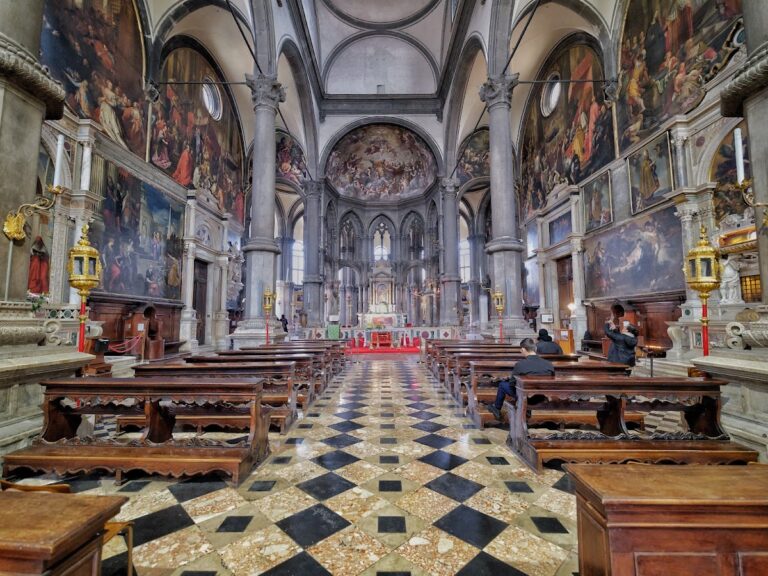
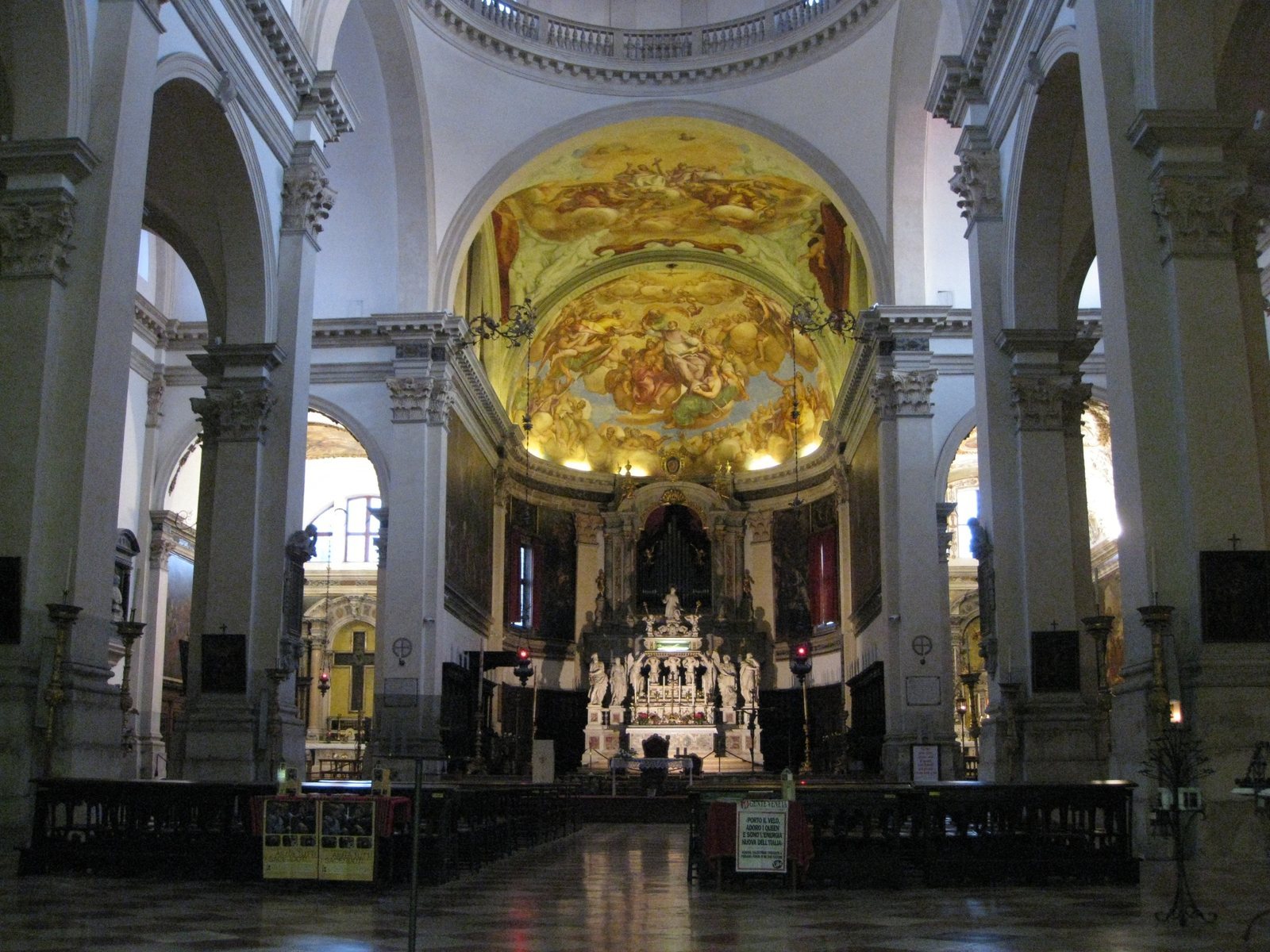
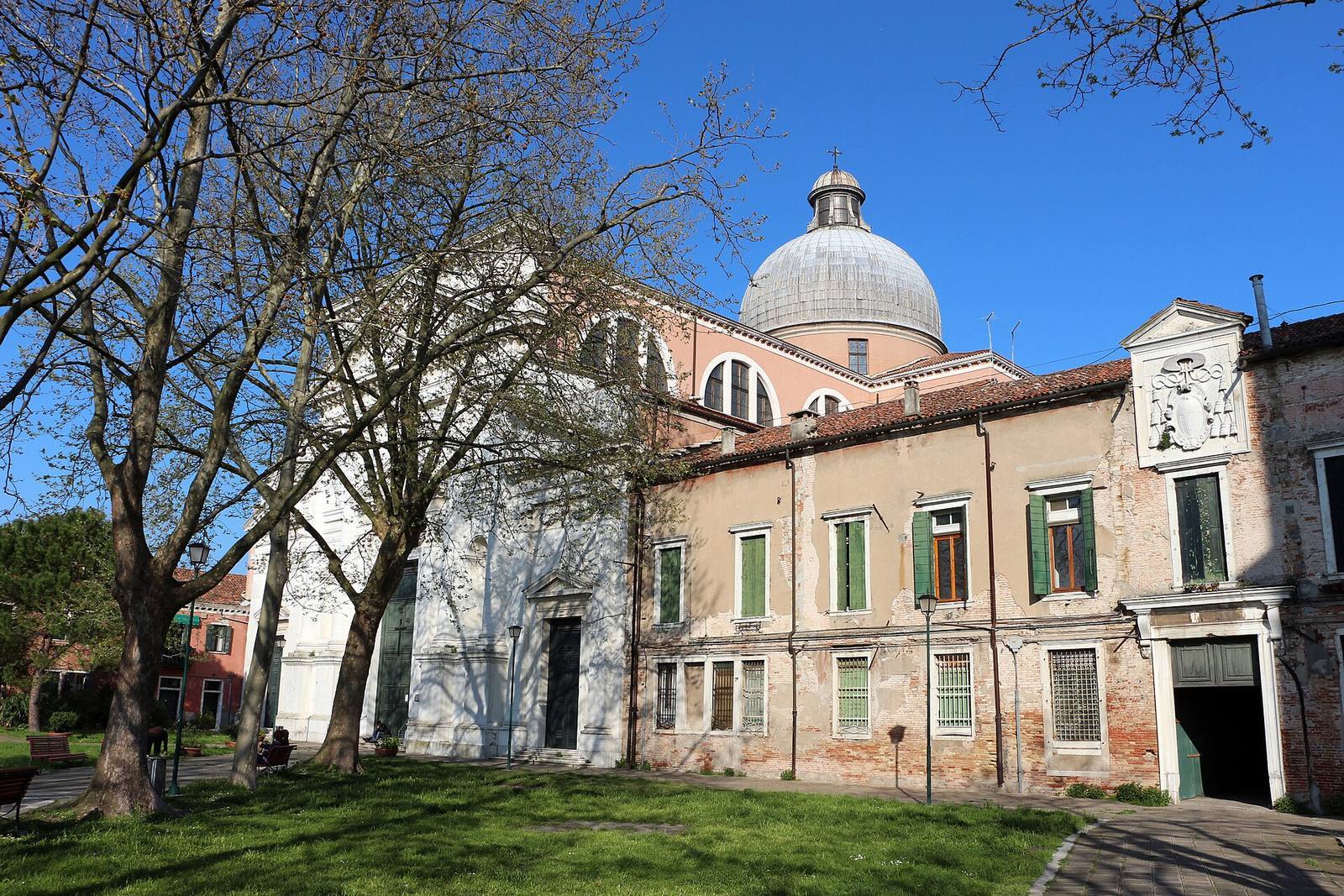
The church is about 75 metres long and 35 metres wide, and its central nave, or main hall, is about 16 metres across. Its plan forms a cross, with two side aisles running alongside the nave and three arches dividing each aisle. A crossing arm meets the nave before a deep presbytery, the area around the high altar used by clergy, which is flanked by two chapels. A large dome covers the crossing. Large semicircular-headed windows light the interior. The west-northwest-facing front has a central entrance and a doorway beside it for each side aisle.
Archaeology and earlier churches
Excavations and settlement remains
Excavations behind the cathedral ran from 1986 to 1991–92. Michele Tombolani initially directed the work, and Stefano Tuzzato took over in 1989. The excavated area grew from 18 to 115 square metres. Further investigations in 2000–02 examined structures from the Byzantine period, meaning the era and culture of the Eastern Roman Empire. Finds include shoreline supports woven from plant material, dating to the 5th and 6th centuries and especially the 7th; a road of wooden planks; and wooden houses on stone foundations made from upright slabs. Drainage works were also uncovered near the excavation area.
Island occupation and objects
The island was continuously inhabited from about 600, an uncommon pattern in the northern lagoon. Residents raised and extended settlement levels to counter rising sea levels. Roman pottery, including terra sigillata (fine Roman tableware with a smooth red surface) from Africa and Gaul, dates from the 1st century BC to the 1st century AD. It was reused as fill, alongside medieval objects. Coins of the Eastern Roman emperors Heraclius I and Constans II, as well as three lead seals, came from a house. The island appears to have been abandoned in the 8th century.
Early churches
Very little survives from the earliest church, though a mosaic fragment is kept in the Lando Chapel. Excavations revealed a Byzantine church dedicated to Saints Sergius and Bacchus. The larger church built after the 1120 fire had three aisles, a front divided into three parts, and rounded apses at its ends. Its associated baptistery was dedicated to John the Baptist.
The church and its furnishings
Facade
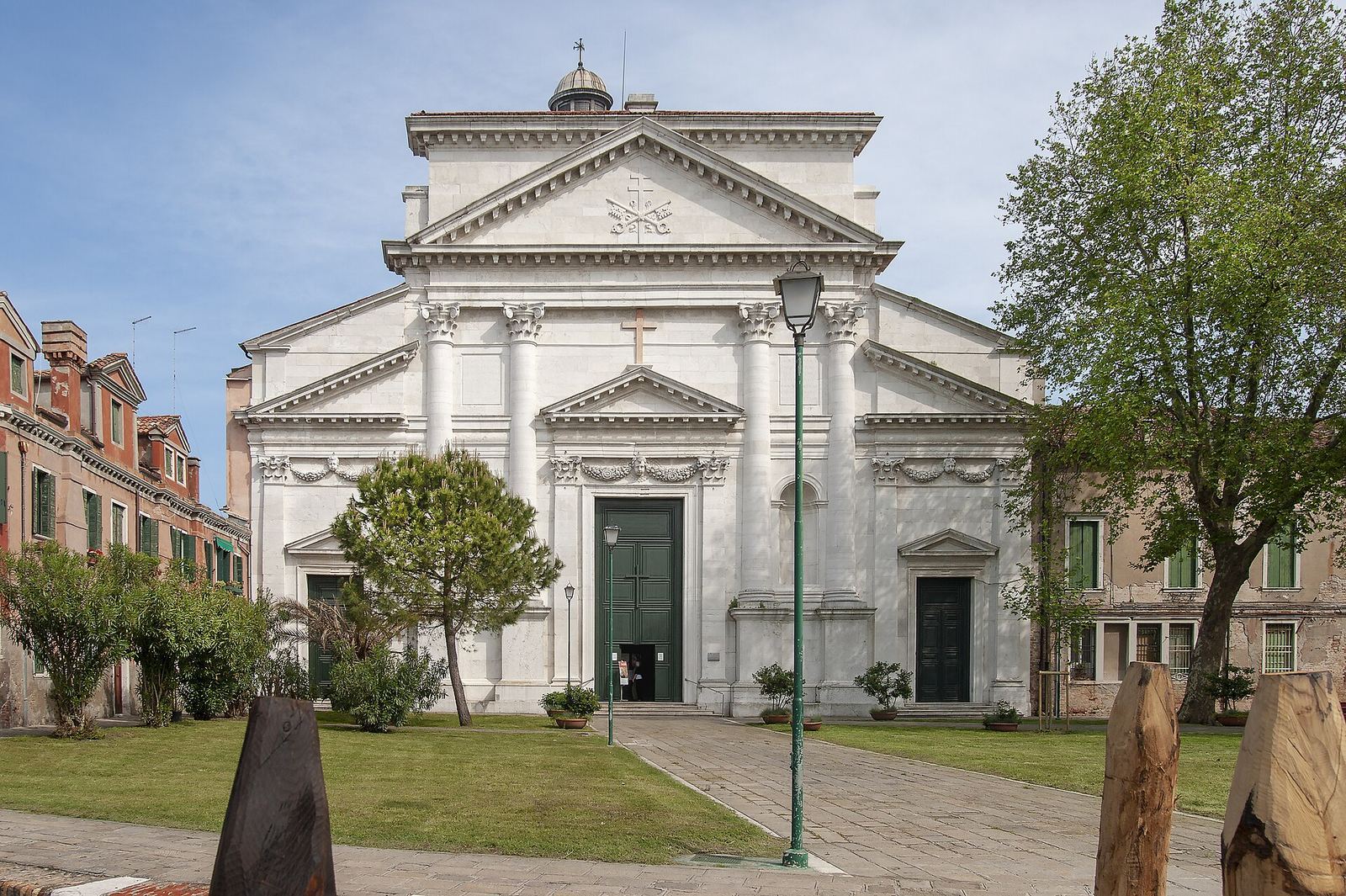
The façade adapts Palladian principles in a simpler composition than Palladio’s other Venetian designs. Its central section rises above the sides and is framed by four half-columns with Composite capitals, combining Ionic and Corinthian forms. A larger column arrangement corresponds to the central hall and a smaller one to the aisles. The entrance sits within this composition, below a pediment flanked by interrupted side pediments. A 19th-century shallow relief of Charity by the sculptor Marsili decorates the front.
Dome
The dome rises from a circular drum, the supporting wall beneath it, pierced by rectangular windows. It was rebuilt after a fire in 1825. On the night of 10 August 1916, a bomb struck the dome, causing it to collapse and destroying its lantern. The dome was rebuilt again after that collapse.
Bell tower
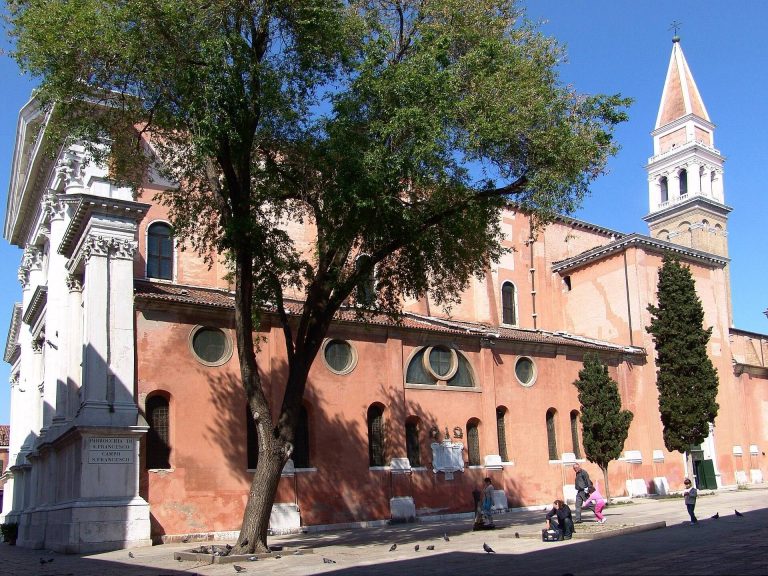
The freestanding bell tower, about 70 metres tall, is built of exposed Istrian stone and leans markedly. Work on its rebuilding began in 1463. After lightning damage, Mauro Codussi reconstructed it in 1482. It has been described as Venice’s second-tallest freestanding bell tower. Its original wooden summit cupola, covered with lead plates and topped by a small lantern, was rebuilt in 1670 and destroyed by lightning on 17 October 1822. The five bells use hanging clappers because of the tower’s lean. The De Poli brothers cast two large bells in 1870, and Domenico Dalla Venezia made the three smaller bells in 1825. Their notes are D3 slightly flat, E-flat3 slightly sharp, F3, G3 slightly flat, and A-flat3.
Main altar
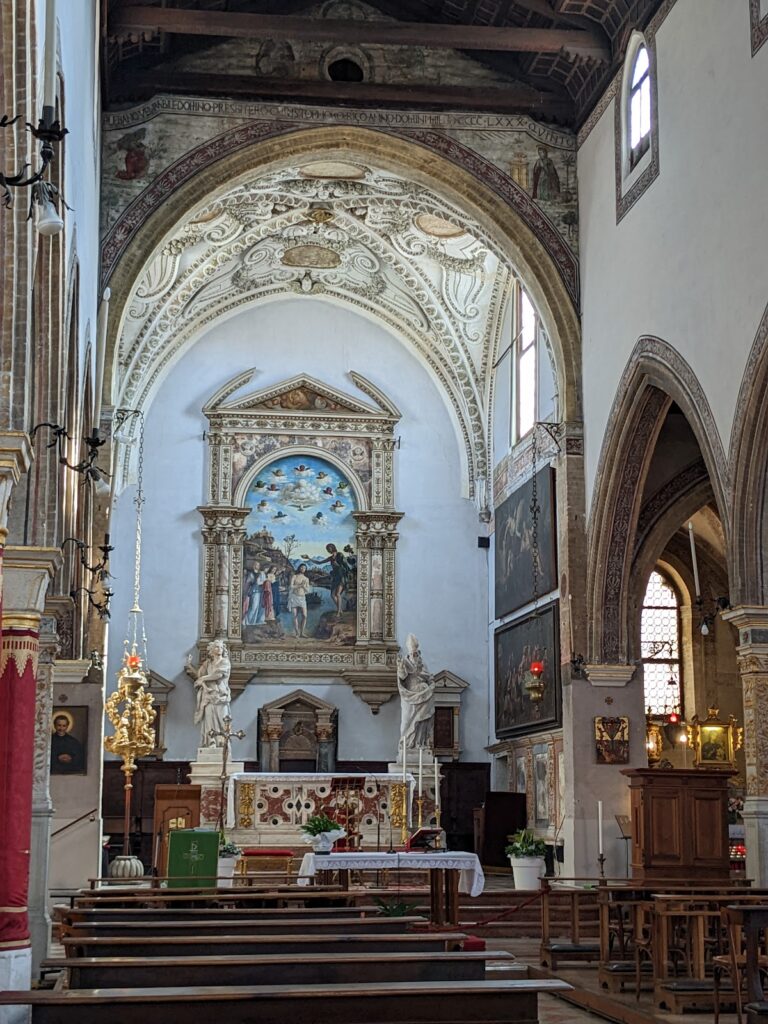
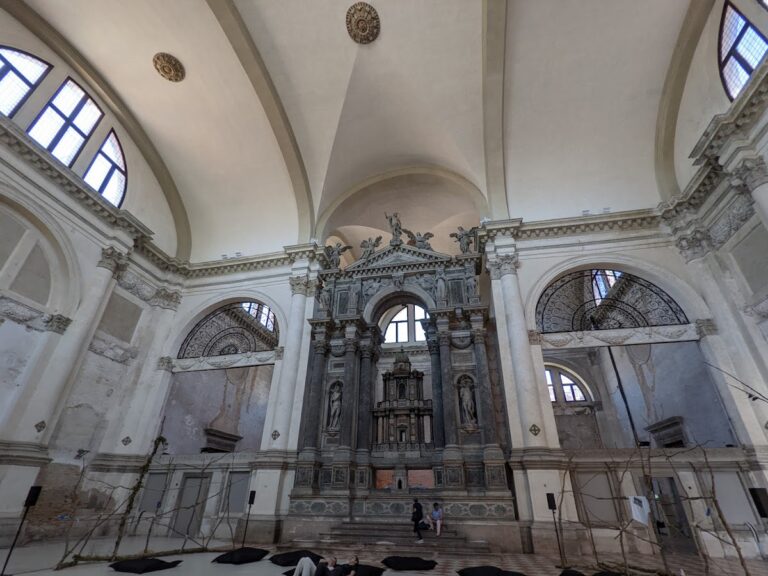
The main altar dates to 1646 and holds the remains of Lorenzo Giustiniani, Venice’s first patriarch. Clemente Molli made the altar and some of its statues to designs by Baldassare Longhena. Other sculptures are attributed to Giusto Le Court, Francesco Cavrioli, and Bernardo Falcone.
Vendramin Chapel
The Vendramin Chapel in the left aisle is dedicated to Our Lady of Mount Carmel, a title of the Virgin Mary associated with the Carmelite tradition. Designed by Longhena, it contains Luca Giordano’s 1650 altarpiece of the Madonna and Child with souls in purgatory, a state of purification after death. Bas-reliefs, or shallow raised sculptures, by Michele Ungaro date to 1675.
Lando Chapel
The Lando Chapel, also in the left aisle, contains a mosaic altarpiece made by Arminio Zuccato around 1570, possibly from a design by Jacopo Tintoretto. A bust of Lorenzo Giustiniani by Antonio Rizzo stands there, as does the fragment of mosaic from the earlier church.
Paintings and sculpture
The church’s artworks include Paolo Veronese’s Saints John the Evangelist, Peter and Paul, from about 1585; Giovanni Maria Morlaiter’s 18th-century Immaculate Conception, depicting the Catholic belief that Mary was conceived without original sin; and Padovanino’s Martyrdom of Saint John the Evangelist. Pietro Malombra and Antonio Vassilacchi’s Supper at Emmaus hangs on the left wall beside an entrance portal. Jacopo Beltrame’s 16th-century Supper in the House of Simon is on the right, flanked by Orazio Marinali’s sculptures of Faith and Meditation and a crucifix by Jacopo Strada.
Pietro Ricchi’s Adoration of the Magi, dated 1658, is in the chapel to the right of the main altar. Marco Basaiti’s 16th-century Saint Peter Enthroned with Four Saints is also among the church’s works. His Saint George, the Princess and the Dragon has been on deposit at the Gallerie dell’Accademia since 1985.
Chair of Saint Peter
Tradition says that the so-called Chair of Saint Peter belonged to Peter when he was bishop of Antioch and that Byzantine emperor Michael III gave it to Doge Pietro Tradonico. Its backrest is made from a medieval Islamic funerary marker decorated with Arabic motifs and Kufic, an angular style of Arabic script. The inscriptions contain verses from chapters III and XXIII of the Quran. The chair’s front may be an older bishop’s seat.
Organ
Pietro Nachini built the pipe organ, opus 276, in 1754; Pietro Bazzani restored it in 1898. It stands behind the main altar on the choir loft. Its mechanism is entirely mechanical, with one 57-note keyboard played by hand and an 18-note foot keyboard, permanently linked to it. Both have a shortened set of lowest notes. The wooden Baroque case is painted to resemble marble and carries gilded relief decoration. Its display of 25 principal pipes has shield-shaped openings; the pipes form a single horizontal peaked group with wings at the sides.
Associated buildings
Baptistery
The former baptistery stood between the bell tower and the bishop’s palace. Dedicated to John the Baptist, it had disappeared by 1810.
Patriarchal palace
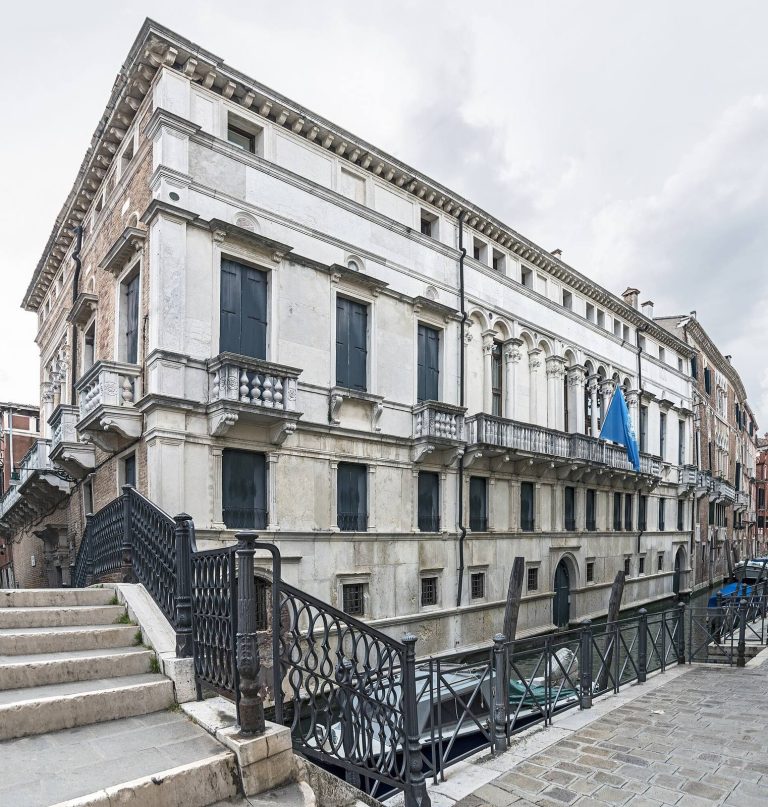
The former patriarchal palace lies south of the church. It became barracks in the 19th century and is now in a dilapidated condition.