San Michele: A Baroque Church in Alghero, Italy
Site at a Glance
- Popularity
- Medium
- Country
- Italy
- Primary era
- Early Modern
- Eras represented
- Early Modern, Modern
- Civilizations
- Crown of Aragon, Italian, Spanish
- Site type
- Religious
- Remains
- Church
On this page13 sections
History
San Michele is a Roman Catholic church in Alghero, Italy, dedicated to Archangel Michael, traditionally a heavenly warrior and the city’s patron saint. Its construction is dated to 1612–1675, and it is an important example of Baroque architecture in Sardinia. The church is a former Jesuit foundation.
Early references and Jesuit presence
An early, indirect indication of a place of worship dedicated to Michael appears in a parchment dated 19 February 1364. The document records an inspection of Alghero’s fortifications and refers to a Tower of St Michael.
The Jesuits, members of the Catholic Society of Jesus, arrived in Alghero in 1584 and took up residence in a church donated by Bishop Andrea Bacallar. The order was founded by Ignatius of Loyola. An attached college followed in 1588.
Baroque rebuilding and later alteration
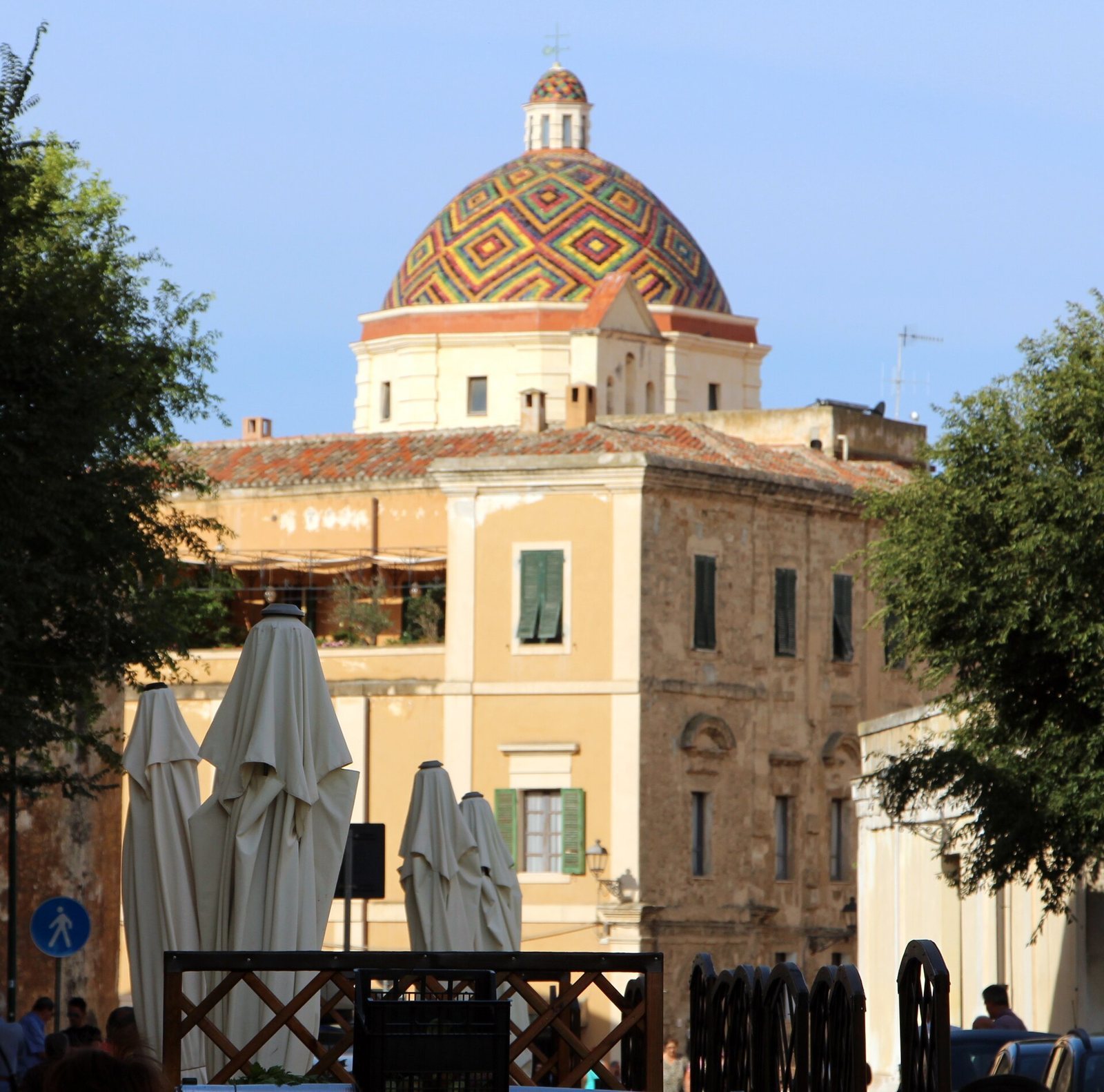
The church was reconstructed in its present form between 1661 and 1675, in the Baroque style. Around 1950, its dome received an exterior covering of multicolored tiles, a later change to the building’s fabric.
Remains
Exterior and dome
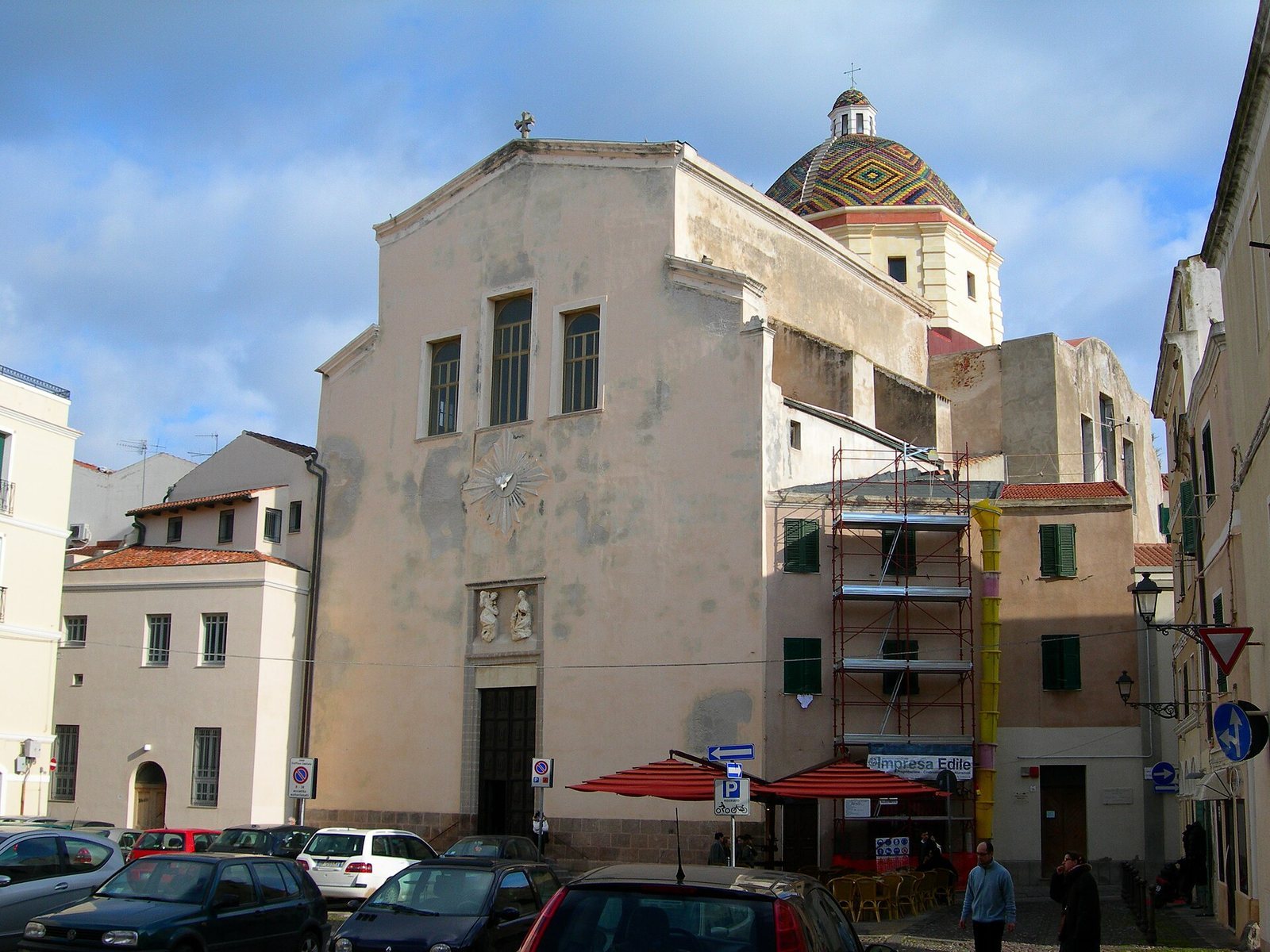
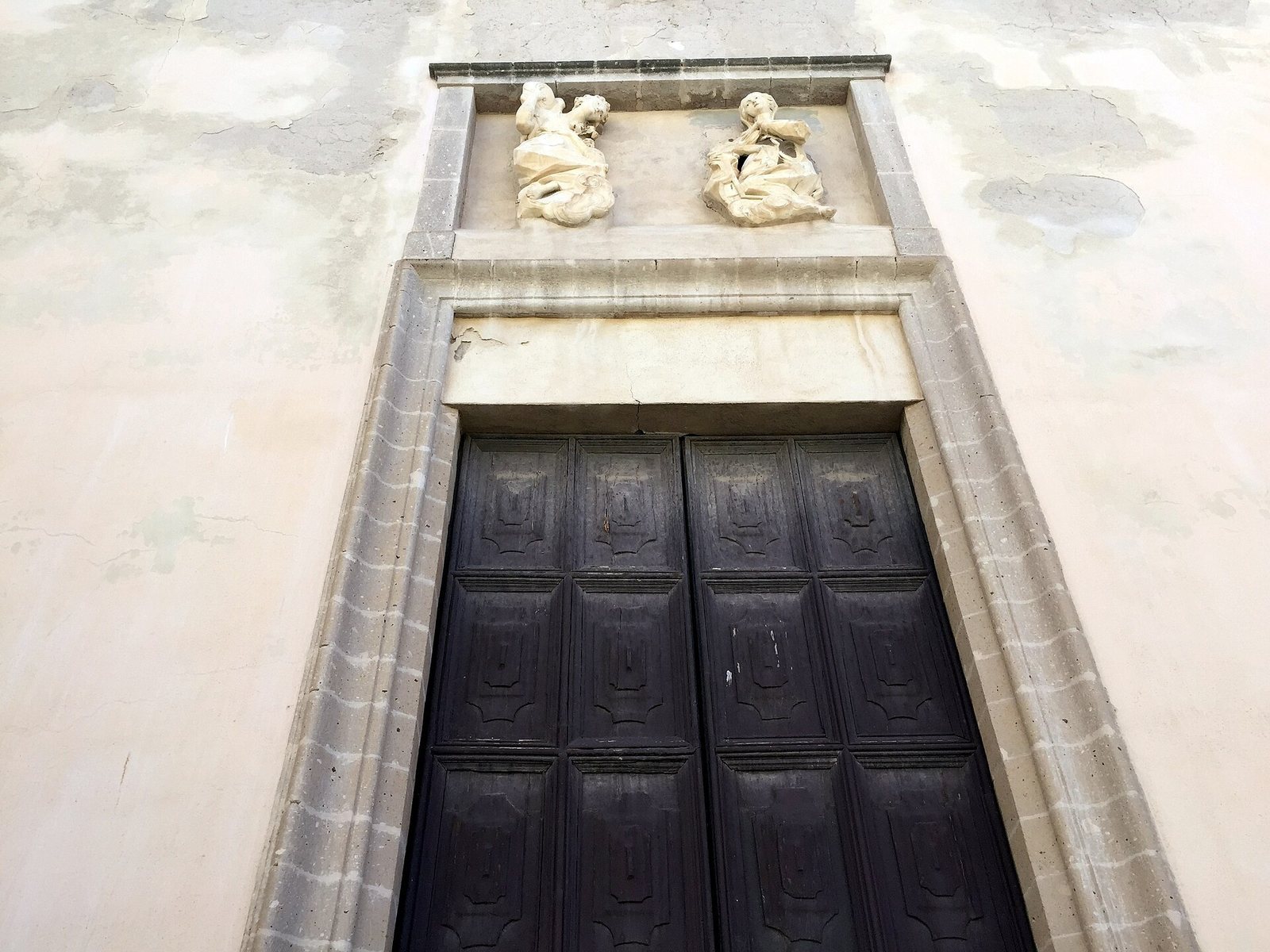
San Michele stands in Alghero’s historic center on Via Carlo Alberto, opposite Piazza Ginnasio, also known as Piazza Sant Miquel. Its relatively plain façade has a base of squared trachyte blocks. Above the wooden entrance, a trachyte frame holds two marble figures depicting the Annunciation, the announcement to Mary that she would bear Jesus. A relief of the Holy Spirit, a central person of Christian belief, appears higher on the façade. The dome, a symbol of Alghero, has an eight-sided plan and rises on a tall drum (the raised structure supporting a dome). Curved pendentives (supports carrying a dome over a differently shaped space) carry it, and a lantern (a structure at the top that can admit light) crowns it. Its exterior is faced with multicolored tiles.
Interior and main altar
Nave
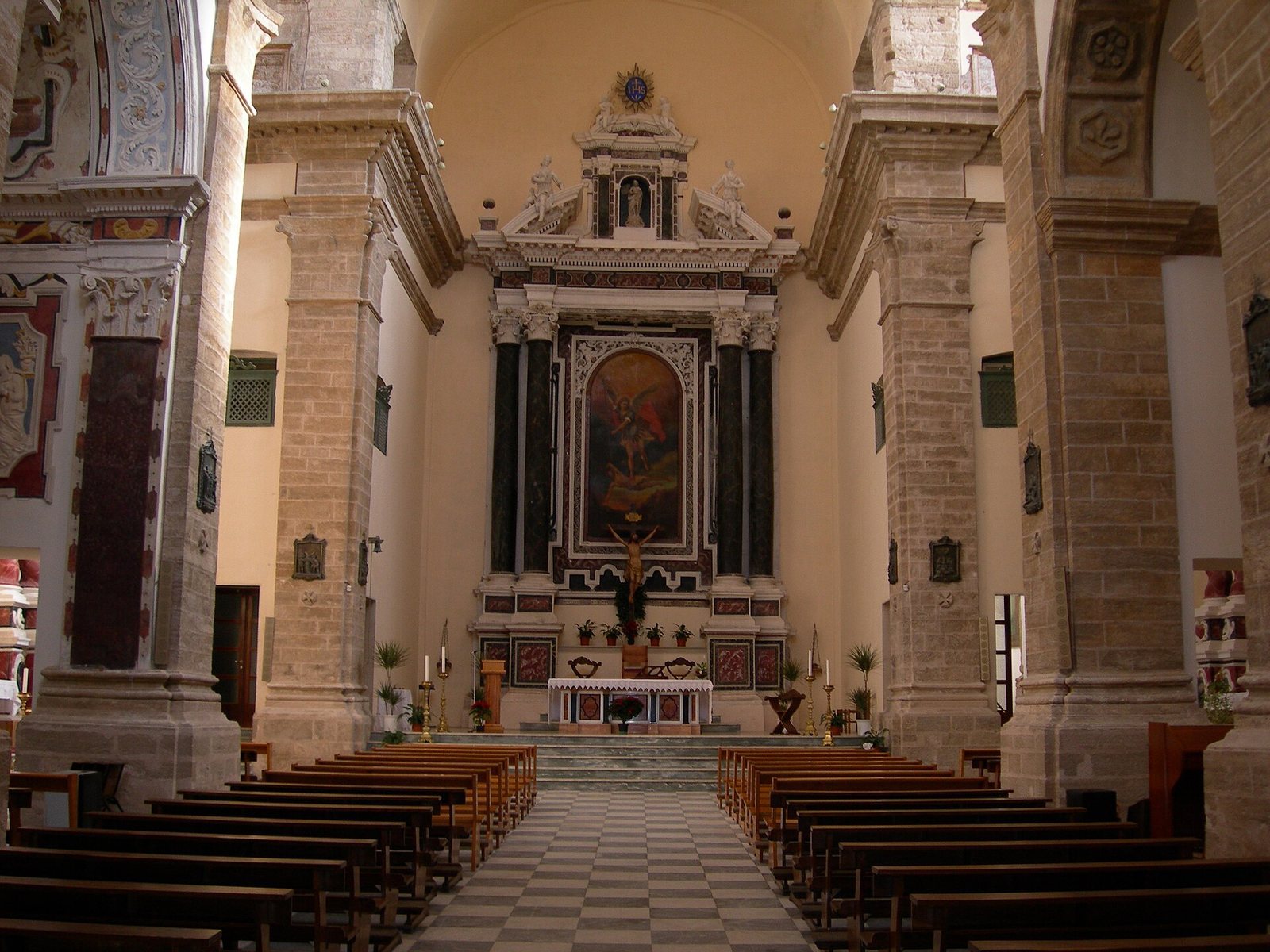
The church has a single nave, or main body, covered by a barrel vault (a continuous arched ceiling). Transverse arches rest on Corinthian columns, whose capitals are decorated with leaf forms. Six deep chapels open off the nave, with three on each side.
Main altar and choir loft
The main altarpiece includes an image of Archangel Michael. A large wooden statue shows Michael defeating Satan, the adversary associated with evil, who is chained beneath him. Another image, once placed in a small shrine frame at the center of the main altar, is now in the Diocesan Museum of Sacred Art. The altar also has an eighteenth-century crucifix made by an unidentified Spanish artist. Above the entrance, a multicolored wooden choir loft bears the monogram IHS at its center, an emblem associated with Jesus’ name and used by the Jesuits.
Chapels and transept
The transept, the crosswise section of the church, has a chapel in each arm. Other chapels open from the nave.
Chapel of Our Lady of Valverde
This chapel contains a large painting dated 1652, with a niche beneath it holding a small statue of the Virgin of Valverde. A sanctuary dedicated to Our Lady of Valverde lies a few kilometres from Alghero.
Chapel of St Ignatius of Loyola
In the left arm of the transept, this chapel is dedicated to Ignatius of Loyola, founder of the Jesuit order. Its painting portrays him in religious ecstasy, with carefully rendered details and effects of light. The chapel’s monumental altar dates to 1678.
Chapel of St Francis Xavier
The chapel in the right arm of the transept is dedicated to Francis Xavier, an early Jesuit and missionary. Its painting shows him walking and opening his robe at the chest, beneath the inscription Satis, Domine, satis (Enough, Lord, enough). Another painting on a wall depicts the Vision of St Teresa of Avila, a Spanish Carmelite nun and mystic. Two groups of Jesuit saints appear above Teresa, while the words “I saw them with white banners in their hands” surround her head like a halo. A multicolored marble plaque on the chapel’s left wall commemorates Girolamo Ferret, a benefactor of the church and college. Its 1612 inscription reads: “And you, brother, look to yourself, and live as a man who must die. For I was as you are, and you will be as I am.”
Chapel of the Immaculate Madonna
One chapel on the left is dedicated to Mary, the mother of Jesus. It has a barrel-vaulted ceiling, panels showing scenes from Mary’s life, and stucco decoration.