San Michele: A Roman Catholic Parish Church in Roccalanzona, Italy
Site at a Glance
- Popularity
- Very Low
- Country
- Italy
- Primary era
- Early Modern
- Eras represented
- Early Modern, Modern
- Civilizations
- Duchy of Parma and Piacenza, Italian, Kingdom of Sardinia
- Site type
- Religious
- Remains
- Church
On this page12 sections
History
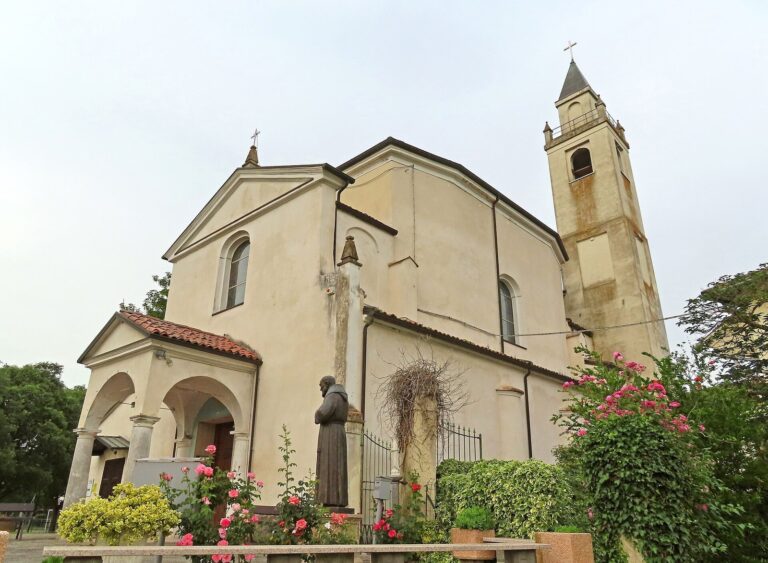
San Michele is a Roman Catholic parish church in Roccalanzona, Italy, dedicated to Saint Michael. The present church was built from 1670 and completed in 1715, succeeding a medieval chapel associated with the nearby castle and fortress.
The medieval chapel
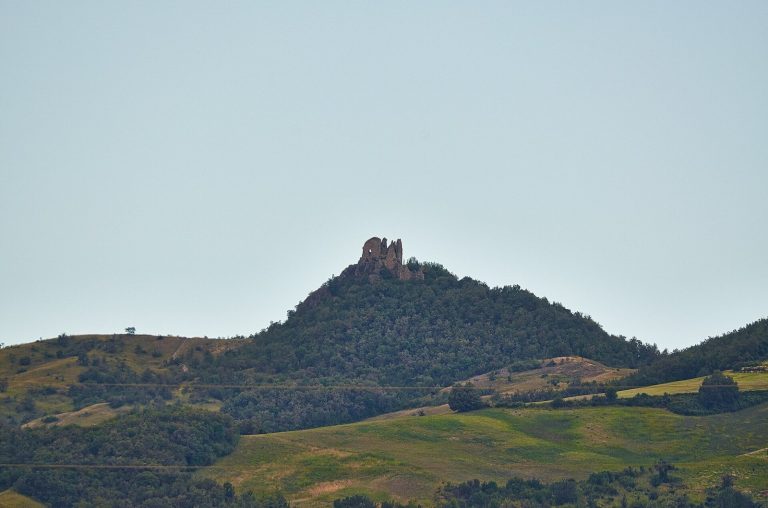
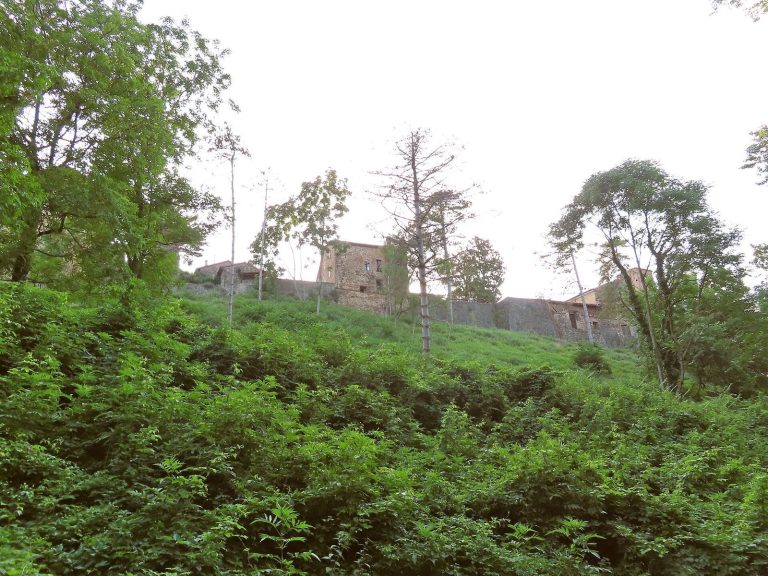
The predecessor chapel stood beside the castle at Rocha Petraluizoni. Its earliest known written mention dates to 1028, in a deed of sale by Ildegarda, wife of Odone, a Lombard nobleman. The deed refers to the chapel and fortress together.
Construction of the present church
The Rossi manor declined in importance during the seventeenth century. In 1666, Scipione I de’ Rossi transferred the fief to Parma’s ducal administration, and the manor was abandoned. Construction of a new church then began in the center of Roccalanzona, below the fortification. Some material from the medieval chapel was reused, and the old building was demolished around the time the new church was completed.
Later changes and parish life
The church was restored in stages during the nineteenth century. Ambrogio Cessi repainted its interior in 1843, and a bell tower and sacristy were built from 1857 to 1860. The floors were renewed in 1912. In 1933, decorator Pietro Ragazzini altered the nave in the Neo-Renaissance style, and the façades were restored in 2017.
San Michele follows the Roman rite and serves as a parish in the Diocese of Parma and its Pedemontana pastoral zone.
Remains
The church has a single nave, with a chapel on either side, an entrance at the west end, and the presbytery at the east. Its plastered exterior and interior combine the building’s carefully arranged façade with vaulted ceilings and decorated altar spaces.
Exterior
Façade
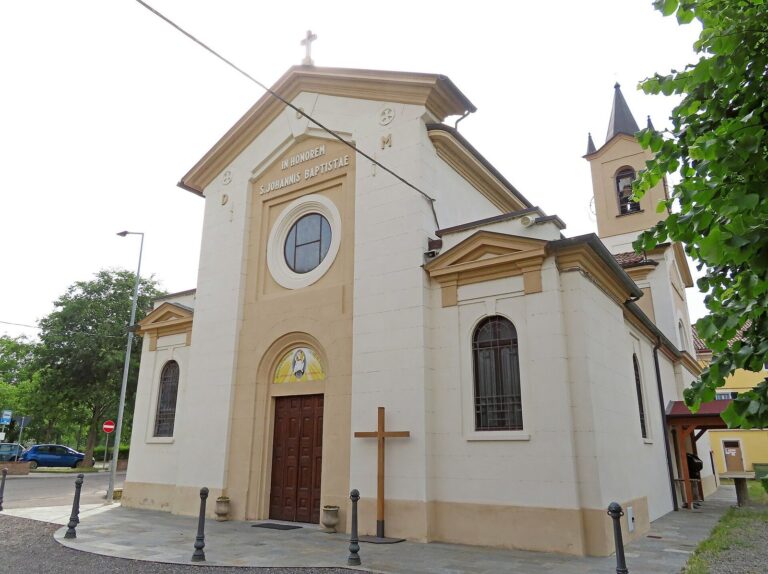
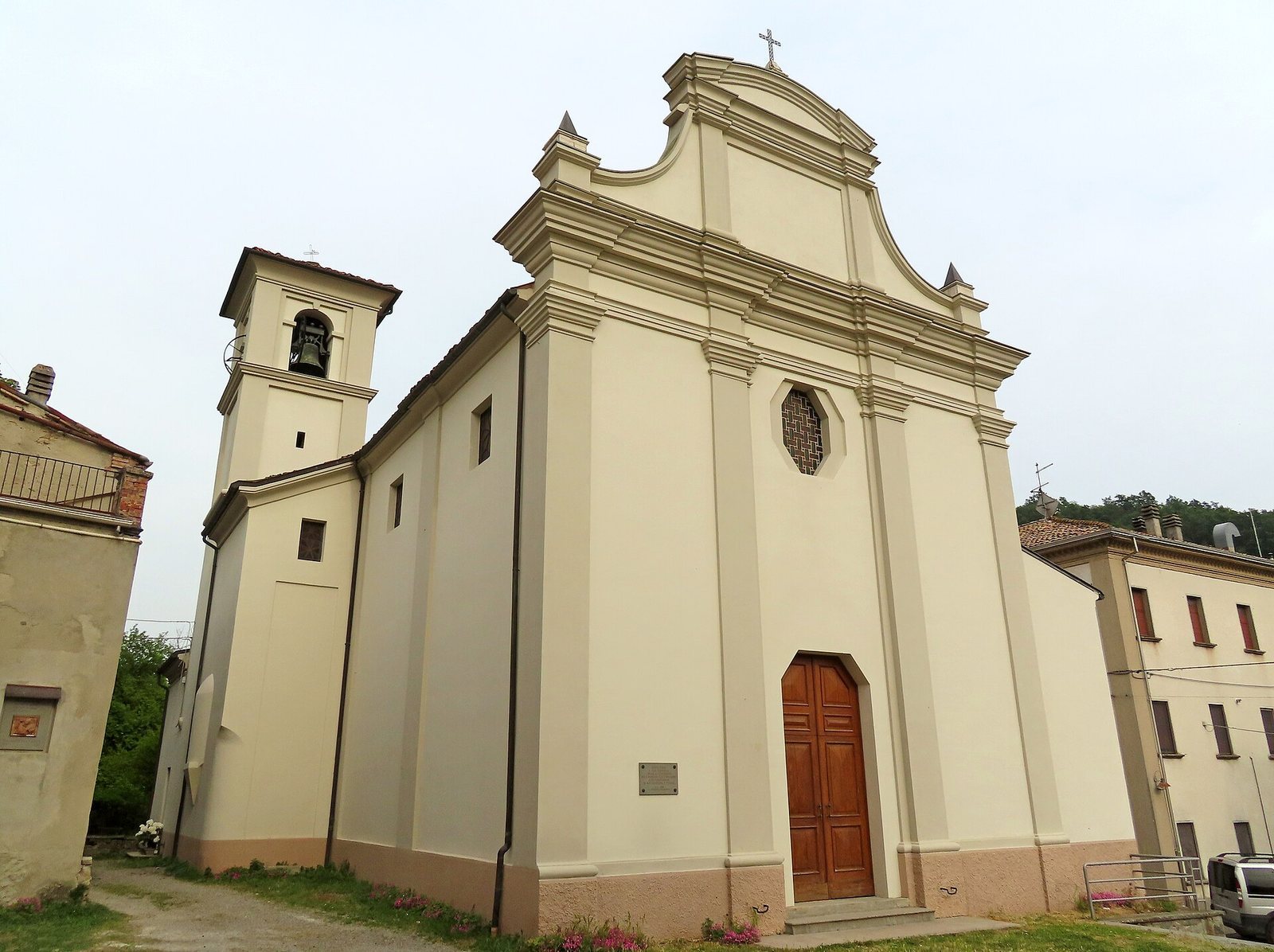
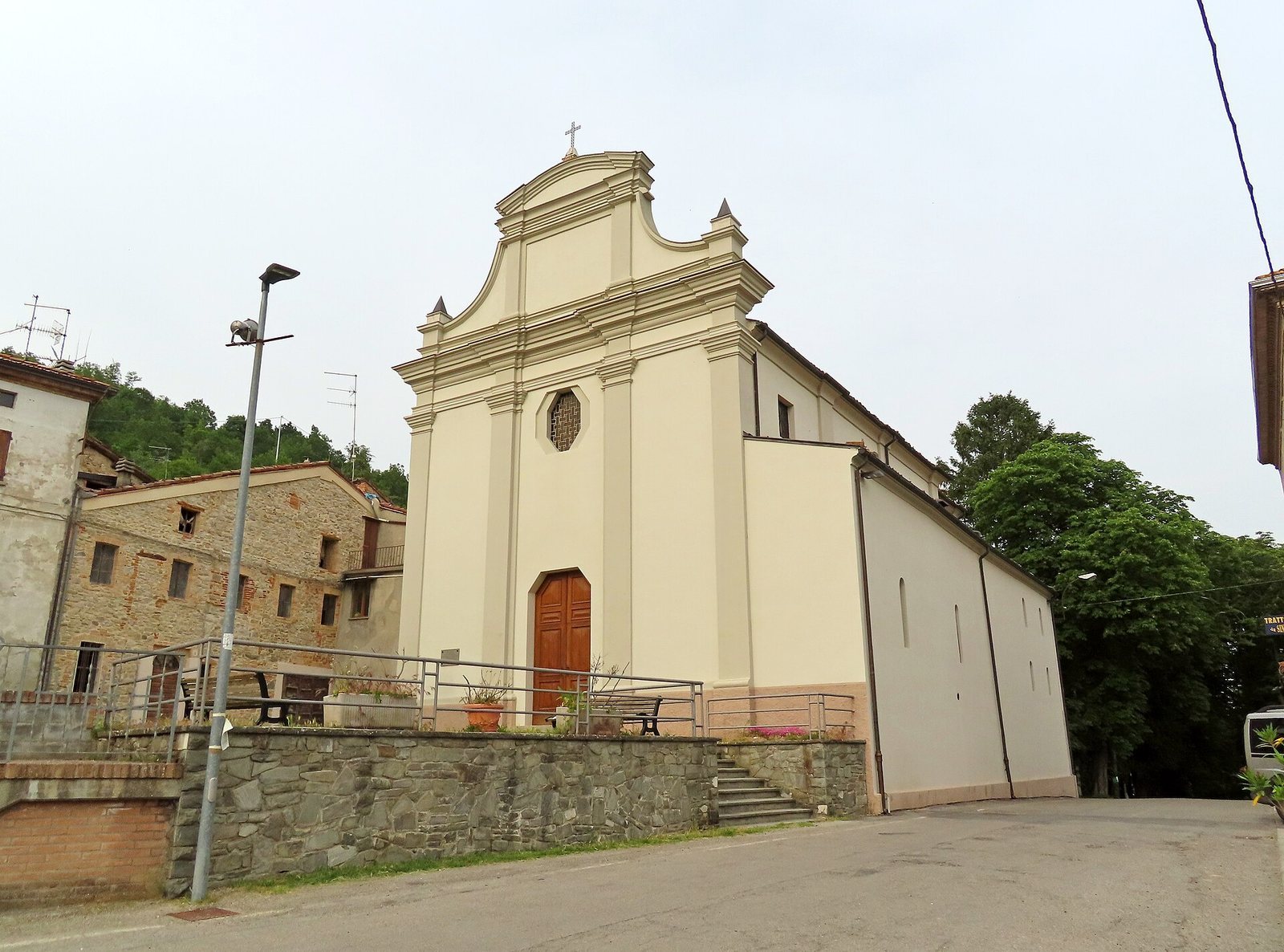
The asymmetrical façade rises in stepped sections above a high base, with a molded cornice dividing its main face into two levels. Four large pilasters, flattened supports attached to the wall, frame the broad entrance. Their Doric capitals, the upper elements of the supports, belong to the Doric architectural order. A mixtilinear arch, formed from both curved and straight lines, crowns the portal. Above it, a rectangular opening with beveled corners sits within a hexagonal frame.
Two more Doric pilasters continue upward from the lower pair and support a circular pediment, a crowning architectural feature. Small volutes connect the central section to pyramidal pinnacles at the ends. On the right, the section containing a side chapel projects beyond the main façade, standing on a base that continues across the front.
Bell tower
The bell tower stands at the end of the church’s left side, aligned with the façade. Pilasters mark its corners, while round-headed openings framed by pilasters pierce each side of the bell chamber.
Interior
Nave and side chapels
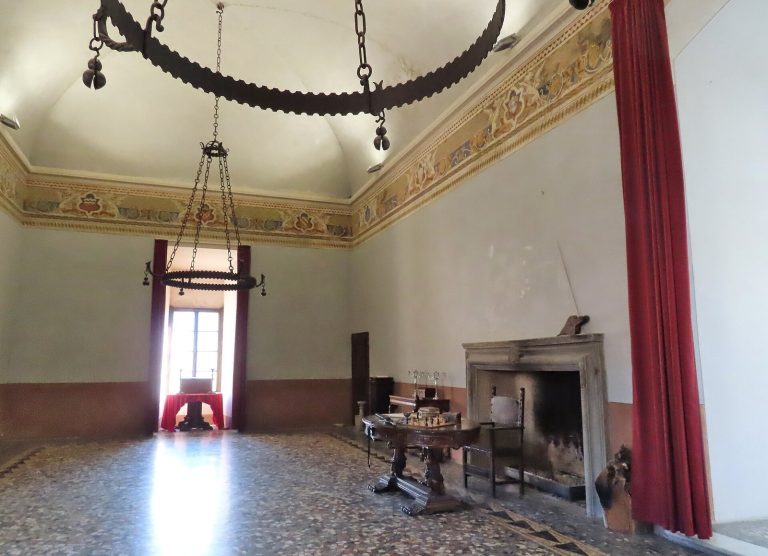
Wall pilasters with Doric capitals support a continuous cornice along the nave. Its painted barrel vault, a continuous arched ceiling, is shaped by lunettes, or arched sections formed where an opening cuts into a larger vault. Broad round arches open symmetrically into the side chapels, each of which has a frescoed barrel vault.
Presbytery and altar
The slightly raised presbytery is separated from the nave by a round triumphal arch supported by pilasters. Its frescoed pavilion vault, made of several sloping sections, also contains lunettes. The wooden and metal altar table was added around 1980. Behind it is a depiction of Saint Michael the Archangel within a gilded Baroque frame.
Preserved artworks
The church retains a bronze processional cross from the thirteenth century, an object carried in religious ceremonies. Its other preserved works include a sculpture of the Madonna of the Annunciation created by the end of the fourteenth century, along with several old paintings.