San Giovanni dell’Origlione: A Baroque Church in Palermo
Site at a Glance
- Popularity
- Low
- Country
- Italy
- Primary era
- Early Modern
- Eras represented
- Early Modern
- Civilizations
- Kingdom of Sicily, Spanish
- Site type
- Religious
- Remains
- Church
On this page15 sections
History
San Giovanni dell’Origlione is a Baroque Roman Catholic church in Palermo, Italy, dedicated to Saint John the Baptist, the Christian prophet who baptized Jesus. It follows the Roman Rite, the principal liturgical tradition of the Latin Catholic Church, and belongs to the Archdiocese of Palermo. The church grew from a medieval religious site and was rebuilt in 1600; after a later reopening, it also served as a parish church dedicated to Saint Benedict.
Hospitaller and Benedictine foundations
A hospice or other dependency of the Knights Hospitaller stood here in the 12th century under the Guilla commandery. The Hospitallers were a Catholic religious order that maintained hospitals and religious houses; a commandery administered an order’s estates and dependent institutions. Wills of 1264 and 1265 refer to the locality as San Giovanni del Roccone. The name has been linked to a dialectal alteration associated with elements on a coat of arms depicting Saint John the Baptist. The origin of Origlione is uncertain, though it may connect the Norman-era form St Joannis de Ruchono with the Latin root for “religion.”
In 1282, during the Aragonese period following the Sicilian Vespers, a major uprising against Angevin rule in Sicily, a monastery following the Benedictine Rule was established at the site. Benedictines observe the monastic rule associated with Saint Benedict.
Monastic changes and church rebuilding
In 1500, Sicily’s viceroy, Giovanni Lanuza, a crown-appointed governor representing the monarch, allowed Palermo’s senate to provide alms to the monastery. In 1532, some nuns established the monastery of the Seven Angels under the Minims, a religious order founded by Francis of Paola. Origlione also received nuns from the Monastery of Grace, known as the Penitents, who followed the Olivetan rule, a branch of the Benedictine tradition. As religious commitment declined and scandals were attributed to the nuns’ proximity to the settlement, they were transferred to other monasteries in Palermo.
In 1554, Pietro Tagliavia d’Aragona renewed the monastery’s personnel and established a commission led by Jesuits, members of the Society of Jesus. The church of the Annunciation of Scutino became part of the monastery in 1590. The small original church was rebuilt in 1600 at the expense of a nun from the Durante family. During later alterations, a marble tabernacle made by Fazio Gagini in 1544 was removed.
Consecration, suppression, and later use
The church was restored in 1782 and consecrated in 1793 by Gabriele Gravina, from the princely family of Montevago and brother of Palermo’s Archbishop Pietro Gravina. A second consecration took place in 1801, led by Giuseppe Carrano in the presence of Ferdinand I, king of the Two Sicilies. A passage to the belvedere on the Cassero is recorded in 1717.
The suppression laws of 1866 brought the confiscation of church property and the expulsion of the nuns, leaving the complex abandoned. Allied bombing on 9 May 1943 destroyed the monastery and damaged the church’s structure and decoration. A school was later built on the monastery site. The church subsequently reopened as a parish under the dedication of Saint Benedict. The Confraternity of Our Lady of Pompeii, a lay devotional association within the Catholic Church, was based there from 1953. Around 1970, the church was briefly entrusted to Mercedarian Fathers who had returned to Palermo. It is now deconsecrated, meaning it has been formally removed from sacred use, and is undergoing a prolonged restoration involving public authorities, the archdiocese, and local organizations.
Remains
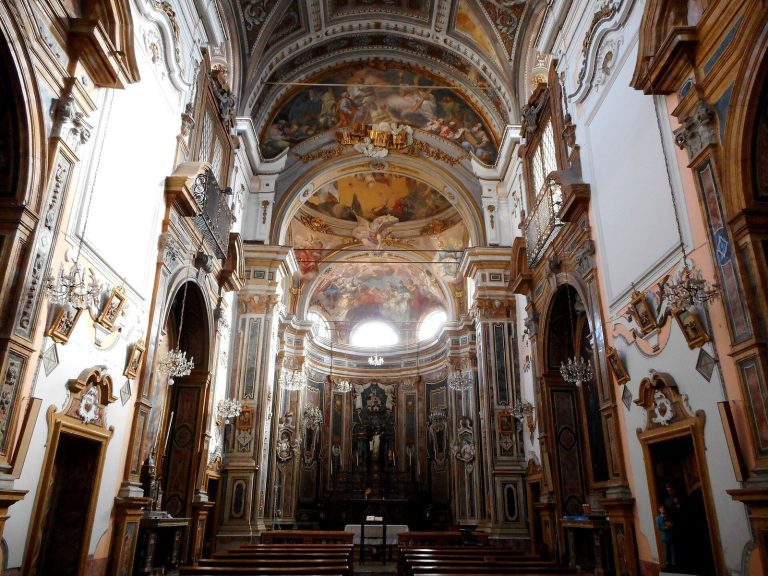
The Baroque church has a central nave, or main body, with three chapels on each side, a choir before it, and an apse, the space at its end. Its facade and interior retain architectural and sculptural features from different stages of the building’s history.
Setting and exterior
Facade
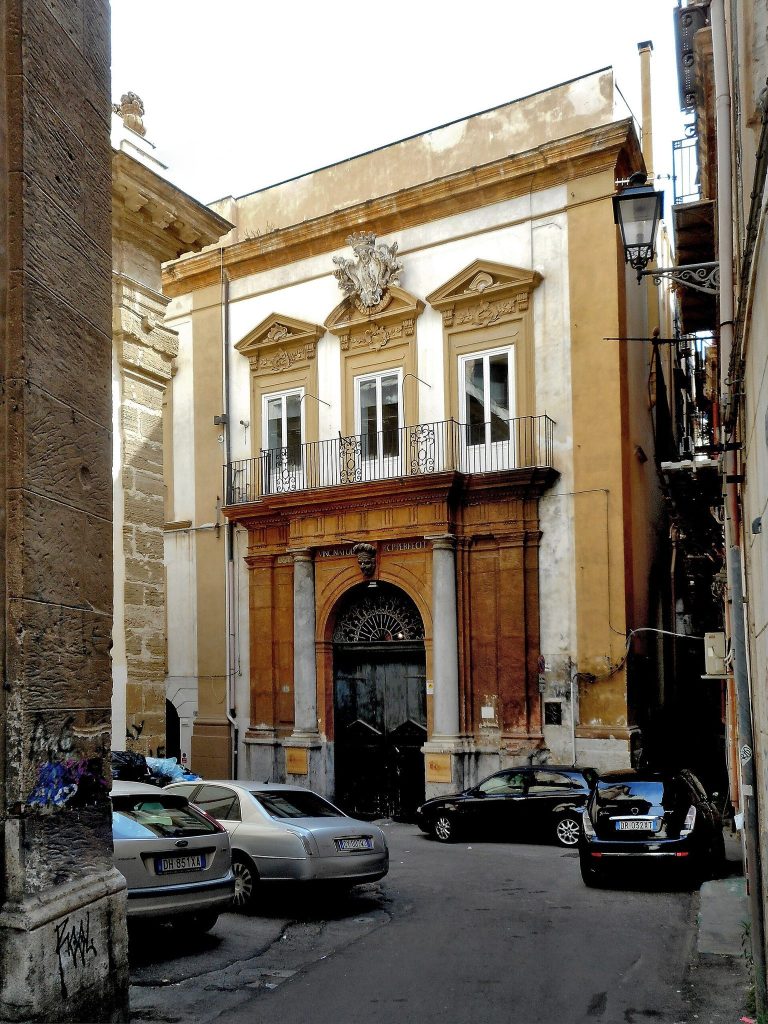
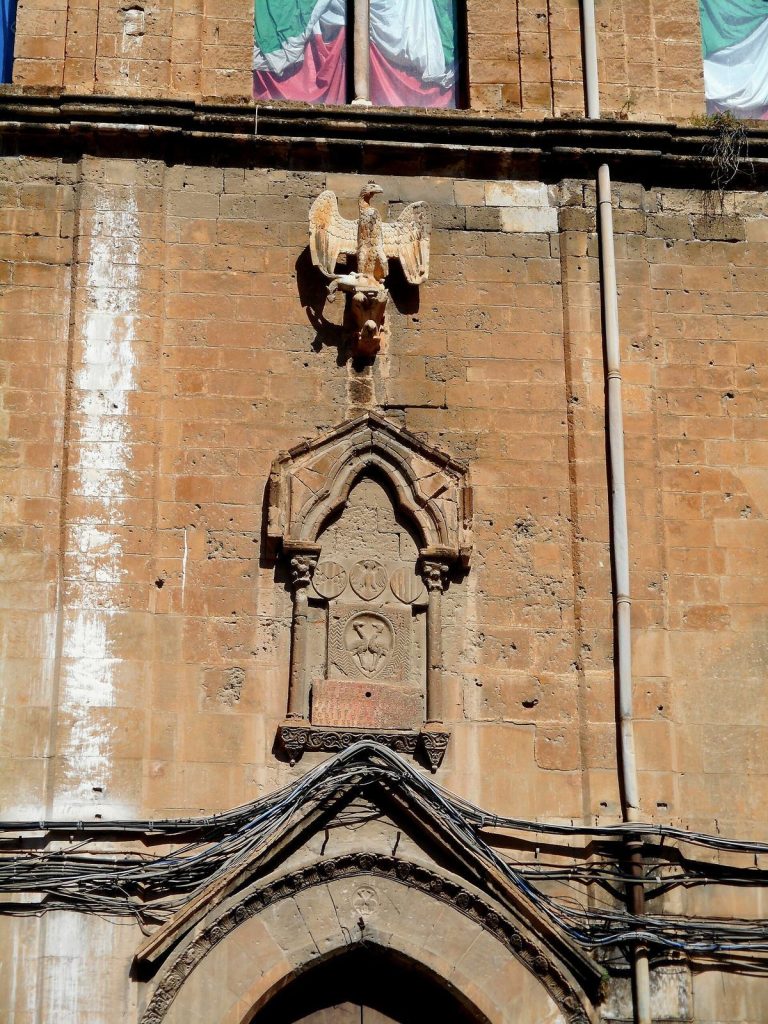
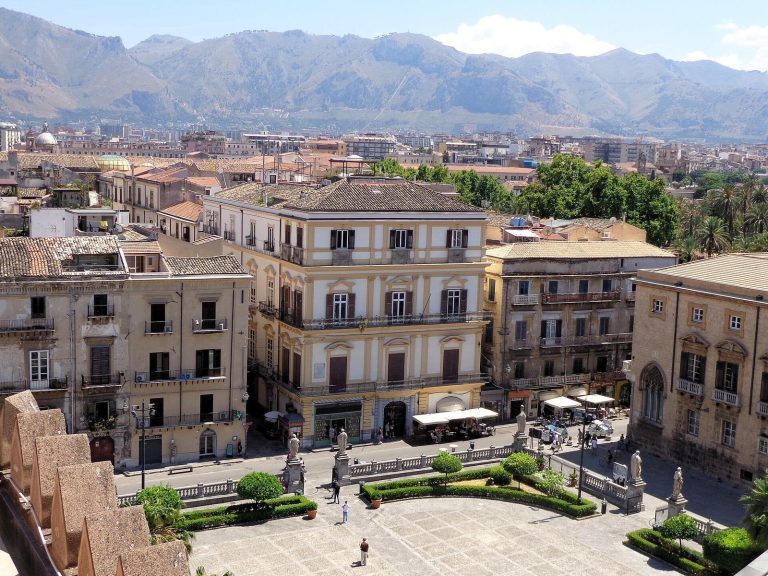
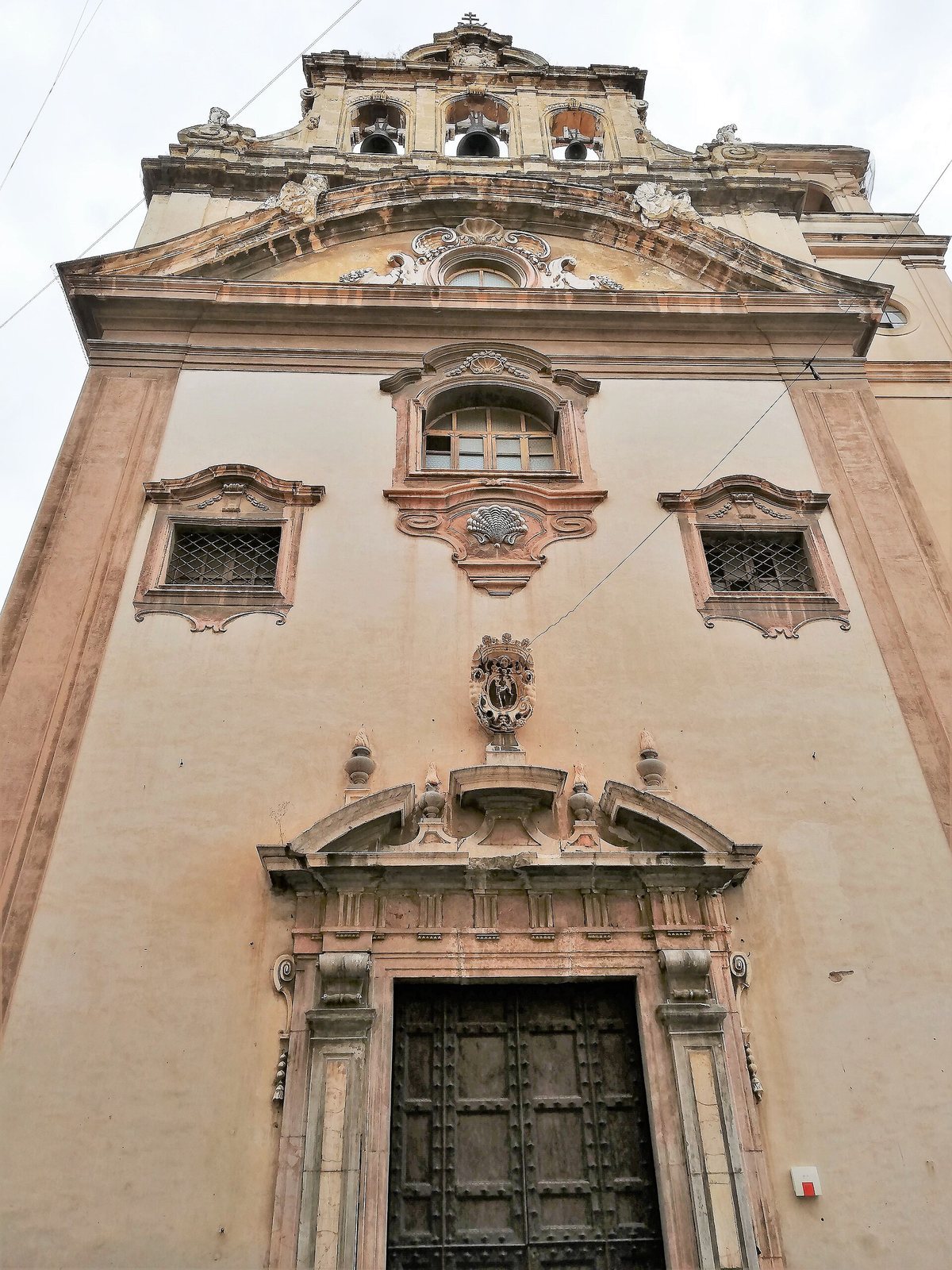
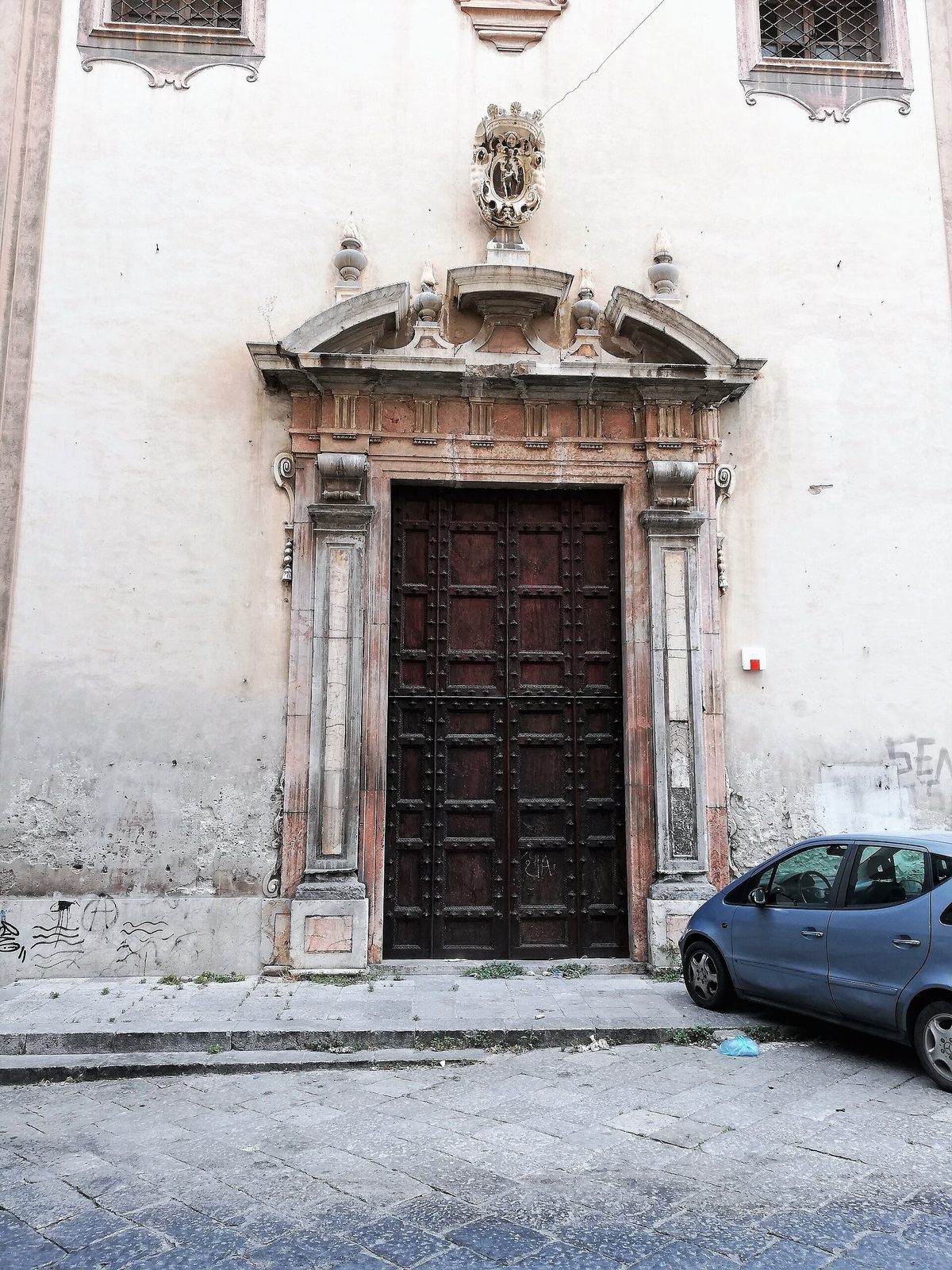
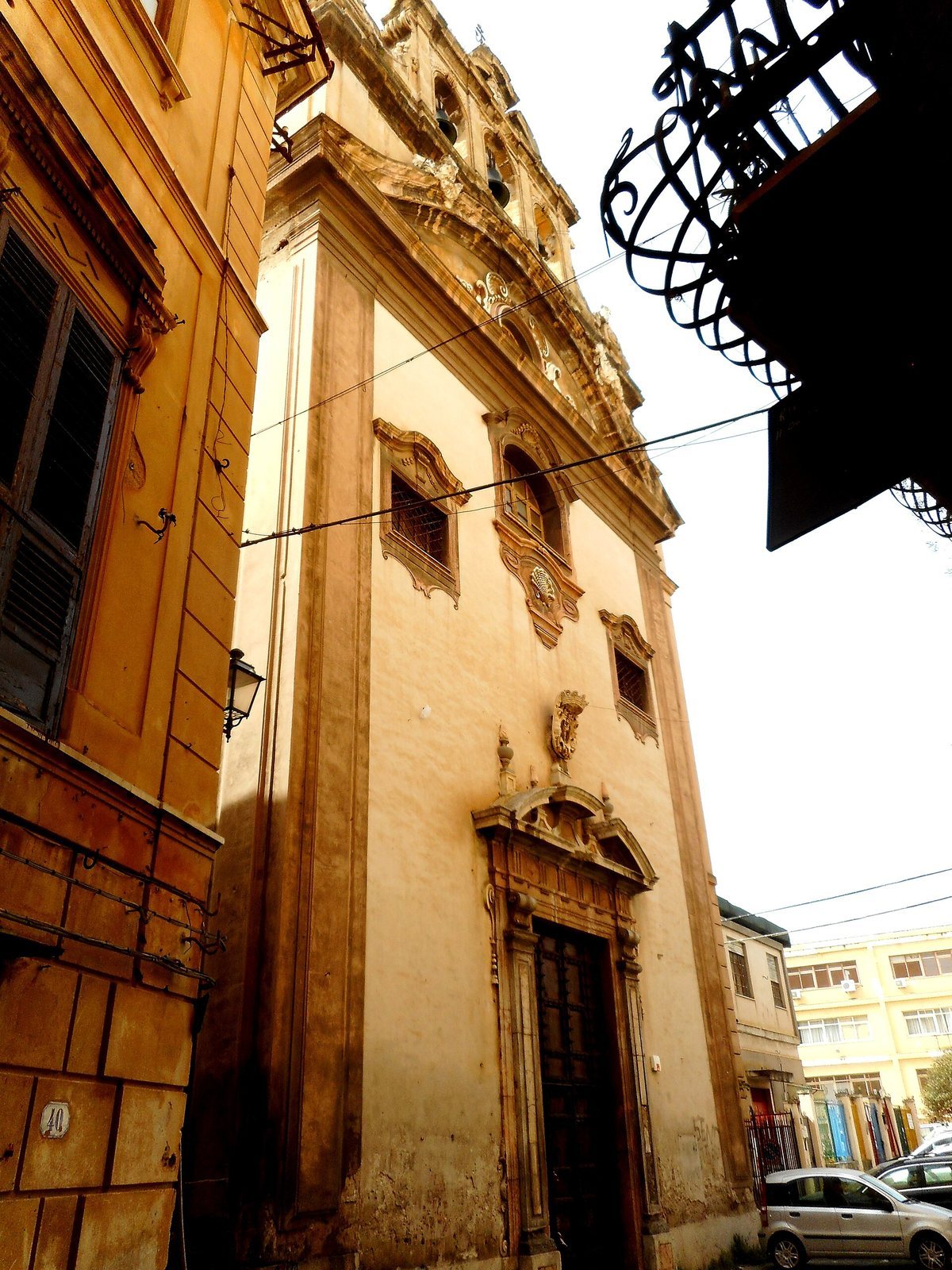
San Giovanni dell’Origlione stands in Piazza Origlione in Palermo’s Albergaria quarter, within the Palazzo Reale district. It is at the intersection of Via Saladino and Via Santissimo Salvatore, and also lies between Vicolo Origlione and Via Protonotaro. Two pilasters, shallow supports attached to a wall, frame the facade and support a large curved pediment, its crowning structure. The pediment’s central field, or tympanum, contains a decorated circular opening called an oculus. Shells and garlands ornament the central window, while a crowned heraldic emblem above the portal bears Saint John the Baptist in its central medallion.
A bell gallery with three bells and an adjoining covered bell tower complete the facade. Tall windows fitted with metal grilles opened onto the nuns’ gallery.
Passages
A cloistered passage once connected the church with the monastery. A separate passage led to the belvedere on the Cassero, as recorded in 1717.
Interior and furnishings
Choir and apse
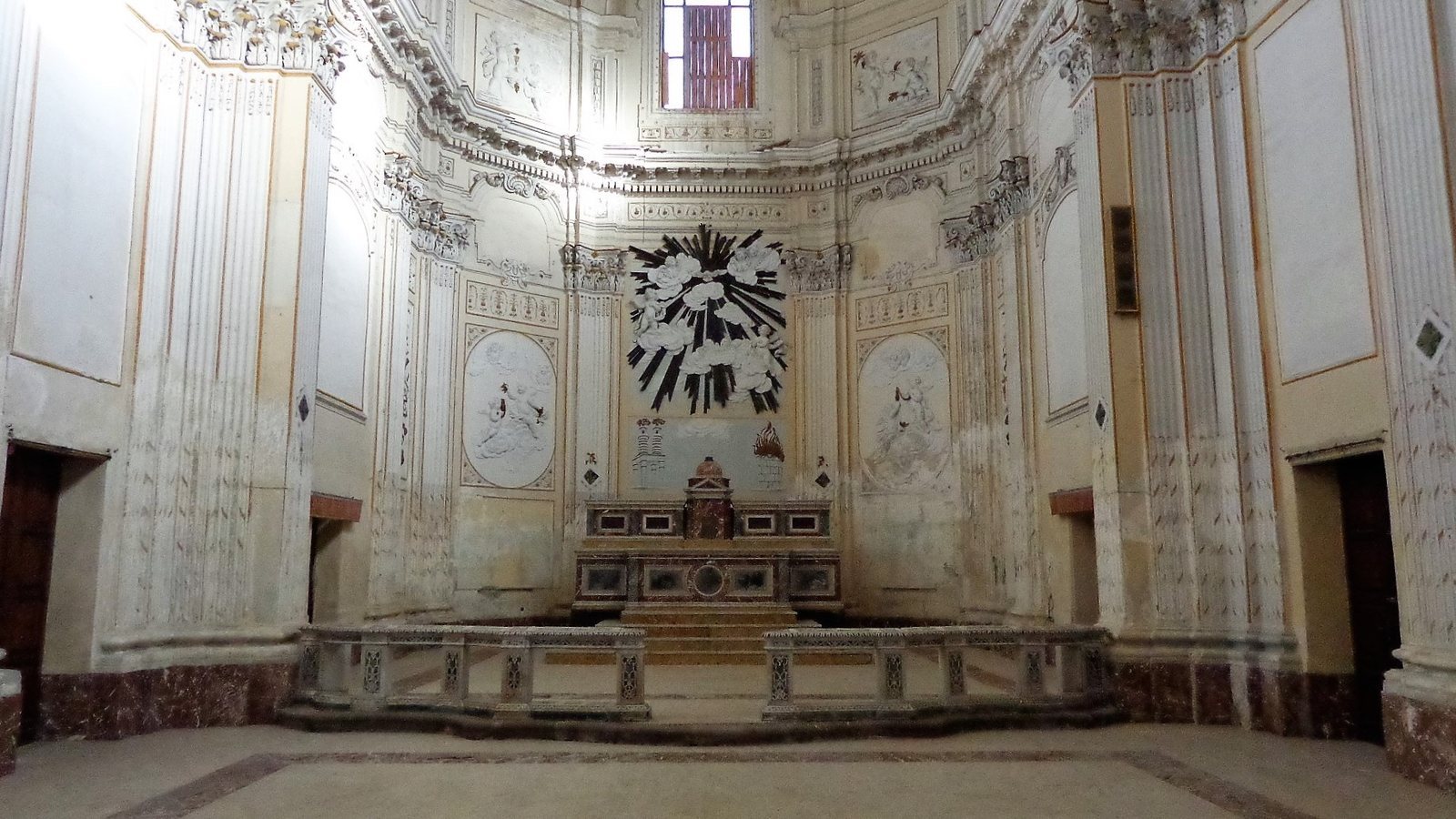
An elaborate wrought-iron screen stands at the choir before the nave. Stucco decoration survives in the apse. Four large panels in plaster bas-relief, which projects only slightly from a surface, surround a central high relief of the Holy Spirit. Angels and clouds frame the central figure against a radiating background.
Right-hand chapels
The right side of the nave has three chapels. The first is dedicated to Saint Ignatius of Loyola, founder of the Jesuits. The second is devoted to the Deposition and contains a painting copied from an original by the Flemish Baroque painter Peter Paul Rubens. The third is dedicated to the Immaculate Conception, a Catholic doctrine concerning Mary. The painting of the Immaculate Conception and the Deposition copy are thought to be now in the abbey church of San Martino delle Scale.
Left-hand chapels
Three more chapels line the left side. The first is dedicated to Saint John the Baptist and once held Vito d’Anna’s painting of the Baptism of Jesus, now in the diocesan museum. The second is dedicated to Saint Benedict and held Gaspare Serenario’s painting of Benedict giving Saint Placid, remembered as an early Benedictine monk, the cowl. That painting is now in the museum’s Sala Beccadelli. The third chapel is dedicated to the Crucifix.
Altars and earlier fittings
Vincenzo Todaro made the fine-marble high altar with bronze inlays in 1798. At Cardinal Ernesto Ruffini’s request, a side altar was transferred to the Borremans Chapel in the Episcopal Palace. An earlier marble tabernacle, made by Fazio Gagini in 1544, was removed during later alterations.
Painted remains
Fresco fragment
Restoration work revealed a damaged fragment of a fresco attributed to the Sicilian painter Pietro Novelli. It depicts the Triumph of David.