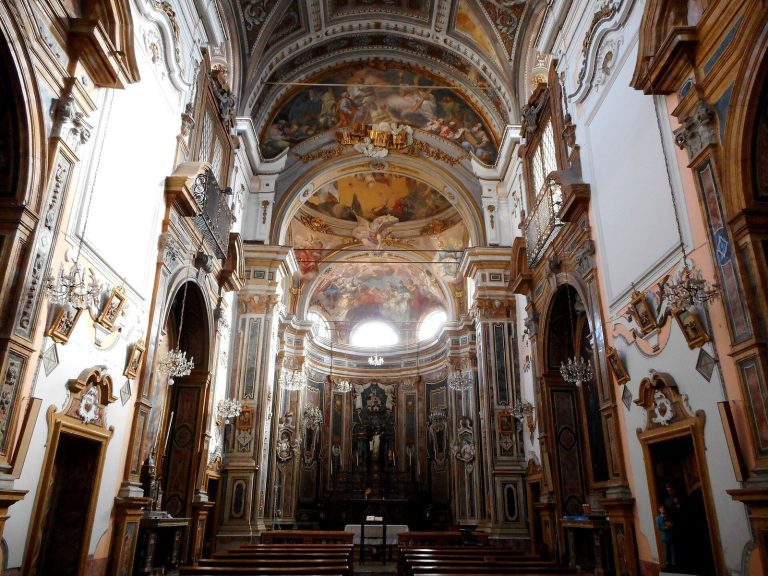
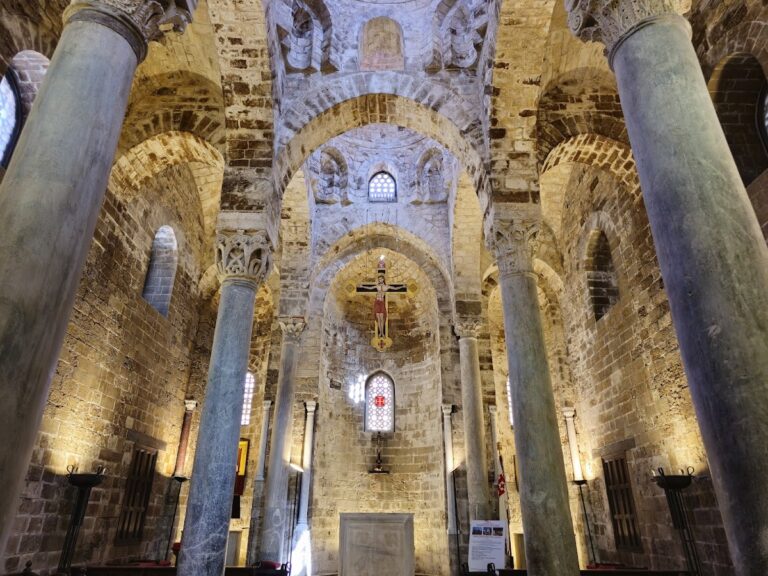
Palazzo Alliata di Villafranca: An Aristocratic Palace in Palermo
Site at a Glance
- Rating
- 4.5
- Popularity
- Low
- Country
- Italy
- Primary era
- Early Modern
- External website
- Open
- Eras represented
- Early Modern
- Civilizations
- Kingdom of Sicily, Spanish
- Site type
- Domestic
- Remains
- Palace
On this page20 sections
History
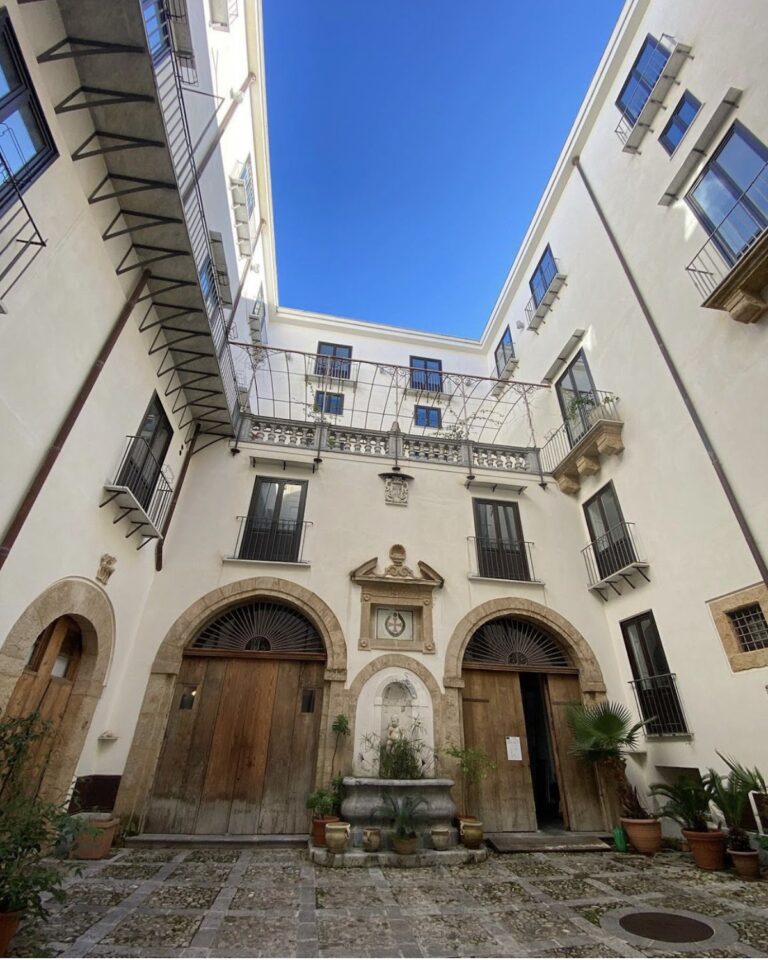
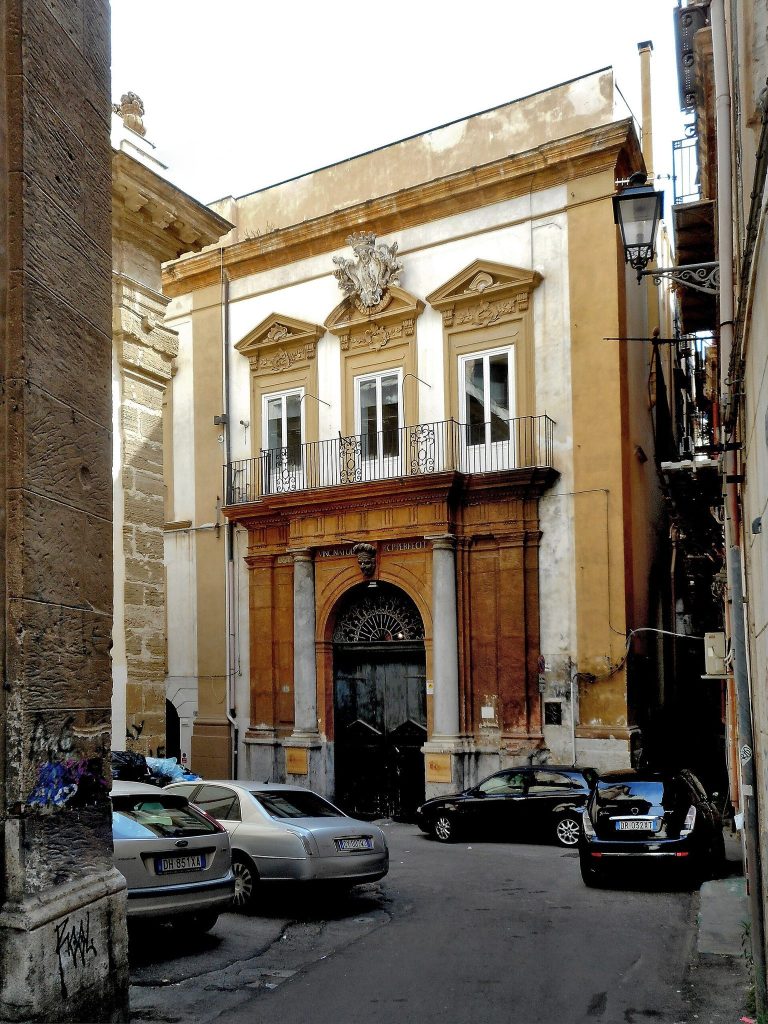
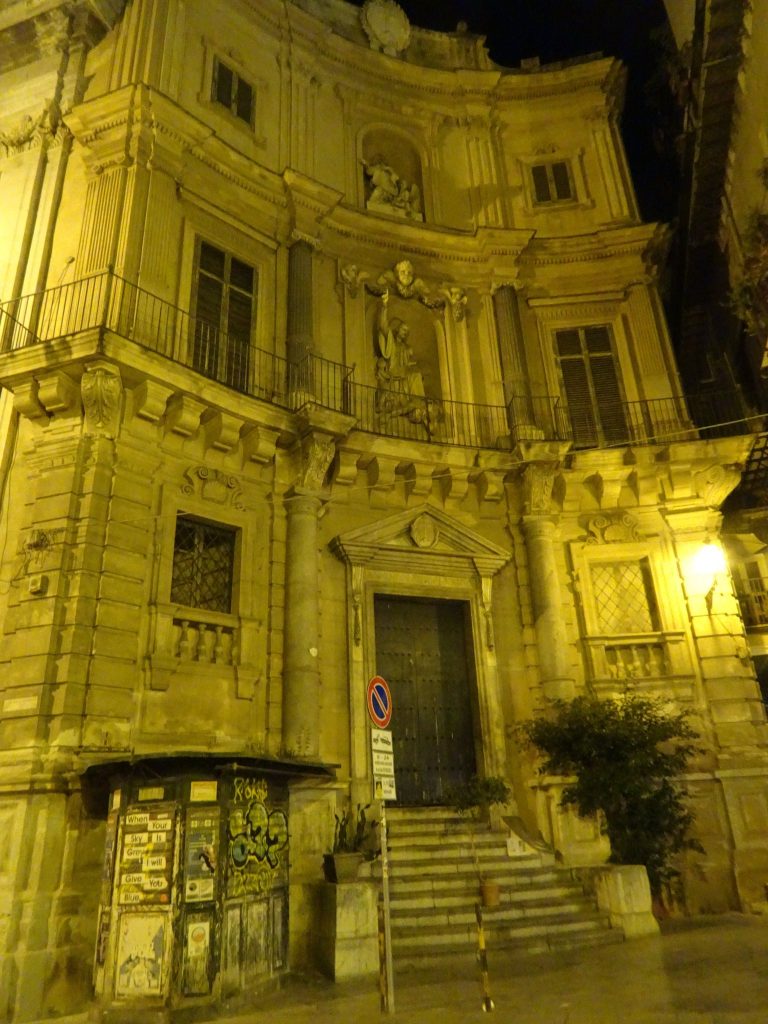
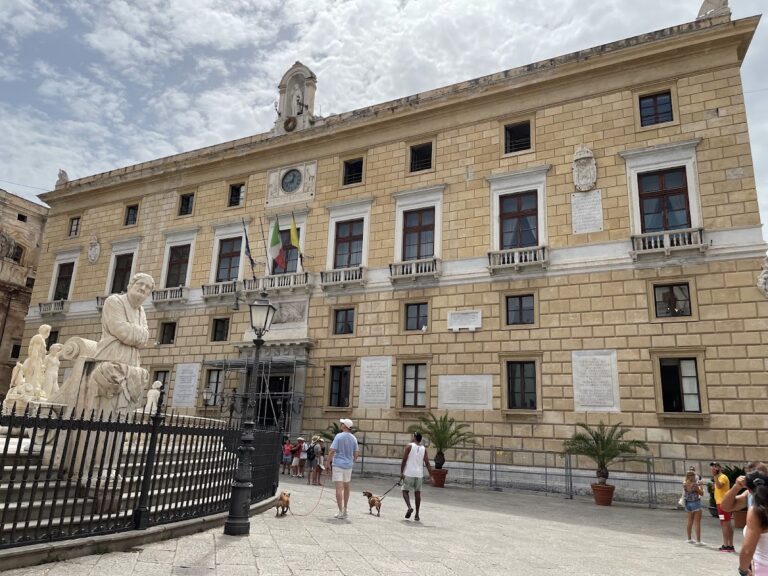
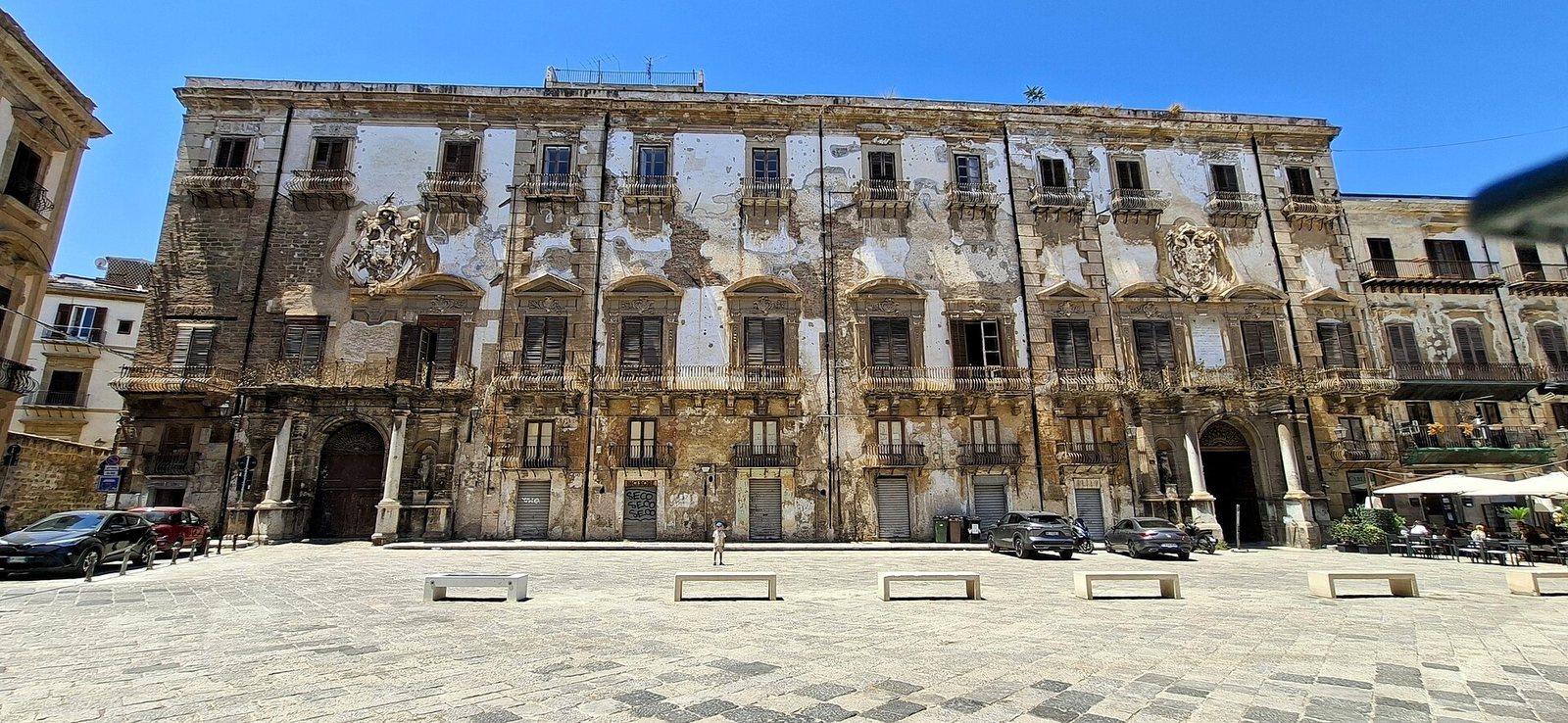
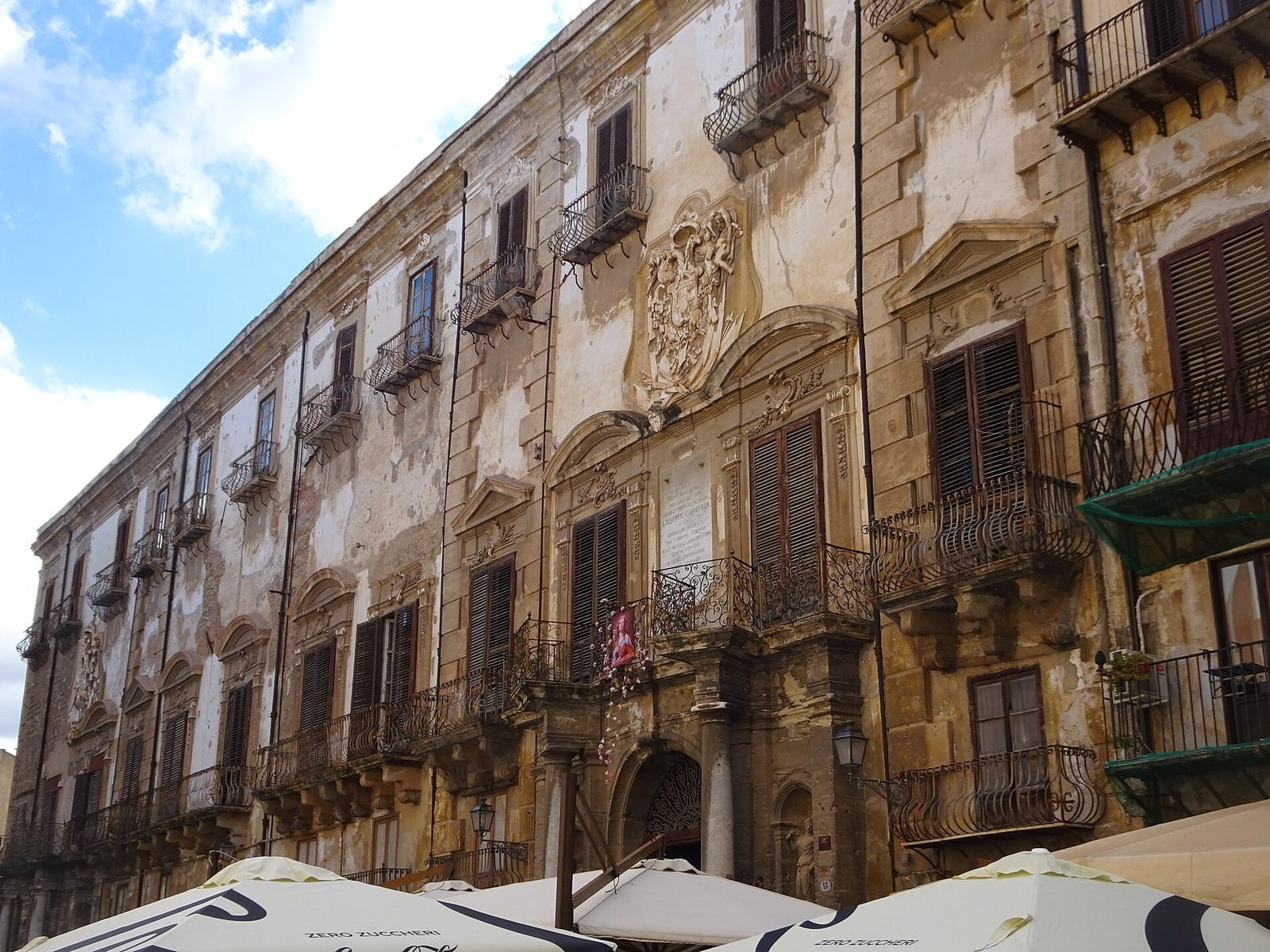
Palazzo Alliata di Villafranca is an aristocratic palace in Palermo, Italy, with sixteenth-century origins and a late-eighteenth-century Baroque appearance created through reconstruction. Facing Piazza Bologni in the historic center, it occupies the block between the Cassaro, now Via Vittorio Emanuele, and Via dell’Università. The palace became the principal Palermo residence of the Alliata di Villafranca family for approximately four centuries and housed one of the city’s major art collections.
Renaissance origins and the Beccadelli di Bologna
By 1567, the site contained a large garden or orchard and a house owned by Aloisio da Bologna, Baron of Montefranco. It later became associated with the Beccadelli di Bologna, a powerful family that had arrived in Sicily during the Renaissance. Their name was given to the square, which was formerly known as Piano d’Aragona.
The family was connected with important cultural and religious figures in Palermo. Antonio Beccadelli, known as Il Panormita, was a prominent humanist and poet at the court of the last Aragonese rulers. Simone di Bologna was associated with the enlargement of Palermo Cathedral and the construction of the Archbishop’s Palace.
The Alliata residence and eighteenth-century rebuilding
The Alliata di Villafranca family acquired the palace during the first half of the seventeenth century. Originally wealthy bankers from Pisa, the family had reached Palermo around the fourteenth century and had acquired the title Prince of Paruta by 1609. The palace thereafter served as their principal residence in the city until the late twentieth century.
An earthquake damaged the building in 1751. Giovanni Battista Vaccarini, an architect associated with Palermo’s Baroque rebuilding after earthquake damage, directed a major reconstruction with the assistance of Cascione and Ferrigno. The work joined the palace to adjacent houses and produced the form and appearance associated with the building in the later eighteenth century.
Postal service, political violence, and Garibaldi
Part of the palace was used by the Kingdom of Sicily’s postal service. The building included rooms for the hereditary chief couriers, whose role helps explain the arrangement of the two main portals. From 1825, three rooms on the ground floor were occupied by the Nobile Conversazione, also known as the Circolo Bologni, Casino Bologni, or Caffè Bologni.
The palace suffered heavy damage during the 1820 revolution, an uprising in Sicily against Bourbon rule. Giuseppe Garibaldi, the Italian nationalist and military leader who later played a major role in the unification of Italy, stayed in the building for two hours on 27 May 1860. A plaque on the principal façade commemorates the event.
War damage, transfer, and cultural preservation
Earthquakes damaged the palace’s painted decoration, and the bombardments of Palermo in 1943 during the Second World War destroyed much of the decoration that remained, particularly the ceilings. In 1984, Princess Rosalia Correale Santacroce, the owner and described as having no heir, transferred the building to the Archdiocese of Palermo for use as an archiepiscopal seminary.
Restoration and exhibition work later brought parts of the palace and its collections back into public use. The Green Room and Coat-of-Arms Room were treated in 2006. Two paintings by Matthias Stom were restored and displayed from October 2010 to May 2011, while a restored painting by Antoon van Dyck was exhibited in December 2012 and January 2013. A work attributed to Gaspare Traversi, The Musicians, and Pietro Novelli’s Annunciation were also restored. The archiepiscopal seminary has managed the palace’s public opening since 2013.
The collections include works by Matthias Stom, Antoon van Dyck, Pietro Novelli, Gaspare Traversi, Francesco Lojacono, Mario Rutelli, Filippo de Pisis, Desiderio De Angelis, and Pietro D’Asaro. Together with the family archive and the surviving furnishings, these works preserve the cultural history of the aristocratic residence.
Remains
The palace forms the fourth side of Piazza Bologni and combines a monumental cut-stone façade with a ground floor of service and postal rooms and a ceremonially arranged piano nobile, the principal residential floor of an aristocratic palace. Its interiors retain named reception rooms, stucco decoration associated with the tradition of Giacomo Serpotta, painted works, furnishings, and objects assembled by the Alliata family.
Façade and ground floor
Main façade
The monumental façade is faced with cut stone and organized around two symmetrical portals. Their arrangement recalls the period when postal couriers departed from the palace. Above them are two large stucco coats of arms bearing the arms of the Alliata, Princes of Villafranca, made by Giacomo Serpotta, a major Sicilian Baroque stucco artist. A commemorative plaque occupies the center of the façade.
Service and postal rooms
The ground floor contains kitchens, stables, and rooms connected with the postal service of the Kingdom of Sicily and its hereditary chief couriers. These spaces belong to the working and administrative functions that operated alongside the aristocratic residence.
The piano nobile
Ceremonial staircase and vestibule
A ceremonial staircase leads to the piano nobile. In its vestibule, a 1929 mosaic window by Pietro Bevilacqua depicts Saint Dacius Alliata, identified as Archbishop of Milan in 530, and Saint Leone Alliata, associated with the 1274 Crusade. Both figures belong to the family’s traditional lineage.
Green Room
The Green Room, also called the Baroque Sitting Room, contains a fresco by Gaspare Serenari showing Saint Dacius Presented to the Virgin. Serpotta-style stucco surrounds the painting. The room was probably the palace’s original private chapel and is associated with Antoon van Dyck’s Crucifixion, painted in 1625.
Yellow Sitting Room and Pink Salon
The Yellow Sitting Room, also called the Tea Room, and the Pink Salon, also called the Baccarat Room, are named interiors on the piano nobile. Their furnishings and decorative contents form part of the palace’s preserved residential setting.
Salon of Prince Fabrizio Alliata Colonna
The Salon of Prince Fabrizio Alliata Colonna has a stucco ceiling with allegorical subjects in the Serpotta tradition. It formerly contained Serenari’s 1756 fresco The Princess Admiring the Temple of Glory. The room now houses Matthias Stom’s The Stoning of Saint Stephen and The Tribute Money, both dated 1639 and formerly kept in the original picture gallery, known as the Musicians’ Room.
Fumoir
The Fumoir, or Leather Room, is another named room on the piano nobile. Its identity forms part of the sequence of specialized interiors that characterizes the principal residential floor.
Coat-of-Arms Room
The Coat-of-Arms Room formerly contained Serenari’s 1756 fresco Fame Showing the Prince’s Glories. Its corners have stucco representations of the four seasons by the Serpotta workshop. Earthquakes damaged the painted decoration, and the bombardments of the Second World War destroyed it. The room contains two works attributed to Pietro D’Asaro, Orpheus Enchanting the Animals and Shipwreck or the Miraculous Haul of Fish, dated 1613–1618.
Musicians’ Room
The Musicians’ Room was originally used as a picture gallery. The two Matthias Stom paintings dated 1639 were formerly kept there before being associated with the Salon of Prince Fabrizio Alliata Colonna.
Furnishings, collections, and archive
Decorative contents
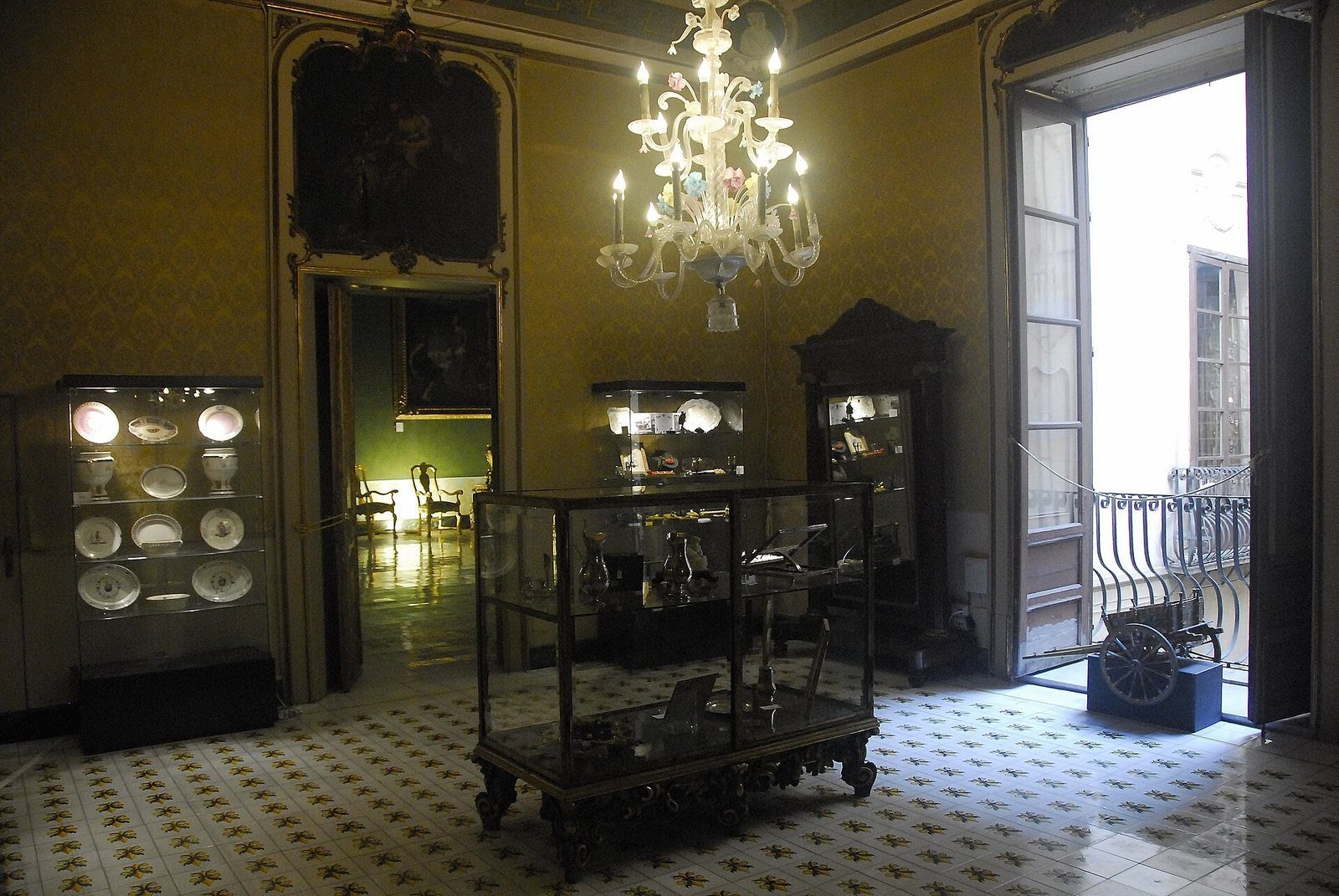
The palace retains mirrors, Murano-glass chandeliers, over-door decorations, period furniture, silver and bronze objects, vases, ceramics, porcelain, a sedan chair, lace, embroidery, wax sculptures, marble plaques, marble shields and helmets, and maiolica floors, including one bearing the family coat of arms. The collections also include Greek and Roman archaeological finds and geological specimens.
Paintings and family records
The art collection includes canvases, portraits, drawings, engravings, paintings on paper and copper, and stucco medallions in the Serpotta tradition. Desiderio De Angelis’s 1791 painting depicts the birth of Prince Giuseppe Alliata Moncada, son of Prince Fabrizio Alliata Colonna and Giuseppina Moncada Branciforte, with Abundance and Fame and the Genius of Palermo paying homage.
Other paintings include Saint Joseph with the Christ Child, an oil on canvas attributed to Pietro Novelli, the restored The Musicians, attributed to Gaspare Traversi, and Novelli’s Annunciation. The family archive preserves documents concerning the commission of Van Dyck’s Crucifixion.