Pons Aemilius: Rome’s First Stone Bridge Across the Tiber
Site at a Glance
- Popularity
- High
- Country
- Italy
- Primary era
- Classical
- Eras represented
- Classical, Early Modern, Modern
- Civilizations
- Papal States, Roman
- Site type
- Infrastructure
- Remains
- Bridge
On this page13 sections
History
Pons Aemilius was an ancient Roman bridge over the Tiber in Rome, Italy. Its stone construction began in 179 BC, and it became the first stone bridge across the river.
Early crossings and stone construction
A timber bridge stood at this crossing around 241 BC before a flood destroyed it in the early second century BC. The Roman historian Livy also mentions a bridge here in 192 BC. Work on a stone replacement began in 179 BC, when Marcus Fulvius Nobilior, a censor responsible for public works as well as civic and financial duties, arranged for its piers to be built. His colleague Marcus Aemilius Lepidus may have assisted. The arches were added in 142 BC by the censors Scipio Aemilianus Africanus and Lucius Mummius Achaicus. The bridge’s upper parts remained wooden at least until that work.
Plutarch places the bridge’s construction during the service of an Aemilius as quaestor, a magistrate chiefly concerned with financial administration. One possible explanation is that the arches built in 142 BC were wooden and that an Aemilius later replaced them with stone, but this interpretation is uncertain. A passage by the Roman writer Julius Obsequens concerning 156 BC may give the bridge the name Pons Maximus, meaning Greatest Bridge, perhaps because of its length. A proposed correction to the text would instead make it refer to a high priest.
Imperial and late antique repairs
Repairs are associated with Augustus sometime after 12 BC, though it is uncertain whether his work included the bridge. The attribution rests on an inscription on a marble chest linked to the Arch of Augustus, which stood in the Forum Boarium in front of the bridge until the fourteenth century. The bridge was repaired or rebuilt under Emperor Probus in AD 280 and was probably among Rome’s busiest crossings during the imperial period.
In the seventh century, a text attributed to Aethicus Ister called it the bridge of Lepidus, possibly referring to the name Aemilius. The text also noted that people commonly understood its name to mean stone bridge, reflecting its reputation as the Tiber’s first stone crossing.
Medieval and early modern phases
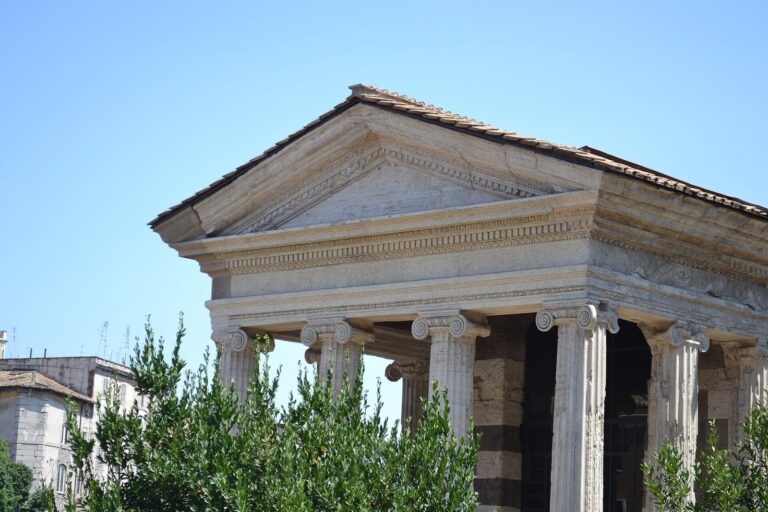
During the Middle Ages, the bridge was called Pons Sanctae Mariae, or Bridge of Saint Mary, after a nearby church that occupied the former Temple of Portunus. It was also known as Pons Major, or Greater Bridge. After 1144, the name Pons Senatorum, or Bridge of the Senators, came into use, probably following repairs organized by the Roman Senate. Severe flooding damaged the bridge in 1230; it was later rebuilt under Pope Gregory XI.
Repairs begun in 1552 included rebuilding one pier completely. A flood damaged the bridge again in 1557, and Pope Gregory XIII arranged further restoration in connection with the 1575 jubilee. By the late sixteenth century, pipes carried across it supplied running water to Trastevere, the district on the Tiber’s west bank.
Flood destruction and later alteration
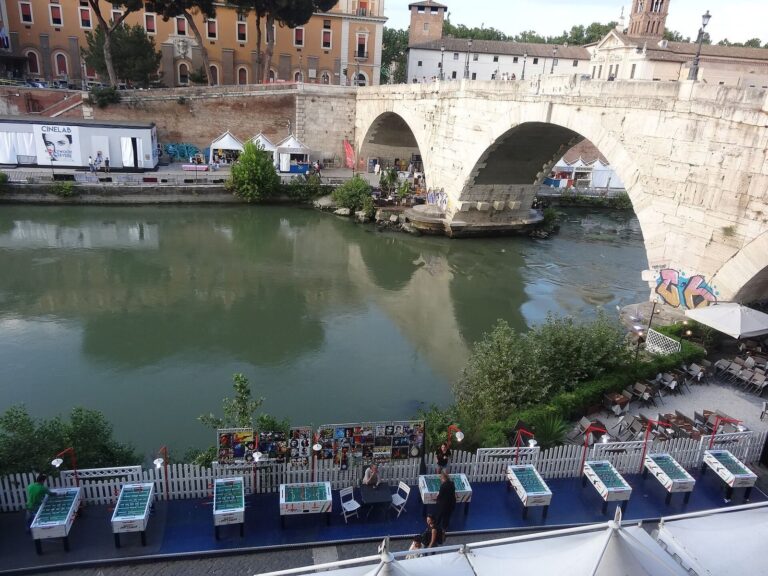
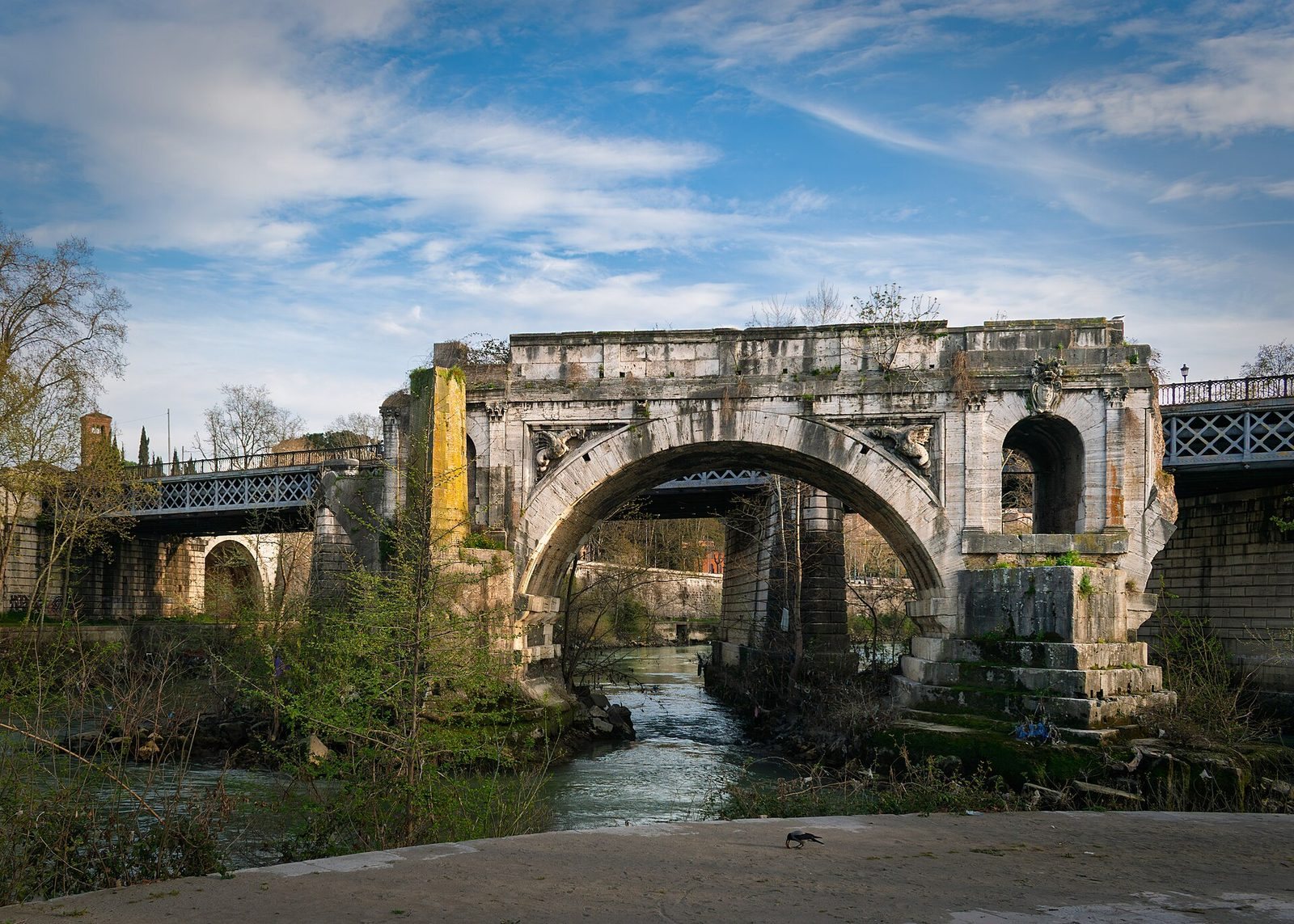
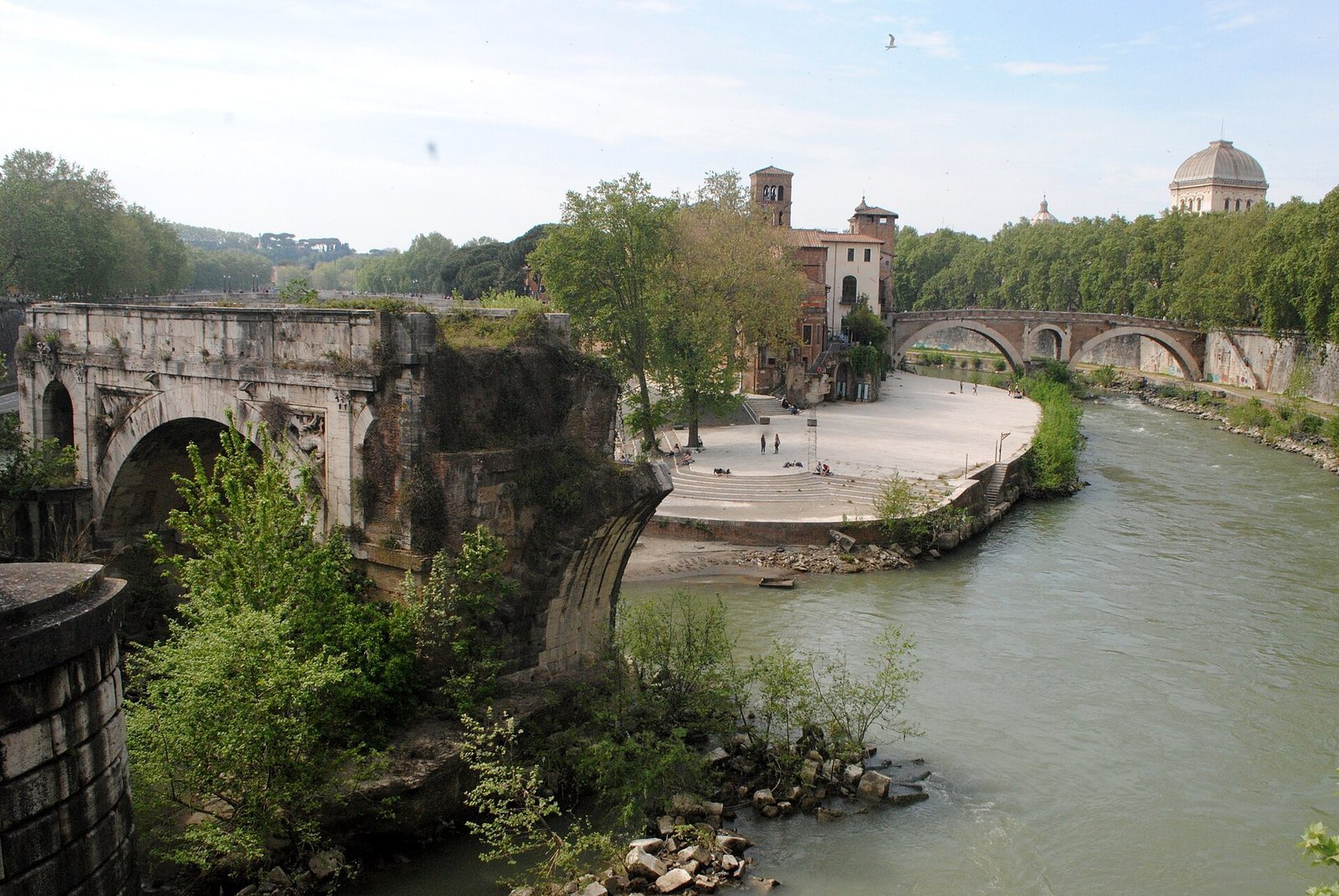
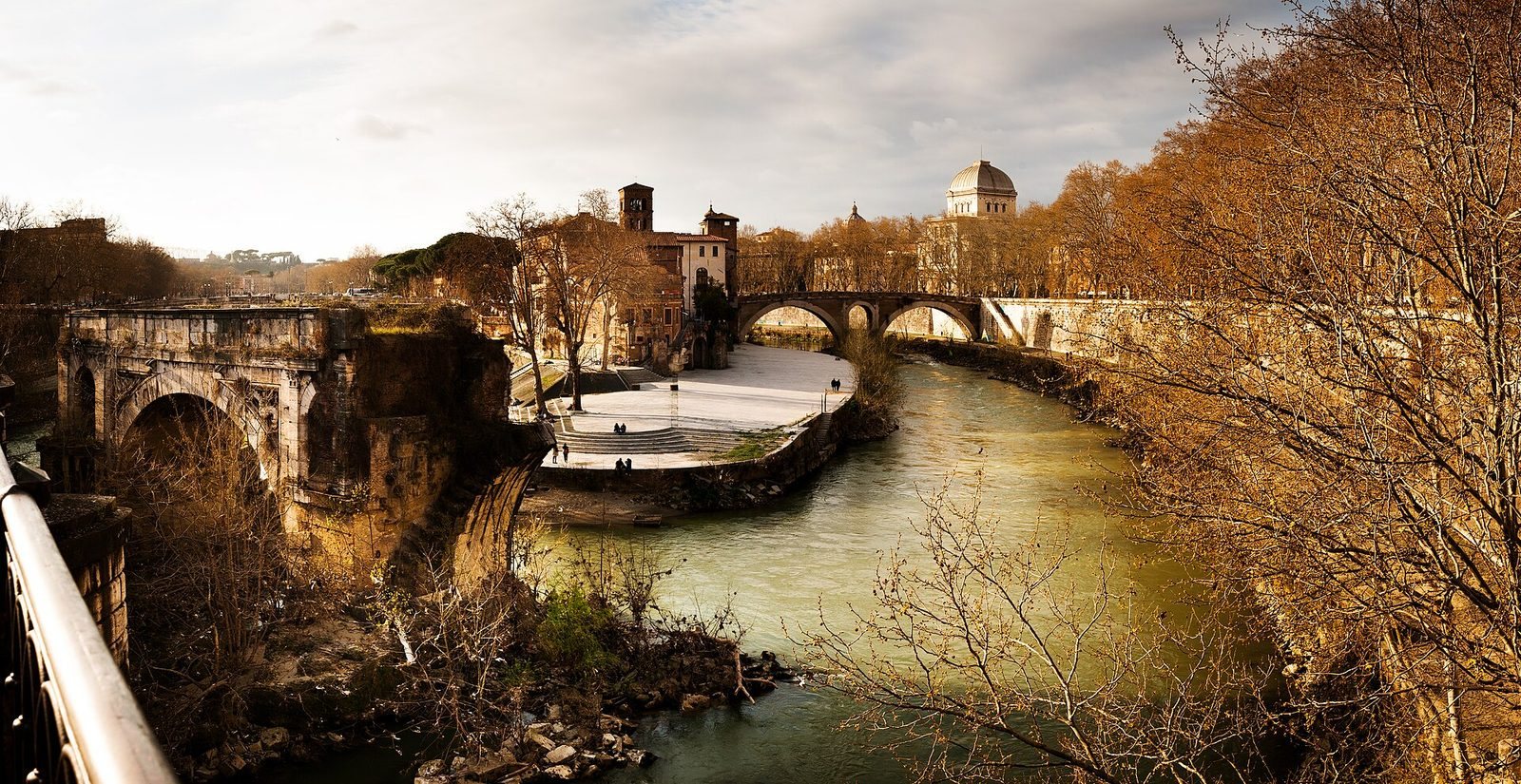
On 24 December 1598, the Tiber rose five metres above street level and destroyed the bridge’s eastern half. Pons Aemilius was never restored as a functioning crossing. For years, its surviving fragment served as a fishing pier. In 1853, Pope Pius IX had an iron pedestrian bridge connect the fragment to the mainland, but the old masonry could not safely support the added structure. The bridge closed in 1887. Its western end was demolished to make room for the Ponte Palatino, while the central arch was left in place, probably because removing it would have been costly.
Remains
Pons Aemilius was a multi-span stone bridge about 150 metres long, the longest bridge in ancient Rome. It crossed the Tiber at a bend, from the Forum Boarium, Rome’s cattle market, to Trastevere. The crossing lay immediately downstream of Tiber Island and near the earlier Pons Sublicius, another Roman bridge. Strong eddies and faster currents at the bend contributed to continual wear.
Surviving masonry
Central arch
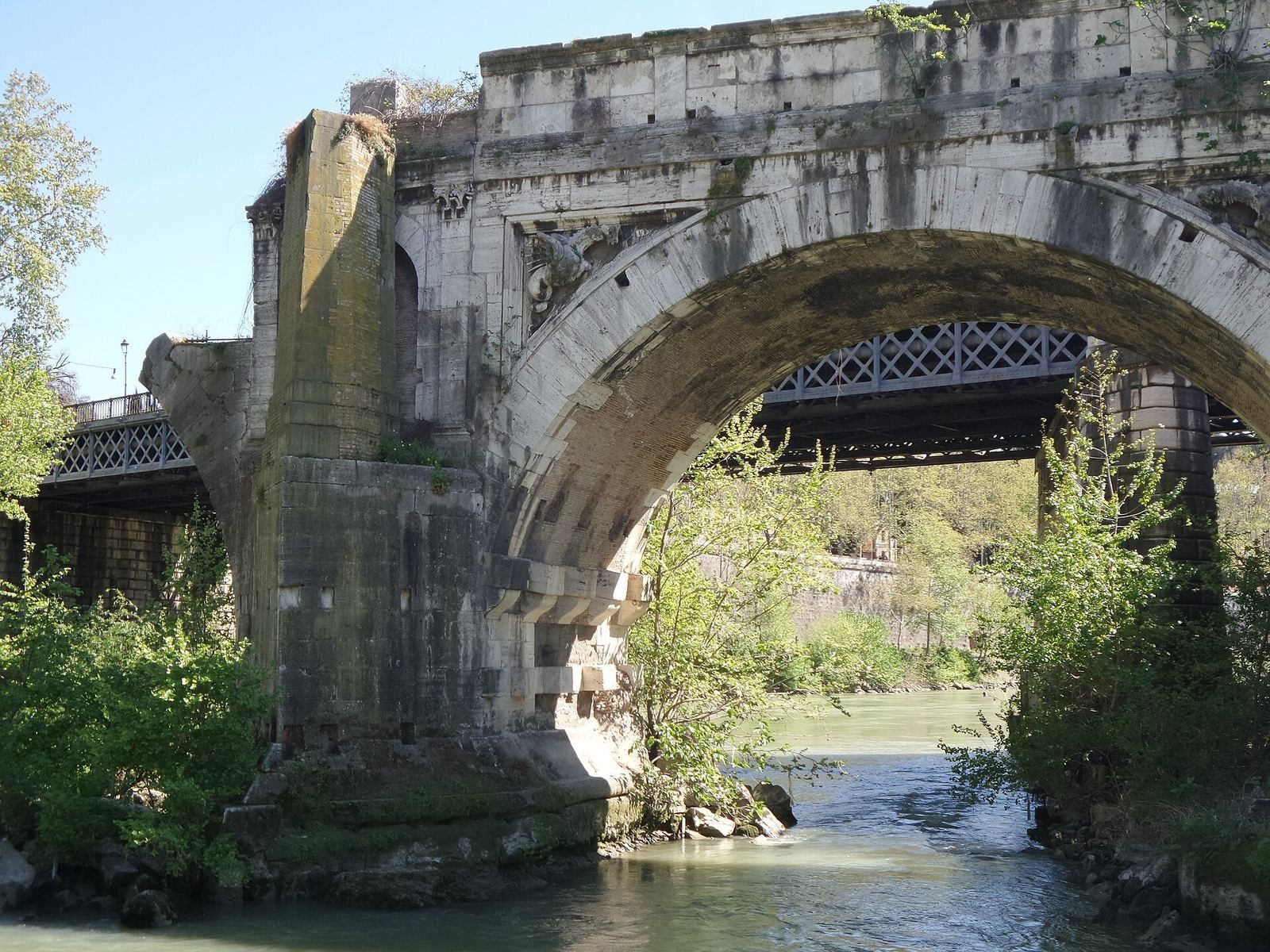
The surviving structure is a single arch standing in the river beside the Ponte Palatino. It is thought to belong to a building phase under Augustus.
Earlier piers
Remains of earlier piers lie north of the Ponte Palatino. They are associated with the bridge’s early construction, and the earlier crossing followed a slightly different angle.
Restoration inscriptions
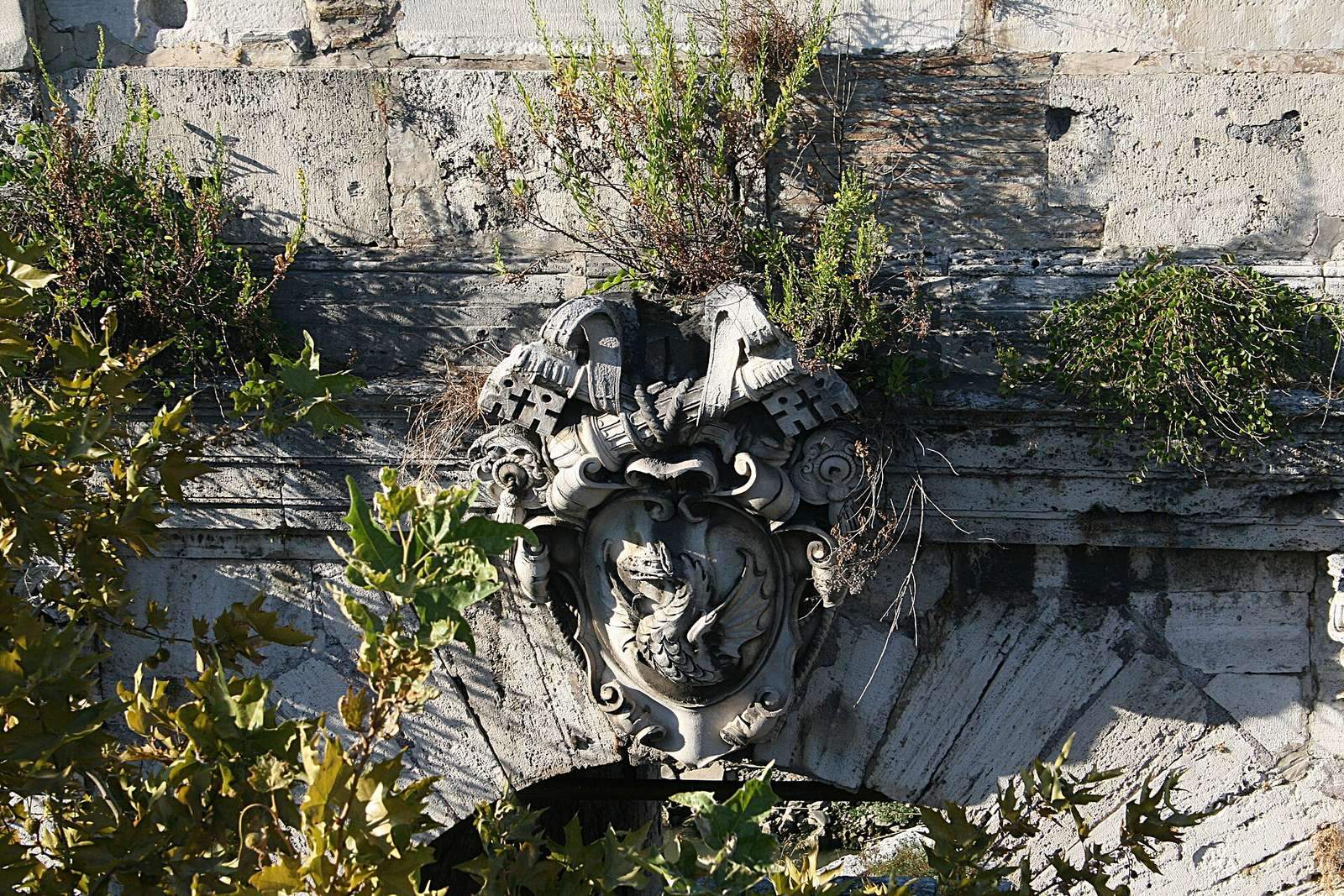
Latin inscriptions on the surviving masonry describe restoration work carried out under Pope Gregory XIII.
Road and water connections
Roman roads
The Via Aurelia and Via Campana separated just west of the bridge. The Via Aurelia continued towards the Janiculum, a hill in Rome, as a viaduct.
Aqueduct
The Aqua Appia, a channel that carried water, may have crossed the Tiber over the bridge. This has been proposed for a period no earlier than an extension associated with restoration work under Augustus.