San Giovanni Battista: The Parish Church of Canale
Site at a Glance
- Popularity
- High
- Country
- Italy
- Primary era
- Modern
- Eras represented
- Medieval, Early Modern, Modern
- Civilizations
- Austrian Empire, Habsburg, Italian, Venetian
- Site type
- Religious
- Remains
- Church
On this page16 sections
History
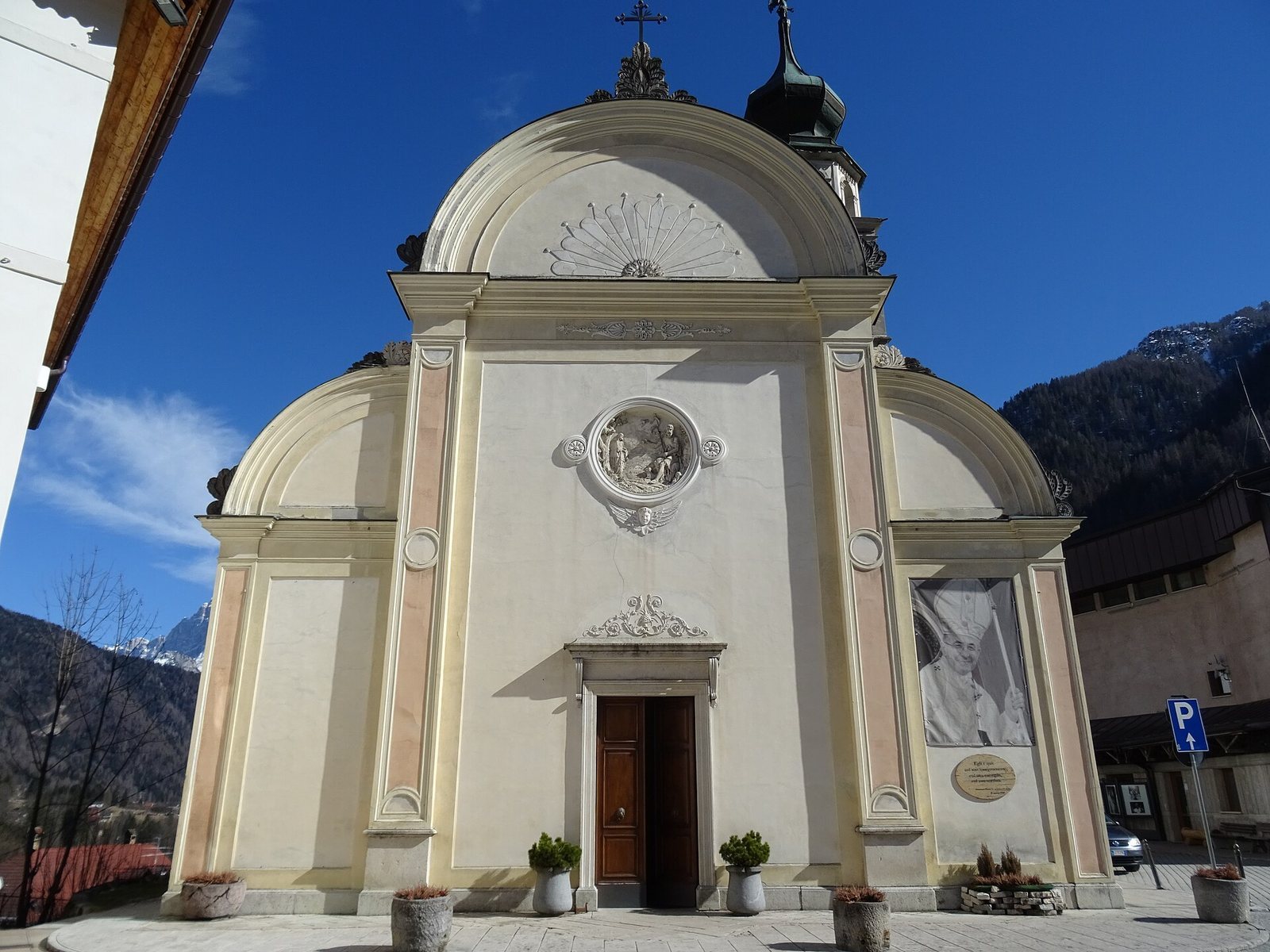
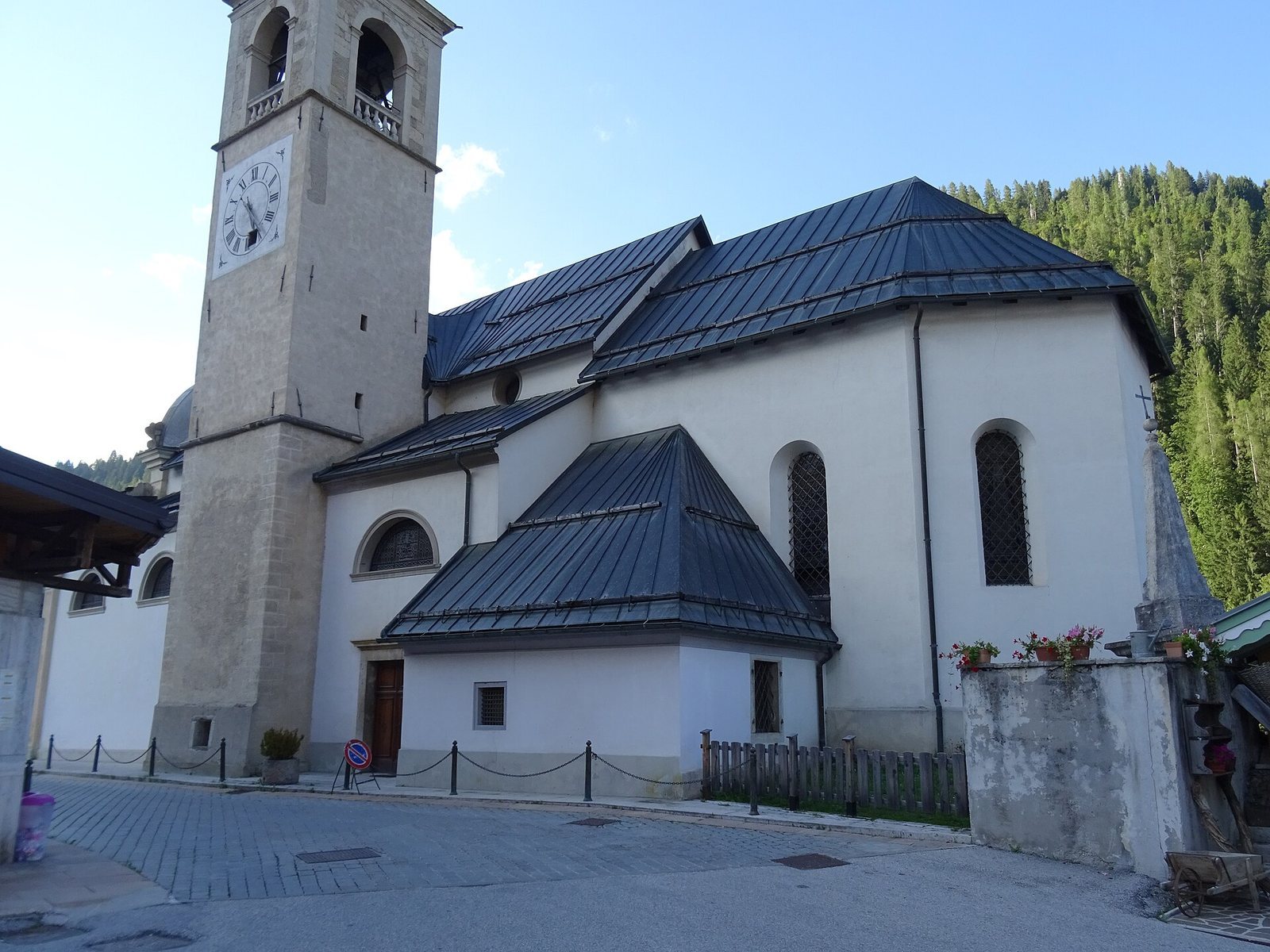
San Giovanni Battista is a church in Canale, Italy, and the historic parish church of the Biois Valley. Its medieval chapel developed into a pieve, a parish church serving a wider territory and its dependent chapels. The present church is Neo-Renaissance in style and was designed by Giuseppe Segusini.
Medieval chapel and local services
In the twelfth century, people in the area relied on the chapel of San Simon for Mass and indulgences, while priests administered the sacraments only at the Pieve of Agordo. A church at Canale offered a closer place of worship because San Simon could no longer accommodate the valley’s congregation and Agordo lay at a distance. Its position also suited nearby villages and lay closer to iron- and copper-working industries supplied by mines in the Gares Valley, which are known from the fourteenth century.
The founding date of the original chapel is uncertain. It is placed between 1185 and its first known mention, in a parchment of 1361, probably near the transition from the thirteenth to the fourteenth century. By 1380, a rector chaplain, or priest in charge of a chapel, had a stable benefice, an endowment that supported his residence and work. The first priest identified by name, Guadagnino da Cantone, served from 1386 to 1389. He also served the church at Cencenighe and held the concession for Canale’s iron-working furnace.
San Giovanni performed baptisms, marriages, and funerals before its formal elevation to a pieve, perhaps from the late thirteenth or early fourteenth century. Burials also began in the churchyard, replacing the practice of carrying the dead to San Simon. A papal decree later establishing the new parish described how local people had long worshipped at both chapels and received sacraments, including baptism, at San Giovanni.
Independence and the new pieve
The effort to separate Canale from the Pieve of Agordo began in 1431. Rector chaplain Georg of Bamberg travelled to Rome to seek the change but died on the way. The campaign advanced in 1456, although Agordo’s archdeacon resisted because separation threatened his income from tithes, dues paid to the Church, on Mount Pelsa. Canale’s chaplain had paid these dues every four years.
On 3 September 1458, a papal decree established the Pieve of Canale. The diocesan vicar Vittore Doglioni negotiated a settlement, while Vendramino Mot represented the local communities and arranged the decree’s implementation. The new parish priest, Raimondo Chemery of Liège, had to divide his services fairly between San Giovanni and San Simon. When Canale received the parish endowment income, he also owed Agordo’s archdeacon an Easter candle, olive branches, and oil, and had to attend services at Agordo on 29 June and 8 September. These obligations recognized the former mother church’s standing.
Parish growth and later changes
The original chapel was probably restored or enlarged around the time Canale became a pieve. Side aisles, arranged as connected chapels, were added in 1567–68. The church ranked second in revenue and importance in the Agordino, after Agordo’s archidiaconal church. A later building campaign began in 1675 and was completed in 1859.
In 1703, the bishop of Belluno created the forania of Canale, a grouping of parishes comparable to a deanery, and Canale’s parish priest oversaw it on the bishop’s behalf. The church became an archpriesthood, an ecclesiastical jurisdiction associated with an archpriest, in 1732. Falcade separated from the parish in 1845, Vallada in 1938, and Caviola in 1950. When the Canale and Rocca Pietore groupings merged into an expanded Agordo forania in 2010, Canale retained its archpriesthood and its role as the reference mother church for the Biois Valley.
The year of the church’s dedication is unknown. Its dedication day is 10 August, the feast of Saint Lawrence, who is honored alongside Saint Simon as a co-patron. Principal observances include the feast of John the Baptist on 24 June and the anniversary of the Pieve of Canale’s establishment on 3 September. The community also marks 26 August, the anniversary of Albino Luciani’s election as pope in 1978.
Austrian forces destroyed the church bells on 8 April 1918. Four replacement bells were raised in the tower in 1920.
Remains
Setting and structure
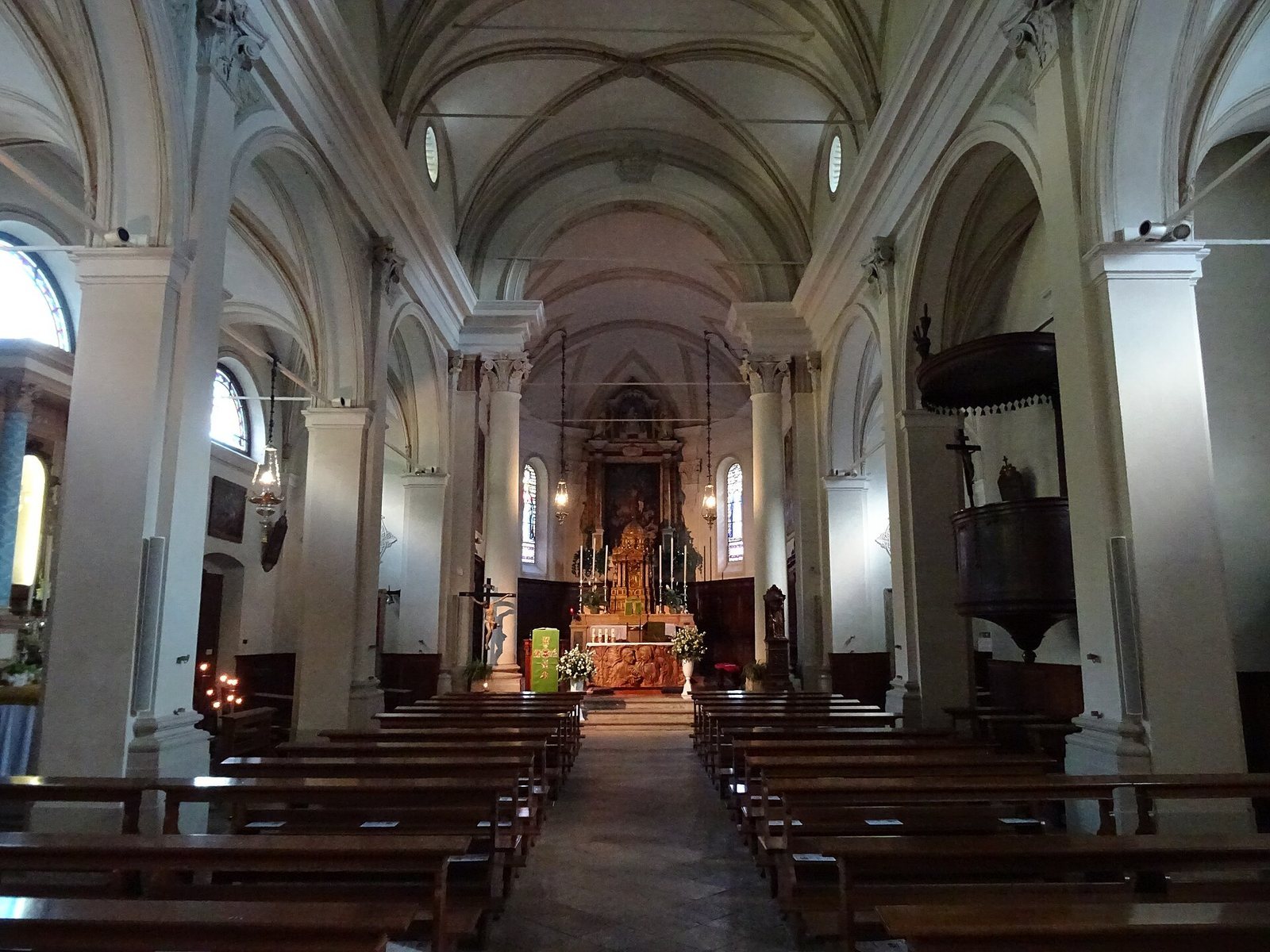
The church stands on Col, a small terrace of river-deposited ground where the Gares and Biois valleys meet. The original chapel occupied approximately the area of today’s central nave and the base of the bell tower. The present building has a central nave and side aisles formed by chapels connected to one another. Its façade includes a rose window by the sculptor Valentino Panciera Besarel.
Altars and paintings
High altar and tabernacle
Andrea Brustolon made the high altar in 1696. A tabernacle, a container for the consecrated Eucharistic bread, from Brustolon’s workshop also dates to that year. It has a raised section for a later, armored tabernacle. Its decoration includes the risen Christ, Saints Simon and Lawrence, and a Deposition on the small door. A separate altarpiece for the high altar, painted by Antonio Longo of Varena in the Fiemme Valley, dates to 1808.
Lateral chapel
A lateral chapel contains wooden caryatids, carved figures serving as supports, representing Time and Death. An artist of the German school made them in the late seventeenth century for the altar of the dead. They were later abandoned, then recovered and restored in 1994. The chapel also holds an eighteenth-century statue of John the Baptist and a 1626 altarpiece of the Blessed Virgin of the Battuti, a lay confraternity associated with penitential devotion, painted by Francesco Frigimelica the Elder.
Other paintings
An eighteenth-century painting of the Adoration of the Magi includes Saint Luciano the Martyr. Above the side doors hang two seventeenth-century works from the German school of Tyrol, a Death of Saint Joseph and a Christ Flagellated. The sacristy contains an eighteenth-century Deposition and a painting of the Virgin Mary as a child with Saints Joachim and Anne, both from the Austrian school.
Organ and liturgical furnishings
Organ and choir
Gaetano Callido made the organ in 1801. Its restoration in 2002–04 included the instrument, case, cabinets, and the space below it. The choir loft was extended to a design by architect Fabio Nassuato. The choir’s back panels were made in 1861 by the carpenter Marmolada; some were donated by the viceroy of Lombardy–Venetia on behalf of Emperor Francis Joseph.
Altars, sculpture, and other furnishings
The altar of the Souls has a seventeenth-century tabernacle. The pulpit, made in 1841 by Giovanni Maria Deola and Pietro De Ventura, follows a design by Stefano Tonegutti of Belluno. Sculptor Amedeo Da Pos made a statue of Saint Anthony, a niche for the Virgin Mary’s altar, and the baptistery, dated 1933. Processional poles associated with the altar of Saint Lucy were carried in eighteenth-century processions. The Way of the Cross, made by the workshop of Valentino Rovisi around 1780–90, was restored in 2005.
Dante Moro of Falcade made the Pope Luciani altar in 1979. Pope John Paul II inaugurated it in Canale’s square on 26 August that year. Riccardo Cenedese’s statue of Pope Luciani, titled Humility, dates to 1982.
Bell tower and churchyard
Bells
The tower holds five bells, all cast after the First World War. The largest, dedicated to John the Baptist, weighs 900 kilograms; the second, dedicated to the Virgin Mary, weighs 600 kilograms; and the third, dedicated to Saint Joseph, weighs 400 kilograms. The fourth weighs 90 kilograms, honors Saints Lucy and Angela, and was acquired in 1925. The three largest carry an inscription saying that enemy forces broke them, but that they were recast from enemy bronze to ring for Italy and God. The fourth bears an inscription crediting benefactors’ contributions in the Holy Year of 1925.
Churchyard and restoration
A small section of the old cemetery survives outside the church on its right side. The bell tower and forecourt were restored in 2001–02, and work also addressed this remnant of the cemetery. The organ’s restoration followed in 2002–04; the sacristy and winter chapel were restored in 2006, processional lanterns in 2007, and sacred banners in 2008. Interior work in 2017 brought back the colors specified for the building, including warmer tones in its oldest areas. It also revealed a cartouche, a framed inscription panel, on a section of the apse, recording the dedication of the high altar.