San Francesco Church, Lerici: A Baroque Parish Church and Sanctuary
Site at a Glance
- Popularity
- Low
- Country
- Italy
- Primary era
- Early Modern
- Eras represented
- Early Modern, Modern
- Civilizations
- Genoese, Italian
- Site type
- Religious
- Remains
- Church
On this page18 sections
History
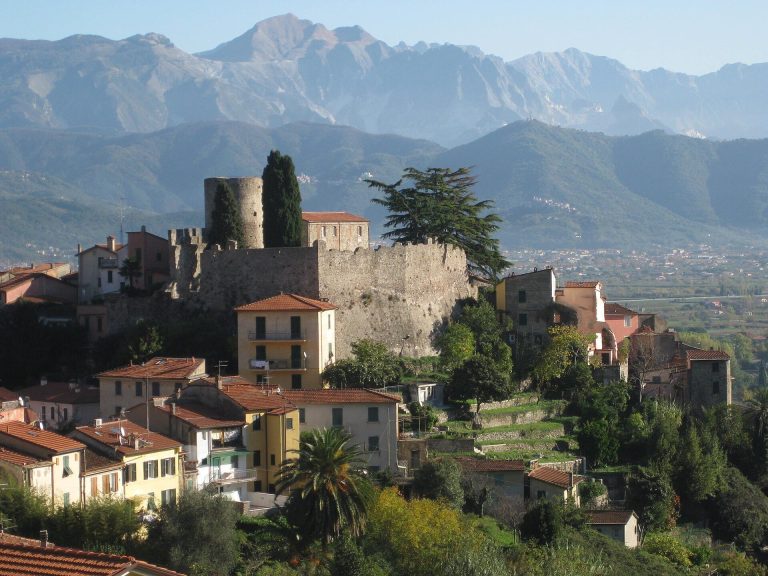
San Francesco Church, Lerici, is a Roman Catholic parish church in Italy dedicated to Saint Francis of Assisi; it also serves as the Sanctuary of Our Lady of Maralunga. Its present Baroque building, in a European style prominent in the seventeenth and eighteenth centuries, replaced an earlier church in the seventeenth century. The church is the seat of its parish, and Our Lady of Maralunga is Lerici’s patroness.
The first church and Lerici’s growth
In the fourteenth century, a larger church was thought necessary, probably because the population was growing and religious life was becoming more active. Unlike earlier churches in Lerici, which stood close to the sea, this church was built in the countryside.
The image of Our Lady and the seventeenth-century rebuilding
Local tradition places the discovery of the image of Our Lady of Maralunga in 1480. Three fishermen, Colotto, Giacopello, and Muzio, were said to have found it on the Maralunga cliffs. The story held that a storm had carried the image there on the waves, although it may instead have come from a shipwreck. The account helped spread devotion to Mary in Lerici.
The earlier church was demolished in 1632 and replaced by the present building. The reason is uncertain: the old structure seemed to be in good condition, but a larger church may have been needed as the population increased. Building work took four years. The church opened for worship on 26 July 1636, while work was still under way, and Bishop Giovanni Domenico Spinola of Luni-Sarzana consecrated it on 25 September that year.
The sanctuary and parish in later centuries
The image first belonged to a sanctuary at the place where tradition said it had come ashore. It was brought to San Francesco Church in 1799 and moved there permanently in 1810. In 1854 it was placed in a chapel dedicated to the Virgin. From 1883 to 1892, the parish was led by Giovanni Battista Borachia, who later became bishop of Massa Marittima.
Remains
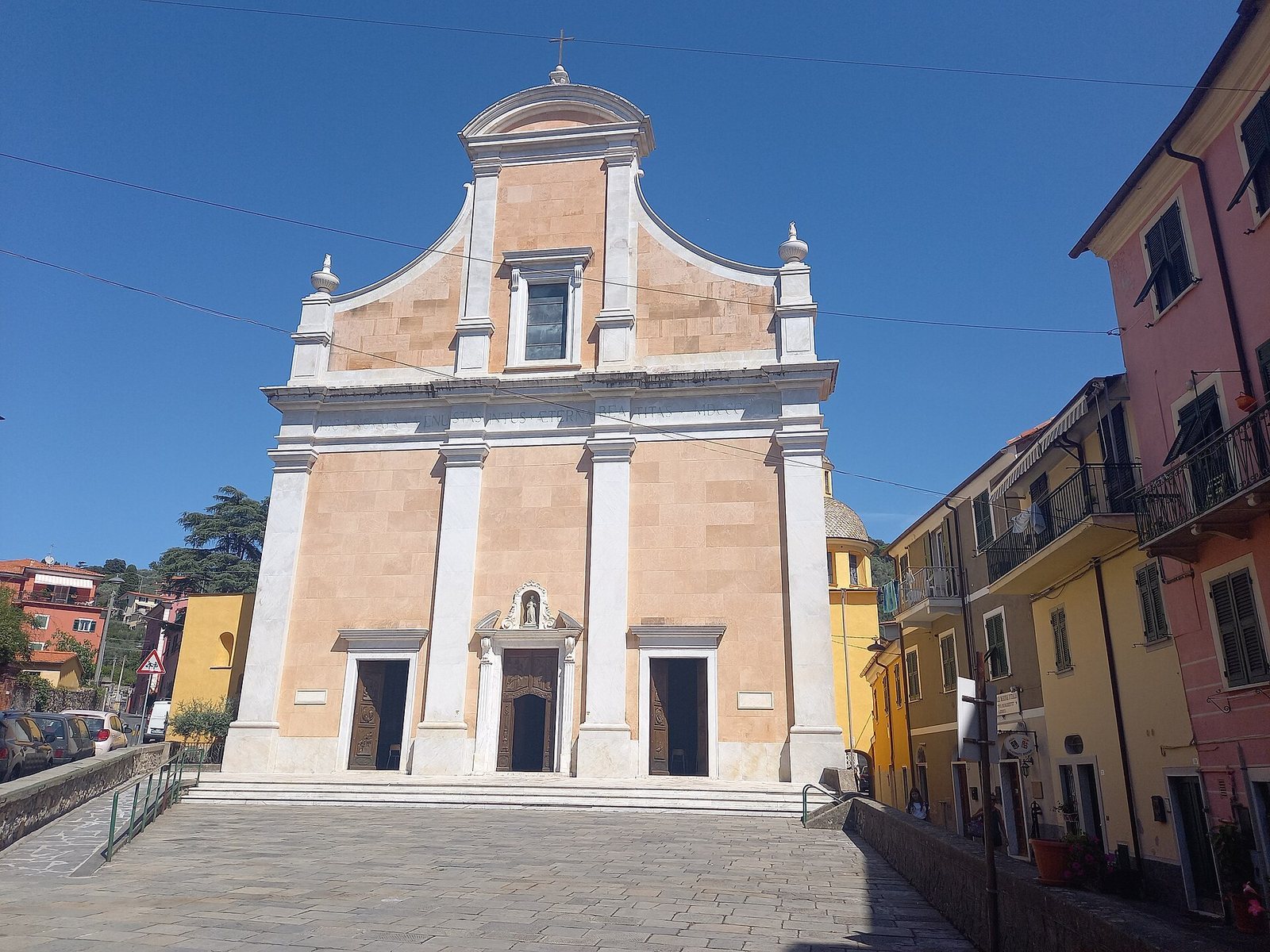
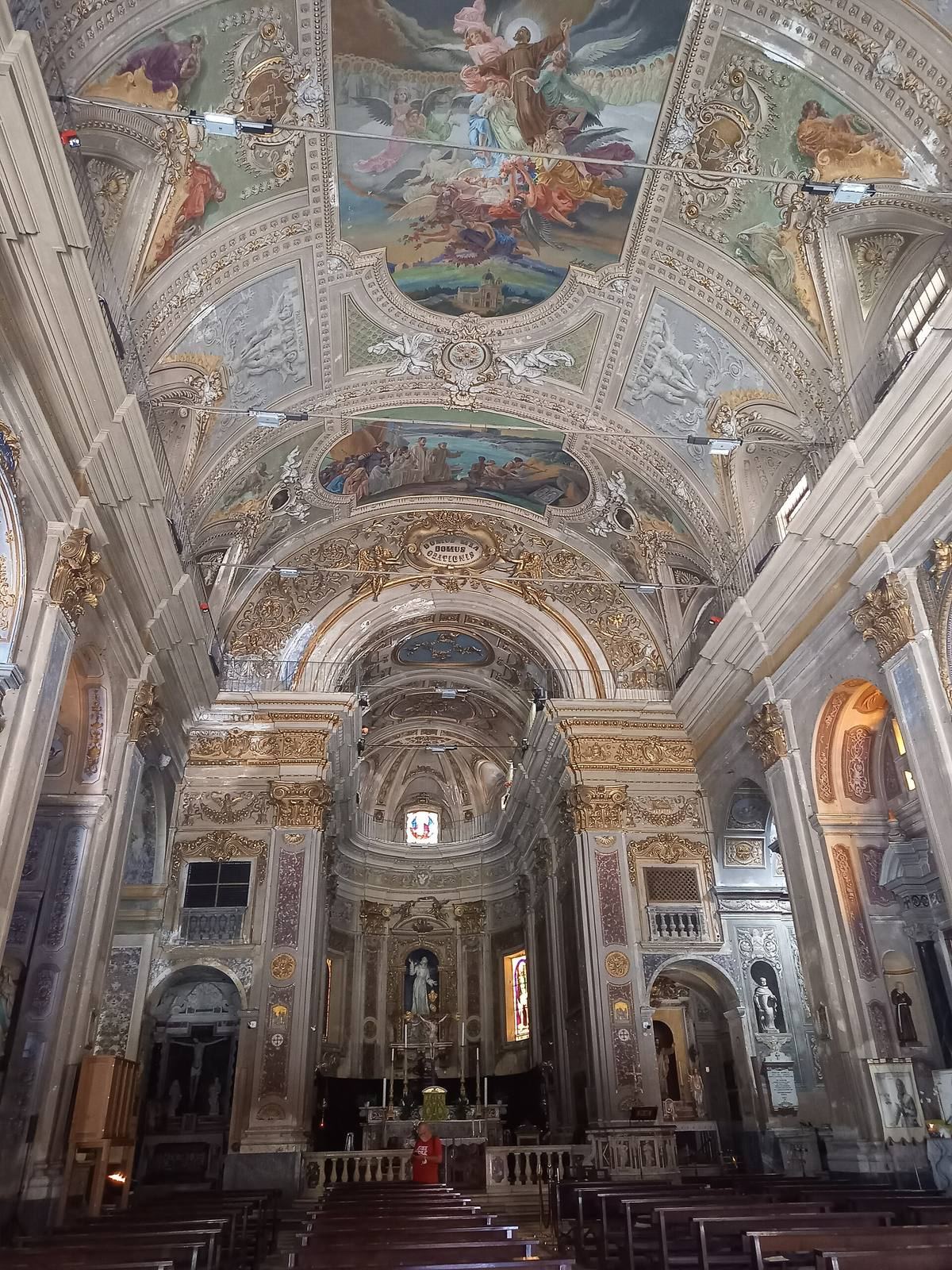
The present church has a single broad nave, a high ceiling, and a Baroque interior. Its pink Ligurian-stone façade was remade in marble in 1962, and an inscription to its right commemorates the consecration. The ceiling was decorated and frescoed by Luigi Agretti in 1932. Along the interior walls, niches hold eighteenth-century marble altars in the late Ligurian Baroque style.
Traces of the earlier church
The earlier church probably had three aisles, a high altar, and eight subsidiary altars. These were dedicated to Saint Mary; the Crucifix, associated with the Aragoni, Rebelli, and Accorsi families; Saint Anthony, associated with the Maruelli family; and Saint Mary at an altar belonging to the Beguines, women who pursued religious lives without formal vows. Other altars honoured Saint Roch at the rear of the church, Saint Luke for the Canata family, Saint Catherine, built by the Poggi family, and the Blessed Sacrament, the consecrated Eucharist, to the right of the high altar. The two altars dedicated to Mary reflect the strength of her veneration in Lerici. A large marble column and a cross-bearing column now stand in the forecourt; the latter is thought almost certainly to have belonged to the earlier church.
Main interior spaces
Nave and choir
The nave, the church’s main central space, is supported by six pillars. The choir was enlarged after its original square plan was changed to a semicircle, a change made possible by acquiring part of the land belonging to the Confraternity of San Bernardino, a religious association of laypeople. Its carved walnut stalls form two semicircular rows. A large niche above the middle of the choir holds a white Carrara-marble statue of Saint Francis, sculpted at Carrara and brought to Lerici in 1797.
Organ
An organ made by the Agati firm of Pistoia was installed in 1841. It has 52 keys and a pedalboard with 27 pedals. Above it hangs a painting brought from the church at Maralunga, showing two merchants following an image of the Madonna borne through the air by two angels.
Chapel of Our Lady of Maralunga
The image of Our Lady of Maralunga is set within a marble frame in the chapel dedicated to the Virgin. An inscription partly concealed by the frame is thought to describe the image’s discovery. Its maker is unknown. The composition is described as two images of the Madonna and Child separated by a column. The discovery tradition instead describes three panels: a dove representing the Holy Spirit in the middle, the Madonna with angels on the right, and the Child on the left.
Paintings and altarpieces
Works by Domenico Fiasella
Domenico Fiasella’s mid-seventeenth-century painting Saint Augustine Hesitating Between the Blood of Christ and the Milk of the Virgin illustrates a passage from Augustine’s meditations. It may have come from a former convent of the Augustinian order, whose members followed the Rule of Saint Augustine. Fiasella also painted The Madonna and Child with Saints Bernardino and Francis, signed and dated 1659. The work came from the adjoining Oratory of the Disciplinati, dedicated to Saint Bernardino, and is regarded as one of Fiasella’s masterpieces.
Other paintings
An unknown artist painted The Madonna and Child with Saints Louis, Anthony the Abbot, Anthony of Padua, Francis, and Souls in Purgatory. Giovanni Bernardo Carbone’s The Visitation is dated 1647, while a sixteenth-century panel depicts Saints Lucy, Catherine, and Cecilia with a donor. A painting of the Madonna and Child with Saints Erasmus, Leonardo, Nicholas of Tolentino, and Clare of Montefalco is attributed to Paolo Gerolamo Piola and dated to the late seventeenth or early eighteenth century. Saint Erasmus, regarded as a protector of seafarers, appears with the promontory of Maralunga. A seventeenth-century tomb monument includes figures of Truth and Time.
Paintings in the presbytery
The presbytery, the area around the high altar, contains a Saint John the Baptist by Domenico Bocciardo and Giovanni Domenico Cappellino’s Immaculate Conception with Saints Bonaventure, Francis, and Clare, signed and dated 1617. In Cappellino’s painting, Mary stands at the centre with her hands on her chest. God blesses her from the left, seated on a cloud supported by angels. On the right, one angel holds a mirror symbolizing truth and another a lily symbolizing purity. Saints Francis and Bonaventure appear below on the right, with Saint Clare of Assisi on the left.
Jan Miel’s Assumption of the Virgin, painted in 1657, shows the Virgin in white among angels, above five figures. King David stands on the left, King Solomon on the right, and Moses points to the tablets of the Law. The Lerici Botti family donated the painting.
Sacristy altarpiece
The sacristy, a room for sacred vessels, vestments, and preparation for services, contains an altarpiece by Domenico Gar arranged in three tiers. Its middle section shows Saints Francis, Bernardino, and Leonardo. The lower section, called a predella, depicts members of the Confraternity of San Bernardino offering gifts to Jesus. In the upper semicircular panel, or lunette, a work by Maragliano shows the Madonna and Child with Saints Roch and Sebastian.
Sculpture and historic furnishings
Crucifix and devotional figures
A large wooden Crucifix from the fifteenth century stands to the left of the high altar. Its maker is unknown, and repeated repainting has made some of its original colours difficult to distinguish. Christ is shown wearing a loincloth, with pronounced ribs. Marble figures of the Virgin and Saint Mary Magdalene stand beside it and are probably from Carrara. Local tradition associates the Crucifix with the destroyed church of Saint Marta in Lerici’s old settlement.
Other sculptural works include marble figures of Saints Elizabeth and Zechariah, a statue of the Assumption, and an unsigned statue of Our Lady of Sorrows. A white Carrara-marble statue of Saint Francis is dated 1792. A seventeenth-century wooden group shows the Madonna rising heavenward on a cloud among angels, accompanied by Saint Bernardino.
Furnishings and other features
The church’s older furnishings include a Carrara-marble baptismal font dated 1448, brought from the Oratory of San Bernardino; an eighteenth-century silver liturgical object; a silver chalice decorated with Saints Francis, Roch, and Lucy; a Baroque wooden reliquary; a silver medallion of Saint Erasmus; and a cope donated by the Botti family. A slate pulpit is associated with a local tradition that Saint Bernardino preached from it. A washbasin is dated 1699.