Nanih Waiya: An Indigenous Earthwork and Choctaw Sacred Site
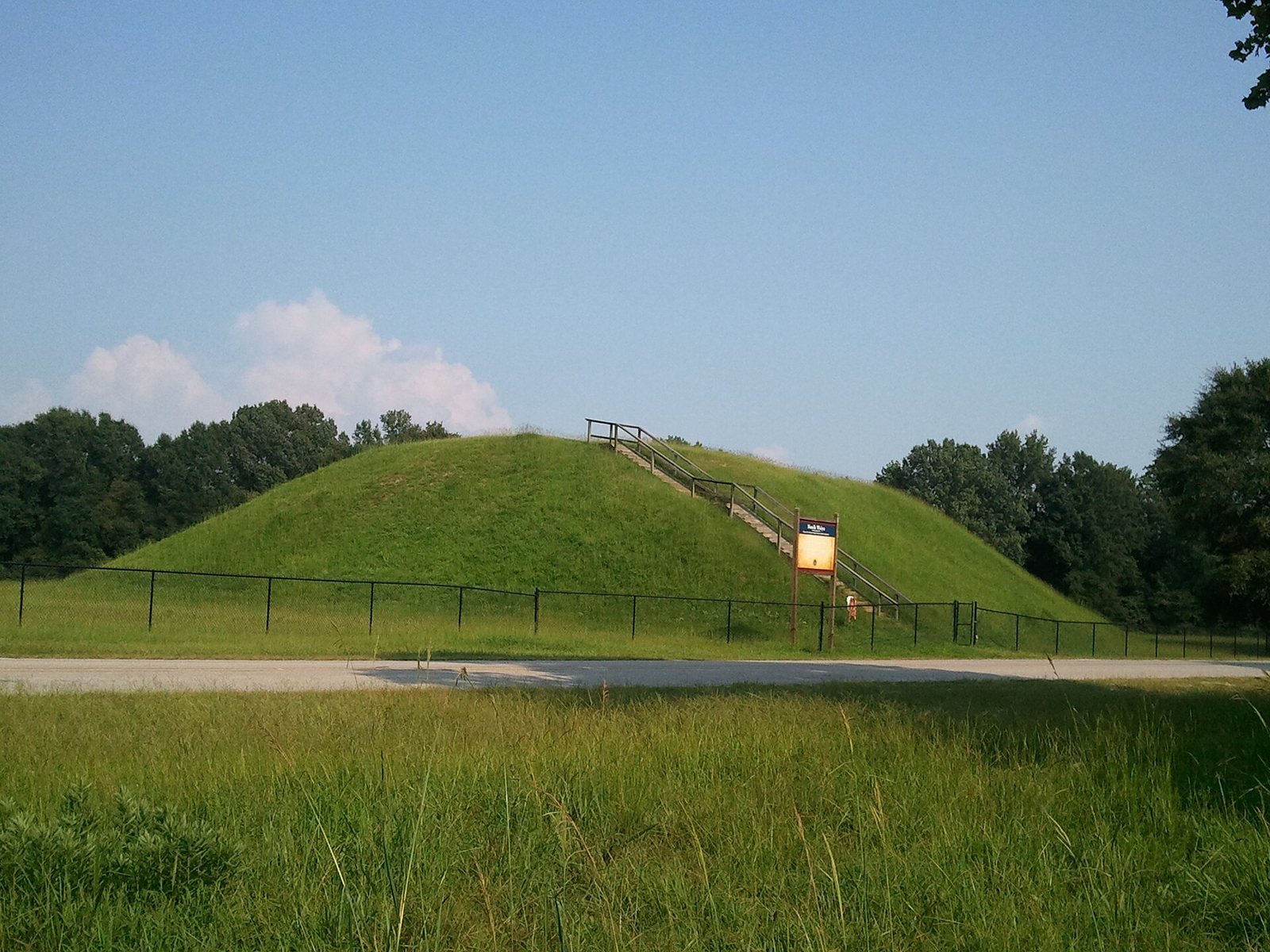
Site at a Glance
- Popularity
- High
- Country
- United States
- Primary era
- Classical
- Eras represented
- Classical, Medieval
- Civilizations
- Unclassified
- Site type
- Religious
- Remains
- Sanctuary
On this page8 sections
History
Nanih Waiya is an Indigenous earthwork mound in southern Winston County, Mississippi, United States, probably built around 300–600 CE during the Middle Woodland period, an archaeological period in eastern North America. Surface artifacts indicate that people occupied the site during this period and apparently continued to do so until at least about 700 CE. Its likely construction era coincided with the Hopewell cultural tradition and mound sites such as Pinson Mounds in Tennessee and Ingomar Mound in Mississippi. Archaeologists have proposed that Nanih Waiya served religious purposes over the course of its history.
Choctaw traditions and sacred associations
Choctaw pilgrimage to Nanih Waiya dates back at least to the seventeenth century. Choctaw and Chickasaw people have revered the mound and a nearby cave as sacred places of origin. Some Choctaw traditions describe Nanih Waiya as the Mother Mound, where the first Choctaw were created. Depending on the version, the people emerged from the mound or from the nearby cave. Other tellings connect the mound or cave with the origins of the Chickasaw and Creek, and sometimes the Cherokee. Historians and anthropologists place Cherokee migration into the Southeast later than the mound’s construction period, while Cherokee oral tradition also recounts a migration to the region.
A Choctaw account of the mound’s creation, recorded by nineteenth-century naturalist and physician Gideon Lincecum, describes a people carrying the bones of their dead as they wandered for 42 Green Corn festivals. These seasonal ceremonies were associated with new corn. At a leaning hill, a magical staff directed the people to settle in fertile country. Their council decided to build an earthen burial mound for their ancestors, raising a frame of branches and adding layers of earth while carrying on daily work. After completing the main mound, the people held their forty-third festival. The account also describes smaller conical mounds for individual burials. Some anthropologists have questioned whether the Choctaw practiced the Green Corn ceremony.
A separate migration tradition recorded by painter and writer George Catlin in an 1885 Smithsonian report tells of a journey eastward from far to the west. A medicine man, a traditional Indigenous religious or healing practitioner, carried a red pole and placed it at each night’s camp. When it leaned east the next morning, the people continued in that direction, toward Nanih Waiya. The tradition gives the name meanings including “leaning hill,” “stooping hill,” and “place of creation.”
Cession, state ownership, and return
The Treaty of Dancing Rabbit Creek, an 1830 agreement between the Choctaw and the United States during the era of U.S. Indian removal, ceded millions of acres of Choctaw land, including Nanih Waiya. The agreement was drawn up between September 15 and 27. During the Choctaw removal to Indian Territory in the 1830s, the tribe lost control of the property. In the following decade, a U.S. Choctaw Claims Commission investigated alleged treaty violations by U.S. citizens. Choctaw claimants described Nanih Waiya as their mother or birthplace, and some said they would not leave the country while the mound remained there.
After a period in private ownership, Mississippi acquired the property for preservation and operated it as a state park. T. W. Luke conveyed the land to the state on the condition that it be maintained as a park. When state maintenance ended, the 150-acre property reverted to the Luke family; State Bill 2803 formally returned control to the family in 2006. The Mississippi Band of Choctaw Indians regained control of the cave site through a land purchase in the early twenty-first century. In August 2008, the Luke family deeded the mound to the tribe. The tribe marks August 18 as a holiday commemorating its return and holds annual Nanih Waiya Day celebrations in August, featuring Choctaw food, dances, and stories about Choctaw origins and history. Nanih Waiya was added to the National Register of Historic Places, the U.S. federal list of places recognized for historical importance, in 1973.
Remains
The site includes a constructed earthen mound and related earthworks in Winston County, as well as a separate natural hill containing a cave about one mile to the east, across the county line in Neshoba County.
Earthworks
Main mound
The main mound rises about 25 feet (7.6 m), measures roughly 140 feet (43 m) across, and extends about 220 feet (67 m) in length. It appears to have been a larger, flat-topped mound that eroded into its present form.
Enclosure and smaller mounds
A circular earthwork enclosure once bordered the mound on three sides. It stood about 10 feet (3 m) high and covered roughly one square mile. Observers also noted smaller mounds nearby in the 1850s. Later plowing removed them; they may have been built during the Mississippian period or by later Indigenous peoples, but their date and purpose remain uncertain.
The cave hill
About one mile east of the main mound, a wooded natural hill stands near Nanih Waiya Creek in Neshoba County. The cave within the hill may once have had four entrances. In a 1973 survey, two cave explorers descended to a depth of 137 feet. Water began about 35 feet from the entrance and grew deeper farther inside.