Saints Cyril and Methodius Church in Wrocław: A Baroque Orthodox Church
Site at a Glance
- Rating
- 4.6
- Popularity
- Medium
- Country
- Poland
- Primary era
- Early Modern
- Eras represented
- Early Modern, Modern
- Civilizations
- Habsburg, Habsburg Austria, Holy Roman Empire, Kingdom of Bohemia
- Site type
- Religious
- Remains
- Church
On this page9 sections
History
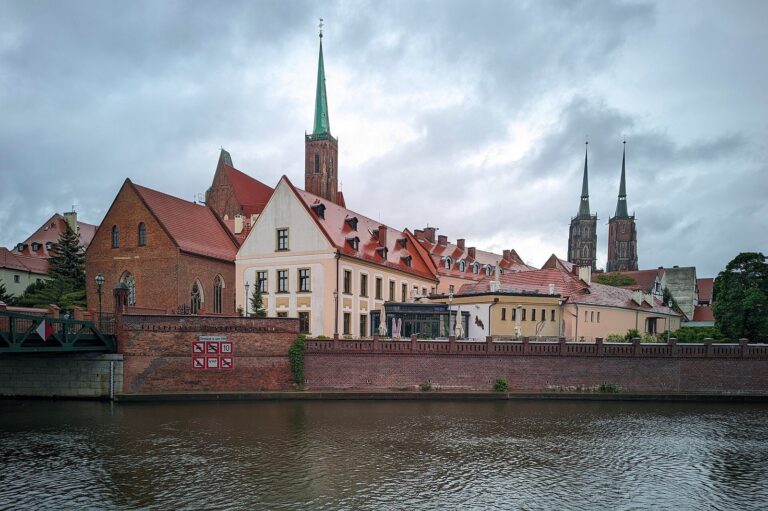
Saints Cyril and Methodius Church is a Baroque church on Sand Island in Wrocław, Poland, built in 1686–1690 for Roman Catholic worship. Baroque is a style marked by dramatic forms and elaborate decoration. The church was Wrocław’s first building in this style. Its present dedication recalls the ninth-century Christian missionaries Cyril and Methodius, whose work among Slavic peoples was associated with Christian liturgy and literacy.
Early Chapel and Baroque Foundation
A medieval chapel stood on the site before the present church. It was dedicated to Saints Joseph and Joachim, traditionally regarded as Mary’s husband and father, and to Natalia and Adrian, early Christian martyrs. The chapel was demolished in the seventeenth century.
The new church was built between 1686 and 1690 as a Roman Catholic church dedicated to St Anne, regarded in Christian tradition as Mary’s mother. It served the Augustinian nuns, members of a Catholic religious order whose communities follow the Rule of St Augustine. An unidentified Italian architect is credited with its design, and Zygmunt Linde directed construction.
Changing Religious Use
The church belonged to the nearby Augustinian convent until its secularization in 1810. The former convent buildings then housed a Catholic teachers’ seminary, which continued until 1909. In 1852, the deteriorating church returned to religious use and was rededicated to St Anne.
From 1919 to 1921, the building served Wrocław’s Polish community before passing to the Old Catholic Church. Old Catholic churches separated from Roman Catholic authority while retaining Catholic traditions.
War Damage and Orthodox Use
During the 1945 siege of Breslau in the Second World War, about half a million books evacuated from the Royal University Library were stored in the church. A fire on 10–11 May 1945 destroyed the books, burned out the interior, and severely damaged the building.
The ruins were secured after the war, and a roof was added in 1948 to protect them from further deterioration. The Polish Autocephalous Orthodox Church, an Orthodox church that governs itself ecclesiastically, received the building on 10 June 1970, and reconstruction began the following year. Services took place in a temporary chapel from 1973; the first Orthodox service in the main nave was held in 1976, when the church became usable as Wrocław’s first Orthodox church.
The church belongs to the Wrocław deanery within the Wrocław and Szczecin Diocese of the Polish Autocephalous Orthodox Church. A deanery groups parishes within a diocese, an ecclesiastical district usually overseen by a bishop. The church also serves the parish of St Peter Mohyla, named for a seventeenth-century Orthodox metropolitan and theologian. Services for Saints Cyril and Methodius parish are held in Polish and Church Slavonic, a historical liturgical language used in Slavic Orthodox traditions; services for St Peter Mohyla parish are held in Church Slavonic and Ukrainian.
The church was entered in Poland’s register of monuments in 1947 and 1961. It also stands within Wrocław’s historic city center, designated a Historic Monument of Poland in 1994.
Remains
Church Architecture
Nave and Façade
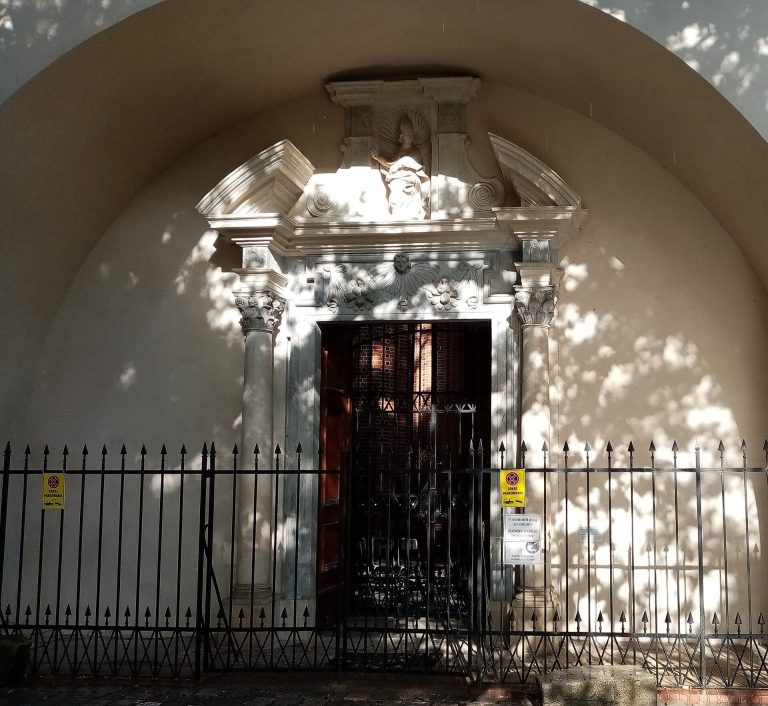
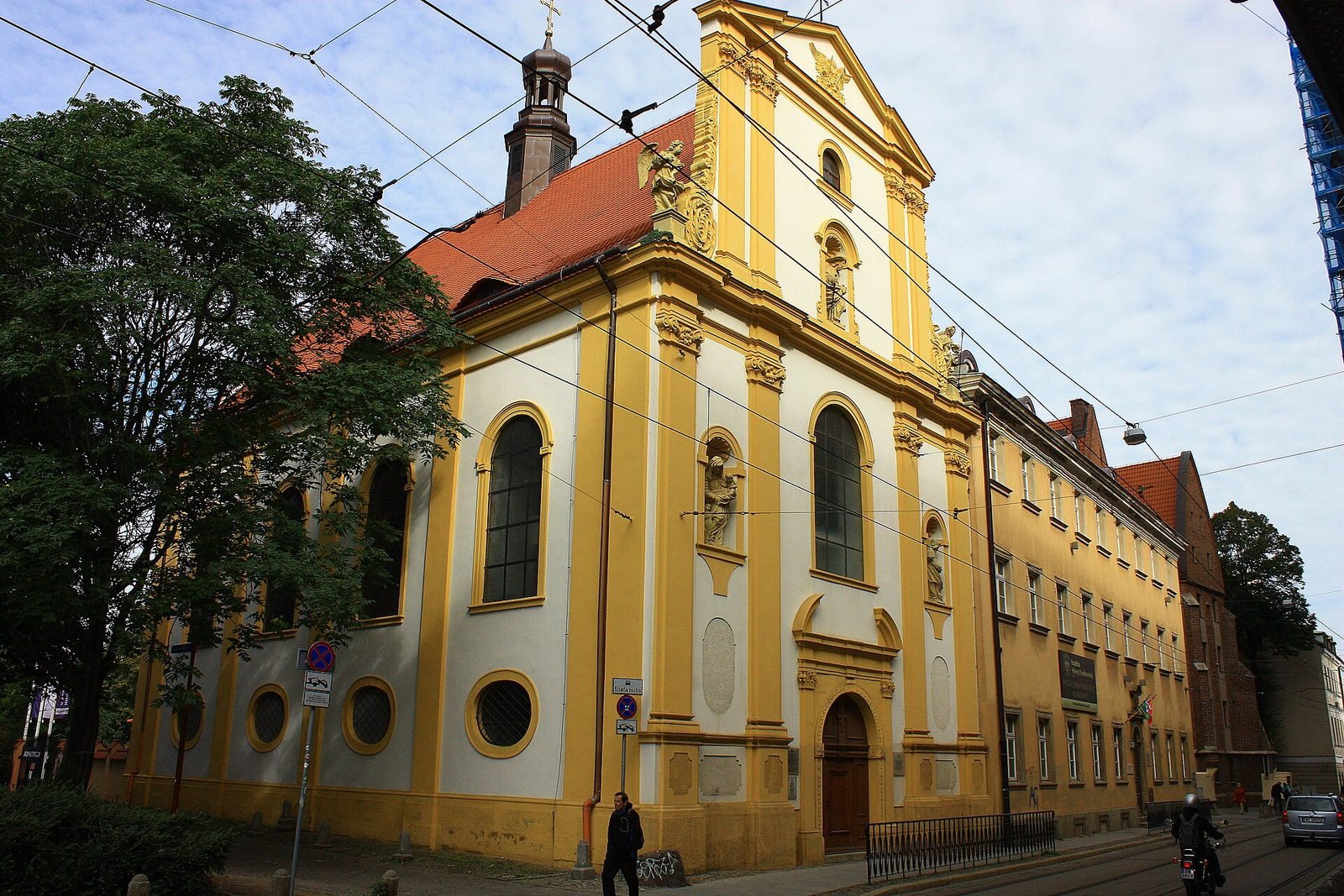
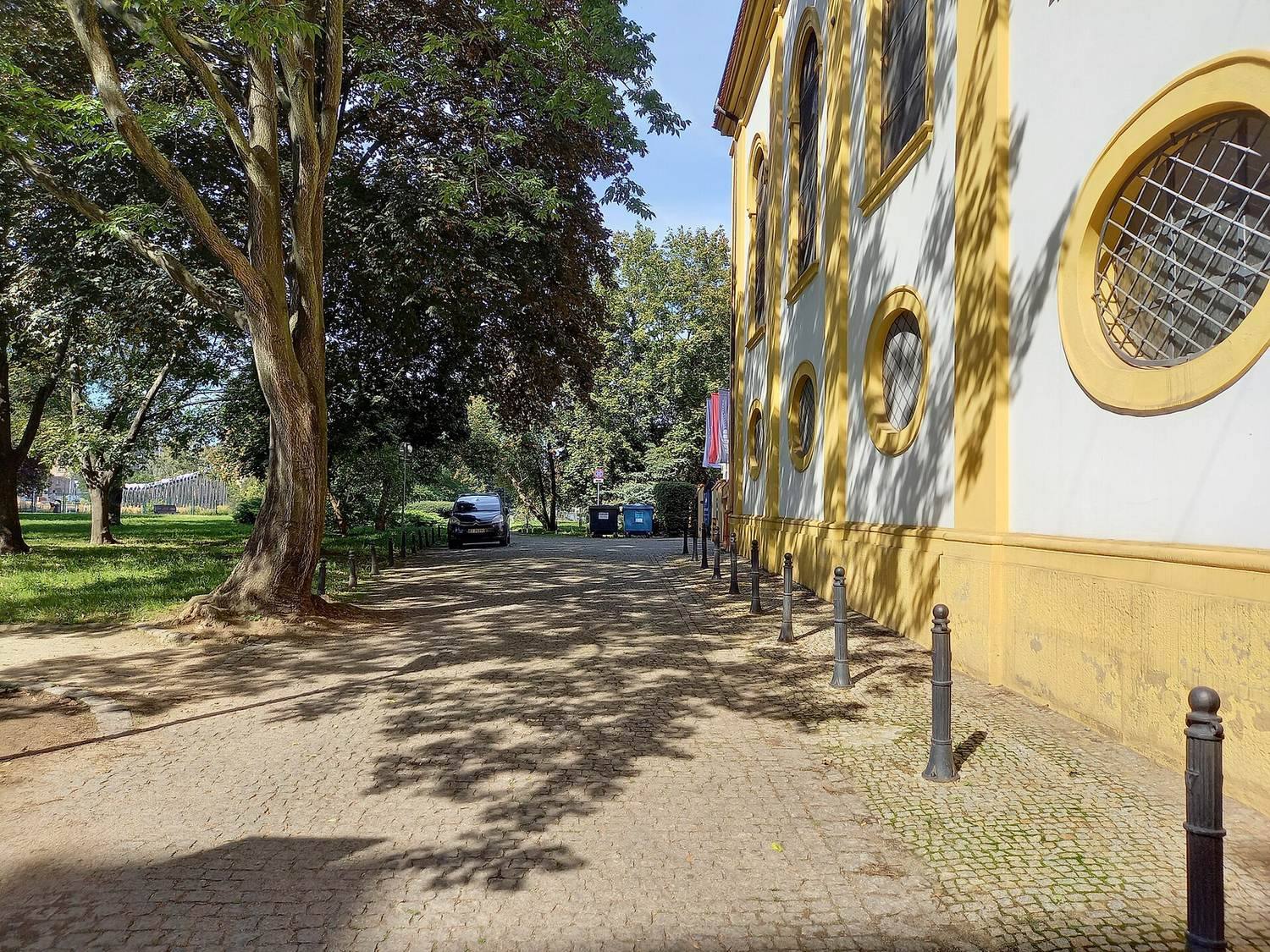
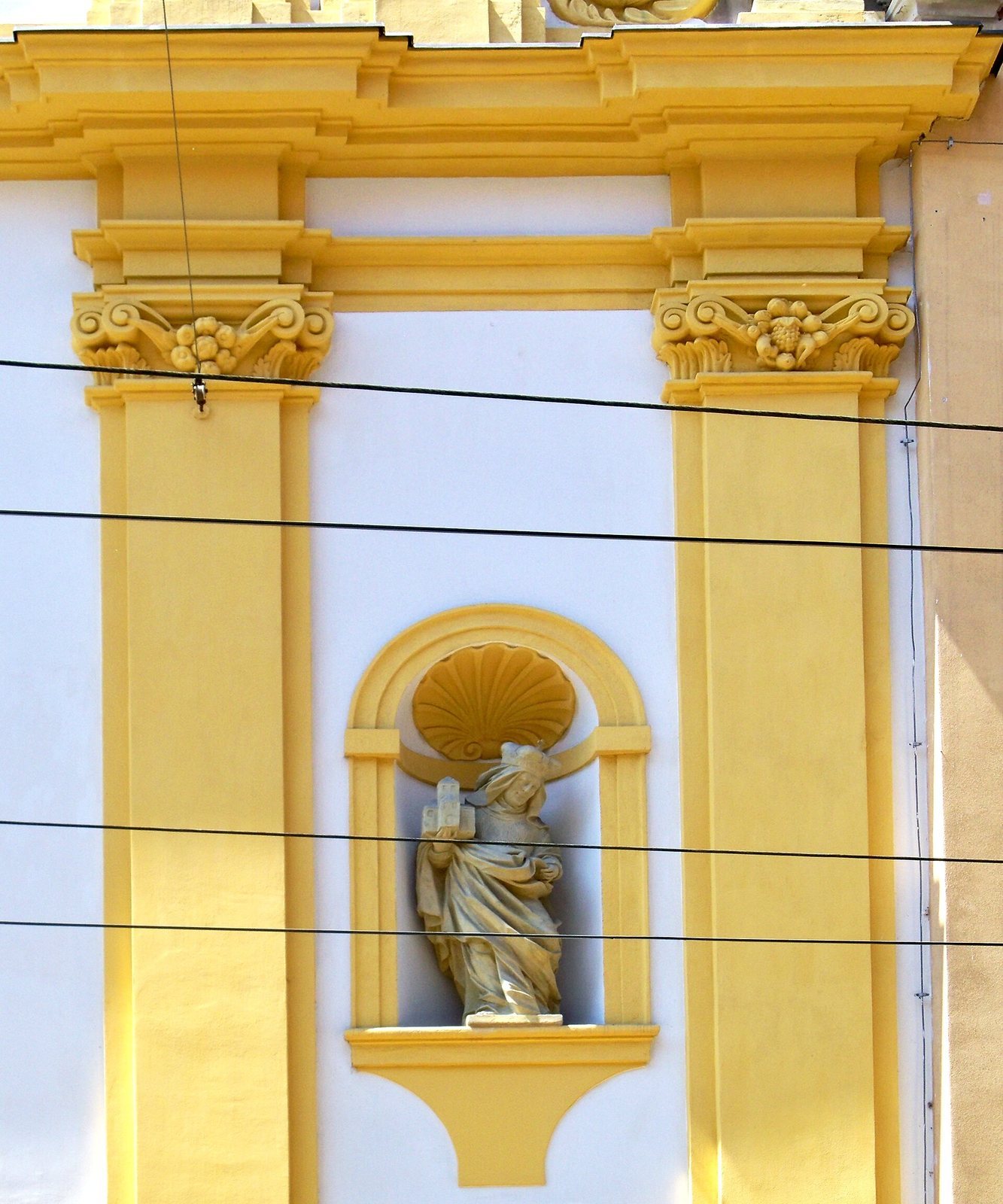
Built of brick, the church has a single nave and an elaborately ornamented façade crowned with sculptures. Its design refers to Il Gesù, a major Jesuit church in Rome whose architecture influenced Baroque church design. During renovation work in 2009–2011, the façade was renewed, the roof covering replaced, and the roof turret rebuilt.
Chapel and Interior Screen
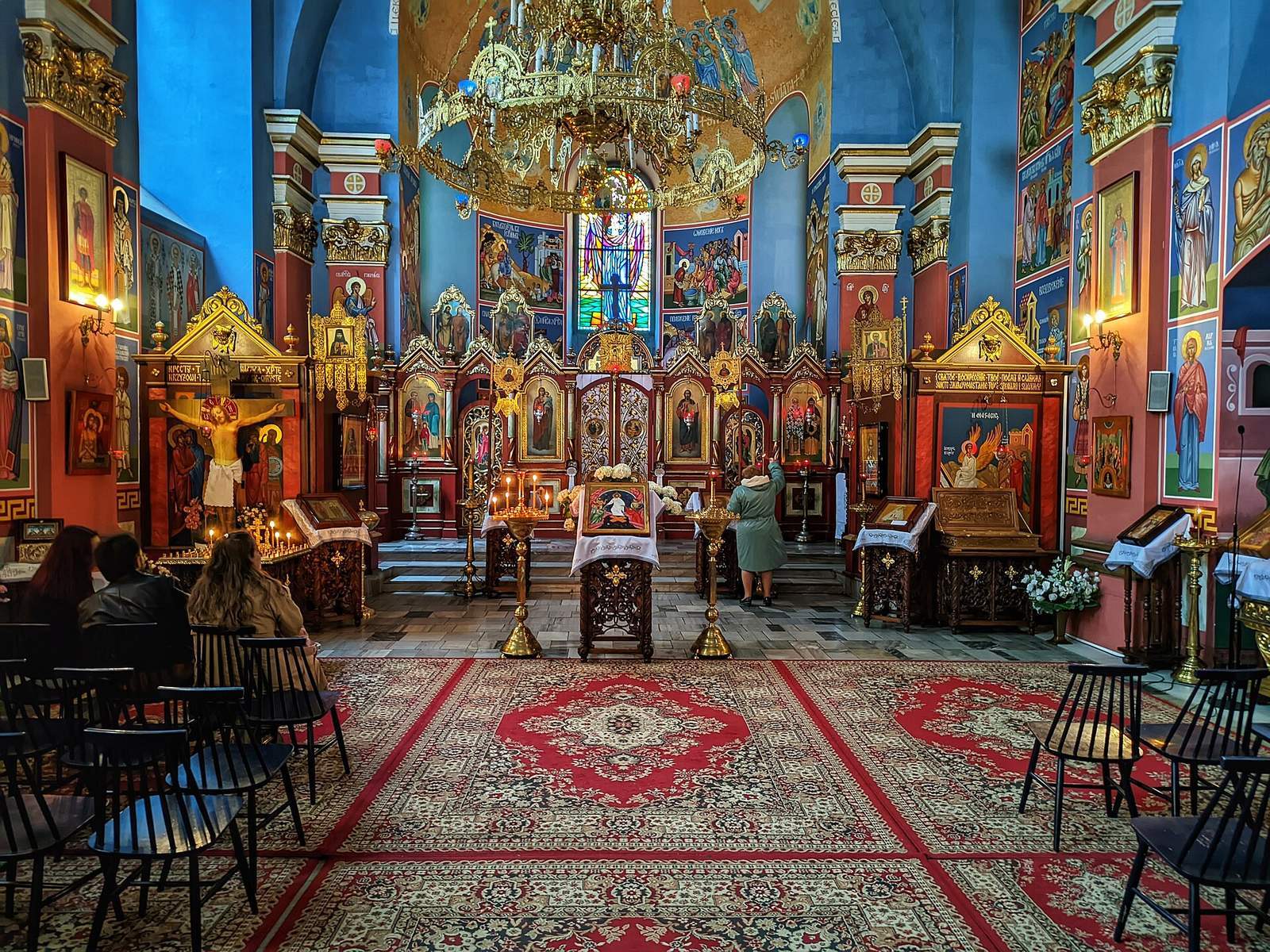
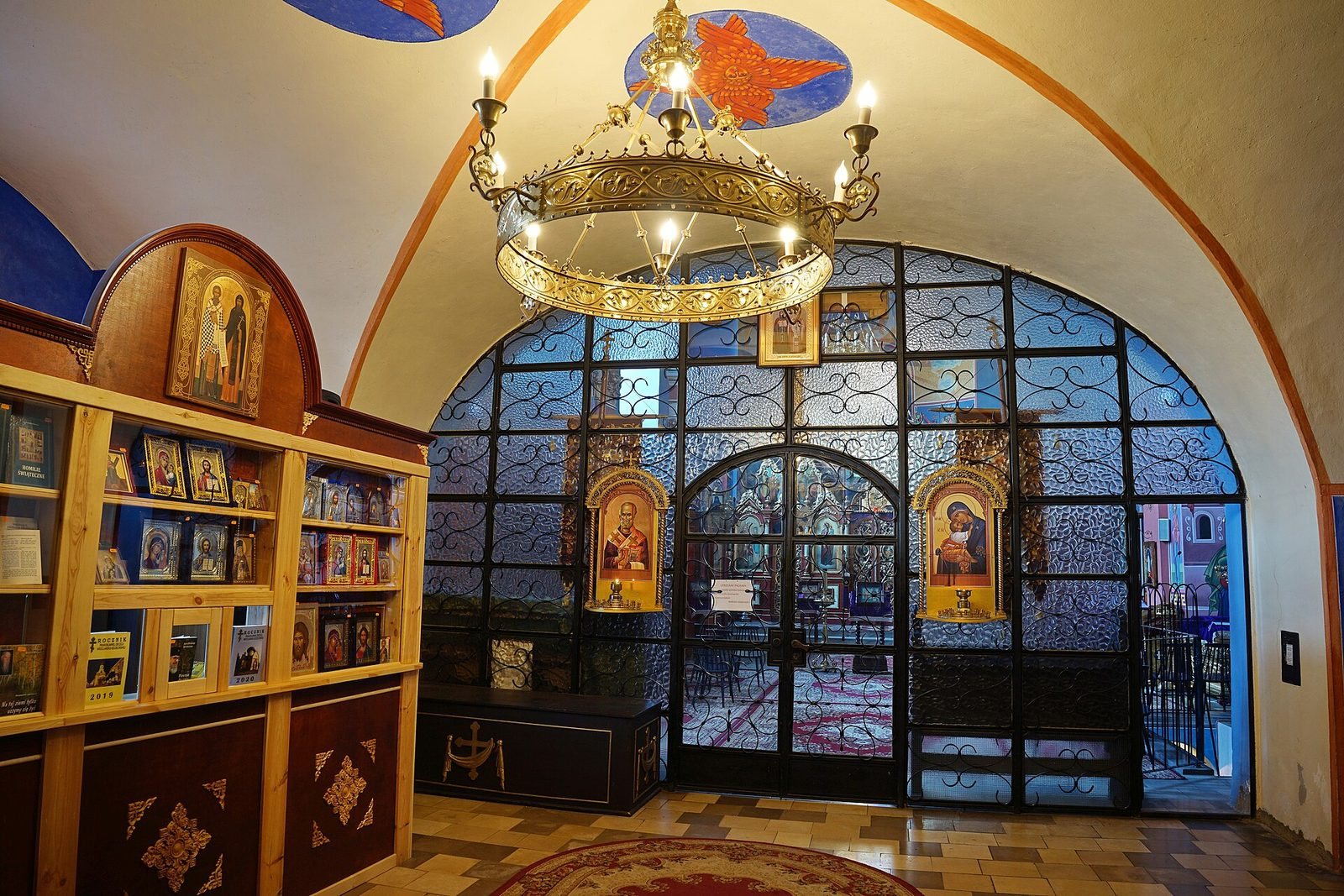
Zygmunt Linde contributed to the creation of a chapel dedicated to St Elizabeth. An iconostasis, an icon-bearing screen separating the sanctuary from the main body of an Eastern Christian church, was installed in the building. Its icons came from several places, including Warsaw and Strwiążyk.
Crypt and Chapel of the Vilnius Martyrs
A partly submerged crypt, a chamber beneath a church often used for burial or worship, was discovered in 1975. It was cleared and given a separate entrance. A chapel dedicated to the Vilnius Martyrs, Anthony, John, and Eustathius, was established there for the St Peter Mohyla parish.